
 Worksheets
PreAP Chem Fall Review
Total questions: 92
Worksheet time: 2hrs 36mins
Name
Class
Date
1.
The density of pyrite is 5g/cm3 . This is an example of
a)
physical intensive property
b)
physical extensive property
c)
chemical change
d)
chemical property
2.
The mass of a lead cube is 64 grams. This is an example of
a)
physical intensive property
b)
physical extensive property
c)
chemical change
d)
physical change
3.
Wood burning is an example of _______
a)
physical intensive property
b)
physical extensive property
c)
chemical change
d)
Physical change
4.
Crumpling paper is an example of
a)
physical change
b)
chemical change
c)
physical property
d)
chemical property
5.
Jack has a rock. The rock has a mass of 14g and a volume of 2cm3. What is the density of the rock?
a)
7 mL
b)
7 g/cm3
c)
28 g/cm3
d)
1/7 g/cm3
6.
What states of matter maintains its own shape and volume instead of conforming to the shape and volume of its container?
a)
Solid
b)
Liquid
c)
Gas
d)
molecules
7.
Gas has___________.
a)
no definite shape and no definite volume
b)
a shape
c)
has volume
d)
motion
8.
A mixture that is NOT evenly distributed is called ....
a)
Compounded
b)
Homogenous
c)
Heterogenous
d)
Salty
9.
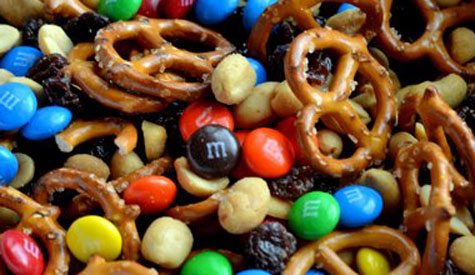
What type of mixture is this?
a)
homogenous mixture
b)
chemical
c)
heterogeneous mixture
d)
solid mix
10.
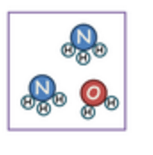
This picture represents:
a)
Element
b)
Compound
c)
Mixture of Elements
d)
Mixture of Compounds
11.

This picture represents:
a)
Element
b)
Compound
c)
Mixture of Elements
d)
Mixture of Compounds
12.
Energy due to motion is ____________ energy.
a)
Potential
b)
Energy
c)
Kinetic
d)
Friction
13.
When you stretch a rubber band, you are storing __________ energy.
a)
kinetic
b)
potential
c)
none of the above
d)
all of the above
14.
How would you write 0.0005 in scientific notation?
a)
50 x 105
b)
5 x 10⁴
c)
5 x 10³
d)
.5 x 103
15.
How would you write -5.6 x 10⁻³ in standard form?
a)
0.0056
b)
-5,600
c)
0.00056
d)
-0.0056
16.
How many significant digits are there in "0.0805"?
a)
2
b)
3
c)
4
d)
5
17.
Round "124,500" to three significant digits.
a)
124,000
b)
125,000
c)
124
d)
125
18.
The prefix kilo represents the value _
a)
10
b)
100
c)
1,000
d)
.001
19.
The prefix centi represents the value _
a)
10
b)
.1
c)
.01
d)
100
20.
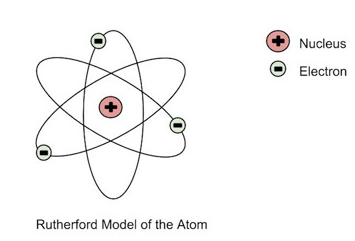
Rutherford's gold foil experiment provided evidence that...
a)
negative and positive charges are spread evenly throughout the atom.
b)
alpha particles have a positive charge.
c)
gold is not a dense as previously thought.
d)
there is a dense positively charged nucleus at the center of an atom.
21.
The majority of an atom's mass exists where?
a)
In the nucleus
b)
In the electron cloud
c)
In the space between the nucleus and the electrons
d)
In the neutrons
22.

J.J. Thomson provided evidence that an atom...
a)
is the smallest particle of matter
b)
contains negatively charged particles
c)
has an overall negative charge
d)
has an overall positive charge
23.
An atom has 10 protons, 15 neutrons and 10 electrons what is its mass number.
a)
20
b)
10
c)
5
d)
25
24.
An element with a mass number of 11 and an atomic number of 5 has how many neutrons?
a)
11
b)
5
c)
6
d)
16
25.
What is an atom mostly made up of?
a)
protons
b)
electrons
c)
empty space
d)
neutrons
26.
How many electrons are in a Li+ ion?
a)
1
b)
2
c)
3
d)
4
27.
How many electrons are in an S2- ion?
a)
10
b)
14
c)
16
d)
18
28.
Which color light has the longest wavelength?
a)
Red
b)
Orange
c)
Green
d)
Violet
29.
Which color light has the most energy?
a)
Red
b)
Blue
c)
Green
d)
Violet
30.

High frequency waves have _________ wavelengths.
a)
varying
b)
long
c)
the same
d)
short
31.
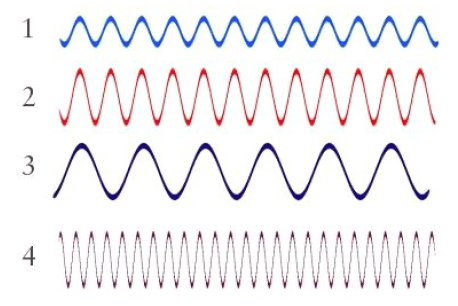
Which wave in the diagram has the greatest wavelength?
a)
1
b)
2
c)
3
d)
4
32.
What is the electron configuration for Aluminum?
a)
1s2 2s2 2p6 3s2 3p1
b)
1s2 2s2 2p6 3s2 3p2
c)
1s2 2s2 2p6 3s2
d)
1s2 2s2 2p6 3s2 3p3
33.
What is the noble gas notation for Arsenic?
a)
[Ar]4s23d104p3
b)
[Kr]4s23d104p3
c)
[Ar]5s24d105p3
d)
[Kr]5s24d105p3
34.
How many protons does Carbon - 14 have?
a)
6
b)
8
c)
7
d)
14
35.
How many neutrons does Iron - 56 have?
a)
56
b)
26
c)
29
d)
30
36.
Maximum number of electrons that can be placed in an s orbital.
a)
2
b)
6
c)
10
d)
14
37.

What is incorrect about this orbital diagram?
a)
Both arrows in the 2p box should be pointing up
b)
There is nothing incorrect with this diagram
c)
In the there should only be 1 orbital in the first 2p box and one in the 2nd 2p box
d)
All the arrows should be pointing up.
38.
Cations are _______ that form ____________ ions and __________ electrons.
a)
nonmetals, positive, lose
b)
nonmetals, negative, gain
c)
metals, positive, gain
d)
metals, positive, lose
39.
Anions are _______ that form ____________ ions and __________ electrons.
a)
nonmetals, positive, lose
b)
nonmetals, negative, gain
c)
metals, positive, gain
d)
metals, positive, lose
40.

a)
energy levels
b)
valence electrons
c)
protons
d)
neutrons
41.
a)
energy levels
b)
valence electrons
c)
protons
d)
neutrons
42.
Which of the following will have a larger radius than Zinc?
a)
Gallium
b)
Aluminum
c)
Magnesium
d)
Strontium
43.
Which of the following will have a higher electronegativity than arsenic (As)?
a)
Carbon (C)
b)
Neon (Ne)
c)
Antimony (Sb)
d)
Germanium (Ge)
44.
Which of the following will have a lower ionization energy than Scandium (Sc)?
a)
Helium (He)
b)
Titanium (Ti)
c)
Calcium (Ca)
d)
Magnesium (Mg)
45.
As atoms of elements in group 16 are considered in order from top to bottom, the electronegativity of each successive element....
a)
decreases
b)
increases
c)
remains the same
d)
none of the above
46.
As you move down the periodic table atoms get bigger. This is because ____________.
a)
The atoms have more mass.
b)
The atoms have more protons.
c)
The atoms have more energy levels
d)
The atoms have more neutrons
47.
Metals have the largest -
a)
atomic radius and electronegativity
b)
electronegativity and ionization energy
c)
atomic radius only
d)
ionization energy and atomic radius
48.
Electronegativity __________ from left to right within a period and __________ from top to bottom within a group.
a)
decreases, increases
b)
increases, increases
c)
increases, decreases
d)
stays the same, increases
49.
Atomic radius generally increases as we move __________.
a)
down a group and from right to left across a period
b)
up a group and from left to right across a period
c)
down a group and from left to right across a period
d)
up a group and from right to left across a period
50.
Ionic Bonding involves...
a)
The transfer of protons
b)
The transfer of nuetrons
c)
The transfer of electrons
d)
None Of the above
51.
Covalent compounds
a)
Share electrons
b)
transfer electrons
c)
contain a sea of electrons
d)
conduct electricity
52.
A chemical bond resulting from electrostatic attraction between positive and negative ions is a(n)
a)
nonpolar covalent
b)
ionic
c)
polar covalent
d)
coordinate covalent
53.
When drawing Lewis structures, all elements follow the _____ rule (except H and He) in order to be the most stable.
a)
Octave Rule
b)
Duet Rule
c)
Triad Rule
d)
Octet Rule
54.
What is the VSEPR shape for CO2?
a)
Linear
b)
Trigonal planar
c)
Bent
d)
Trigonal pyramidal
55.
Each element wants to gain or lose electrons so that it can have the same electron configuration as......
a)
a Nobel gas
b)
other elements in its family
c)
other elements in its period
d)
it used to have before reacting
56.
What is an alpha particle?
a)
2 protons
b)
2 neutrons
c)
2 protons & 2 neutrons
d)
hydrogen
57.
What is a beta particle?
a)
proton
b)
positron
c)
electron
d)
neutrino
58.
The half-life of an isotope is 3 days. How much of a 10 gram sample will remain after 9 days?
a)
1.25 gram
b)
3.33 gram
c)
2.5 gram
d)
The sample will have decayed completely.
59.
What is emitted when potassium-40 decays to calcium-40?
a)
an alpha particle
b)
a beta particle
c)
a positron
d)
a neutrino
60.
What is emitted when radium-226 decays to radon-222
a)
an alpha particle
b)
a beta particle
c)
a positron
d)
a neutrino
61.
The name of Mg₃N₂ is
a)
manganese nitride
b)
magnesium nitride
c)
magnesium (III) nitride
d)
trimagnesium dinitride
62.
The name of FeCl₂ is
a)
iron chloride
b)
iron (II) chloride
c)
iron (I) chloride
d)
iron dichloride
63.
The name of Cu₃N₂ is
a)
copper (III) nitride
b)
copper (II) nitride
c)
copper nitride
d)
tricopper dinitride
64.
The chemical formula of magnesium phosphide is
a)
MgP
b)
Mg₂P₃
c)
Mg₃P₂
d)
Mg₃(PO₄)₂
65.
What is the FORMULA for
ammonium sulfide
ammonium sulfide
a)
(NH4)2S
b)
NH4 S
c)
(NH4)2S4
d)
NH2S
66.
What is the FORMULA for
calcium chloride
calcium chloride
a)
CaCl2
b)
Cl2Ca
c)
Ca2Cl
d)
CaCl
67.
What is the FORMULA for
Potassium chloride
Potassium chloride
a)
KCl2
b)
Cl2K
c)
K2Cl
d)
KCl
68.
What is the formula for Lead II Phosphate?
a)
Pb₃(PO₃)₂
b)
Pb₃(PO₄)₂
c)
Pb₂PO₄
d)
Pb₂P
69.
What is the formula for Copper II Sulfide?
a)
CuS
b)
Cu₂S
c)
CuS₂
d)
CuSO₃
70.
Aluminum carbonate is written
a)
AlCO3
b)
Al(CO3)3
c)
Al2(CO3)3
d)
Al3(CO3)2
71.
Name the acid: HC2H3O2
a)
Acetic Acid
b)
Acetous Acid
c)
Hydrogen Acetate
d)
Hydrogen Dicarbon Trihydrogen Dioxygen
72.
chlorous acid
a)
HClO3
b)
HClO2
c)
HClO
d)
HCl
73.
Hydroiodic acid
a)
H2I2
b)
H1I1
c)
HI
74.
H2C2O4
a)
carbonic acid
b)
chromic acid
c)
chloric acid
d)
oxalic acid
75.
What is the formula for phosphorous acid?
a)
H3PO4
b)
H2PO4
c)
H3P
d)
H3PO3
76.
HNO2
a)
hydronitrogen
b)
hydrogen nitrogen oxygen
c)
nitrous acid
d)
nitric acid
77.
The chemical formula of sulfur hexabromide is
a)
SBr₆
b)
S₆Br
c)
S(VI)Br
d)
S6Br
78.
The chemical formula of carbon tetrachloride is
a)
CCl
b)
C₄Cl
c)
CCl₄
d)
C(IV)Cl
79.
The name of P₄S₁₀ is
a)
phosphorous sulfide
b)
phosphorus sulfide
c)
tetraphosphorus decasulfide
d)
phosphorus (X) sulfide
80.
Identify this type of reaction,
Cl2 + 2KI --> I2 + 2KCl
Cl2 + 2KI --> I2 + 2KCl
a)
Synthesis
b)
Single displacement
c)
Double displacement
d)
Decomposition
81.
2 C5H5 + Fe --> Fe(C5H5)2
a)
single displacement
b)
double displacement
c)
decomposition
d)
synthesis
82.
2 RbNO3 + BeF2 --> Be(NO3)2 + 2 RbF
a)
single displacement
b)
double displacment
c)
decomposition
d)
synthesis
83.
Which of the following is an example of synthesis?
a)
Na + Br2 --> NaBr
b)
KClO3 --> KCl + O2
c)
HgO + Cl2-->HgCl + O2
d)
Cl2 + NaBr --> NaCl + Br2
84.
Which of the following is the general formula for a decomposition reaction?
a)
A + B → AB
b)
AB → A + B
c)
AB + C → AC + B
d)
AB + CD → AC + BD
85.
Which of the following is the general formula for a decomposition reaction?
a)
A + B → AB
b)
AB → A + B
c)
AB + C → AC + B
d)
AB + CD → AC + BD
86.
2 AgNO3 + Cu --> Cu(NO3)2 + 2 Ag
a)
single displacement
b)
double displacement
c)
decomposition
d)
synthesis
87.
Balance this equation
_Al +_HCl --> _H2 +_AlCl3
_Al +_HCl --> _H2 +_AlCl3
a)
2, 6, 3, 2
b)
it is already balanced
c)
4, 12, 3, 4
d)
2, 1, 4, 5
88.
Balance this equation-
__P4 + __O2 --> __P2O3
__P4 + __O2 --> __P2O3
a)
it is already balanced
b)
2, 1, 3
c)
1, 2, 3
d)
1, 3, 2
89.
Balance this equation.
_CH4 +_O2 ->_CO2 +_H2O
_CH4 +_O2 ->_CO2 +_H2O
a)
1,2,1,1
b)
2,1,2,1
c)
1,2,1,2
d)
0,2,0,2
90.
Balance this:
_BaS +_PtF2 ->_BaF2+_PtS
_BaS +_PtF2 ->_BaF2+_PtS
a)
1,1,1,1
b)
1,2,1,1
c)
1,1,1,2
d)
2,1,1,1
91.
_HCN+_CuSO4
->_H2SO4+_Cu(CN)2
->_H2SO4+_Cu(CN)2
a)
2,1,1,2
b)
2,1,1,1
c)
1,2,2,1
d)
1,2,1,1
92.
_RbNO3+_BeF2
->_Be(NO3)2+_RbF
->_Be(NO3)2+_RbF
a)
1,1,1,1
b)
1,2,1,1
c)
2,1,1,2
d)
2,1,2,1
100 %

