
 Worksheets
Physiology Final Review
Total questions: 70
Worksheet time: 37mins
Name
Class
Date
1.
The body's ability to maintain stable internal conditions is referred to as ___________
a)
metabolism
b)
homeostasis
c)
irritability
d)
output
2.
The study of structure is called ___________.
a)
homeostasis
b)
anatomy
c)
physiology
d)
interrelation
3.
Skin, hair, and nails make up the _____________________ system.
a)
muscular system
b)
integumentary system
c)
skeletal system
d)
nervous system
4.
The head is ______ to the chest.
a)
superior
b)
dorsal
c)
inferior
d)
ventral
5.
What is the function of the spinal cord?
a)
To transmit information
b)
To supply blood and nutrients
c)
To supply hormones
d)
To help support the vertebral column
6.
What is the contractile unit of a muscle fiber?
a)
Tendon
b)
Fascicle
c)
Sarcomere
d)
Endomysium
7.
In anatomical position the palms of the hands face forward.
a)
True
b)
False
8.
Proximal means closer to the trunk.
a)
True
b)
False
9.
The diaphragm separates the thoracic or abdominal cavities.
a)
True
b)
False
10.
Which cavity holds the ovaries?
a)
abdominal
b)
cranial
c)
pelvic
d)
thoracic
11.
What is another word for posterior?
a)
caudal
b)
cranial
c)
ventral
d)
dorsal
12.
Which cavity holds the heart?
a)
abdominal
b)
cranial
c)
pelvic
d)
thoracic
13.
The valve located between the right atrium and the right ventricle is the _______ valve.
a)
Tricuspid
b)
Vena Cava
c)
Aortic
d)
Semilunar
14.

Away from the origin or trunk
a)
Deep
b)
Distal
c)
Proximal
d)
Posterior
15.

The knee is _______ to the ankle.
a)
proximal
b)
lateral
c)
distal
d)
medial
16.

The bone is _____ to the skin.
a)
inferior
b)
superficial
c)
deep
d)
posterior
17.
What two sounds does the heart make?
a)
Dup-Dup
b)
Lub-Dup
c)
Duck-Truck
d)
Fup-Up
18.
Ventricles are:
a)
The two medium chambers of the heart
b)
The two upper chambers of the heart
c)
The two lower chambers of the heart
d)
The highest chambers of the heart (above the upper chambers)
19.

a)
Flexion
b)
extension
c)
abduction
d)
adduction
20.

a)
Flexion
b)
extension
c)
abduction
d)
adduction
21.

a)
Flexion
b)
extension
c)
abduction
d)
adduction
22.

a)
Flexion
b)
extension
c)
abduction
d)
adduction
23.
Which of the following muscle types is involved in peristalsis and is not striated?
a)
Smooth
b)
Skeletal
c)
Cardiac
d)
All of the above are striated
24.
Which type of muscle is involuntary?
a)
skeletal
b)
cardiac
c)
smooth
d)
smooth and cardiac
25.
Which type of muscle is attached to bones?
a)
cardiac
b)
smooth
c)
skeletal
26.
Which type of muscle is found in the heart?
a)
smooth
b)
cardiac
c)
skeletal
27.
Which of the following is NOT a muscle function?
a)
Movement of skeleton
b)
Heat generation
c)
Transport substances around body
d)
Moves neurons around body
28.

Bile is made by which digestive organ?
a)
Gallbladder
b)
Stomach
c)
Rectum
d)
Liver
29.

Nutrients from digested food are absorbed in which digestive organ?
a)
Small Intestine
b)
Stomach
c)
Large Intestine
d)
Gallbladder
30.

Number 4 is pointing to the....
a)
Anus
b)
Rectum
c)
Large Intestine
d)
Small intestine
31.

Number 5 is pointing to the...
a)
Liver
b)
Gallbladder
c)
Pancreas
d)
Stomach
32.

Number 3 is pointing to the...
a)
Small intestine
b)
Rectum
c)
Large intestine
d)
Stomach
33.

Number 2 is pointing to the...
a)
Esophagus
b)
Stomach
c)
Small intestine
d)
Anus
34.

Which organ pushes food down to the stomach?
a)
Mouth
b)
Esophagus
c)
Rectum
d)
Large intestine
35.

As waste moves through the digestive system, the ______ absorbs water before storing waste in the rectum.
a)
Small intestine
b)
Stomach
c)
Esophagus
d)
Large intestine
36.
A short tube at the end of the large intestine that stores solid waste is the...
a)
Anus
b)
Rectum
37.

Bile is stored in which secondary digestive organ?
a)
Stomach
b)
Liver
c)
Gallbladder
d)
Pancreas
38.
What is the substance found in the stomach that allows for chemical digestion to take place?
a)
Gastric Juices
b)
Saliva
c)
Bile
39.
Enzymes (chemicals) in your saliva help break down food while chewing. This is...
a)
Mechanical digestion
b)
Chemical digestion
40.
The main purpose of the large intestine.
a)
absorb hormones
b)
absorb protein
c)
absorb nutrients
d)
absorb water
41.
Saliva contains this enzyme to start the digestive process.
a)
spit
b)
amylase
c)
hydrochloric acid
d)
sodium bicarbonate
42.
Digestion is both chemical and __________.
a)
spiritual
b)
mental
c)
mechanical
d)
stupid
43.
The wave of muscle contractions that moves things along the alimentary canal.
a)
peristalsis
b)
digestion
c)
alimentary push
d)
rectal dysfunction
44.

Another word for a sex cell is
a)
Man Egg
b)
Human Ovaries
c)
Gamete
d)
Fimbrae
45.

A fertilized egg is also called a
a)
Work in Progress
b)
Zygote
c)
Blastocyst
d)
Teenager
46.

What is the sac like structure which houses the male gonads?
a)
eggs
b)
Scrotum
c)
bag
d)
bulborethral gland
47.

Sperm/seminal fluid and urine pass through the same opening to exit the body in a male?
a)
True
b)
False
48.

Looking at the picture below what is the female gonad in this picture?
a)
Ovary
b)
Vagina
c)
Cervix
d)
Uterus
49.
This site in the male reproductive system is necessary for sperm production
a)
Seminiferous Tubule
b)
Epididymis
c)
Vas Deferens
d)
Seminal Vesicle
50.
Where does the sperm mature?
a)
Seminiferous Tubules
b)
Epididymis
c)
Prostate Gland
d)
Scrotum
51.
This gland produces a fluid that nourish the sperm so they can swim faster.
a)
Prostate Gland
b)
Cowper's Gland
52.
This area is where fertilization occurs
a)
Ovaries
b)
Fallopian Tube
c)
Uterus
d)
Vagina
53.
What layer of the uterus sheds itself if no fertilization occurs.
a)
Perimetrium
b)
Myometrium
c)
Endometrium
54.
The entrance to the uterus is known as?
a)
Vagina
b)
Birth Canal
c)
Cervix
d)
Uterus
55.
Women create all their ova during the fetal phase
a)
True
b)
False
56.
An egg cell leaves the _______________ and goes into the fallopian tube.
a)
Testicle
b)
Ovary
c)
Uterus
d)
Scrotum
57.
Males are born with all the sperm cells that they will ever have?
a)
True
b)
False
58.
The liquid that carries sperm.
a)
Sperm
b)
Erection
c)
Semen
d)
Egg Cell
59.
The nesting of a fertilized egg in the wall of the uterus.
a)
Implantation
b)
Fertilization
c)
Conception
d)
Menstruation
60.
A mature egg coming out of the ovary.
a)
Puberty
b)
Ovulation
c)
Conception
d)
Fertilization
61.
The main function of the respiratory system is to bring _______________ into the body and exhale ___________________ out of the body.
a)
oxygen, nitrogen
b)
carbon dioxide, oxygen
c)
oxygen, carbon dioxide
d)
nitrogen, oxygen
62.
The scientific name for the windpipe is the ___________ ?
a)
larynx
b)
bronchi
c)
trachea
d)
alveoli
63.
The structure where actual gas exchange takes place is the ?
a)
alveoli
b)
larynx
c)
windpipe
d)
bronchi
64.
Actual gas exchange is accomplished by what process?
a)
osmosis
b)
isotonic exchange
c)
diffusion
d)
going up the concentration gradient.
65.
The voice box is contained in the ?
a)
lungs
b)
trachea
c)
larynx
d)
alveoli
66.
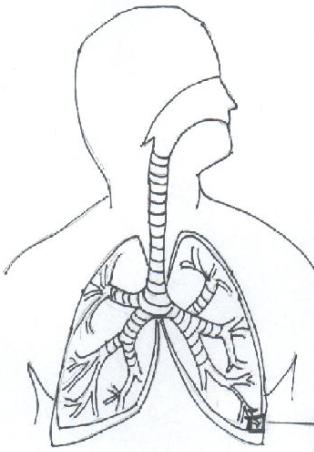
What is the function of the bronchi?
a)
Transport air from nose to lungs
b)
Transport air from trachea to lungs
c)
Transport air from lungs to alveoli
d)
Transport air from alveoli to blood
67.
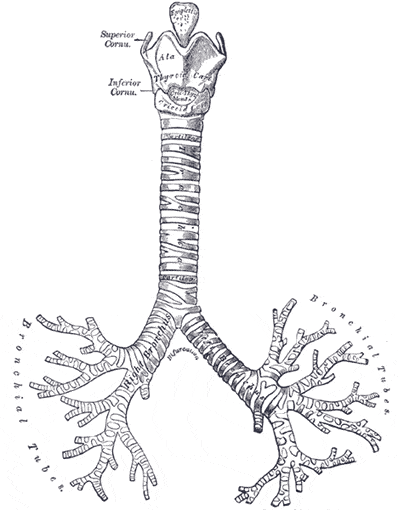
The two main branches from the trachea (one to each lung)
a)
bronchi
b)
alveoli
c)
capillaries
d)
bronchioles
68.
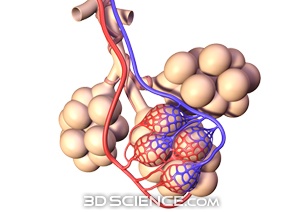
The air sacs that are covered with capillaries where gas exchange takes place
a)
bronchi
b)
lungs
c)
oxygen
d)
alveoli
69.
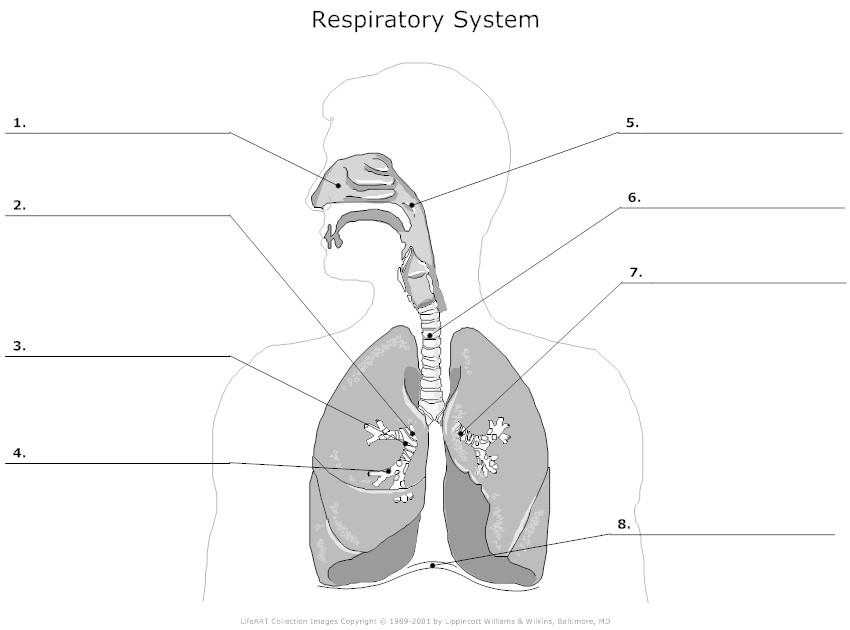
Name the structure labeled 8
(the muscle that rises and falls)
(the muscle that rises and falls)
a)
lungs
b)
trachea
c)
diaphragm
d)
alveoli
70.
Flap of skin that covers the opening to the windpipe during swallowing
a)
Stomach
b)
Trachea
c)
Pancreas
d)
Epiglottis
100 %

