
 Worksheets
CHAP
Total questions: 100
Worksheet time: 2hrs 39mins
Name
Class
Date
1.
Capillary action is the result of adhesion. Which aspect of water is responsible for this?
a)
Nonpolar covalent bonds that enable water to dissolve other substances
b)
Polar covalent bonds that join molecules of water to other substances
c)
Hydrogen bonds between water and another substance
d)
Ionic bonds that enable electrons to flow through water and into another substance
2.
Which of the following properties of water enables it to move from the roots to the leaves of plants?
a)
Water expands as it freezes.
b)
Water is an excellent solvent.
c)
Water exhibits cohesive behavior.
d)
Water moderates temperature.
3.
What property of water allows it to be such a versatile solvent that it is often called the "universal solvent?"
a)
Purity
b)
Polarity and cohesion
c)
High heat capacity
d)
Expansion upon freezing
4.
Large bodies of water do not quickly fluctuate in temperature. Why?
a)
Water is a solvent.
b)
Water has a high heat capacity.
c)
Water acts as a buffer.
d)
Water is non-polar.
5.
Water striders can walk across the surface of calm water. Their feet push the surface of the water down slightly, but they do not break the surface. Why?
a)
The insects are light enough so they do not break the hydrogen bonds holding the water molecules together
b)
The insects actually use their wings to hover slightly above the water’s surface and they only skim it with their feet.
c)
The insect’s feet are non-polar, so they are repelled by the polar water molecules and are pushed away from the water’s surface.
d)
The insects are small enough to see the individual water molecules, so they are able to step carefully from one molecule to the next
6.
What two elements make up water?
a)
Helium and oxygen
b)
Hydrogen and oxygen
c)
helium and carbon
d)
oxygen and carbon
7.

What word describes when water is attracted to other substances?
a)
cohesion
b)
adhesion
c)
capillary action
d)
surface tension
8.
Why can water have no net charge but have slight charges in different parts of the molecule?
a)
The oxygen end is slightly negative and the hydrogen end is slightly positive
b)
The hydrogen end is slightly negative and the oxygen end is slightly positive
c)
The hydrogen and oxygen ends change in polarity
d)
Because it is hydrophobic
9.

Why does water move from the roots to the leaves of plants?
a)
Water is pushed by solutes
b)
Capillary action pulls the water molecules like a chain
c)
Water is pulled by gravity
d)
Water’s cohesion causes it to “pull” towards the leaves
10.
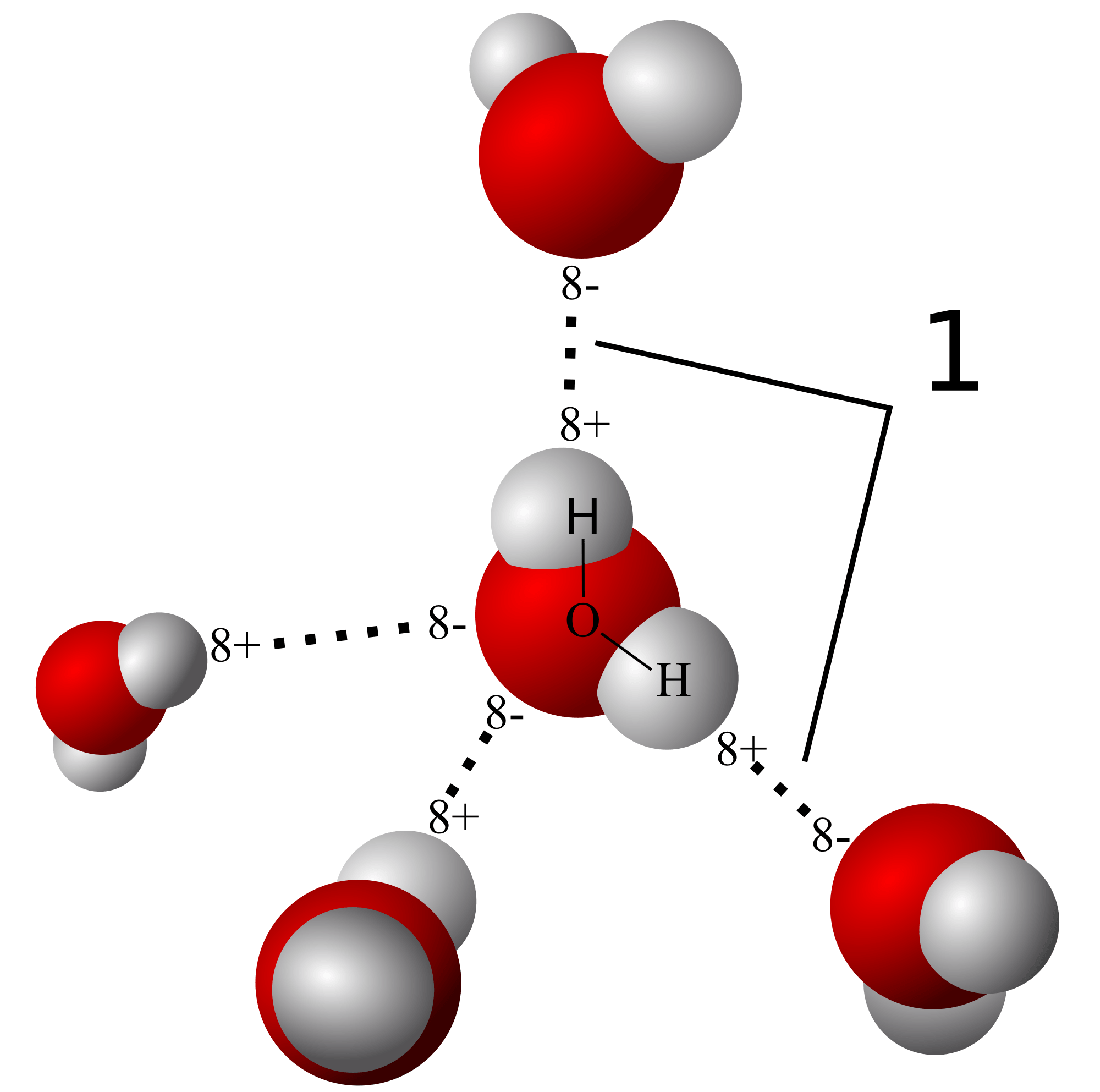
Attractions between water molecules are called
a)
Covalent bonds
b)
Ionic bonds
c)
Polar bonds
d)
Hydrogen bonds
11.

The attraction that causes water and other liquids to form drops on thin films is called ________________. This is also water’s ability to be attraction to other water molecules.
a)
adhesion
b)
capillary action
c)
cohesion
d)
surface tension
12.
Which is NOT a unique property of water?
a)
Frozen water floats on liquid water.
b)
Water covers most of the Earth’s surface and retains a large amount of heat.
c)
Water molecules stick to each other through hydrogen bonds.
d)
Water cools very rapidly.
13.

What property of water helps to moderate earth's temperature?
a)
adhesion
b)
chohesion
c)
Specific heat capacity
d)
Latent heat of vaporization
14.
Why does ice float?
a)
As water freezes, it expands and its density decreases.
b)
As water freezes, it takes up more hydrogen from the atmosphere, causing it to have a greater buoyancy.
c)
As water freezes, air becomes trapped between the hydrogen bonds of water molecules.
d)
As water freezes, it takes up more oxygen from the atmosphere, causing it to have a greater buoyancy.
15.
Water is polar because...
a)
The unequal sharing of electrons gives the water molecule a slight negative charge near its oxygen atom and a slight positive charge near its hydrogen atoms.
b)
The molecule has two poles, at which the it is colder than other regions of the molecule.
c)
The unequal sharing of electrons gives the water molecule a slight negative charge near its hydrogen atoms and a slight positive charge near its oxygen atom.
d)
The water molecule is neutral.
16.
All polymers are made up of...
a)
monosaccharides
b)
monomers
c)
proteins
d)
None of these
17.
What is the function of a carbohydrate?
a)
Stores energy
b)
Movement
c)
Stores genetic information
d)
Speeds up reactions
18.
What suffix is used in the names of most carbohydrates?
a)
-ase
b)
-nic
c)
-ose
d)
-yme
19.
All organic compounds contain the element
a)
carbon
b)
nitrogen
c)
phosphorus
d)
sulfur
20.

The molecule of amylose that you see in the
a)
disaccharide
b)
polypeptide
c)
polysaccharide
d)
monosaccharide
21.

What is this molecule?
a)
a monomer of sucrose
b)
a monomer of glucose
c)
a monomerof lipid
d)
a disaccharide
22.

Though which process would multiple units of this monomer be able to be turned into a polymer?
a)
photosynthesis where ionic bonds would be created
b)
dehydration synthesis where ionic bonds would be created
c)
hydrolysis where covalent bonds would be created
d)
dehydration synthesis where covalent bonds would be created
23.

What type of carbohydrate is this?
a)
polysaccharide
b)
disaccharide
c)
monosaccharide
d)
it isn't a carbohydrate
24.
Humans store energy in their body in the form of
a)
Starch
b)
Glycogen
c)
Cellulose
d)
Chitin
25.
Important to the structural integrity of plant cells, this is the single most popular polysaccharide in the world.
a)
Starch
b)
Glycogen
c)
Cellulose
d)
Chitin
26.
What do carbohydrates provide for the body?
a)
Helps build and repair body tissue
b)
Helps hydrate your body
c)
Provides your body's main source of energy
d)
Helps vital processes
27.
Carbohydrates are made of...
a)
C H O
b)
C H O N
c)
C H O N P
d)
C H O N S
28.
Plants store glucose in the form of
a)
starch
b)
glycogen
c)
cellulose
d)
chitin
29.
What element must be present for a molecule to be considered organic?
a)
nitrogen
b)
water
c)
hydrogen
d)
carbon
30.
What elements make up carbohydrates?
a)
Carbon, hydrogen, nitrogen, oxygen
b)
sulfur, carbon, hydrogen
c)
glucose and fructose
d)
carbon, hydrogen, oxygen
31.
The 3 categories of carbohydrates are:
a)
Monosaccharide, disaccharide, polysaccharide
b)
glucose, fructose, galatose
c)
starch, cellulose, glycogen
d)
There are no categories of carbohydrates
32.
These are all properties of a disaccharide EXCEPT:
a)
made up of two sugars
b)
sucrose
c)
2 monosaccharides joined together dehydration synthesis
d)
glycogen
33.

What type of carbohydrate is this?
a)
polysaccharide
b)
disaccharide
c)
monosaccharide
d)
it isn't a carbohydrate
34.
Chemical process that breaks bonds using water.
a)
Biomolecule
b)
Dehydration Synthesis
c)
Hydrolysis
d)
Protein
35.

What is the monomer of a lipid?
a)
monosaccharide
b)
nucleic acid
c)
fatty acid
d)
amino acid
36.

Steroids have what kind of structure?
a)
long chain of hydrogen/carbons with a glycerol group
b)
CHO in a hexagonal shape
c)
4 fused rings
d)
polar head and two fatty acid tails
37.
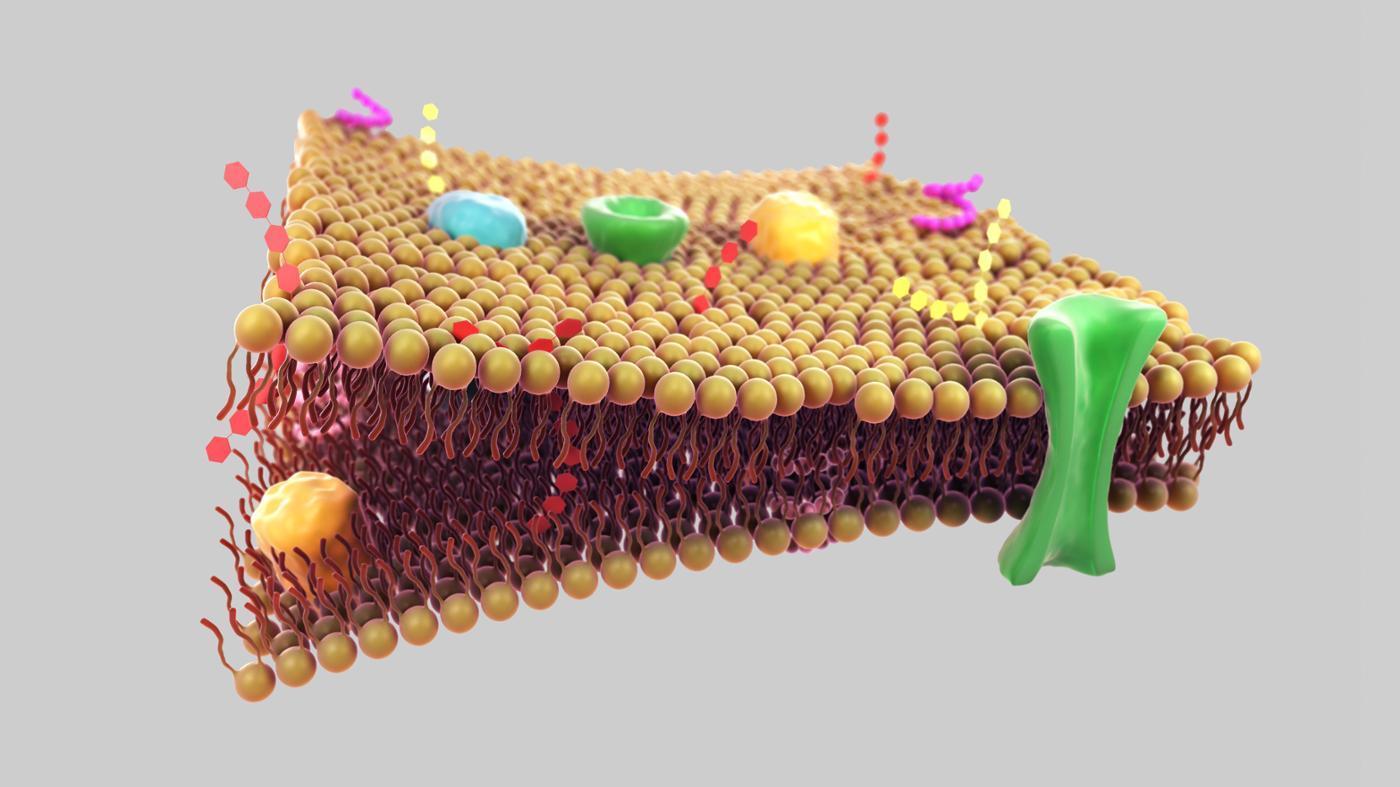
The phospholipid bilayer comprises what part of the cell?
a)
cytoplasm
b)
cell membrane
c)
cytoskeleton
d)
nuclear membrane
38.

What type of fat is this?
a)
saturated fatty acid
b)
unsaturated fatty acid
c)
steroid
d)
wax
39.

What type of lipid is this?
a)
steroid
b)
cholesterol
c)
phospholipid
d)
triglyceride
40.

In the phospholipid, the polar head is considered what type of structure?
a)
hydrophobic
b)
insoluble
c)
hydrophilic
41.

Which of the following molecules is not a lipid?
a)
testosterone
b)
triglycerides
c)
cellulose
d)
phospholipids
42.

The C-O-O-H on the end of a fatty acid structure is called a _______
a)
carboxyl group
b)
R group
c)
fatty acid
d)
amino acid
43.
Lipids do not dissolve in water because they are _______________
a)
polar
b)
water soluble
c)
non-polar
44.

Saturated fats have _______________
a)
straight structure
b)
single bonds
c)
solidity at room temperature
d)
all of the above
45.

An example of an unsaturated fat would be ________
a)
butter
b)
meat fat
c)
vegetable oil
d)
scrapple
46.

A lipid is a polymer that is made of what kind of monomers?
a)
monosacchirides
b)
amino acids
c)
fatty acids and a glycerol
d)
nucleic acid
47.

All of the following are lipids except __________
a)
ear wax
b)
saturated fats
c)
cholesterol
d)
starch
48.
What are lipids mostly made of?
a)
Sugar and Honey
b)
Glycerol and Fatty Acids
c)
Water and Salt
d)
Oxygen
49.
How do lipids function for cells?
a)
store information
b)
store energy
c)
breakdown wastes
d)
join with substrates
50.
Saturated fats are __________ at room temperature.
a)
liquid
b)
gases
c)
plasma
d)
solid
51.
The characteristic that all lipids have in common is----
a)
made of lots of double bonds
b)
acidic when mixed with water
c)
no high energy content
d)
do not dissolve in water
52.
Unsaturated fats are __________ at room temperature.
a)
liquids
b)
solids
c)
toxic
d)
saturated
53.
Which of these is a lipid?
a)
triglycerides
b)
steroids
c)
fatty acids
d)
all of the above
54.
What creates a steroid?
a)
4-fused carbon rings
b)
3-fused hydrogen chains
c)
2-fused oxygen molecules
d)
1 carboxyl group
55.
What does hydrophobic mean?
a)
the fear of water
b)
the fear of hydrogen
c)
the love of water
d)
the love of hydrogen
56.

Which of the following molecules make up the basic structure of a cell membrane?
a)
waxes
b)
steroids
c)
fatty acids
d)
phospholipids
57.
What is the monomer of proteins?
a)
amino acids
b)
polypeptides
c)
nucleotides
d)
monosaccharides
58.

The structure of proteins can be changed by environmental factors such as temperature or pH.
a)
True
b)
False
59.
Bond formed between two amino acids that results in a water molecule being released
a)
peptide bond
b)
complete protein
c)
dipeptide
d)
casein
60.
Amino acids that must be supplied by foods in the diet
a)
essential amino acid
b)
complete protein
c)
emulsion
d)
collagen
61.
A protein molecule made from two amino acids
a)
polypeptide
b)
gluten
c)
dipeptide
d)
myoglobin
62.
The order of the amino acids occur in the chain
a)
disulfide cross-link
b)
hydrophobic
c)
primary structure
d)
secondary structure
63.
Refers to the three-dimensional structure of an entire amino acid chain in a protein molecule
a)
tertiary structure
b)
primary structure
c)
secondary structure
d)
fibrous proteins
64.

What is the name of this molecule?
a)
amino acid
b)
nucleotide
c)
monosaccharide
d)
triglyceride
65.

The diagram shows the structure of an amino acid. Which type of molecule is formed from amino acids?
a)
lipids
b)
proteins
c)
carbohydrates
d)
nucleic acids
66.
The bond between two amino acids is called...
a)
Peptide bond
b)
Amino acid bond
c)
Nothing. There isn't a name for it
d)
Hydrogen bond
67.

If a methyl group (-CH3), which does not like water, were at the 'R', the amino acid would likely be:
a)
Hydrophobic
b)
Hydrophilic
c)
Ionic
d)
Acidic
68.
Amino acids all have the same general structure except for the:
a)
Amino Group
b)
Carboxyl Group
c)
'R' Group
d)
Carbonyl Group
69.

The reaction used to digest and break the bond in red is:
a)
Hydrolysis
b)
Dehydration Synthesis
c)
Oxidation
d)
Single Displacement
70.

The primary sequence of a protein refers to the:
a)
Order of amino acids
b)
α-Helix or β-Pleated Sheet
c)
Interaction of subunits
d)
Hydrogen Bonding
71.

Structures like an α-Helix are formed because of:
a)
Hydrophobic Interactions
b)
DiSulphide Bridges
c)
Salt Bridges
d)
Hydrogen Bonding
72.
What is a peptide bond?
a)
Bond that holds two amino acids together.
b)
A bond that holds hydrogen and oxygen molecules together.
c)
A bond that holds the phosphate group of one nucleotide and a sugar of a neighboring nucleotide.
d)
A bond that is formed by the sharing of electrons.
73.
What is the function of nucleic acids?
a)
Stores energy
b)
Stores genetic information
c)
Movement
d)
Physical structure
74.
What is the monomer of nucleic acids?
a)
Glycerol
b)
Monosaccharides
c)
Amino Acids
d)
Nucleotides
75.

Which macromolecule is this?
a)
carbohydrate
b)
lipid
c)
protein
d)
nucleic acid
76.
What are the components of a nucleotide?
a)
nitrogen base, phosphate group, and pentose sugar
b)
pentose sugar, purine, and pyrimidine
c)
nitrogen base and a phosphate group
d)
DNA, phosphate group, monosaccharide
77.
RNA contains the sugar...
a)
Deoxyribose
b)
Glucose
c)
Ribose
d)
Lipids
78.

Which of the following is a MONOMER:
a)
Nucleic Acid
b)
Nucleotide
c)
Polysaccharide
d)
Phospholipid
79.

From the nucleotide on the right, which part is labeled 2?
a)
Sugar
b)
Phosphate
c)
Nitrogenous Base
d)
Phosphorous
80.

What pentose sugar does DNA use?
a)
Ribose
b)
Sucrose
c)
Amylose
d)
Deoxyribose
81.

Guanine is complementary to what other nitrogenous base?
a)
Cytosine
b)
Adenine
c)
Thymine
d)
Uracil
82.
If a cell has 20% Adenine in it, what % of Cytosine must it have?
a)
10%
b)
20%
c)
30%
d)
80%
83.

Complementary Bases are held together by what type of bond?
a)
Covalent
b)
Hydrogen
c)
Ionic
d)
Mettalic
84.
If one series of bases reads: TTGACTAGG, then the complementary set of bases would read:
a)
TTGACTAGG
b)
AACTGATCC
c)
AATCGAACTT
d)
AAGTCATCC
85.
When coiled together, DNA looks like a:
a)
Single Helix
b)
Double Helix
c)
Triple Helix
d)
Broken Ladder
86.
The backbone of DNA is made up of _______ & ________ units.
a)
sugar & base
b)
sugar & phosphate
c)
base & phosphate
d)
phosphate & phosphate
87.
Which is the monomer (building block) for proteins?
a)
amino acid
b)
nucleotide
c)
fatty acid & glycerol
d)
monosaccharide
88.
Which is the monomer (building block) for nucleic acids?
a)
amino acid
b)
fatty acid & glycerol
c)
nucleotide
d)
monosaccharide
89.
Which is the monomer (building block) for carbohydrates?
a)
nucleotide
b)
monosaccharide
c)
amino acid
d)
fatty acids & glycerol
90.
Which is the monomer (building block) for lipids?
a)
fatty acids & glycerol
b)
nucleotide
c)
amino acids
d)
monosaccharide
91.
Which is an example of a lipid?
a)
olive oil
b)
glucose
c)
DNA
d)
keratin
92.
What is the function of nucleic acids?
a)
store genetic information
b)
provide structure and support
c)
store energy (short-term)
d)
make up cell membranes
93.
What is the function of lipds?
a)
store genetic information
b)
provide structure and support
c)
store energy (long-term)
d)
make up proteins
94.
What is the function of carbohydrates?
a)
store genetic information
b)
make proteins
c)
store energy (short-term)
d)
build skin, hair, nails, muscles
95.
What is the function of proteins?
a)
store genetic information
b)
make proteins
c)
store energy (short-term)
d)
build skin, hair, nails, muscles
96.
A monomer is
a)
a large molecule
b)
a macromolecule
c)
a building block
d)
a polymer
97.
How many bonds can carbon form?
a)
two
b)
four
c)
three
d)
one
98.
What are the four types of Macromolecules
a)
carbohydrates, proteins, lipids, amino acids
b)
carbohydrates, lipids, nucleic acids, proteins
c)
carbohydrates, monosaccharides, proteins, lipids
d)
carbohydrates, amino acids, lipids, proteins
99.

Term for any large organic molecule made of many subunits.
a)
polymer
b)
monomer
c)
oligosaccharide
d)
dimer
100.

What is the function of macromolecule subunit shown?
a)
energy
b)
catalyst
c)
stores genetic information
d)
composes the majority of the cell
membrane
membrane
100 %

