
 Worksheets
Chemistry of Life Practice Exam
Total questions: 73
Worksheet time: 1hrs 12mins
Name
Class
Date
1.
Isotopes of an element contain
a)
equal numbers of protons and neutrons
b)
the same number of protons but different number of neutrons
c)
the same number of neutrons, but different number of protons
d)
the same number of protons, but different number of electrons
2.

Ionic bonds form when
a)
electrons are shared equally between two atoms
b)
electrons are shared unequally between atoms
c)
electrons are transferred from one atom to another
d)
slight attractions develop between oppositely charged regions of nearby molecules
3.

What two subatomic particles form the nucleus of an atom?
a)
protons and neutrons
b)
protons and electrons
c)
isotopes and neutrons
d)
isotopes and electrons
4.
All atoms of the same element contain the same number of
a)
neutrons
b)
protons
c)
neutrons and electrons
d)
neutrons and protons
5.
Attractions between oppositely charged regions of nearby molecules are called
a)
ionic bonds
b)
van der Waals forces
c)
covalent bonds
d)
polar bonds
6.
The attraction between the hydrogen atom on one water molecule and the oxygen atom on another water molecule is called a(n)
a)
ionic bond
b)
covalent bond
c)
polar bond
d)
hydrogen bond
7.

Acids
a)
have a pH below 7
b)
form H+ in solution
c)
have a higher H+ concentration than pure water
d)
all of these answers are correct
8.
In polar molecules such as water, there is an uneven distribution of
a)
solvent
b)
electrons
c)
energy
d)
tempartature
9.

In polar molecules such as water, there is an uneven distribution of
a)
solvent
b)
electrons
c)
energy
d)
tempartature
10.
The group of macromolecules that serves as the source of energy for livings things are
a)
carbohydrates
b)
lipids
c)
nucleic acids
d)
proteins
11.
The group of macromolecules that stores and transmits genetic information are
a)
carbohydrates
b)
lipids
c)
nucleic acids
d)
proteins
12.
The major functions of proteins in cells do NOT include
a)
regulating cell processes
b)
transporting substances
c)
storing energy
d)
controlling reactions
13.

As an analogy, the monomers in a polymer are like
a)
bonds in a molecule
b)
links in a chain
c)
electrons in an atom
d)
solvent in a solution
14.
Proteins and carbohydrates are similar in that both are
a)
polymers containing carbon, hydrogen, and oxygen
b)
monomers containing hydrogen, carbon and oxygen
c)
are polymers containing carbon, hydrogen, and nitrogen
d)
are monomers containing hydrogen, and nitrogen
15.
The positively charged particle in an atom is called the
a)
neutron
b)
ion
c)
proton
d)
electron
16.
Two or more different atoms are combined in definite proportions in any
a)
symbol
b)
isotope
c)
element
d)
compound
17.
A covalent bond is formed by the
a)
transfer of electrons
b)
sharing of electrons
c)
gaining of electrons
d)
losing of electrons
18.
A compound that produces hydrogen ions in a solution is a(n)
a)
salt
b)
acid
c)
base
d)
polymer
19.

Compared to most other substances, a great deal of heat is needed to raise the temperature of water by a given amount. This is because water
a)
is an acid
b)
readily forms soultions
c)
has a high heat capacity
d)
acts as a buffer
20.

What does this chemical formula represent?
a)
a sugar
b)
a starch
c)
an amino acid
d)
a fatty acid
21.
Proteins are polymers formed from
a)
lipids
b)
carbohydrates
c)
amino acids
d)
nucleic acids
22.
An enzyme speeds up a reaction by
a)
lowering the activation energy
b)
raising the activation energy
c)
releasing the activation energy
d)
absorbing the activation energy
23.
In a chemical reaction, a reactant binds to an enzyme at region known as the
a)
catalyst
b)
product
c)
substrate
d)
active site
24.
Proteins that start chemical reactions without being changed by the chemical reaction
a)
catalyst
b)
blanching
c)
enzyme
d)
oxidase
25.
A substance that starts a reaction between substances without being affected by the reaction
a)
electrolyste
b)
catalyst
c)
marinate
d)
enzymatic browning
26.
The substance on which the enzyme acts upon
a)
coenzyme
b)
active site
c)
electrolyte
d)
substrate
27.
What is the mass number?
a)
the number of protons
b)
the number of protons and neutrons
c)
the number of neutrons
d)
the number of protons and electrons
28.

What is the atomic number of this nucleus?
a)
1
b)
3
c)
4
d)
7
29.
Developed to express the degree of concentration of hydrogen ions present in a solution
a)
pH scale
b)
PH scale
c)
Ph scale
d)
ph scale
30.
Atoms that gain & lose electrons are called _________
a)
ions
b)
isotopes
c)
radioactive
d)
corrosive
31.
What is the atomic number?
a)
the number of protons
b)
the number of protons and neutrons
c)
the number of neutrons
d)
the number of protons and electrons
32.
What is the atomic number of this nucleus?
a)
1
b)
3
c)
4
d)
7
33.

What is the mass number of this nucleus?
a)
1
b)
3
c)
4
d)
7
34.

This is used to represent the number of each atom being represented.
a)
A Exponent
b)
The Coefficient
c)
A Molecule
d)
The Subscript
35.

A group of atoms bonded together.
a)
A Molecule
b)
The Coefficient
c)
The Subscript
d)
An Atom Party
36.
A_____________________is a process that changes, or transforms, one set of chemicals into another set of chemicals
a)
reaction
b)
chemical reaction
c)
product
d)
physical change
37.
In a ___________change, a substance changes into a different substance.
a)
Physical
b)
Chemical
38.

The force that holds 2 atoms together is called a ________________.
a)
Chemical Reaction
b)
Chemical Bond
c)
Diatomic Chemical
d)
Glue
39.
In a chemical reaction, bonds are broken and new bonds are formed that create new substances. The bonds that are broken are called what?
a)
Reactants
b)
Products
c)
Atoms
d)
Catalysts
40.
In chemical reactions, atoms are
a)
created
b)
destroyed
c)
rearranged
d)
neutralized
41.
When hydrogen and oxygen combine to form water, water is
a)
a product
b)
a reactant
c)
an enzyme
d)
a catalyst
42.
What is the process that changes one set of chemicals into another set of chemicals?
a)
cohesion
b)
hydrogen bonding
hydrogen bonding
hydrogen bonding
c)
chemical reaction
d)
dissolving
43.
The energy needed to get a reaction started is the
a)
adhesion energy
b)
activation energy
c)
cohesion energy
d)
chemical energy
44.
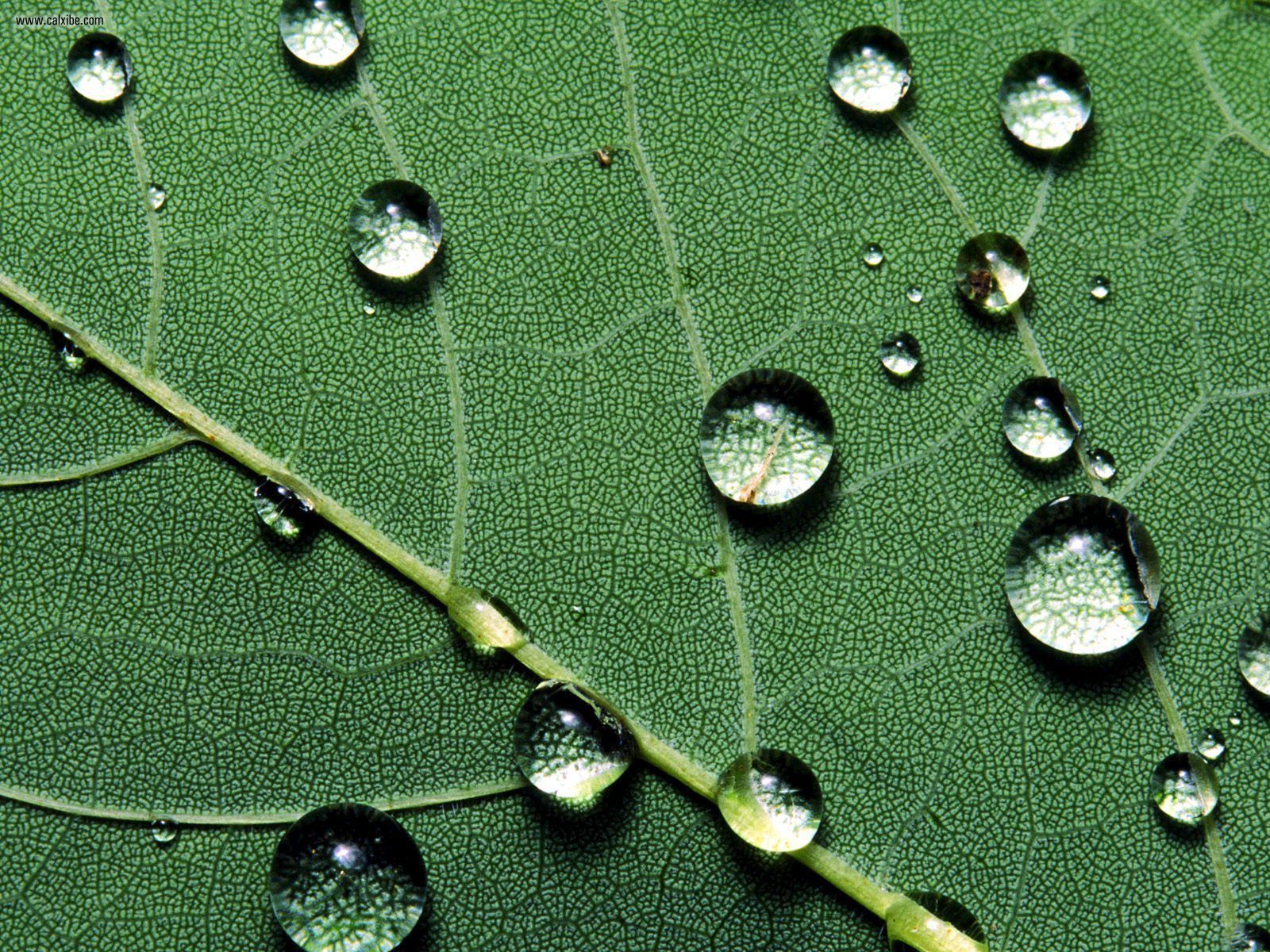
Refer to the picture; this is occurring because of:
a)
Adhesion
b)
Cohesion
45.
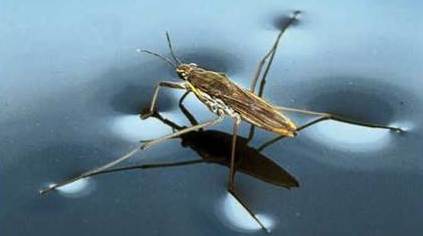
Refer to the picture; this is occurring due to:
a)
Adhesion
b)
Cohesion
46.
Which of the following can water not do since it's polar:
a)
Be cohesive & adhesive
b)
Dissolve other polar molecules
c)
Influence weather, not climate
d)
Display a high heat capacity
47.
Cohesive forces cause water droplets to form the smallest possible volume, a sphere. Both cohesive and adhesive forces are responsible for__________________.
a)
capillary action
b)
physical reactions
c)
barometric pressure
d)
All of these choices are false
48.
The molecules of life are all based on which element?
a)
Nitrogen
b)
NaCl
c)
Carbon
d)
Oxygen
49.
A substance that starts a reaction between substances without being affected by the reaction
a)
electrolyste
b)
catalyst
c)
marinate
d)
enzymatic browning
50.
Enzymes are considered to be
a)
Lipids
b)
Carbohydrate
c)
Protein
d)
Nucleic Acid
51.

What is structure A?
a)
Substrate
b)
Active site
c)
Enzyme
d)
Products
52.

What is structure D?
a)
Substrate
b)
Active site
c)
Enzyme
d)
Products
53.

What is structure E, F, G?
a)
Substrate
b)
Active site
c)
Enzyme
d)
Products
54.
How do enzymes speed up a chemical reaction?
a)
Increasing activation energy
b)
Decreasing activation energy
c)
Increasing deactivation energy
d)
Decreasing deactivation energy
55.

Which substrate would this enzyme catalyze?
a)
Δ
b)
σ
c)
∅
d)
μ
56.
What affects Enzyme activity?
a)
Nothing
b)
Temperature, Environment, Diet
c)
Temperature,Activators, Ph levels, Inhibitors
d)
Cataylst and Substrate
57.
The pH scale is a range from:
a)
1-7
b)
0-14
c)
1-14
d)
1-20
58.
A(n) ______ is a substance with a pH less than 7
a)
Acid
b)
Alkaline
c)
Base
d)
Buffer
59.
A(n) _______ is a substance with a pH greater than 7.
a)
Base
b)
Acid
c)
Buffer
d)
Water
60.
A(n) _______ is a substance with a pH greater than 7.
a)
Base
b)
Acid
c)
Buffer
d)
Water
61.
What is the only substance with a neutral pH of 7?
a)
Milk
b)
Orange Juice
c)
Water
d)
Blood
62.
Which solution releases H+ in solution?
a)
Base
b)
Acid
c)
Buffer
d)
Water
63.

Is this substance acidic, basic, or neutral?
a)
Acidic
b)
Basic
c)
Neutral
64.

Is this substance acidic, basic, or neutral?
a)
Acidic
b)
Basic
c)
Neutral
65.

Is this substance acidic, basic, or neutral?
a)
Acidic
b)
Basic
c)
Neutral
66.
A solution with a pH of 3.6 would be...
a)
Acid
b)
Base
c)
Neutral
d)
Acid and Base
67.
Ca(OH)2 is an example of a(n)
a)
Acid
b)
Base
c)
Neutral
68.
LiOH is an example of a(n)
a)
Acid
b)
Base
c)
Neutral
69.
HBr is an example of a(n)
a)
Acid
b)
Base
c)
Neutral
70.
Connects monomers to form a polymer
a)
Dehydration synthesis
b)
hydrolysis
71.
Breaks up polymers, forming monomers
a)
dehydration synthesis
b)
hydrolysis
72.
Any substance that is acted upon by an enzyme is called a(n)?
a)
Coenzyme
b)
Substrate
c)
Vitamin
d)
Polypeptide
73.
After the enzyme and substrate bind together and perform the reaction, what does the substrate become?
a)
a substrate
b)
an enzyme
c)
a product
d)
an active site
100 %

