
 Worksheets
Cell Processes
Total questions: 104
Worksheet time: 2hrs 8mins
Name
Class
Date
1.
Which of the following is the correct equation for PHOTOSYNTHESIS?
a)
6CO2 + 6H2O + Sunlight --> 6O2 + C6H12O6
b)
CO2 + sugar + H2O --> O2 + light
c)
O2 + light + H2O --> CO2 + Sugar
d)
CO2 + O2 + H2O --> Light+ Sugar
2.
What process occurs when light energy is captured in autotrophs and converted into sugar?
a)
Photosynthesis
b)
Cellular Respiration
3.
What is the pigment in chloroplasts that performs photosynthesis?
a)
Chlorosynthesis
b)
Chlorophyll
c)
ADP
d)
Electron Transport
4.
Which gas is removed from the atmosphere during photosynthesis?
a)
hydrogen
b)
oxygen
c)
nitrogen
d)
carbon dioxide
5.
What are the products of photosynthesis?
a)
water and carbon dioxide
b)
oxygen and glucose
c)
oxygen and carbon dioxide
d)
oxygen and water
6.
Plants need ________ for photosynthesis
a)
oxygen
b)
soil
c)
carbon dioxide
d)
sugar
7.
What is photosynthesis?
a)
The process in which humans eat their food
b)
When a photographer takes a photo.
c)
To get your pictures from the photo lab.
d)
The process in which plants make their food.
8.
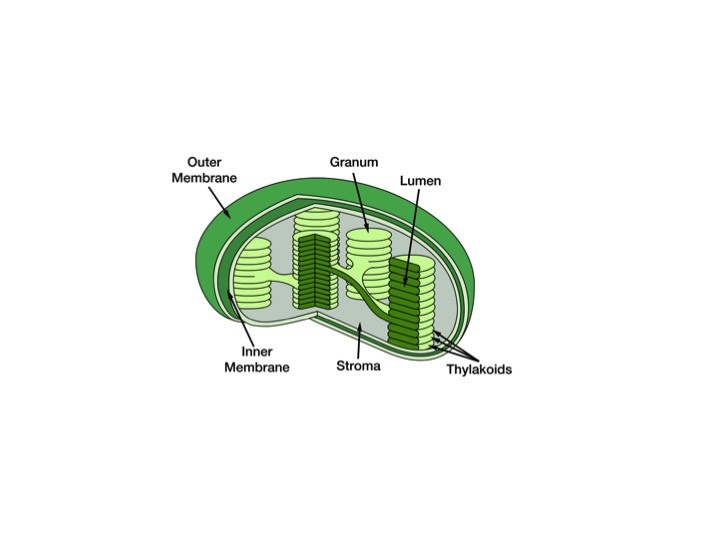
Chloroplasts are...
a)
Structures of animal cells to produce ATP
b)
Organelles where lipids are made
c)
Specialized structures of plants where food is made
d)
Waste organelle of plants
9.

What process is the diagram representing?
a)
Photosynthesis
b)
Soil development
c)
Cellular Respiration
d)
Nitrogen Cycle
Nitrogen cycle
Nitrogen cycle
10.

If all four plants were watered daily but placed in a closet, receiving no sunlight, what process would NOT occur?
a)
Ingestion of carbon dioxide
b)
Filtration of water through the soil
c)
Photosynthesis
d)
Water absorbtion
11.
Which of the following best describes photosynthesis?
a)
Photosynthesis converts radiant energy into chemical energy.
b)
Photosynthesis produces carbohydrates.
c)
Plants need sunlight, carbon dioxide, water, nutrients, and chlorophyll to complete photosynthesis.
d)
Plants use chlorophyll, water, and carbon dioxide to make sugar.
12.
Where does cellular respiration take place in the cell?
a)
Cell Membrane
b)
Nucleus
c)
Mitochondria
d)
Vacuole
13.
What is the purpose of cellular respiration?
a)
to break down food
b)
to create energy in the body
c)
to release energy from food
d)
there is none; it's a waste of time
14.
Which is not a product of cellular respiration?
a)
Water
b)
Sugar
c)
Carbon Dioxide
d)
ATP
15.
This means that oxygen is needed
a)
anaerobic
b)
aerobic
16.
This means that oxygen is not needed
a)
anaerobic
b)
aerobic
17.
What is the correct equation for cellular respiration?
a)
6O2 + C6H12O6 -> 6CO2 + 6H2O + ATP Energy
b)
6O2 + C6H12O6 + ATP Energy -> 6CO2 + 6H2O
c)
6CO2 + 6H2O -> 6O2 + C6H12O6 + Energy
d)
6CO2 + 6H2O + ATP Energy -> 6O2 + C6H12O6
18.
Cellular Respiration's goal is to
a)
make water
b)
make ATP
c)
make glucose
d)
make oxygen
19.
If a red blood cell is placed into a hypertonic solution, what effect would it have on a cell?
a)
There would be no effect on the cell
b)
The cell would shrink
c)
The cell would swell
d)
The cell would burst
20.
The movement of water through a membrane
a)
Diffusion
b)
Osmosis
c)
Active transport
d)
Passive transport
21.
The movement of substances through a cell membrane with the use of cell energy
a)
Osmosis
b)
Diffusion
c)
Passive Transport
d)
Active transport
22.
The process by which a cell membrane surrounds and encloses a large particle to bring it into the cell
a)
Passive transport
b)
Endocytosis
c)
Exocytosis
d)
Osmosis
23.
The process by which a cell gets rid of large particles by creating vacuoles that become part of the cell membrane
a)
Diffusion
b)
Exocytosis
c)
Endocytosis
d)
Passive Transport
24.
The process of releasing energy from food is called:
a)
Plant respiration
b)
Human circulation
c)
Body perspiration
d)
Cell respiration
25.
During the process of diffusion
a)
A cell absorbs large particles
b)
Particles move from areas of lower concentration to high concentration
c)
Cell gets rid of large particles
d)
Particles move from areas of higher concerntration to low concerntration
26.
Osmosis is important to cell because
a)
Cells are filled with fluids that are mostly water
b)
Cells need to get rid of large particles they don't need
c)
Cells need to move from place to place
d)
Cells need to stay on balance
27.
Oxygen is released during
a)
Cellular respiration
b)
Photosynthesis
c)
Breathing
d)
Fermentation
28.
In what type of cell does water move into the cell?
a)
Hypotonic
b)
Hypertonic
c)
Isotonic
d)
Diffusion
29.
Process where food is broken down to release chemical energy. Occurs in the mitochondria.
a)
Cellular Respiration
b)
Photosynthesis
c)
Active Transport
d)
Passive Transport
30.
Small particles such as oxygen and carbon dioxide move easily across the cell membrane from areas of high concentration to low concentration.
a)
Active Transport
b)
Osmosis
c)
Diffusion
31.
Water moving from areas of high concentration to low concentration.
a)
Photosynthesis
b)
Osmosis
c)
Cellular Respiration
32.
Process by which the cell membrane removes material that is too large to pass through the membrane.
a)
Endocytosis
b)
Exocytosis
c)
Transport
d)
Respiration
33.
Process in which substances or particles move through the cell membrane, protein channel, or protein doorway from high concentration to low concentration without the use of energy
a)
Diffusion
b)
Active Transport
c)
Osmosis
d)
Passive Transport
34.
Process by which the cell membrane envelops (engulfs) material that is too large to pass through the membrane
a)
Endocytosis
b)
Diffusion
c)
Exocytosis
d)
Cellular Respiration
35.
Process in which particles move from less crowded (low concentration) to more crowded (high concentration) using energy
a)
Passive Transport
b)
Cellular Respiration
c)
Active Transport
d)
Osmosis
36.

a)
Endocytosis
b)
Active Transport
c)
Mitochondria
d)
Exocytosis
37.

a)
Osmosis
b)
Cellular Respiration
c)
Photosynthesis
d)
Respiration
38.

a)
Endocytosis
b)
Exocytosis
c)
Diffusion
d)
Osmosis
39.

a)
Passive Transport
b)
Osmosis
c)
Active Transport
d)
Diffusion
40.

a)
Diffusion
b)
Cellular Respiration
c)
Osmosis
d)
Active Transport
41.
What is the chemical formula for glucose?
a)
C6H12O4
b)
C4H12O6
c)
C6H12O6
42.
What is the chemical formula for photosynthesis?
a)
Carbon Dioxide + Oxygen + Sunlight = Glucose + Water
b)
Glucose + Oxygen = Carbon Dioxide + Water + Sunlight
c)
Carbon Dioxide + Water + Sunlight = Glucose + Oxygen
43.
What is another name for glucose?
a)
Sugar
b)
Salt
c)
Water
d)
Milk
44.
What is the chemical formula for cellular respiration?
a)
Carbon Dioxide + Water = Glucose + Oxygen + Energy (ATP)
b)
Glucose + Oxygen = Water + Carbon Dioxide + Energy (ATP)
c)
Water + Carbon Dioxide + Energy = Glucose + Oxygen
45.
Where does cellular respiration occur?
a)
Chloroplast
b)
Golgi Apparatus
c)
Mitochondria
46.
Where does photosynthesis occur?
a)
Mitochondria
b)
Leaves
c)
Chloroplast
47.
Where do plants get their green color from?
a)
Chlorophyll
b)
Chloroplast
c)
Green Beans
48.
Plant cells take in light energy and change it into chemical energy in the form of glucose (food). Occurs in the chloroplasts.
a)
Photosynthesis
b)
Cellular Respiration
c)
Osmosis
d)
Diffusion
49.
Water molecules move from areas of ___ concentration to ____ concentration.
a)
high, high
b)
low, low
c)
high, low
d)
low, high
50.
Why is photosynthesis important?
a)
releases oxygen
b)
makes food for plants
c)
allows for plants to be eaten by humans
d)
all of the above
51.
When there is not enough oxygen, a cell will go through this process to get energy.
a)
cellular respiration
b)
photosynthesis
c)
fermentation
52.
Molecules need to move through this to get into the cell.
a)
cell membrane
b)
cell wall
c)
mitochondria
d)
ribosome
53.
This occurs when a cell needs water.
a)
diffusion
b)
osmosis
c)
active transport
d)
endocytosis
54.
Passive transport of water by diffusion
a)
exocytosis
b)
osmosis
c)
mixture
d)
endocytosis
55.
Bacteria are taken into cells by
a)
diffusion
b)
endocytosis
c)
exiting
d)
water
56.
The function of the selectively permeable cell _____ is to allow some things to pass through it, but not others.
a)
cytoplasm
b)
membrane
c)
nucleus
d)
wall
57.
Movement of substances through the cell membrane without the use of energy
a)
Passive Transport
b)
Active Transport
c)
Differentiation
d)
Necrosis
58.
Movement of materials from an area of high concentration to an area of low concentration
a)
Diffusion
b)
Phagocytosis
c)
Mitosis
d)
Cytology
59.
When molecules are spread evenly throughout another substance is known as:
a)
Differentiation
b)
Necrosis
c)
Equilibrium
d)
Synthesis
60.
Occurs when substances are so large they can enter cells only with the help of transport proteins.
a)
Diffusion
b)
Facilitated Diffusion
c)
Cell Signaling
d)
Protein synthesis
61.
Osmosis is:
a)
Diffusion
b)
Diffusion of water
c)
Creation of proteins
d)
Cell death
62.
Movement from an area of low concentration to an area of high concentration with the help of ions
a)
Passive Transport
b)
Cytology
c)
Active Transport
d)
Diffusion
63.
Term that refers to dumping large waste particles out of the cell
a)
Exocytosis
b)
necrosis
c)
protein synthesis
d)
Endocytosis
64.

The picture shown here is an example of _________________.
a)
osmosis
b)
isotonic
c)
diffusion
d)
active transport
65.

The picture shown here is an example of _________________.
a)
isotonic
b)
diffusion
c)
osmosis
d)
active transport
66.
How do plants get energy?
a)
They absorb energy straight from the sun
b)
They use sun energy to make their own food
c)
They consume other organisms for energy
d)
They absorb energy from the soil
67.
How do animals get energy?
a)
They absorb energy straight from the sun
b)
They use sun energy to make their own food
c)
They consume other organisms for energy
d)
They absorb energy from the soil
68.
What kind of energy is made by cellular respiration?
a)
ATP
b)
sunlight
69.
When particles move from an area of high to an area of low concentration, this is...
a)
passive transport
b)
active transport
70.
When particles move from an area of low to an area of high concentration, this is...
a)
passive transport
b)
active transport
71.
What is true about the reactants of photosynthesis?
a)
they are the same as the products of cellular respiration
b)
they are the same as the products of photosynthesis
c)
they are the same as the reactants of cellular respiration
d)
they have nothing to do with cellular respiration
72.
Which of these is NOT a method of active transport?
a)
endocytosis
b)
exocytosis
c)
protein channels
d)
osmosis
73.
In active transport, particles move from areas of _______ to areas of _____ concentration.
a)
high to high
b)
low to low
c)
low to high
d)
high to low
74.
In passive transport, particles move from areas of _______ to areas of _____ concentration.
a)
high to high
b)
low to low
c)
low to high
d)
high to low
75.

Fruit fly body cells have 8 chromosomes. After mitosis, you would expect a resulting fruit fly daughter cell to have ...
a)
16 chromosomes.
b)
46 chromosomes.
c)
8 chromosomes.
d)
4 chromosomes.
76.
The process by which the nuclear material is divided equally between two new cells
a)
mitosis
b)
cancer
c)
spindle
d)
centromere
77.

Name the phase:
a)
Anaphase
b)
Telophase
c)
Metaphase
d)
Prophase
78.

Name the phase:
a)
Anaphase
b)
Telophase
c)
Metaphase
d)
Prophase
79.

What is the next phase of mitosis?
a)
Prophase
b)
Metaphase
c)
Anaphase
d)
Telophase
80.

What is the next phase of mitosis?
a)
Prophase
b)
Metaphase
c)
Anaphase
d)
Telophase
81.

What is the next phase of mitosis?
a)
Prophase
b)
Metaphase
c)
Anaphase
d)
Telophase
82.

Name the previous phase.
a)
Prophase
b)
Metaphase
c)
Anaphase
d)
Telophase
83.

Name the previous phase.
a)
Prophase
b)
Metaphase
c)
Anaphase
d)
Telophase
84.

Name the previous phase.
a)
Prophase
b)
Metaphase
c)
Anaphase
d)
Telophase
85.

Name the previous phase.
a)
Prophase
b)
Metaphase
c)
Anaphase
d)
Telophase
86.

Name the phase:
a)
Prophase
b)
Metaphase
c)
Anaphase
d)
Telophase
87.

Name the phase:
a)
Prophase
b)
Metaphase
c)
Anaphase
d)
Telophase
88.

Name the phase:
a)
Prophase
b)
Metaphase
c)
Anaphase
d)
Telophase
89.

Name the phase:
a)
Prophase
b)
Metaphase
c)
Anaphase
d)
Telophase
90.

Name the phase:
a)
Prophase
b)
Metaphase
c)
Anaphase
d)
Telophase
91.

Name the phase:
a)
Prophase
b)
Metaphase
c)
Anaphase
d)
Telophase
92.

The stages of mitosis in order
a)
Metaphase, Anaphase, Prophase, Telophase
b)
Prophase, Anaphase, Metaphase, Telophase
c)
Prophase, Metaphase, Anaphase, Telophase
d)
Anaphase, Prophase, Telophase, Metaphase
93.
Where does a cell contain it's genetic material?
a)
nucleus
b)
nucleolus
c)
cytoskeleton
d)
golgi
94.
Nuclear membrane forms around chromosomes and begins to separate.
a)
Anaphase
b)
Telophase
95.

a)
Prophase
b)
Interphase
c)
Anaphase
d)
Telophase
96.

a)
Anaphase
b)
Cytokinesis
c)
Telophase
d)
Metaphase
97.

a)
Cytokinesis
b)
Interphase
c)
Anaphase
d)
Metaphase
98.

a)
Anaphase
b)
Cytonkinesis
c)
Interphase
d)
Prophase
99.

a)
Cytokinesis
b)
Anaphase
c)
Telophase
d)
Prophase
100.
The phase in mitosis where chromosomes move away and are pulled apart by spindles to opposite sides of the cell.
a)
prophase
b)
anaphase
c)
metaphase
d)
telephase
101.
Chromosomes condense from long stands into rod like structures.
a)
Prophase
b)
Interphase
102.

Which is Metaphase?
a)
A
b)
E
c)
C
d)
F
103.
The process by which the nuclear material is divided equally between two new cells
a)
mitosis
b)
cancer
c)
spindle
d)
centromere
104.

In mitosis, the two resulting cells are
a)
different from the starting cell and identical to each other.
b)
different from the starting cell and different from each other.
c)
identical to the starting cell and different from each other.
d)
identical to the starting cell and identical to each other.
100 %

