
 Worksheets
Science test
Total questions: 100
Worksheet time: 25hrs 0mins
Root hair:
enable elongation of a root.
produces oxygen in the process of photosynthesis.
absorbs water and minerals from soil.
What is the term for the control center for the entire body that sends signals from throughout the body to the brain?
circulatory system
digestive system
nervous system
respiratory system
What organ system are blood vessels part of?
digestive system
circulatory system
nervous system
respiratory system
What organ system are the small and large intestine part of?
digestive system
circulatory system
nervous system
respiratory system
What organ system is the spinal cord part of?
digestive system
circulatory system
nervous system
respiratory system

What is the slippery surface that cover the bones?
synovial membrane
ligament
synovial fluid
cartilage
What is the slippery surface that cover the bones?
synovial membrane
ligament
synovial fluid
cartilage
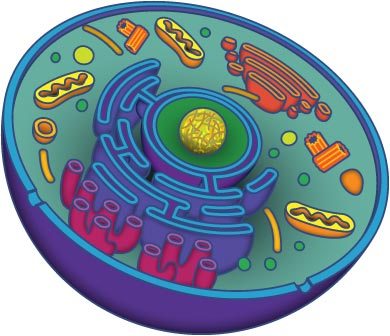
Which of these is a plant organ responsible for absorbing light energy to make food?
leaf
fruit
petal
root

Which term best describes the brain?
cell
organ
tissue
organ system
What part of a plant's leaves allows the plant to take in carbon dioxide and release oxygen?
stem
cuticle
stomata
chloroplasts
A plant leaf is an organ. In what way is a human lung similar to a plant leaf?
Both organs make chemical energy
Both organs are made up of only one kind of cell
Both organs are made up of protective dermal tissue
Both organs exchange oxygen and carbon dioxide
Which is true of all animals?
They are producers
They are unicellular
They are multicellular
What is the function of the respiratory system?
body system the breaks down food and absorbs nutrients
body system that removes waste from the body
body system that brings oxygen into the body and gets rid of carbon dioxide
body system that circulates blood, oxygen, and nutrients to all the cells of the body
an area where living things interact with one another and with nonliving things
ecosystem
population
community
habitat
a group of organisms of the same species living together in an ecosystem
ecosystem
population
community
habitat
all the populations living in an ecosystem
ecosystem
population
community
habitat
the variety of species in an ecosystem
niche
producer
diversity
consumer
an organism that makes its own food
consumer
producer
food chain
competition
a sequence of connected producers and consumers
food chain
energy pyramid
food web
diversity
a group of connected food chains in an ecosystem
food chain
food web
competition
diversity
an organism that benefits from its relationship with an organism that it lives in or on while the other organism is harmed
host
parasite
symbiosis
rude
the organism that a parasite lives in or on
parasite
kind
host
house
Moist skin covered in scales
Vertebrate
Birds
Fish
Reptiles
Dry skin with scales
mammals
Fish
Birds
Reptiles
skin with hair on most or some of the body
mammals
birds
fish
reptiles
moist skin with no scales
mammals
reptiles
amphibians
fish
backbone made of bone or cartilage
mammals
vertebrates
avertebrates
amphibians
choose the field of science that names and classifies organisms based on their similar characteristics
ecology
zoology
genetics
taxonomy
P = Genus
Q = Phylum
R = Class
S = Kingdom
T = Family
U = Species
V = Order
which of the following sequence shows the hierarchy of classification
Q, S, U, V, T, P, R
S, Q, R, V, T, P, U
V, T, P, S, U, Q, R
U, T, Q, P, V, S, R
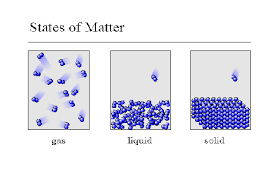

Transparent and brittle (breaks easily)
Metal
Sponge
Glass
Plastic
Weak and absorbent
Fabric
Cardboard
Plastic
Glass
Is Mercury a metal?
Yes
No
Which describes a metal?
Some are magnetic.
Conducts heat well.
Shatters easily.
Is ductile.
Which non-metal can be used to purify water?
Carbon
Sulfur
Chlorine
Silicon
In a chemical change, new substances are formed, for example
heating glass and bending it
melting an ice
burning of wood
boil water
iron + sulfur --> iron sulfide
from that word equation, the reactant(s) is/are ....
iron
iron and sulfur
sulfur
iron sulfide
What happens in a chemical reaction?
Atoms form new combinations
Atoms do not form new combinations

when something burns, it reacts with the .... in the air
CO2
CO
C
O2
In detecting chemical reactions, there are few clues we can look, except ...
A colour change
Heat is produced
A gas is given off
No new substances
. ........ is formed when iron reacts with oxygen in the air
iroxy
rust
crumble
substances

from this experiment, we can conclude that rusting need
oxygen
oil
water
oxygen and water
The compound formed when magnesium reacts with oxygen is
Magnesium oxide
Magnesiumide
Magnesium oxygen
Oxymagnesium
The chemical symbol for magnesium is
Mg
MG
mg
Mag
Which of the following is a sign that a chemical reaction has occurred?
change in shape
formation of a gas
melting
dissolving
____________ is the outermost system which is an invisible layer of gases that surround the planet.
biosphere
hydrosphere
geosphere
atmosphere
What is the atmosphere made of?
Nitrogen, Oxygen, and Trace gases
Nitrogen, Oxygen, and Helium
Hydrogen, Oxygen, and Trace gases
Nitrogen and Oxygen
What is the core made of?
steel
magnesium
aluminum
iron
What is the unit to MEASURE force?
Kilogram
Meter
Pounds
Newton

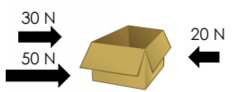
Which example would be a balanced force?
Train moving at a constant speed in the same direction.
A skier going down a hill.
A basketball being passed to a teammate.
An apple falling to the floor.

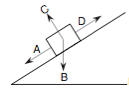
The diagram shows a box being pulled up the ramp. Which letter represents normal force?
A
B
C
D

The diagram shows a box being pulled up the ramp. Which letter represents applied force?
A
B
C
D

The diagram shows a box being pulled up the ramp. Which letter represents the frictional force?
A
B
c
d


The biker travels at constant velocity. All of the following are true except-
he has a net force acting on him.
the normal force is equal to his weight.
the force of friction acts opposite the direction of his motion.
the force of friction is equal to the forward force he applies.
What is energy?
moving energy
stored energy
renewable energy
The ability to do work.
What is potential energy?
moving energy
stored energy
renewable energy
non renewable energy
What is kinetic energy?
moving energy
potential energy
stored energy
renewable energy

A computer uses what type of energy to operate?
Mechanical
Light
Electric
Sound

Which is an example of light energy?
lawn mower
blender
flash light
speaker



