
NEW
Font size
S
M
L
XL
 Worksheets
Midterm Unit 1 an
Total questions: 59
Worksheet time: 34mins
Name
Class
Date
1.
Biology is the study of...?
a)
animals
b)
plants
c)
bacteria
d)
all living things
2.
Ralph is concerned about the number of ants in his kitchen. He wonders if cleaning the kitchen once a day instead of once a month would fix the problem.
What is the independent variable?
What is the independent variable?
a)
How often the kitchen is cleaned.
b)
The number of ants in the kitchen.
c)
Ralph's concern.
d)
Cleaning the kitchen.
3.
Ralph is concerned about the number of ants in his kitchen. He wonders if cleaning the kitchen more than once a month would fix the problem.
What is the dependent variable?
What is the dependent variable?
a)
How often the kitchen is cleaned.
b)
The amount of ants in the kitchen.
c)
Ralph's concern.
d)
Cleaning the kitchen.
4.
Ralph is concerned about the number of ants in his kitchen. He wonders if cleaning the kitchen more than once a month would fix the problem.
What will the experimental group be compared with?
What will the experimental group be compared with?
a)
Cleaning the kitchen versus not cleaning the kitchen.
b)
The amount of ants in the field before a rainstorm versus after a rainstorm.
c)
The amount of ants in the kitchen before it was cleaned more often, compared to the amount of ants after the kitchen is cleaned more often.
d)
How clean the ants are before the kitchen is cleaned versus how clean the ants are after the kitchen is cleaned.
5.
Hypotheses are:
a)
Observations
b)
Inferences
c)
Testable Predictions
d)
Educated guesses
6.
Which of the following is a good, testable question?
a)
Why do some kites fly for a longer amount of time?
b)
If the tail is changes, will a kite have more air time?
c)
What is the effect of air time on the number of tails?
d)
How does the number of tails on a kite affect the air time?
7.
Which of the following is a well-written hypothesis?
a)
If more tails are added to a kite, then the air time will increase.
b)
If the kite has a longer tail, then it will become a better kite.
c)
I think that more tails will make the kite fly for longer.
d)
Kites with longer string are able to fly higher, which makes them better.
8.
This variable in an experiment is the one being deliberately changed or manipulated by the scientist.
a)
dependent variable
b)
independent variable
c)
data
d)
control group
9.
Should experiments be repeated over and over to see if the results are the same each time?
a)
yes
b)
no
10.
How is it determined if a hypothesis is supported or rejected?
a)
A focused question is decided given.
b)
Research within written sources is conducted.
c)
An experiment is carried out to test the hypothesis.
d)
Scientists communicate their results.
11.
The hypothesis you make is always supported.
a)
True
b)
False
12.
A controlled experiment is one where
a)
you change only one variable.
b)
you change many variables.
13.
The variable that affects the dependent variable is called the _________ variable.
a)
dependent
b)
optional
c)
independent
d)
scientific
14.
Experiment: How does adding cardio to one’s daily schedule affect their heart rate?
The heart rate is the ________________ variable.
The heart rate is the ________________ variable.
a)
independent
b)
dependent
15.
You can have more than one independent variable in a controlled experiment.
a)
True
b)
False
16.
The factors in an experiment that can be changed.
a)
variables
b)
quantitative data
c)
hypothesis
d)
steps
17.
Testing a hypothesis often involves a(n):
a)
answer
b)
experiment
c)
problem
d)
safety check
18.
This part of the experiment serves as a basis of comparison; the one variable being tested has been omitted.
a)
experimental group
b)
control group
c)
data
d)
variables
19.

What conclusion can you draw from this line graph?
a)
For the most part, the older the teenagers get, the more likely they are to have a cell phone.
b)
Older teens have less cell phones.
c)
People in their thirties have the least cell phones.
d)
No one should own a cell phone.
20.

The scatter plot shows the relationship between the number of chapters and the total number of pages for several books. Use the trend line to predict how many pages would be in a book with 19 chapters.
a)
150 pages
b)
170 pages
c)
190 pages
d)
210 pages
21.
When you step out into the cold, your body shivers in order to keep its temperature at 98.6F.
a)
All living things use energy
b)
All living things contain cells
c)
All living things maintain homeostasis
d)
All living things grow
22.
Green plants produce their own food through the process of photosynthesis.
a)
All living things use energy
b)
All living things contain cells
c)
All living things maintain homeostasis
d)
All living things grow
23.
A caterpillar hibernates in a cocoon and emerges as a butterfly.
a)
All living things adapt to their environment
b)
All living things use energy
c)
All living things respond to their environment
d)
All living things grow
24.
A gazelle running away from a hunting lion is an example of ____________.
a)
homeostasis
b)
responding to stimuli
c)
growing and developing
d)
reproducing
25.
An example of homeostasis includes maintaining :
a)
oxygen level (breathing)
b)
body temperature
c)
heart rate
d)
all of these
26.
Homeostasis is important because it keeps conditions just right so our cells can function.
a)
True
b)
False
c)
Say what?
27.
Over many hundreds of years, a population of rabbits living in the woods has brown fur more because of survival of the fittest.
a)
All living things evolve as a population.
b)
All living things grow
c)
All living things use energy
d)
All living things have cells
28.
YOU are a multi-celled organism but an amoeba is a single celled organism.
a)
All living things have cells
b)
All living things grow
c)
All living things use energy
d)
All living things respond to their environment
29.
The basic unit of life is called a (n)
a)
atom
b)
compound
c)
cell
d)
energy
30.
Cells with no nucleus are called
a)
prokaryotic
b)
eukaryotic
c)
dead
d)
alive
31.
All cell types are surrounded by
a)
a cell membrane or plasma membrane
b)
a cell wall
c)
cytoplasm
32.

The following cell is a __________ ?
a)
Eukaryotic Cell
b)
Prokaryotic Cell
33.
The DNA is located in the center of this cell, not surrounded by a nuclear membrane?
a)
Eukaryotic Cell
b)
Prokaryotic Cell
34.
Eubacteria and Archaebacteria are this cell type?
a)
Eukaryotic Cell
b)
Prokaryotic Cell
35.

The following organism is composed of what type of cells?
a)
Prokaryotic Cells
b)
Eukaryotic Cells
c)
Both Types of Cells
36.
Which cell type has a plasma or cell membrane?
a)
Eukaryotic Cells
b)
Prokaryotic Cells
c)
Both types of cells
37.
A cell lacking a nucleus or any other membrane-enclosed organelle.
a)
Prokaryotic Cells
b)
Eukaryotic Cells
38.
Prokaryotic and Eukaryotic Cells both have?
a)
Mitochondria
b)
Nucleus
c)
DNA
d)
Choloropast
39.
Most eukaryotic organisms are?
a)
Unicellular
b)
Multicellular
40.
The DNA is located in the nucleus of this cell?
a)
Eukaryotic Cell
b)
Prokaryotic Cell
41.

Which technology was important to the development of the cell theory?
a)
Telescope
b)
Binoculars
c)
Periscope
d)
Microscope
42.
_____________ cells contain DNA.
a)
Prokaryotic
b)
Eukaryotic
c)
Both types of
43.
How are animals cells and plant cells similar?
a)
Both plant and animal cells have cell walls.
b)
Both plant and animal cells contain amyloplasts.
c)
Both plant and animal cells contain chlorplast.
d)
Both plant and animal cells have ER.
44.
Plant and animal cells.
a)
Both types of cells.
b)
Eukaryotic cells
c)
Prokaryotic cells
45.
The cell structure that converts the energy in food into usable energy for the cell is the?
a)
mitochondrion
b)
cell wall
c)
chloroplast
d)
nucleus
46.
A structure not found in animal cells
a)
cell wall
b)
cell membrane
c)
nucleus
d)
mitochondria
47.
What is the main function of the mitochondria?
a)
to give energy to the cell
b)
remove waste
c)
to hold DNA
d)
protect the cell
48.
________ have large cells with membrane bound organelles such as mitochondria and chloroplasts.
a)
eukaryotes
b)
prokaryotes
c)
bacteria
d)
archaea
49.
Eukaryotes include bacteria.
True or False?
True or False?
a)
True
b)
False
50.
The part of the cell that makes protein.
a)
Vacuoles
b)
Ribosomes
c)
Golgi Apparatus
d)
Cytoplasm
51.
Packages proteins into vesicles and ships them out.
a)
Endoplasmic Reticulum
b)
Ribosomes
c)
Golgi Apparatus
d)
Nucleus
52.
The control center of the cell.
a)
Nucleus
b)
Nuclear Membrane
c)
Chloroplasts
d)
Golgi Aparatus
53.
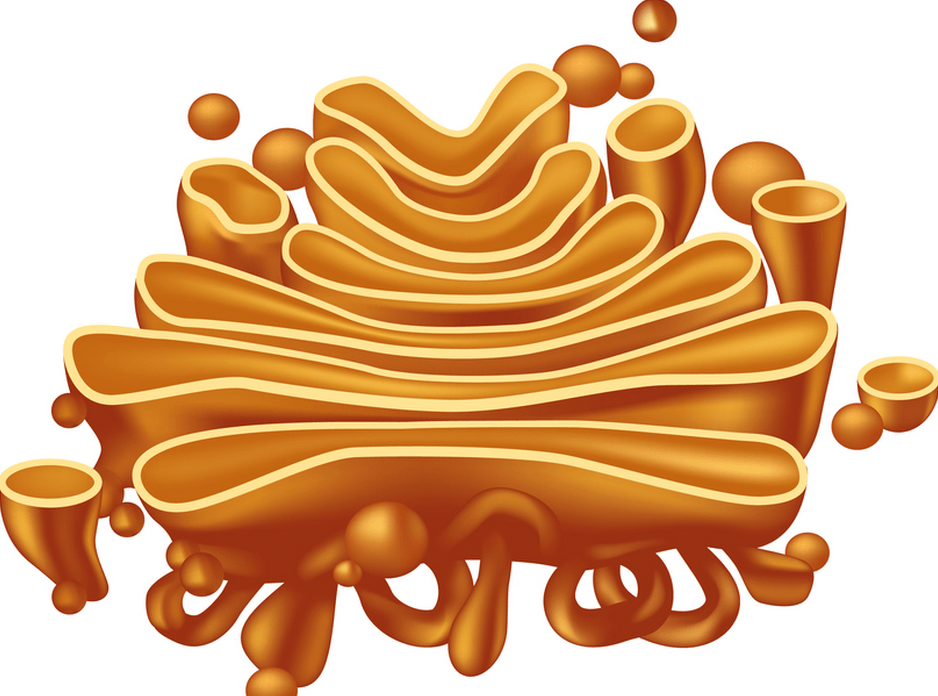
I am a lipid and protein packaging and shipping machine! Who am I?
a)
vacuole
b)
ribosome
c)
mitochondrion
d)
golgi apparatus
54.
What is found in both plant and animal cells but is much larger in plant cells?
a)
Nucleus
b)
Mitochondria
c)
Chloroplast
d)
Vacuole
55.
This can be found in the nucleus, and are tiny strands that contain the instructions for directing the cell's functions.
a)
DNA/Chromatin
b)
Chloroplasts
c)
Golgi Bodies
d)
ER
56.

An animal cell has the following except a/an...
a)
Centriole
b)
Lysosome
c)
Cell Wall
d)
Endoplasmic reticulum
57.
Which organelle is in a plant cell but not in an animal cell?
a)
cytoplasm
b)
chloroplast
c)
mitochondrion
d)
cell membrane
58.
Which sequence correctly shows the levels of increasing organization of the human body?
a)
organelle-cell-tissue-organ-organ system-organism
b)
organism-organ system-organelle- organs-tissues-cells
c)
cells-organs-tissues-- organelle- organ system-organism
d)
organelle-organism-cell-tissue-organs-organ system
59.
Of the following, which is not a part of the cell theory?
a)
all living things are composed of one or more cells
b)
the cell is the basic unit of life in all living things
c)
all cells come from existing cells
d)
all cells are too small to see
Reset

