
 Worksheets
The Animal Kingdom
Total questions: 61
Worksheet time: 1hrs 1mins
Name
Class
Date
1.
True or False:
Vertebrates have an exoskeleton.
Vertebrates have an exoskeleton.
a)
True
b)
False
2.

Is the picture a vertebrate or invertebrate?
a)
Vertebrate
b)
Invertebrate
3.
All of the following animal groups are ectothermic except for one. Which one is NOT ectothermic?
a)
Birds
b)
Reptiles
c)
Fish
d)
Amphibians
4.
I have hair or fur, give birth to live young, feed my babies milk, breathe with lungs and am endothermic (warm-blooded). What am I?
a)
Fish
b)
Reptile
c)
Bird
d)
Mammal
5.
What are the five groups of vertebrates?
a)
Mammals, bugs, spiders, fish, and birds
b)
Mammals, birds, fish, reptiles, and amphibians
c)
Snakes, turtles, frogs, bugs, birds
d)
Worms, insects, spiders, jellyfish, sponges
6.
What is the scientific word for warm-blooded?
a)
Warmtherm
b)
Ectotherm
c)
Thermal
d)
Endotherm
7.
Which group of invertebrates does a clam belong to?
a)
Sponge
b)
Fish
c)
Echinoderm
d)
Mollusk
8.
Which group of animals breathe with gills as young and breathe with lungs on land?
a)
Reptiles
b)
Amphibians
c)
Mammals
d)
Fish
9.
Butterflies, bumble bees, and spiders are examples of which group?
a)
Arthropods
b)
Segmented worms
c)
Sponges
d)
Echinoderms
10.

This picture is an example of which group of invertebrates?
a)
Segmented worms
b)
Fish
c)
Sponges
d)
Arthropods
11.
Organisms that make their own food
a)
autotroph
b)
heterotroph
c)
selfietroph
d)
hunterotroph
12.
Organisms that cannot make their own food
a)
autotroph
b)
heterotroph
c)
selfietroph
d)
hunterotroph
13.
What are the two missing levels of classification?
Kingdom, phylum, ____, order, family, _____, species
Kingdom, phylum, ____, order, family, _____, species
a)
class, genus
b)
genus, class
c)
domain, genre
d)
genre, domain
14.

The tarantula belongs to which phylum?
a)
Echinodermata
b)
Arthropoda
c)
Molluska
d)
Annelida
15.
What is a vertebrate?
a)
an animal with a backbone
b)
an animal with a notochord
c)
an animal with a tongue
d)
an animal with no backbone
16.
Which name literally means "double life", describing animals that live part of their life in water and part of their life on land?
a)
Amphibians
b)
Birds
c)
Reptiles
d)
Mammals
17.
All animals ____________.
a)
have a backbone
b)
are able to regulate their body temperature regardless of environmental factors
c)
are heterotrophs
d)
all of the above
18.
All animals must be able to ________________.
a)
reproduce
b)
get rid of watse
c)
take in oxygen and get rid of carbon dioxide
d)
all of the above
19.

This organism is best described as...
a)
Vertebrate
b)
Vascular
c)
Invertebrate
d)
Nonvascula
20.
Which of the following is a characteristic of ALL living things?
a)
moving around
b)
sweating
c)
thinking
d)
responding to stimulus
21.
I lay eggs, have gills, scales and fins, what am I?
a)
frog
b)
dinosaur
c)
toad
d)
fish
22.
Animals that live on both land and in water are:
a)
mammals
b)
insects
c)
amphibians
d)
fish
23.
Which animal belongs in the mammal kingdom?
a)
frog
b)
fish
c)
camel
d)
tortoise
24.
Which animal group do the mollusks, sponges, jellyfish, and worms belong?
a)
Invertebrates
b)
Vertebrates
25.
What is the special structure of an arthropod that provides structure and protection from the outside?
a)
An endoskeleton
b)
Spicules
c)
An exoskeleton
d)
A shell
26.
A characteristic the organisms in the phylum Porifera possess:
a)
Stinging cells.
b)
The ability to photosynthesize.
c)
Have asymmetrical symmetry.
d)
Have radial symmetry.
27.
Which of the following are classified as a mollusks?
a)
Bees
b)
Slugs
c)
Frogs
d)
Monkeys
28.

Mollusks include which of the following?
a)
Octopus, Squid, Slugs, Snails
b)
Fish, Squid, Jellyfish, Sea cucumbers
c)
Sea stars, Sea cucumbers, sea urchins
d)
Oysters, Fish, Whales, Sponges
29.

Which of the following animals are characterized by pores and an opening known as the osculum?
a)
Sponges
b)
Flatworms
c)
Jellyfish
d)
Hydrozoa
30.

Which of the following are examples of echinoderms?
a)
Jellyfish, Hydrozoa, Squid
b)
Slugs, Snails, Mussels
c)
Sea stars, sea urchins, sea cucumbers
d)
bony fish, cartilaginous fish
31.

Which of the following is not a crustacean?
a)
Shrimp
b)
Lobster
c)
Crab
d)
Oyster
32.
Which of the following are endothermic?
a)
Mammals and amphibians.
b)
Reptiles and birds.
c)
Birds and mammals.
d)
Reptiles and amphibians.
33.

My body is moist and smooth, I lay eggs, and live in or near the water. What am I?
a)
Amphibian
b)
Reptile
c)
Bird
d)
Fish
34.

Which of the following is not a major body characteristic of all mollusks?
a)
Mantle that secretes a shell
b)
A shell
c)
Strong tentacles
d)
A foot
35.
Some of the most common vertebrates are _____, birds, reptiles, and fish.
a)
spiders
b)
squid
c)
mammals
d)
starfish
36.
Warm-blooded animals that feed their young with milk, have backbones, and are covered with hair are called _____.
a)
amphibians
b)
reptiles
c)
mammals
d)
squid
37.
Invertebrates don't have _____ skeletons made of bones.
a)
internal
b)
external
c)
vertebrates
d)
outer
38.
Jelly Fish
a)
Echinoderm
b)
Cnidarian
c)
Arthropod
d)
Chordate
39.
Crab
a)
Arthropod
b)
Echinoderm
c)
Annelid
d)
Chordate
40.
Sea Star/ Star fish
a)
Echinoderm
b)
Cnidarian
c)
Annelid
d)
Chordate
41.
Human
a)
Chordate
b)
Arthropod
c)
Echinoderm
d)
Porifera
42.
Sea anenome
a)
Echinoderm
b)
Cnidarian
c)
Arthropod
d)
Porifera
43.
Spider
a)
Arthropod
b)
Porifera
c)
Echinoderm
d)
Chordate
44.

What phylum of invertebrates does the following picture belong?
a)
Cnidaria
b)
Porifera
c)
Platyhelminthes
d)
Animalia
45.
Instead of a brain or central nervous system, jelly fish have what in place to help them respond to the environment.
a)
Stinging Cells
b)
Nerve Net
c)
Internet
d)
Chloroplast
46.

What phylum do crustaceans belong to?
a)
Animalia
b)
Echinodermata
c)
Arthropoda
d)
Cnidarian
47.

Which class do the clams belong to?
a)
Cephalopoda
b)
Bivalva
c)
Gastropoda
d)
Cubozoa
48.
What surrounds the mouth of Cnidarians?
a)
guard cells
b)
pinococytes
c)
tentacles
d)
spines
49.
What type of symmetry do cnidarians have
a)
asymmetrical
b)
bilateral
c)
radial
d)
medial
50.
Invertebrates that have stinging cells and take food into a central body cavity.
a)
echinoderm
b)
mollusk
c)
flatworm
d)
cnidarian
51.
An invertebrate with a soft, unsegmented body; most are protected by a hard outer shell.
a)
mollusk
b)
arthropod
c)
cnidarian
d)
flatworm
52.
An invertebrate that has an external skeleton, a segmented body, and jointed appendages.
a)
echinoderm
b)
cnidarian
c)
arthropod
d)
segmented worm
53.
Which is not an example of echinoderms?
a)
anenome
b)
starfish
c)
urchin
d)
sea cucumber
54.
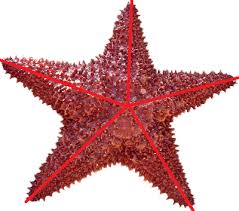
What type of symmetry is displayed in the picture?
a)
asymmetry
b)
bilateral symmetry
c)
radial symmetry
d)
photosynthesis
55.

What type of symmetry is pictured?
a)
bilateral symmetry
b)
radial symmetry
c)
asymmetry
d)
cellular respiration
56.
Which of the following is a cephalopod (head-foot)?
a)
snail
b)
octopus
c)
slug
d)
earthworm
57.
The hard part of the mouth in squid is called the
a)
Beak
b)
Radula
c)
Tentacle
d)
Arm
58.

Identify the class.
a)
Reptile
b)
Amphibian
c)
Mammal
d)
Aves
59.

Identify the class.
a)
Fish
b)
Aves
c)
Mammal
d)
Reptilia
60.
Echinodermata means ....
a)
spiny skin
b)
two lives
c)
jointed appendages
d)
two shells
61.
True or False: most animals are invertebrates.
a)
True
b)
False
100 %

