
 Worksheets
Cell Organelle, Theory, Function
Total questions: 91
Worksheet time: 1hrs 7mins
Name
Class
Date
1.
Which of the following is NOT part of the cell theory
a)
All cells come from pre-existing cells
b)
All cells have a nucleus
c)
Cells are the basic unit of life
d)
all organisms are composed of one or more cells
2.
A prokaryotic cell does have _________
a)
Nucleus
b)
DNA
c)
Mitochondria
d)
Cell wall
3.
Stores food and water for the cell.
a)
Cytoplasm
b)
Cell Wall
c)
Vacuole
d)
Nucleus
4.
Controls what enters and leaves the cell
a)
Mitochondria
b)
Cell Membrane
c)
Cell Wall
d)
Nucleus
5.

What would happen to the plant cell without the chloroplasts?
a)
There wouldn't be an organelle that performs photosynthesis
b)
There wouldn't be an organelle that serves as the resevoir for water and waste
c)
There wouldn't be an organelle that regulates what comes in and out of the cell
d)
They wouldn't be an organelle that makes necesary proteins
6.

According to cell theory, where did this cell come from?
a)
another living cell
b)
energy from sun
c)
a multicellular organism
d)
the nonliving environment
7.
The first part of the Cell Theory states: "What happens in Cell Theory, stay in Cell Theory."
a)
True
b)
False
c)
I don't know
d)
Ummmm
8.
Rocks are not living because
a)
they never move
b)
they aren't needed for humans
c)
they are not made of cells
d)
they don't break down
9.
What is the basic structural and functional unit of all living things?
a)
atom
b)
cell
c)
molecule
d)
human
10.
An organism made of one cell is called
a)
unicellular
b)
multicellular
11.
also known as the "powerhouse"
a)
cell membrane
b)
storage
c)
cytoskeleton
d)
mitochondria
12.
the photosynthesis equation is
a)
6CO2+6H2O+sunlight~C6H12O6+6O2
b)
nothing
c)
H2O
d)
CO2
13.

This organelle helps plants keep their rigid structure.
a)
Cell wall
b)
Cell membrane
c)
Chloroplast
d)
Nucleus
14.

Using this image, what organelle is C?
a)
Cell Wall
b)
Mitochondria
c)
Large Cell Vacuole
d)
Chloroplast
15.

Using this image, what organelle is A?
a)
Cell Wall
b)
Large Central Vacuole
c)
Mitochondria
d)
Chloroplast
16.

What is the difference between rough and smooth ER?
a)
There is no difference.
b)
Plants have rough ER, animals have smooth ER.
c)
What type of injuries the Doctors treat.
d)
Rough has ribosomes, smooth does not.
17.
What is the correct order of organization
a)
tissues-cells-organs-organ systems-organism
b)
cell-tissue-organs-organ systems-organism
c)
organism-cells-tissues-organ systems-organism
d)
tissues-cells-organs-organ sytems-organism
18.
A group of cells that have similar functions? Examples are nervous, epithelial, muscle and connective
a)
cells
b)
tissues
c)
organs
d)
atoms
19.
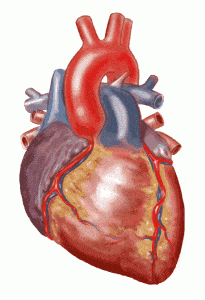
This is a example of ........
a)
cell
b)
organ system
c)
organ
d)
tissue
20.
Cell organelles that are responsible for digesting food, worn out organelles and other cellular wastes are called ___________________.
a)
Mitochondria
b)
Vacuoles
c)
Lysosomes
d)
Chlororplasts
21.
What is one basic function of the vacuoles?
a)
circulating oxygen
b)
producing food
c)
controlling cell processes
d)
storing water
22.
In what part of the plant cell does the process of photosynthesis take place?
a)
nucleus
b)
mitochondria
c)
chloroplasts
d)
vacuoles
23.
Which organism listed below is a prokaryote?
a)
dog
b)
human
c)
sunflower
d)
bacterial cell
24.
Animal and plant cells are both this type of cell.
a)
Eukaryote
b)
Prokaryote
25.
This plant structure is designed to allow glucose to be transported throughout the entire plant.
a)
Xylem
b)
Pholem
c)
Roots
d)
Leaves
26.
This plant structure is designed to allow water to move up/out to rest of plant
a)
Xylem
b)
Pholem
c)
Roots
d)
Leaves
27.
This organelle function is to package, modify and transport materials in/out of cell.
a)
Rough E.R.
b)
Smooth E.R.
c)
MItochondria
d)
Golgi Body
28.
This organelle helps transport proteins.
a)
Ribosomes
b)
Rough E.R.
c)
Golgi Body
d)
Smooth E.R.
29.
This organelle protects/holds the DNA
a)
Mitochondria
b)
Chloroplasts
c)
Nucleolus
d)
Nucleus
30.
Organelles inside nucleus function is to make ribosomes
a)
Golgi Body
b)
Lysosome
c)
Rough E.R.
d)
Nucleolus
31.
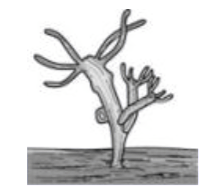
Many invertebrate animals, such as the hydra, reproduce asexually. What form of reproduction in this stage of the life cycle of the hydra is shown in the diagram?
a)
binary fission
b)
budding
c)
fragmentation
d)
vegetation propagation
32.
A plant that has traits identical to the parent plant provides evidence that the plant
a)
resulted from sexual reproduction.
b)
resulted from asexual reproduction.
c)
will develop many seeds.
d)
will have large leaves.
33.
Organisms that reproduce asexually generally have offspring that are
a)
unicellular.
b)
multicellular.
c)
genetically varied.
d)
genetically identical.
34.
Which is the greatest benefit of sexual reproduction?
a)
capable of reproducing by meiosis
b)
ability to reproduce without a mate
c)
ability to produce genetically different offspring
d)
capable of producing offspring genetically identical to parent
35.
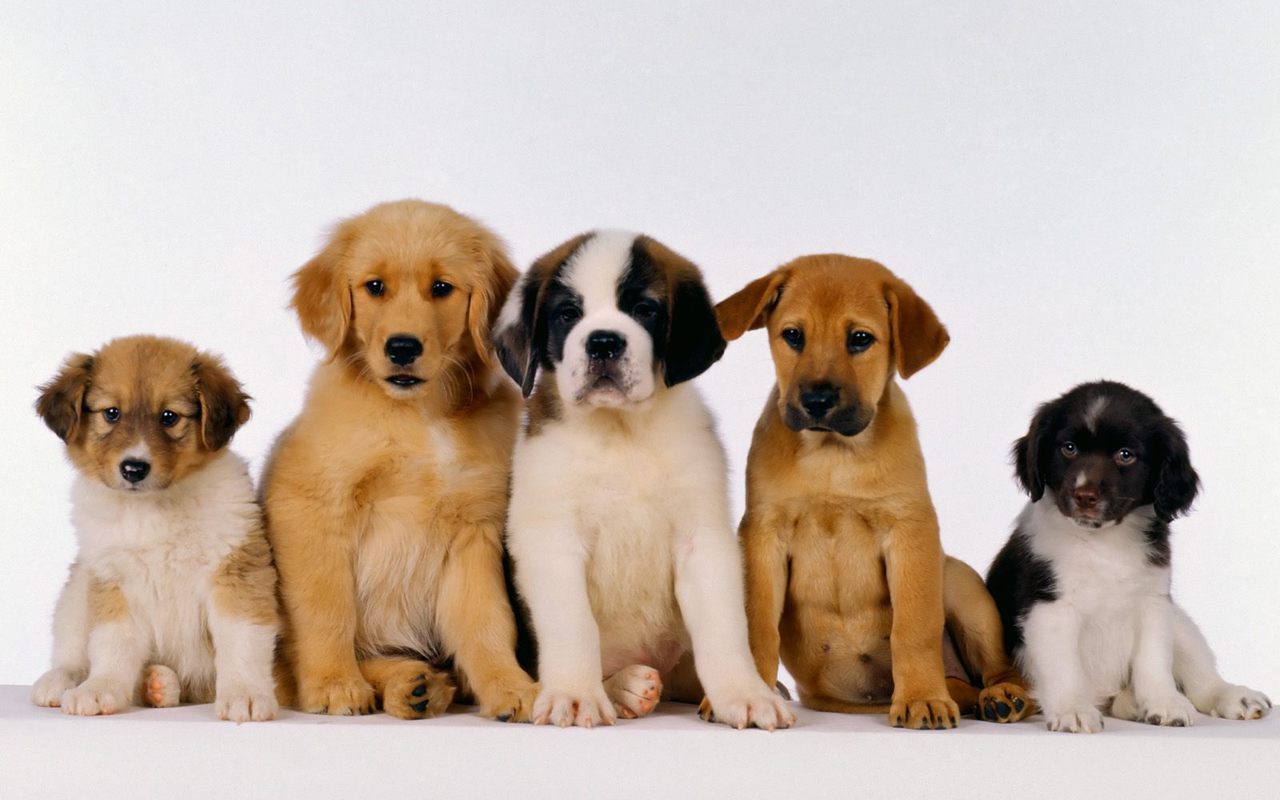
If two organisms reproduce sexually, then their offspring will exhibit a genetic makeup that is -
a)
identical to only one parent
b)
identical to all of its siblings
c)
a unique combination of traits
d)
the recessive traits of each parent
36.
Which is a type of Asexual Reproduction
a)
Sexual
b)
Binary fission
c)
Cells
d)
organism
37.

Which of the following best describes a DNA molecule?
a)
double helix
b)
contains ribose
c)
made of amino acids
d)
contains Uracil
38.

Sexual or Asexual?
a)
Sexual
b)
Asexual
39.

What does this graph represent?
a)
Constant speed
b)
Acceleration
c)
Not moving
40.

How long did it take this object to travel 10 m?
a)
0 s
b)
10 s
c)
15 s
d)
20 s
41.
65 miles per hour North is an example of an objects what?
a)
Speed
b)
Velocity
c)
Average Speed
d)
Constant Speed
42.

LT4: The graph shows Ashley riding her bike to Maria's house.
What was occurring from point B to point C?
What was occurring from point B to point C?
a)
She was increasing her speed.
b)
She stopped for 4 minutes
c)
She was decreasing in speed
43.

According to the graph how far does the person travel in the first 5 seconds?
a)
2 m
b)
10 m
c)
0 m
d)
5 m
44.

A runner races in the 100 meter dash. It takes her 10 seconds to finish. What is her average speed?
a)
10 m/s
b)
1000 m/s
c)
100 seconds
d)
10 seconds
45.

What does this graph represent?
a)
Constant Speed
b)
Acceleration
c)
Deacceleration
d)
Not moving
46.

What is the net force?
a)
40 N left
b)
0 N Balalnced
c)
400 N right
d)
40 N right
47.

A wheeled cart is moving to the right at a constant speed. Two forces of equal magnitude are acting upon the cart. Which of the following best describes the forces and motion of the cart?
a)
Balanced Forces, Constant Speed
b)
Balanced Forces, Acceleration
c)
Unbalanced Forces, Constant Speed
d)
Unbalanced Forces, Acceleration
48.
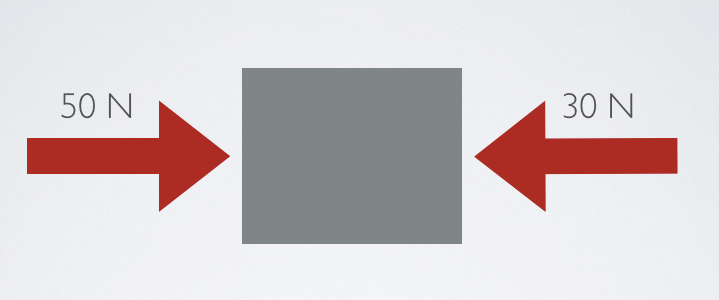
How will this object move?
a)
It won't move.
b)
It will move to the right.
c)
It will move to the left.
d)
It will move up.
49.

What is the net force?
a)
30 N left
b)
25 N right
c)
5 N left
d)
55 N right
50.

Calculate the Net Force.
a)
40N, Left
b)
40N, Right
c)
0N, Balanced
d)
75N, Right
51.
When forces are _________ the object DOES NOT move.
a)
unbalanced
b)
balanced
c)
heavy
d)
light
52.

Describe the forces and motion at Section 2 of the track.
a)
Balanced forces, Constant Speed
b)
Balanced Forces, Acceleration
c)
Unbalanced Forces, Constant Speed
d)
Unbalanced Forces, Acceleration
53.

What is the net force?
a)
400 N Up
b)
400 N Down
c)
- 400 N Down
d)
800 N Down
54.

An offspring will receive how many alleles from each parent to determine a specific trait?
a)
one
b)
two
c)
three
d)
five
55.
What is a phenotype
a)
The genetic make up (code)
b)
The physical trait
56.
having two of the same genes for the trait (sometimes called purebred).
a)
homozygous
b)
hetrozygous
c)
protein
d)
chromosome
57.
having two different genes for a trait (sometimes called hybrid).
a)
protein
b)
homozygous
c)
heterozygous
d)
genotype
58.
Magda is a tall, 11 year old drummer. She has a scar on her right cheek. She is good at swimming. Which of her traits did Magda most likely inherit?
a)
height
b)
the scar
c)
ability to swim
d)
ability to play drums
59.
Two brown eyed parents (Bb) have a baby. What is the chance the baby is blue eyed?
a)
0 %
b)
25%
c)
50%
d)
75%
60.
G = green, g = yellow
The genotype for a yellow plant is...
The genotype for a yellow plant is...
a)
GG
b)
Gg
c)
gg
d)
all of the choices result in yellow
61.
Organic compounds are compounds contain ______________.
a)
O
b)
C
c)
N
d)
S
62.
How many atoms of carbon (C) are in C6H12O6?
a)
3
b)
6
c)
12
d)
24
63.
How many elements are in C6H12O6?
a)
1
b)
2
c)
3
d)
4
64.
The positive particles of an atom are
a)
electrons
b)
positrons
c)
neutrons
d)
protons
65.
an atom with atomic number 6 would have how many protons
a)
6
b)
12
c)
3
d)
cannot be determined
66.
True or False? Neutrons have a negative charge
a)
True
b)
False
67.
A particle that moves around the nucleus is a(n)...
a)
Proton
b)
Neutron
c)
Electron
d)
Quark
68.

A vertical column is called...
a)
group
b)
tower
c)
period
d)
crew
69.
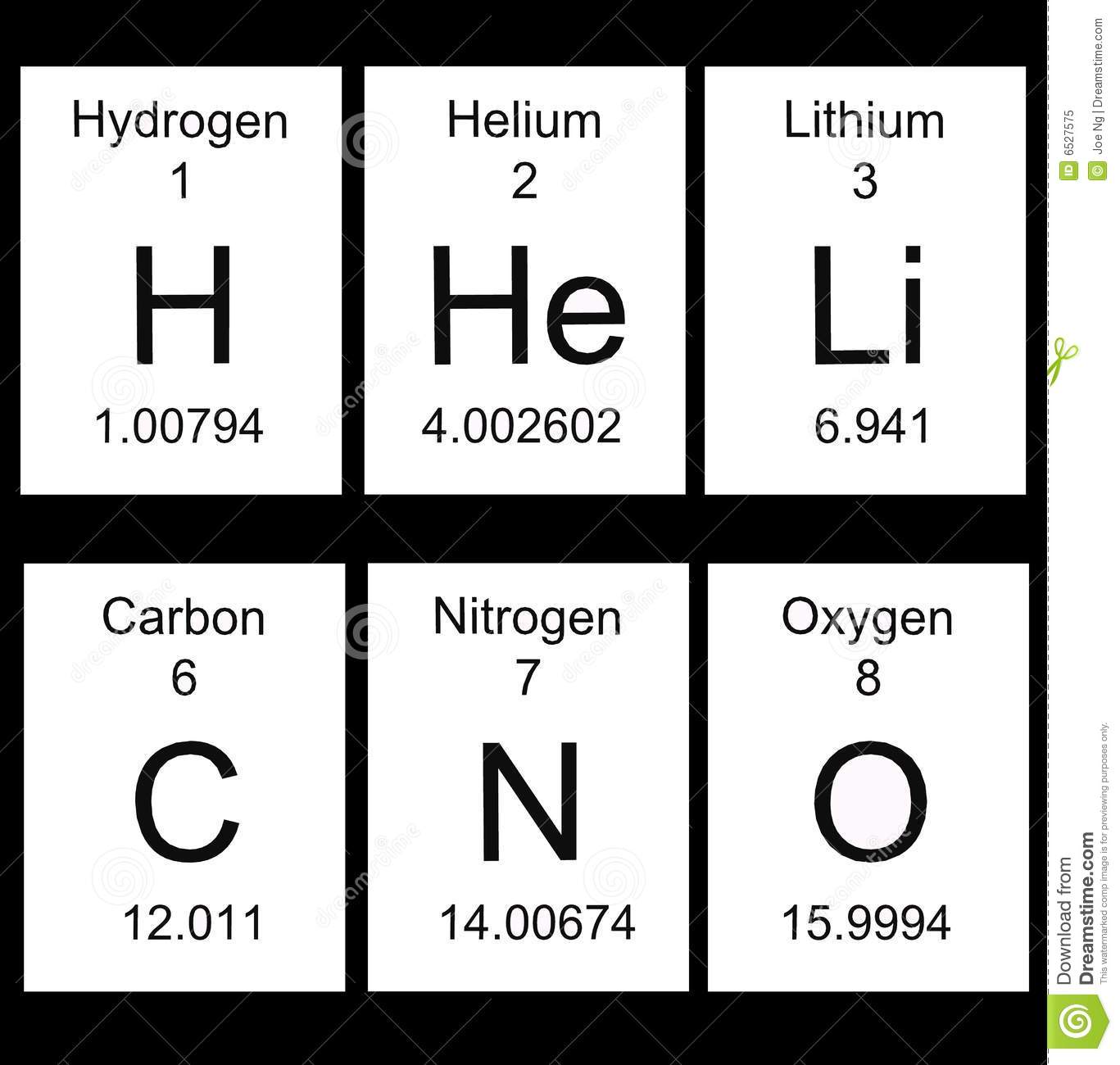
The number at the bottom of each square on the periodic table is the ...
a)
atomic number
b)
atomic mass
c)
chemical symbol
d)
element name
70.
Elements in a ..................have similar chemical properties.
a)
period
b)
group
c)
row
71.
The simplest substance is..?
a)
Carbon
b)
An element
c)
Water
d)
A simple compound
72.
Which element is not a metal?
a)
H
b)
Re
c)
Al
d)
B
73.
Elements which are shiny, conduct electricity and heat are called
a)
metal
b)
nonmetal
c)
metalloid
d)
nonexistent
74.

What's a valence electron?
a)
electrons in the second energy level
b)
electrons in the outermost energy level
c)
the atomic number
d)
electrons in the first level
75.
How many Valance electrons does Iodine Have?
a)
6
b)
16
c)
7
d)
17
76.

?
a)
Helium
b)
Hydrogen
c)
Argon
d)
Silver
77.

What group does this element belong to?
a)
Group 1: Alkali metals
b)
Group 18: Noble Gases
c)
Group 2: Alkaline-Earth Metals
d)
Group 17: Halogens
78.

What is the atomic number of this atom?
a)
2
b)
4
c)
6
d)
none of the above
79.
How are electrons arranged in an atom?
a)
In groups of five
b)
In energy levels
c)
By color
d)
By shape
80.
How many Mn atoms are found in the following compound?
3Cr(MnO4)6
3Cr(MnO4)6
a)
3
b)
6
c)
18
d)
72
81.
What is the little number after an element in a chemical equation called.
Example: H2
Example: H2
a)
Coefficient
b)
Subscript
c)
Atom
d)
Equation
82.
In the following chemical equation
H2 and O2 are the
2H2 + O2 --> 2H2O
H2 and O2 are the
2H2 + O2 --> 2H2O
a)
Reactants
b)
Products
c)
Yields
d)
Chemical Equation
83.
In the following chemical equation 2H2O is a...
2H2 + O --> 2H2O
2H2 + O --> 2H2O
a)
Reactant
b)
Product
c)
Yields
d)
Chemical Equation
84.
Balance this equation...
H2 + Cl2 --> HCl
H2 + Cl2 --> HCl
a)
It is balanced
b)
3H2 + Cl2 --> 6H2Cl
c)
H2 + Cl2 --> 2HCl
d)
I don't know! Oh well.
85.
In the equation, 2Mg + O2 ---> 2MgO, which are the reactants?
a)
2Mg + O2
b)
2MgO
c)
Mg + MgO
d)
O + MgO
86.
Balance this equation...
HgO --> Hg + O2
HgO --> Hg + O2
a)
It is balanced
b)
2HgO --> Hg + O2
c)
2HgO --> 2Hg + O2
d)
I don't know...Oh well!
87.
A change in the size, shape, or state of matter.
a)
chemical change
b)
physical change
c)
chemical reaction
d)
electron change
88.
Which of the following is NOT an example of a physical change?
a)
crumpled paper
b)
pencil sharpening
c)
shrunken clothing
d)
sour milk
89.
Which is a Chemical property?
a)
Thermal Conductivity
b)
Density
c)
Malleability
d)
Flammability
90.
Acceleration is defined as the CHANGE in
a)
time of motion to another place.
b)
velocity
c)
distance
d)
speed
91.
Do escalators moving at the same speed in the opposite direction have the same velocity?
a)
Yes
b)
No
100 %

