Wayground logo

Free Printable Worksheets

Font size

S
M
L
XL
Worksheets

APES U3 Review - The Living World

Total questions: 100

Worksheet time: 3hrs 46mins

Name
Class
Date
1.
All rabbits living in a particular area would be an example of a(n)
a)
population
b)
species
c)
fossil
d)
individual organism
2.
Only about ten percent of the energy stored in an organism can be passed on to the next trophic level. Of the remaining energy, some is used for the organism’s life processes, and the rest is typically
a)
used in reproduction
b)
stored as body fat
c)
stored as body tissues
d)
converted to heat and lost
3.
A tertiary consumer has to be which type?
a)
Carnivore.
b)
Decomposer.
c)
Producer.
d)
Herbivore.
4.
If these organisms were arranged in an ecological biomass pyramid, which organism would have the least amount of biomass?
a)
coyote
b)
insect
c)
lizard
d)
shrub
5.
Identify the cycle pictured.
a)
The Water cycle
b)
The Carbon cycle
c)
The Nitrogen cycle
d)
The Phosphorus cycle
6.
How do animals get the carbon they need?
a)
decomposing
b)
combustion
c)
eating plants 
d)
breathing it in
7.
What role do decomposers play in the carbon cycle?
a)
absorb carbon dioxide 
b)
release carbon dioxide into atmosphere
c)
return carbon into the soil
d)
combustion
8.
Identify the cycle pictured.
a)
The Water cycle
b)
The Carbon cycle
c)
The Nitrogen cycle
d)
The Phosphorus cycle
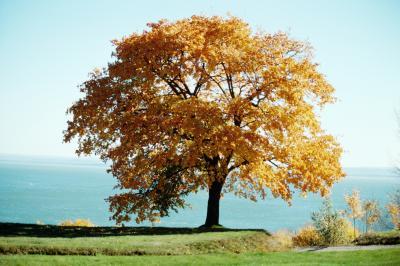
9.
What effect will an invasive species have on the carrying capacity of an ecosystem?
a)
The carrying capacity will increase
b)
The carrying capacity for everyone will decrease
c)
The carrying capacity will only decrease for those in competition for same resource
d)
The carrying capacity for all animals will stay the same
10.
In this tundra food web, if grasses were removed what would happen to the sustainability of the ecosystem?
a)
There would be an overpopulation of arctic hares and lemmings.
b)
Polar bears would move to a new ecosystem
c)
The ecosystem would collapse because it lost its main producer
d)
Wildflowers would die out from the ecosystem
11.
The most important abiotic factors when studying biomes are...
a)
Food and Water
b)
Water and Sunlight
c)
Temperature and Oxygen
d)
Water and Temperature 
12.
What type of growth curve is pictured?
a)
exponential 
b)
logistic
c)
predator-prey
d)
invasive
13.
What is the correct equation for cellular respiration?
a)
6O2 + C6H12O6 -> 6CO2 + 6H2O + Energy
b)
6O2 + C6H12O6 + Energy -> 6CO2 + 6H2O
c)
6CO2 + 6H2O -> 6O2 + C6H12O6 + Energy
d)
6CO2 + 6H2O + Energy -> 6O2 + C6H12O6
14.
Starts with BARE ROCK followed by lichen
a)
primary succession 
b)
secondary succession
c)
both types of succession
15.
The picture shows what type of succession?
a)
primary
b)
secondary
c)
tertiary
d)
quadanary
16.
The final stable community of plants and animals is called:
a)
pioneer community
b)
farmland
c)
climax community
d)
old field
17.
A population of deer belongs to the forest community.  Which change to the community would most likely cause the deer population to increase? 
a)
A new disease strikes mountain lions, a predator of deer
b)
A new beetle arrives that lives in the bark of trees, food supply for the deer
c)
Human activities divert water away from the forest
d)
Human activities reduce the size of the forest
18.
The diagram to the right represents different levels of a marine food pyramid. Between which two levels is the greatest amount of energy transferred? 
a)
R and Q
b)
S and R
c)
T and S
d)
U and T
19.
Which pathway shows how atmospheric nitrogen is converted into the nitrogen compounds that plants need? 
a)
atmospheric nitrogen --> denitrifying bacteria -> plants
b)
atmospheric nitrogen --> plants
c)
atmospheric nitrogen --> nitrogen-fixing bacteria and other soil bacteria --> plants
d)
atmospheric nitrogen --> animals --> denitrifying bacteria --> plants
20.
Which change would most likely reduce the rate at which carbon dioxide is increasing in the atmosphere? 
a)
A decrease in the combustion of fossil fuels
b)
A decrease in total photosynthesis among Earth's plants and algae
c)
An increase in the population of denitrifying bacteria
d)
An increase in the population of denitrifying bacteria
21.
Which conclusion best supports the data in the graphics above?
a)
Not all producers provide 100% energy to an ecosystem.
b)
Biomass is a measurement of living tissue that provides a source of food.
c)
One tree can provide enough food energy to support many organisms.
d)
Larger populations of organisms always have more biomass.
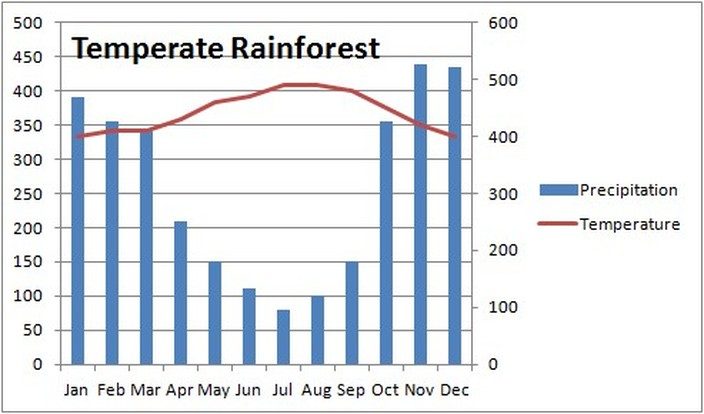
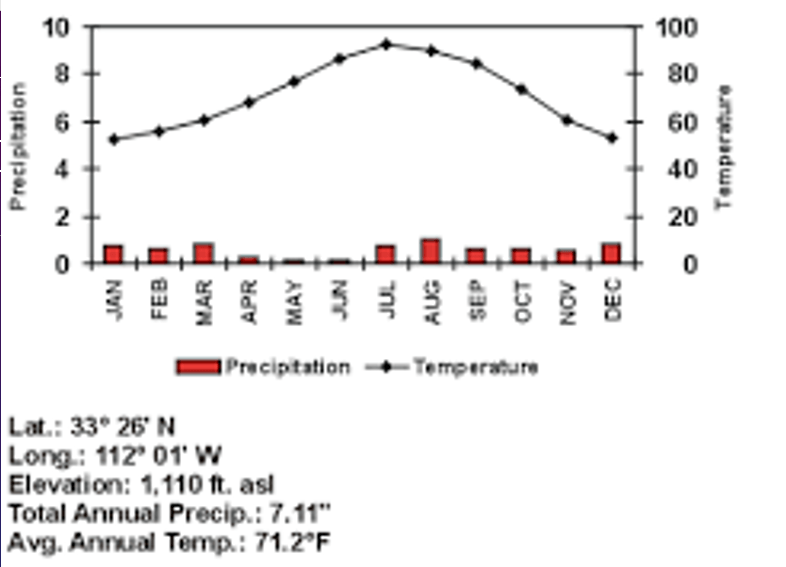
22.
Which biome is represented in this climatograph?
a)
Cold Forest
b)
Tropical Forest
c)
Temperate Forest
d)
Temperate Desert
23.
Which of the following is NOT a limiting factor in MOST aquatic biomes?
a)
dissolved oxygen
b)
precipitation
c)
sunlight
d)
nutrient availability
24.
When bacteria convert ammonia back into nitrogen in the soil it is called .. 
a)
Nitrogen Fixation
b)
Assimilation
c)
Nitrification
d)
Denitrification
25.
Nitrogen is the most plentiful gas in the atmosphere.
a)
True
b)
False
26.
Organisms that need nitrogen to survive
a)
only plants
b)
only animals
c)
only bacteria
d)
all living organisms
27.
The sulfur cycle does not involve volcanoes.
a)
True
b)
False
28.
Deforestation will alter which of the following cycles?
I. Water
II. Carbon
III. Nitrogen
a)
I only
b)
II only
c)
II and III
d)
I, II, and III
29.
How do animals gain sulfur, phosphorus, carbon, and nitrogen from their environment?
a)
Eating other organisms
b)
Drinking water
c)
Exchange of gases
d)
Mitosis & meiosis
30.
In which populations does genetic drift most often occur?
a)
in small populations
b)
in large populations
c)
in marine populations
d)
in terrestrial populations
31.
Which best describes how resistance to antibiotics will aid in the evolution and survival of bacteria?
a)
A.  Bacteria resistant to antibiotics will survive, reproduce, and pass on their resistance to the next generation.
b)
B.  The presence of the antibiotics reduces competition between the bacteria present, which will allow some bacteria to survive.
c)
C.  Resistance to antibiotics allows bacteria to cause a stronger disease-like reaction in an organism.
d)
D.  The mutation that causes bacteria to become resistant also causes quicker reproduction with increased survival rates.
32.
After a volcanic eruption, lava covers the land. What is the order that plants grow to repopulate the area?
a)
Lichens → Shrubs → Grasses → Trees
b)
Lichens → tree → shrubs→Grasses
c)
Grasses → Lichens → Shrubs → Trees
d)
Lichens → Grasses → Shrubs → Trees
33.
Which of the following is an accurate food chain found within this farmland food web?
a)
Owl, Grasshopper, Grain
b)
Bird, Fox, Rabbit
c)
Carrot, Rabbit, Fox
d)
Grass, Mice, Bird
34.
How much energy is passed onto the next trophic level in an energy pyramid? AND how much is lost as heat? 
a)
10%, 90%
b)
1%, 99%
c)
50%, 50%
d)
90%, 10%
35.
An ecological model comparing the total amount of dried mass of each trophic level is call a pyramid of - 
a)
Energy
b)
Organisms
c)
Biomass
d)
Numbers
36.
I eat fruit, nuts and insects...I am also a
a)
Carnivore
b)
Producer
c)
Herbivore
d)
Omnivore
37.
An organism that only eats plants is called a - 
a)
primary consumer; autotroph; herbivore
b)
secondary consumer; heterotroph; herbivore
c)
primary consumer; heterotroph; herbivore
d)
secondary consumer; heterotroph; omnivore
38.
The field mouse population in Australia has grown so fast that they eat an average of  $4 billion of wheat every year. Their fast growth is caused by -
a)
A. The mice are mammals
b)
B. A lack of a native species to eat the field mouse
c)
C. Abundant food supply
d)
Both B and C
39.
What type of relationship is shown in this picture? (HINT: it's a tapeworm inside a human intestine)
a)
Predator/Prey
b)
Commensalism
c)
Mutualism
d)
Parasitism
40.
What happens to the populations as you move up a pyramid of numbers?
a)
Populations increase
b)
Populations decrease
c)
Populations remain the same
d)
Populations fluctuate
41.
The diagram below illustrates the feeding relationships within an ecosystem.  Approximately what percentage of the original amount of energy from producers is stored in the tissues of the rabbit?
a)
0.1%
b)
1%
c)
10%
d)
100%
42.
A snake that eats a frog that has eaten an insect that fed on a plant is considered a - 
a)
first-level producer
b)
first-level consumer
c)
second-level producer
d)
third-level consumer
43.
A wildlife preserve reports that its population of red foxes has increased while the coyote population has decreased.  Which relationship between foxes and coyotes would help explain this observation? 
a)
Coyotes and red foxes live near one another, but do not compete for resources.
b)
Coyotes and red foxes fill exactly the same niche in the forest
c)
Coyotes are predators of red foxes.
d)
Red foxes parasitize coyotes. 
44.
A new invasive beetle has been discovered in a farmland community.  The beetle bores into and destroys the roots of entire fields of crops.  The beetle was accidentally imported form abroad, and does not have predators in its new habitat.  To control the destructive beetle, a group of researchers has proposed the use of nematodes that burrow into the soil and feed exclusively on the larvae of the beetle.  Which best describes the beetle control method suggested by the researchers? 
a)
Allowing the beetle population to crash as a result of density-independent limiting factors
b)
Using predation as density-dependent limiting factor
c)
Allowing the nematode population to reach carry capacity
d)
 Enabling the beetle population to grow exponentially
45.
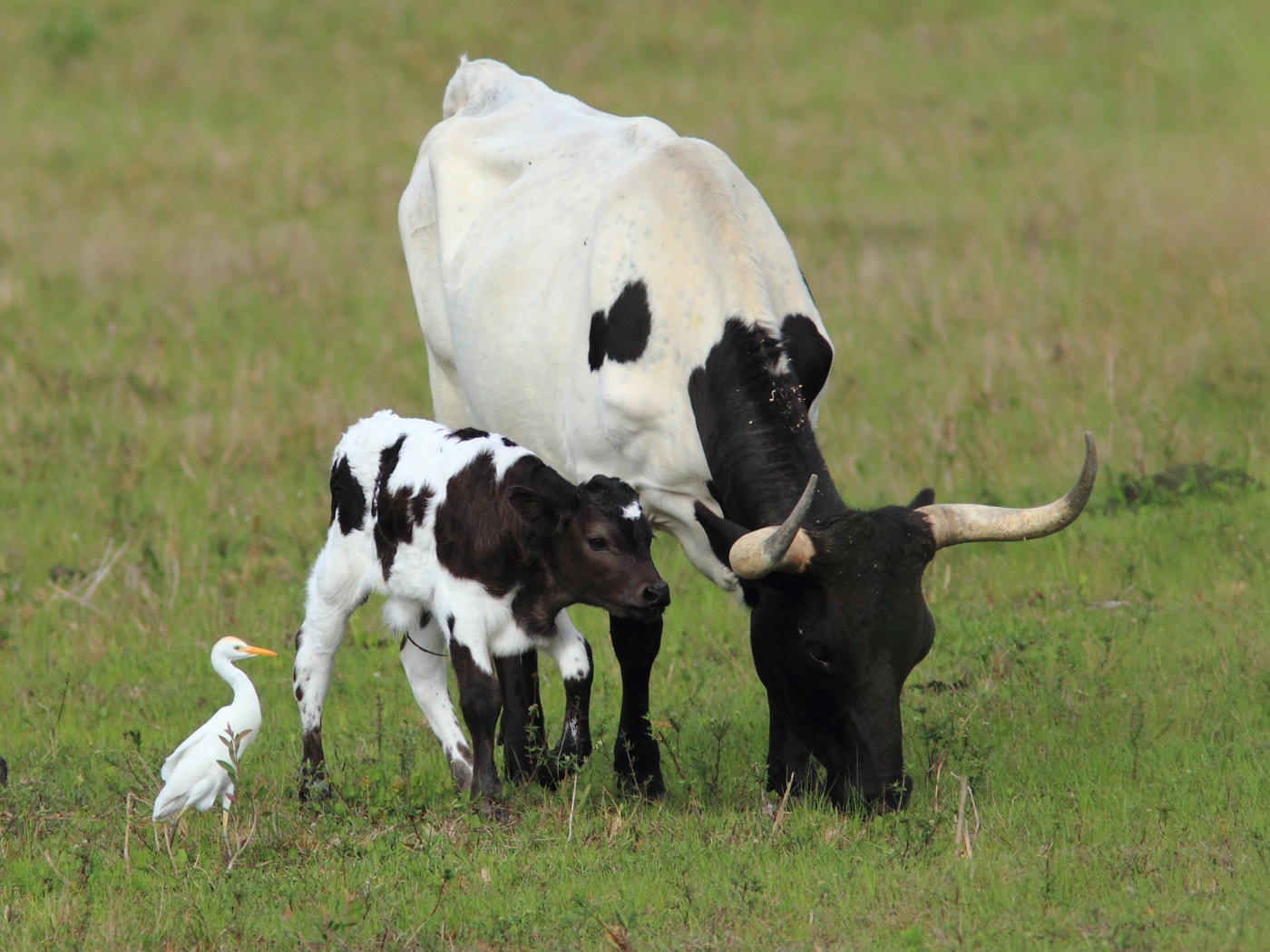
Cattle egrets forage (feed) in fields among cattle. The egret gets easy access to flying insects stirred up by the cattle, and the cattle don't care if they are there or not.
This is an example of  -
a)
mutualism
b)
commensalism
c)
competition
d)
parasitism
46.
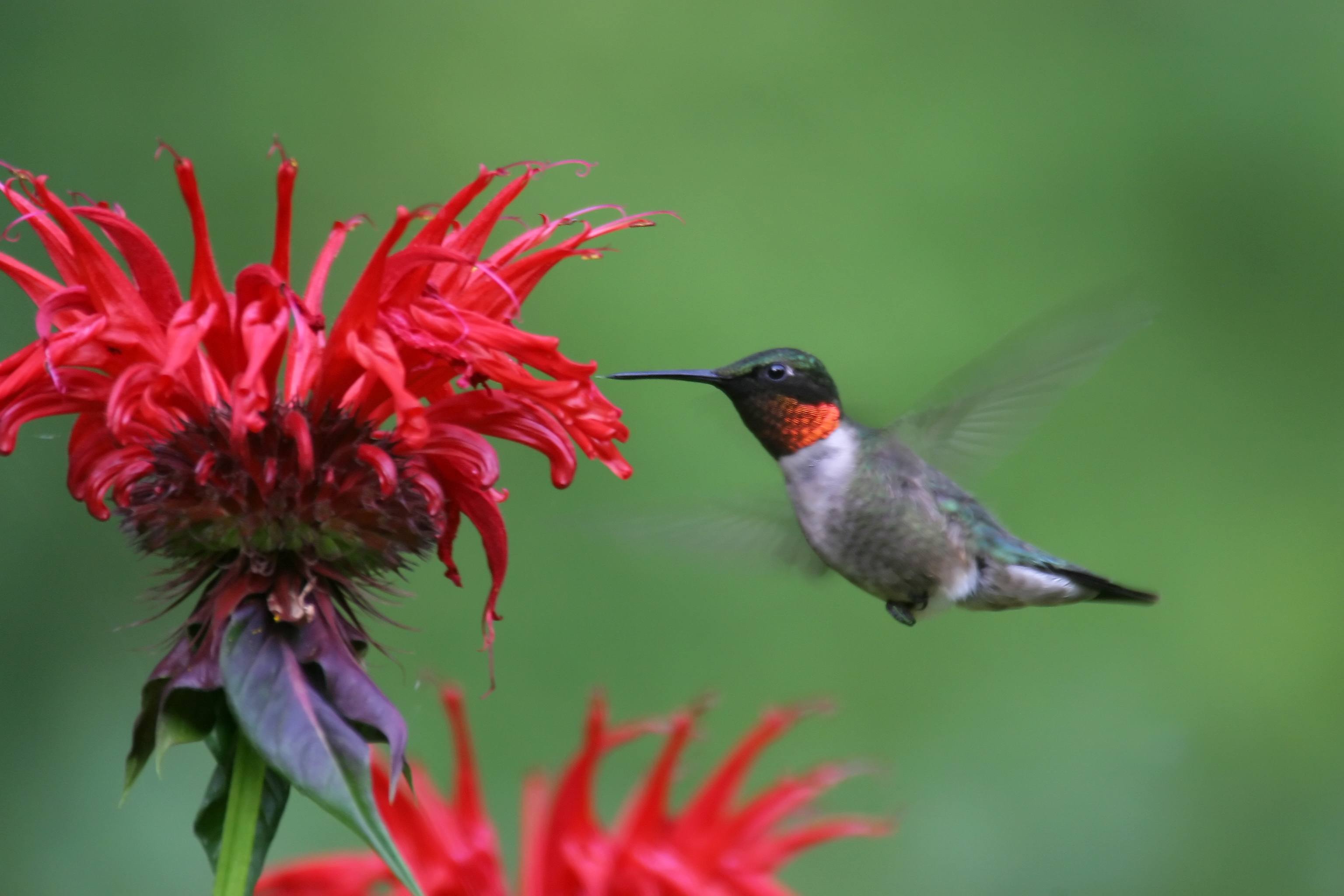
What type of symbiosis?  Hummingbirds feed on nectar from flowers.  The flowers are pollinated by hummingbirds as they move from flower to flower.
a)
commensalism
b)
mutualism
c)
parasitism
d)
predation
47.
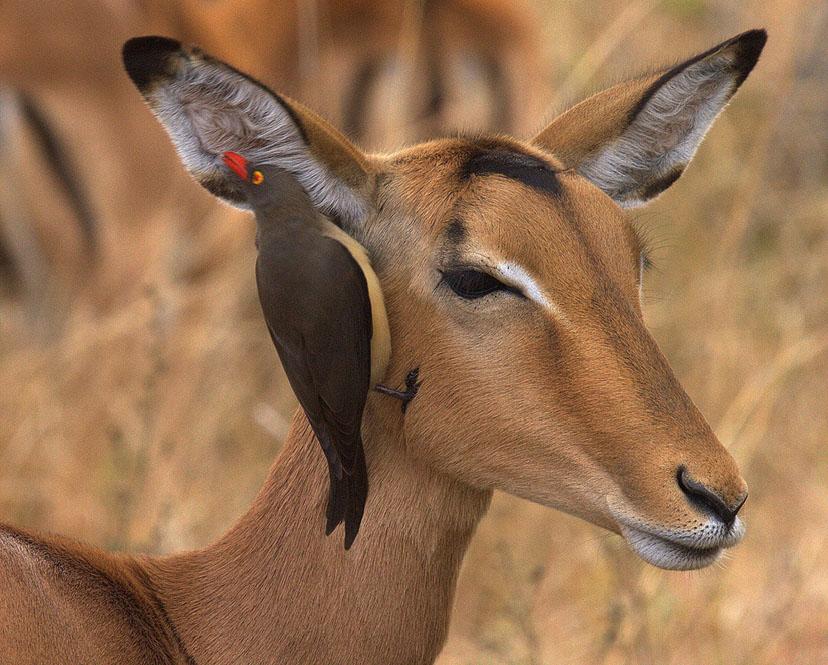
Red-billed oxpeckers are birds that often feed on parasites that infest impala gazelles.  This is an example of _______.
a)
commensalism
b)
mutualism
c)
saprotrophism
d)
competition
48.
A sparrow will build its nest under the nest of an eagle. The smaller birds get protection because other predators will not mess with the eagle. The eagle are not helped nor harmed by the sparrow.
This is an example of - 
a)
parasitism
b)
commensalism
c)
mutualism
d)
amensalism
49.
Will competition increase or decrease the carrying capacity of an ecosystem for the animal in competition?
a)
Decrease
b)
Increase
50.
Which organism is a primary producer?
a)
phytoplankton
b)
krill
c)
copepods
d)
zooplankton
51.
In an ecological pyramid, which type of organism always has the least amount of energy available?
a)
Producers
b)
Herbivores
c)
Carnivores
d)
Top Predator
52.
In this energy pyramid, which organisms have the most energy available?
a)
Producers
b)
Carnivores
c)
Herbivores
d)
Top Predator
53.
The diagram represents a pyramid of energy in an ecosystem.  Which level would most likely contain organisms that do photosynthesis?
a)
A
b)
B
c)
C
d)
D
54.
How much of the energy in each level of a ecological pyramid gets lost as heat or used by the organism so that it cannot be passed on to the next trophic level?
a)
80%
b)
90%
c)
10%
d)
20%
55.
What type of pyramid does this show?
a)
biomass
b)
energy
c)
numbers
d)
producers
56.
Food chains demonstrate
a)
flow of energy
b)
exchange of matter 
c)
biogeochemical pathways
d)
relationships between symbiotic species
57.
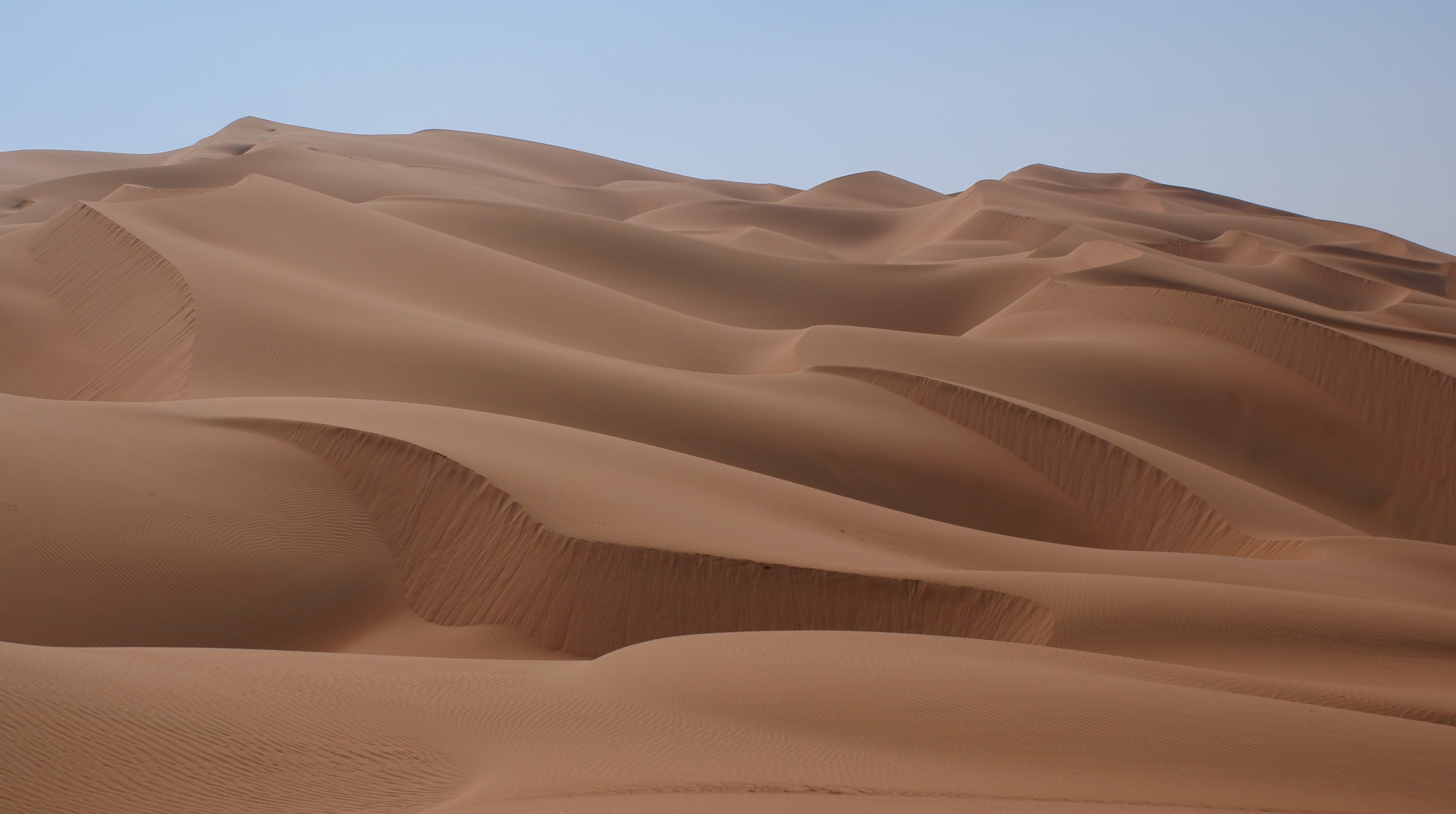
Which biome is represented by the rainfall amounts in letter C?
a)
desert
b)
prairie
c)
deciduous forest
d)
tropical rain forest
58.
Which biome is MOST LIKE the "desert" in terms of precipitation?
a)
tropical rainforest
b)
temperate deciduous forest
c)
tundra
d)
coniferous forest
59.
The temperate deciduous forest is unique in that it
a)
Has a large number of plants and animals
b)
Has mild tempertures
c)
Experiences 4 seasons a year
d)
All of these
60.
Which of the following tends to be the limiting factor in terrestrial biomes?
a)
Nitrogen and Phosphorous in the soil.
b)
Temperature
c)
Sunlight 
d)
Carbon dioxide in the air.
61.
All plants have nitrogen fixing nodules on their roots.
a)
True
b)
False
62.
The image provided is an example of a(n):
a)
Carnivore
b)
Herbivore
c)
Producer
d)
Autotroph
63.
In a temperate deciduous forest ecosystem, which of the following is the best example of a limiting factor for a rabbit population?
a)
The population of squirrels
b)
The proportion of shady to sunny areas
c)
Available grass, weeds, and shrubs
d)
The abundance of decomposers
64.
This invasive plant came from Asia and was believed to be a pretty decoration.  Unfortunately, it covers native plants and blocks sunlight from reaching them.
a)
Kudzu Vine
b)
Lionfish
c)
Fire ants
d)
Zebra Mussels
65.
Biodiversity refers to
a)
the variety of extinct organisms and fossils found
b)
the variety of species on Earth
c)
nonrenewable resources
d)
the rate of species decline
66.
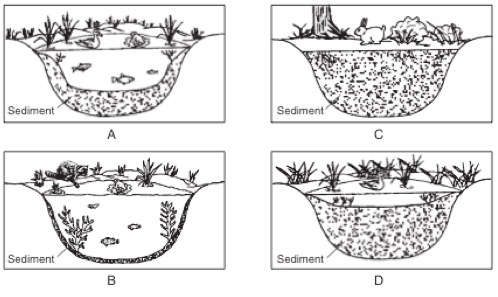
What is the correct order from oldest (happened first) to youngest (happened last) in this pond succession?
a)
A, B, C, D
b)
D, C, B, A
c)
B, A, D, C
d)
C, D, A, B
67.
What are examples of pioneer species in a primary succession?
a)
Bushes and Shrubs
b)
Oak trees
c)
Mossess and Lichens 
d)
A rose Bush
68.
Based on the graph shown, what is the effect of removing a keystone species from an ecosystem?
a)
biodiversity goes up
b)
biodiversity goes down
c)
biodiversity stays about the same
d)
not enough information to tell
69.
Based on the graph shown, how can you tell sea otters are a keystone species?
a)
as the sea otter population decreases, biodiversity increases
b)
as sea otter population increases, biodiversity increases
c)
changes in the sea otter population have little effect on biodiversity 
d)
the sea otter population dereases due to the presence of urchins
70.
How can you tell that Zebra Mussels are an invasive species from the graph shown?
a)
The population of rotifers goes up after zebra mussels they are introduced.
b)
The population of rotifers goes down after zebra mussels are introduced.
c)
The population of rotifers stays about the same after zebra mussels are introduced.
d)
The population of zebra mussels goes down after they are introduced.
71.
The Endangered Species Act of 1973 protects registered endangered species by removing them from the "take" list which makes it unlawful to
a)
shoot
b)
capture
c)
trap
d)
all of the above
72.
What are the greatest problems facing plants, animals, and people?
a)
introducing new species that  can cause problems 
b)
habitat destruction
c)
illegal hunting 
d)
all of the above
73.
The wolves of Yellowstone are considered to be a
a)
predator
b)
keystone species
c)
captive breeding
d)
experiment
74.
What are the biotic factors in this image?
a)
sunlight, elephants, and grasses
b)
sunlight, water,  and air
c)
elephants, plants, trees 
d)
trees, clouds, and mountains
75.
What are the abiotic factors in this image? 
a)
water, sunlight, air
b)
birds and plants
c)
water, plants, and birds 
d)
birds only
76.
The invasive species are always intentionally introduced into the ecosystem. 
a)
TRUE 
b)
FALSE
77.
The picture represent the world __________. 
a)
ecosystems 
b)
continents 
c)
biomes 
d)
US territory 
78.
Which of the following is a fossil?
a)
a plant that has recently died
b)
a group of organisms that can reproduce
c)
a structure or organ that no longer functions
d)
a trace of an organisms that existed in the past
79.
Brown mice survive and reproduce in their desert environment better than white mice because owls can see and eat the white mice more easily. In this situation, what is doing the selecting?
a)
Owl
b)
Grains & seeds
c)
Brown Mice
d)
White Mice
80.
The Ash Borer moth looks like a common wasp.  How does this adaptation help the Ash Borer survive? 
 
a)
a.  Wasps are stronger than moths, so the Ash Borer is stronger than other moths 
b)
b.  Wasps fly faster than moths, so the Ash Borer can fly faster than other moths. 
c)
 c.  Wasps see better than moths, so the Ash Borer can see better than other moths. 
d)
d.  Wasps are dangerous to eat, so predators of moths will not eat the Ash Borer 
81.
Mutations are important because they bring about -
a)
death of the organism in which they develop
b)
genetic variation needed for a population to evolve
c)
benefits for the individual, not for the population
d)
Hardey-Weinberg equilibrium within a population
82.
An earthquake causes an ocean channel top open and separate an island into two.  the species on each section are now in
a)
geographic isolation
b)
reproductive isolation
c)
disruptive selection
d)
temporal isolation
83.
Which of the following is a term for a group of similar organisms that can reproduce fertile offspring?
a)
individual
b)
population
c)
species
d)
fossil
84.
The differences among a species, like different bird beaks, are called
a)
genes.
b)
variations.
c)
traits.
d)
theories.
85.
Why did the population of peppered moths in England change from light to dark after the Industrial Revolution?
a)
Light moths were easy to see against sooty trees and were eaten
b)
Light moths were killed by soot
c)
The birds that ate the dark moths were killed by soot
d)
Dark moths were produced by industrial processes
86.
Which of the following is the correct equation for PHOTOSYNTHESIS?
a)
CO2 + light + H2O --> O2 + Sugar
b)
CO2 + sugar + H2O --> O2 + light
c)
O2 + light + H2O --> CO2 + Sugar
d)
CO2 + O2 + H2O --> Light+ Sugar
87.
Which of the following is an example of an AUTOTROPH?
a)
Apple tree
b)
Dog
c)
Mushroom
d)
Human
88.
What are the three types of diversity?
a)
Community, species, and ecosystem
b)
Genetic, food, and ecosystem
c)
Genetic, species, and ecosystem
d)
Language, species, genetic
89.
The biggest threat to biodiversity today is 
a)
poaching
b)
habitat destruction
c)
habitat preservation
d)
invasive species
90.
Breaking habitats into smaller, isolated pieces is called -
a)
habitat fragmentation
b)
habitat destruction
c)
preservation
d)
illegal
91.

On islands, species richness increases with ____________ and decreases with _____________.

a)

area, shape

b)

shape, isolation

c)

isolation, area

d)

area, isolation

e)

isolation, shape

92.

Which of the following scenarios does the theory of island biogeography apply to?


I. An island in the middle of the ocean

II. A grove of trees surrounding by roadways and pavement

III. A marsh in the middle of a housing development

a)

I only

b)

I and II

c)

II and III

d)

I, II, and III

93.

The climatograph shown represents which biome?

a)

Temperate Deciduous Forest

b)

Tropical Rain Forest

c)

Tundra

d)

Grassland

e)

Taiga

94.

The biome known for trees with broad leaves that fall off the trees in the winter.

a)

Coniferous Forests

b)

Deciduous Forests

c)

Deserts

d)

Tropical Rain Forests

e)

Wetlands

95.

Which biome is MOST similar to deserts in terms of precipitation?

a)

tropical rainforest

b)

temperate deciduous forest

c)

tundra

d)

boreal forest

e)

tropical savannah (grassland)

96.

Which biome is represented by the climatograph?

a)

Tropical Grassland

b)

Tundra

c)

Desert

d)

Tropical Rainforest

e)

Boreal Forest

97.

A biome has a GPP of 9 kg C/m2/year and the rate of cellular respiration is 4.8 kg C/m2/year. What is the NPP?

a)

3.2 kg C/m2/year

b)

4.2 kg C/m2/year

c)

4.8 kg C/m2/year

d)

5.0 kg C/m2/year

e)

5.2 kg C/m2/year

98.
Have wide tolerance range; have ability to live in a wide array of habitats or use a wide array of resources
a)
Specialist
b)
Generalist
99.
Competitive interactions among members of two or more different species.
a)
Intraspecific
b)
Interspecific
100.

Which natural phenomenon is being shown in this image?

a)

Artificial Selection

b)

Natural Selection

c)

Genetic Bottleneck

d)

Homeostasis

e)

Mutation