
 Worksheets
SNC1P1 Exam Review #2 - Chemistry
Total questions: 134
Worksheet time: 2hrs 2mins
Name
Class
Date
1.

Oxidizing materials can be stored next to flammable & combustible materials safely.
a)
True
b)
False
2.

This symbol is used to describe poisonous and infectious material causing immediate & serious toxic effects.
a)
True
b)
False
3.

This symbol is used for poisonous & infectious material causing other toxic effects
a)
True
b)
False
4.

The following WHMIS symbol represents ...
a)
corrosive material
b)
biohazardous infectious materal
c)
flammable & combustable material
d)
dangerously reactive material
5.

The following WHMIS symbol is put on ___________ ______________ material
a)
poisonous & infectious
b)
biohazardous infectious
c)
dangerously reactive
d)
flammable & combustable
6.

The following WHMIS symbol is put onto ______________________ material.
a)
flammable
b)
dangerously reactive
c)
oxidizing
d)
poisonous
7.

This HHPS symbol is used on _____________________ materials.
a)
flammable
b)
explosive
c)
poisonous
d)
corrosive
8.

The following symbol would be found on household products that are poisonous.
a)
True
b)
False
9.

The following symbol is for ...
a)
Materials causing immediate and serious toxic effects
b)
oxidizing material
c)
corrosive material
d)
materials causing other toxic effects
10.

The following symbol is for ...
a)
oxidizing material
b)
flammable material
c)
materials causing other toxic effects
d)
corrosive material
11.

The following symbol is for ...
a)
Biohazardous materials
b)
Compressed gas
c)
Oxidizing material
d)
Dangerously reactive material
12.

At higher temperatures
a)
particles in an object have less energy
b)
particles in an object move faster
c)
a gas contracts
13.

Which state of matter has molecules that slide past each other but stay close together? They do not form a regular pattern.
a)
solid
b)
liquid
c)
gas
14.

Which state of matter has molecules that vibrate the least?
a)
solid
b)
water
c)
gas
15.

Which state of matter has a definite shape?
a)
solid
b)
liquid
c)
gas
16.
Which has a stronger Inter molecular Forces?
a)
gas
b)
Liquid
17.
What is the change of state from a solid straight to a gas called?
a)
melting
b)
evaporating
c)
freezing
d)
sublimation
18.
What am I? I have a fixed mass, a volume that changes, I can be squashed and I take the shape of all of my container.
a)
solid
b)
liquid
c)
gas
d)
plasma
19.
As particles are exposed to colder temperatures they _____
a)
speed up
b)
slow down
c)
stay the same
d)
become ions
20.
Which is needed for both boiling and melting to occur?
a)
solids
b)
gases
c)
heat
d)
pressure
21.
Matter changes state when...
a)
energy is added or removed
b)
energy is added
c)
energy is removed
d)
there is no energy
22.
Energy(heat) is removed in order to go from ....
a)
gas to solid
b)
solid to liquid
c)
solid to gas
d)
liquid to gas
23.
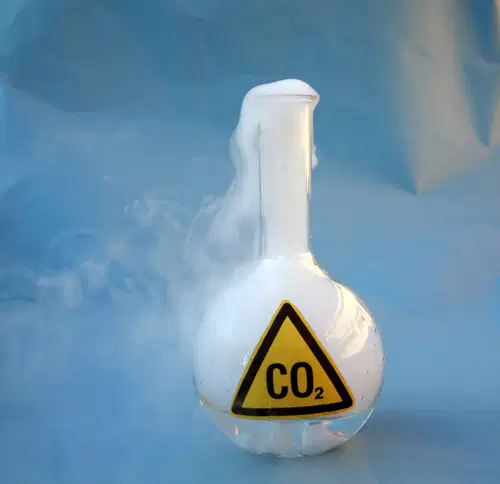
What is an example of sublimation?
a)
Ice cream melting
b)
Dry ice
24.

Are made from a combination of 2 or more elements...
a)
Molecules
b)
Pure Substances
c)
Compounds
d)
Elements
25.
A mixture that is NOT evenly distributed is called ....
a)
Compounded
b)
Homogenous
c)
Heterogenous
d)
Salty
26.

Substance with atoms that are all alike.
a)
element
b)
compound
c)
homogeneous mixture
d)
heterogeneous mixture
27.

All matter is made up of .....
a)
Compounds
b)
Atoms
c)
Molecules
d)
Sunshine
28.

A mixture that is so evenly mixed you can't see the parts. Such as Kool-Aid
a)
Homogeneous Mixture
b)
Heterogeneous Mixture
c)
Pure Substance
29.

A gold coin is an example of a.....
a)
pure element
b)
pure compound
c)
heterogeneous mixture
d)
homogeneous mixture
30.

Burning Logs
a)
Physical Change
b)
Chemical Change
31.

Water freezing
a)
Physical Change
b)
Chemical Change
32.

Fireworks
a)
Physical Change
b)
Chemical Change
33.

Sugar dissolving in tea
a)
Physical Change
b)
Chemical Change
34.

Digestion
a)
Physical Change
b)
Chemical Change
35.

Photosynthesis is an example of a
a)
physical change
b)
chemical change
36.
Which of the following is a sign that a chemical reaction has occurred?
a)
change in shape
b)
melting
c)
formation of a gas
d)
dissolving
37.
A change in the size, shape, or state of matter.
a)
chemical change
b)
physical change
c)
chemical reaction
d)
electron change
38.
Which of the following is NOT an example of a physical change?
a)
crumpled paper
b)
pencil sharpening
c)
shrunken clothing
d)
sour milk
39.
Which is a chemical change?
a)
freezing fruit juice
b)
slicing a potato
c)
boiling water
d)
copper metal turning green
40.

Is gatorade powder dissolving in water physical or chemical change?
a)
Physical
b)
Chemical
41.
A piece of paper burns.
a)
physical change
b)
chemical change
42.

Water boils at what temperature?
a)
132o F
b)
212o C
c)
100o C
d)
None of the above
43.
When you find mass per unit volume of a mineral, you are testing its
a)
Luster
b)
Streak
c)
Density
d)
Crystal structure
44.
What is the formula for calculating density?
a)
Mass ∗ Volume
b)
Volume ∗ Mass
c)
Mass ÷ Volume
d)
Volume ÷ Mass
45.
What is the density of water?
a)
1 mL
b)
1 gram
c)
1 g/cm3
d)
All of the above
46.
An object has a density of 3 g/cm3. When submerged in water, the object will ___________.
a)
float
b)
sink
c)
float halfway in the water
d)
float then sink
47.

Which is denser? An inflated basketball or a deflated basketball?
a)
inflated basketball
b)
deflated basketball
c)
they have the same density
d)
not enough info to answer question
48.
Which of the following is not a chemical property?
a)
rusting
b)
boiling
c)
rotting
d)
burning
49.
Flammability is an example of what property?
a)
Chemical property
b)
Physical property
50.

Ability to rust is this type of property:
a)
Physical property
b)
Chemical property
51.
Which is NOT a physical property?
a)
odor
b)
reacts with acid
c)
ability to conduct electric current
d)
hardness
52.
Physical properties are
a)
properties that can be observed without changing the identity of the substance
b)
properties that describe how a substance changes into a completely different substance
53.
Malleability is the
a)
ability to hammer a substance into thin sheets
b)
how shiny an object is
c)
ability to draw a substance into thin wires
d)
the temperature at which the substance changes from a solid to a liquid
54.
Solubility is the
a)
ability to be scratched
b)
ability to be hammered into thin sheets
c)
how shiny it is
d)
ability to dissolve
55.

even though mercury is a metal, it is a liquid at room temperature
a)
physical property
b)
chemical property
56.
Which lab tool might you use to measure the volume of a liquid?
a)
electric scale
b)
bunsen burner
c)
test tube
d)
graduated cylinder
57.
Jack has a rock. The rock has a mass of 14g and a volume of 2cm3. What is the density of the rock?
a)
7 mL
b)
7 g/cm3
c)
28 g/cm3
d)
1/7 g/cm3
58.
This is a measurement of the amount of matter, or 'stuff', in an object or substance.
a)
volume
b)
density
c)
mass
d)
length
59.
If two objects have the same volume but one has a greater mass, the one with greater mass
a)
Has a lower density
b)
Has a higher density
c)
Will float
d)
Will sink
60.
If you cut a wooden block in half, each half would have
a)
Half the density of the original piece
b)
Twice the density of the original piece
c)
The same density as the original piece
d)
No density at all
61.

The sum of the number of protons and the number of neutrons is called the _____
a)
atomic number
b)
mass number
c)
isotope number
d)
average weight
62.

The middle of the atom, which contains protons and neutrons, is called _____
a)
the shell
b)
the nucleus
c)
the cell
d)
the control center
63.

In the Bohr model of the atom, what is the maximum number of electrons in the second shell?
a)
2
b)
6
c)
8
d)
18
64.

Which subatomic particle has no electric charge?
a)
the proton
b)
the neutron
c)
the electron
d)
the photon
65.

Which subatomic particle has a relative charge of -1?
a)
the proton
b)
the neutron
c)
the electron
d)
the photon
66.

For an atom to be electrically neutral, it must contain the same number of _____
a)
protons and neutrons
b)
neutrons and electrons
c)
protons and electrons
d)
nucleons and electrons
67.

If you want to know which atom an element is, then count the _____
a)
protons
b)
neutrons
c)
electrons
d)
nucleons
68.
This contains most of the mass of an atom
a)
Electron Cloud
b)
Nucleus
c)
Electron
69.
An atom has a mass of 54 while is atomic number is 32. How many electrons does it have?
a)
22
b)
32
c)
54
d)
0
70.
An atom has a mass of 54 while is atomic number is 32. How many neutrons does it have?
a)
22
b)
32
c)
54
d)
86
71.
Each column in the periodic table is called a
a)
period
b)
group
c)
cluster
d)
unit
72.
Elements on the left side of the periodic table are
a)
metals
b)
nonmetals
c)
metalloids
d)
noble gases
73.

The atoms along the staircase are called
a)
metals
b)
nonmetals
c)
metalloids
d)
noble gases
74.
Which group of the periodic table is composed of inert (not reactive) gases?
a)
alkali metals
b)
alkaline earth metals
c)
halogens
d)
noble gases
75.
Which is a halogen?
a)
Helium
b)
Chlorine
c)
Oxygen
d)
Neptune
76.
Which is an alkali metal?
a)
Magnesium
b)
Iron
c)
Sodium
d)
Europium
77.
A horizontal row of elements in the periodic table.
a)
column
b)
group
c)
period
78.
Elements in a ..................have similar chemical properties.
a)
period
b)
group
c)
row
79.
In the modern periodic table elements are arranged by:
a)
atomic mass
b)
atomic number
c)
valence electrons
d)
number of isotopes
80.
Good conductor of heat
a)
Metal
b)
Nonmetal
81.
If a material can easily be drawn into the shape of a wire, it is
a)
Ductile
b)
Magnetic
c)
Malleable
d)
Reactive
82.
If a substance is a gas at room temperature it is most likely a
a)
metal
b)
non-metal
83.
Non-metals are good conductors of heat and electricity.
a)
TRUE
b)
FALSE
84.
Silicon is a semiconductor and has properties of both metals and nonmetals. What type of element is Silicon?
a)
Metal
b)
Nonmetal
c)
Metalloid
d)
Pretty
85.
Which of the following represents an element?
a)
H2O
b)
H2
c)
NaCl
d)
CaCO3
86.

Name this compound: H2O
a)
Water
b)
Carbon dioxide
c)
Hydrogen peroxide
d)
Sulfuric acid
87.
How many Oxygen are in H2O?
a)
1
b)
2
c)
0
d)
4
88.
How many atoms are there TOTAL in:
H2SO4
H2SO4
a)
6
b)
5
c)
7
d)
3
89.
Can be found on the periodic table
a)
Element
b)
Compound
c)
MIxture
90.

What is water?
a)
element
b)
compound
c)
mixture
91.
Nonmetals tend to
a)
gain electrons
b)
lose electrons
92.
Metals tend to
a)
gain electrons
b)
lose electrons
93.
If my charge becomes 2+ what does that say about me?
a)
I am stealing 2 electrons
b)
I am losing 2 electrons
c)
I am in period 2
d)
I have an atomic # of 2
94.
If I gain electrons I become
a)
Positive because I've added to my atom
b)
negative because I've added electrons
c)
same because i'm balanced
d)
equal because now I have electrons
95.
When metals bond with non-metals they form what type of bonds
a)
covalent
b)
ionic
c)
cooperative
d)
lewis
96.
How do the following two elements bond together?
Na1+ F1-
Na1+ F1-
a)
NaF
b)
NaF3
c)
Na3F
d)
Na1F2
97.
How do the following two elements bond together?
Cr3+ O2-
Cr3+ O2-
a)
CrO
b)
Cr3O2
c)
Cr2O3
d)
CrO3
98.

Al represents the element ...
a)
Gold
b)
Aluminum
c)
Tin
d)
Arsenic
99.

Ar represents the element ...
a)
Arsenic
b)
Aluminum
c)
Argon
d)
Oxygen
100.

As represents the element ...
a)
Argon
b)
Aluminum
c)
Arsenic
d)
Fluorine
101.

Ba represents the element ...
a)
Beryllium
b)
Bohrium
c)
Bismuth
d)
Barium
102.

Be represents the element ...
a)
Barium
b)
Boron
c)
Bismuth
d)
Beryllium
103.

B represents the element ...
a)
Boron
b)
Bismuth
c)
Beryllium
d)
Barium
104.

Ca represents the element ...
a)
Copper
b)
Calcium
c)
Carbon
d)
Cerium
105.

C represents the element ...
a)
Calcium
b)
Carbon
c)
Chlorine
d)
Cesium
106.

Cl represents the element ...
a)
Carbon
b)
Calcium
c)
Chromium
d)
Chlorine
107.

Cr represents the element ...
a)
Chlorine
b)
Carbon
c)
Cesium
d)
Chromium
108.

F represents the element ...
a)
Iron
b)
Francium
c)
Fermium
d)
Fluorine
109.

Ga represents the element ...
a)
Germanium
b)
Gallium
c)
Garbonium
d)
Lead
110.

Au represents the element ...
a)
Silver
b)
Tungstun
c)
Gold
d)
Indium
111.

He represents the element ...
a)
Hydrogen
b)
Copper
c)
Hellium
d)
Helium
112.

H represents the element ...
a)
Helium
b)
Hellium
c)
Hydrogen
d)
Neon
113.

I represents the element ...
a)
Iridium
b)
Iodine
c)
Lithium
d)
Sulfur
114.

Co represents the element ...
a)
Carbon
b)
Cobalt
c)
Cesium
d)
Cerium
115.

Fe represents the element ...
a)
Iron
b)
Ferium
c)
Fluorine
d)
Francium
116.

Pb represents the element ...
a)
Gold
b)
Silver
c)
Potassium
d)
Lead
117.

Li represents the element ...
a)
Lutetium
b)
Lithium
c)
Lanthanum
d)
Lawrencium
118.

Mg represents the element ...
a)
Manganese
b)
Magnesium
c)
Molybdenum
d)
Mendelevium
119.

Mn represents the element ...
a)
Manganese
b)
Magnesium
c)
Mendelevium
d)
Molybdenum
120.

Hg represents the element ...
a)
Mercury
b)
Hafnium
c)
Holmium
d)
Hassium
121.

Ne represents the element ...
a)
Nitrogen
b)
Neodymium
c)
Neptunium
d)
Neon
122.

Ni represents the element ...
a)
Neon
b)
Nickel
c)
Nitrogen
d)
Sodium
123.

N represents the element ...
a)
Nickel
b)
Neon
c)
Nitrogen
d)
Sodium
124.

O represents the element ...
a)
Osmium
b)
Oxygen
c)
Cobalt
d)
Hydrogen
125.

P represents the element ...
a)
Potassium
b)
Phosphorus
c)
Platinum
d)
Praseodymium
126.

Pt represents the element ...
a)
Palladium
b)
Lead
c)
Platinum
d)
Polonium
127.
Pt represents the element ...
a)
Palladium
b)
Lead
c)
Platinum
d)
Polonium
128.

K represents the element ...
a)
Potassium
b)
Krypton
c)
Californium
d)
Curium
129.

Si represents the element ...
a)
Sulfur
b)
Sodium
c)
Selenium
d)
Silicon
130.

Ag represents the element ...
a)
Argon
b)
Gold
c)
Mercury
d)
Silver
131.

Na represents the element ...
a)
Nickel
b)
Sodium
c)
Niobium
d)
Neodymium
132.

S represents the element ...
a)
Sulfur
b)
Silver
c)
Seaborgium
d)
Strontium
133.

Sn represents the element ...
a)
Gold
b)
Tungstun
c)
Cadmium
d)
Tin
134.

Zn represents the element ...
a)
Zirconium
b)
Zinc
c)
Mercury
d)
Thallium
100 %

