wayground logo

Free Printable Worksheets

Font size

S
M
L
XL
Worksheets

Practice: Quarter 1 Final

Total questions: 136

Worksheet time: 2hrs 35mins

Name
Class
Date
1.

What element is in period 3 group 18?

a)

Aluminum

b)

Potassium

c)

Argon

d)

Neon

2.

What is the charge of an electron?

a)

positive

b)

negative

c)

neutral

3.

Which subatomic particle determines the identity of an element?

a)

electron

b)

proton

c)

neutron

d)

nucleus

4.

Which statement describes a neutron?

a)

It has no mass and is inside the nucleus

b)

It has mass and is outside the nucleus

c)

It has no mass and is outside the nucleus

d)

It has mass and is inside the nucleus

5.

Which of the following is not a property of metals?

a)

brittle (can break apart easily)

b)

malleable (can bend, be formed into shapes)

c)

lustrous (shiny!)

d)

conduct heat and electricity

6.

What type of element makes up the largest percentage of elements on the Periodic Table?

a)

metals

b)

nonmetals

c)

metaloids

d)

halogens

7.
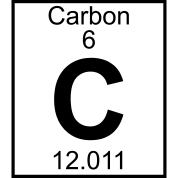
What does the 6 represent?
a)
atomic mass
b)
atomic number
c)
element name
d)
chemical symbol 
8.
What is the element symbol for boron? 
a)
B
b)
Bo
c)
Bn
d)
W
9.
The atomic number tells you what?
a)
number of electrons
b)
number of protons
c)
number of neutrons
d)
both electrons and protons in an atom.
10.

What is the average atomic mass of Neon?

a)

10

b)

30

c)

10.18

d)

20.18

11.

How many protons, neutrons, and electrons are in an atom of potassium, K?

a)

40 protons, 40 neutrons, 40 electrons

b)

19 protons, 20 neutrons, 20 electrons

c)

19 protons, 20 neutrons, 19 electrons

d)

39 protons, 20 neutrons, 39 electrons

12.

An element has the properties of metallic shiny luster, magnetic, good conductor of electricity, and is a solid. What side of the period table would this element be on?

a)

Right

b)

down

c)

Left

d)

Zigzag line

13.

Positively charged particles in the nucleus of the atom.

a)

Atom

b)

Proton

c)

Neutron

d)

Electron

e)

Nucleus

14.

Where are electrons located in the atom?

a)

Inside the nucleus with the protons

b)

Inside the nucleus with the neutrons

c)

Outside the nucleus in the cloud/shell

d)

Outside the nucleus with the protons and neutrons

15.

Go to ptable.com. What is the name of the element that has 27 protons?

a)

Aluminum

b)

Cobalt

c)

Cesium

d)

Silicon

16.

Go to ptable.com. What is the name of the element that has 39 protons?

a)

Potassium

b)

Lithium

c)

Yttrium

d)

Iodine

17.

Go to ptable.com. What is the name of the element that has 9 protons?

a)

Fluorine

b)

Beryllium

c)

Boron

d)

Iron

18.

Go to ptable.com. How many neutrons does Tin (Sn) have?

a)

50

b)

69

c)

119

19.
How many neutrons are in a Gold atom?
a)
79
b)
196
c)
118
d)
275
20.
How many neutrons does a Hydrogen atom have?
a)
1
b)
2
c)
3
d)
0
21.

How many electrons does a neutral atom of Iodine have?

a)

53

b)

126

c)

73

d)

179

22.
How many neutrons does an Oxygen atom have?
a)
8
b)
16
c)
24
d)
7.999
23.

What element is found in period 4, group 8?

a)

Nitrogen

b)

Iron

c)

Calcium

d)

Selenium

24.

What is the element symbol for calcium?

a)

C

b)

Ca

c)

Le

d)

Ge

25.

What is the element symbol for iron

a)

Ir

b)

I

c)

Fe

d)

F

26.
Evidence of Chemical Change.
a)
New Substance 
b)
Size change
c)
State change
d)
Mixture 
27.
Water boiling is a _______ change. 
a)
Physical Change 
b)
Chemical Change 
28.
Fireworks Exploding are a ________ change.
a)
Physical Change
b)
Chemical Change
29.
Ice melting
a)
Chemical Change
b)
Physical Change
30.
Wood burned in a fireplace
a)
Chemical Change
b)
Physical Change
31.
Cake batter baked in an oven
a)
Chemical Change
b)
Physical Change
32.
Baking soda and vinegar combine to make carbon dioxide
a)
Chemical Change
b)
Physical Change
33.
Glass bottle that is shattered
a)
Chemical Change
b)
Physical Change
34.
Rust on an iron fence
a)
Chemical Change
b)
Physical Change
35.
Shredding a piece of paper
a)
Chemical Change
b)
Physical Change
36.
What happens in ALL chemical changes?
a)
Change in state of matter
b)
A new substance is formed
c)
Bubbles are produced
d)
An explosion
37.

Nonmetals tend to

a)

gain electrons

b)

lose electrons

38.

Metals tend to

a)

gain electrons

b)

lose electrons

39.
If my charge becomes 2+ what does that say about me?
a)
I am stealing 2 electrons
b)
I am losing 2 electrons
c)
I am in period 2
d)
I have an atomic # of 2
40.
If I gain electrons I become
a)
Positive because I've added to my atom
b)
negative because I've added electrons
c)
same because i'm balanced
d)
equal because now I have electrons
41.
How do the following two elements bond together?
Na1+  F1-         
a)
NaF
b)
NaF3
c)
Na3F
d)
Na1F2
42.
How do the following two elements bond together?
Cr3+  O2-         
a)
CrO
b)
Cr3O2
c)
Cr2O3
d)
CrO3
43.
How do the following two elements bond together?
K1+  S2- 
a)
KS
b)
K8S
c)
K6S3
d)
K2S
44.
How do the following two elements bond together?
Al3+  O2-         
a)
AlO
b)
Al2O3
c)
Al3O6
d)
Al3O2
45.

What is the charge of silver in AgF?

a)

+1

b)

+2

c)

+3

d)

+4

46.

When a nonmetal gains electrons, it becomes this type of ion.

a)

Anion

b)

Cation

47.

When a metal loses electrons, it becomes this type of ion.

a)

anion

b)

cation

48.
When an ionic compound is formed, its charge is 
a)
negative
b)
neutral (no charge)
c)
positive
49.
Nonmetals form ____ by ____ electrons.
a)
Cations, gaining
b)
Cations, losing
c)
Anions, gaining
d)
Anions, losing
50.
Which of the following BEST describes ionic bonds?
a)
Bond held together by a sea of electrons
b)
Bond of two ions of opposite charges held together by electrostatic forces
c)
Bond held together by the sharing of electrons
d)
Bond between hydrogen and an anion or polyatomic ion.
51.

How do the following two elements bond together?

Al3+ Cl1-

a)

AlCl

b)

Al2Cl3

c)

AlCl2

d)

AlCl3

52.

How do the following two elements bond together? Ca, calcium, and Br, bromine.

a)

Ca2Br

b)

CaBr2

c)

CaBr

d)

Ca2Br3

53.
An electron has what kind of charge?
a)
no charge
b)
positive 
c)
negative
d)
it depends
54.

Anions

a)

Gain electrons, has an overall positive charge

b)

Lose electrons, has an overall positive charge

c)

Lose electrons, has an overall negative charge

d)

Gain electrons, has an overall negative charge

55.

Cations

a)

Gain electrons, has an overall positive charge

b)

Lose electrons, has an overall positive charge

c)

Lose electrons, has an overall negative charge

d)

Gain electrons, has an overall negative charge

56.

What is the charge of a hydrogen ion?

a)

+1

b)

-1

c)

+2

d)

-2

e)

+3

57.

What is the charge of a nitrogen ion?

a)

+2

b)

-2

c)

+3

d)

-3

58.

What is the charge of a sulfur ion?

a)

+1

b)

+2

c)

-1

d)

-2

59.

What is the charge of a sodium ion?

a)

+1

b)

-1

c)

+2

d)

-2

60.

What is the charge of a bromine ion?

a)

+1

b)

-1

c)

+2

d)

-2

e)

-3

61.

What is the charge of an aluminum ion?

a)

+1

b)

-1

c)

+2

d)

-2

e)

+3

62.

Which scientist first gave evidence for the existence of atoms?

a)
JJ Thomson
b)
Ernest Rutherford
c)
John Dalton
d)
James Chadwick
63.
James Chadwick discovered the ________.
a)
proton
b)
neutron
c)
electron
d)
nucleus
64.
What did Thomson discover?
a)
electron
b)
proton
c)
neutron
d)
electron cloud
65.

Subatomic particles with a negative charge

a)

Electrons

b)

Neutrons

c)

Protons

d)

Quarks

66.
Subatomic particles with a positive charge
a)
neutrons
b)
atomic mass
c)
protons
d)
isotopes
67.
Subatomic particles that are neutral in charge
a)
Neutrons
b)
Protons
c)
Nucleus 
d)
Electrons
68.
A tiny but very dense, positively charged portion of the atom that holds most of the atomic mass
a)
Electron Shells
b)
Orbitals
c)
Electron Cloud
d)
Nucleus
69.

He claimed that matter was made of small, hard particles that he called “atomos.”

a)

Democritis

b)

Dalton

c)

Moseley

d)

Einstein

70.
The scientist responsible for "discovering" the nucleus is:
a)
Bohr
b)
Rutherford
c)
Schroedinger
d)
Einstein
71.

Which of the following statements from John Dalton were later shown to be incorrect?

a)

Atoms cannot be subdivided, created, or destroyed.

b)

Atoms of different elements are different in size, mass, and other properties

c)

All matter is composed of extremely small particles called atoms.

d)

In chemical reactions, atoms are combined, separated, or rearranged.

72.
Atoms are made up of three basic parts, which are -
a)
Protons, neutrons, electrons
b)
neutrinos, protons, neutrons
c)
quarks, protons, electrons
d)
electrons, neutrons, and quarks
73.
The nucleus is made up of -
a)
neutrons and electrons
b)
protons and neutrons
c)
protons and electrons
d)
electrons and quarks
74.
What scientist is best known for his "Plum Pudding" model of the atom?
a)
J.J. Tomson
b)
Ernest Rutherford
c)
John Dalton
d)
Democritus
75.
Place the following scientists in order, from earliest to latest: 
A) Ernest Rutherford
B) J.J. Thomson
C) John Dalton
a)
B,C,A
b)
C,A,B
c)
A,C,B
d)
C,B,A
76.
J.J. Thomson provided evidence that an atom...
a)
is the smallest particle of matter
b)
contains negatively charged particles
c)
has an overall negative charge
d)
has an overall positive charge
77.
Rutherford's gold foil experiment provided evidence that...
a)
negative and positive charges are spread evenly throughout the atom.
b)
alpha particles have a positive charge.
c)
gold is not a dense as previously thought.
d)
there is a dense positively charged nucleus at the center of an atom.
78.
Ernst Rutherford discovered which part of the atom through the use of gold foil?
a)
Proton
b)
Neutron
c)
Electron
d)
Orbitals
79.
The particles that are found in the nucleus of an atom are
a)
neutrons and electrons
b)
electrons only
c)
protons and neutrons
d)
protons and electrons
80.

What element is more reactive than Sulfur?

a)

Phosphorus

b)

Selenium

c)

Tellurium

d)

Chlorine

81.

What element is more reactive than Nitrogen?

a)

Phosphorus

b)

Arsenic

c)

Antimony

d)

Oxygen

82.

What is the most reactive element here?

a)

Oxygen

b)

Sulfur

c)

Selenium

d)

Tellurium

83.

What is the most reactive element in group 17?

a)

Fluorine

b)

Bromine

c)

Iodine

d)

Iron

84.

What is the most reactive element in group 1?

a)

Lithium

b)

Francium

c)

Potassium

d)

Caesium

85.

What is the most reactive element in group 2?

a)

Beryllium

b)

Strontium

c)

Radium

d)

Barium

86.

Using ptable.com, tell me the most reactive between Fe, Zn, Cu, and Al.

a)

Fre

b)

Zn

c)

Cu

d)

Al

87.

What is the most reactive cation in group 4?

a)

Potassium

b)

Iron

c)

Zinc

d)

Bromine

88.

What is the most reactive anion in these elements found in group 4?

a)

Potassium

b)

Iron

c)

Zinc

d)

Bromine

89.

Using ptable.com, is Boron, Aluminum, or Gallium more reactive as a cation?

a)

Boron

b)

Aluminum

c)

Gallium

d)

Mr. Fisher

90.

Is Fluorine, Oxygen, or Nitrogen more reactive as an anion?

a)

Fluorine

b)

Oxygen

c)

Nitrogen

91.

Which has the greater electronegativity:  N or C?

a)
C
b)
N
92.

Which has the greater electronegativity:  H or F?

a)
H
b)
F
93.

Put these in increasing order of electronegativity: F, N, B

a)
B < N < F
b)
B < F < N
c)
N < F < B
d)
F < N < B
94.

Put these in increasing order of electronegativity: C, H, and O

a)
H < C < O
b)
H < O < C
c)
O < C < H
d)
C < H < O
95.

Which has the greater electronegativity:  Cl or Al?

a)
Cl
b)
Al
96.

Put these in increasing order of electronegativity

a)
Cu, Mg, Sr, Ca
b)
F, Cl, Br, Si
c)
Cs, Rb, Ca, Mg
d)
Zn, Cd, Ag, Cu
97.
Electronegativity is...
a)

the measurement of an elements ability to attract electrons

b)

the measurement of an elements ability to give away electrons

c)
the energy required to remove an electron from a specific atom
d)
how easy it is to make friends. 
98.
The element with the largest electronegativity in the halogens is - 
a)
At
b)
F
c)
Cl
d)
Br
99.
The element with the lowest electronegativity in Period 3 is - 
a)
Na
b)
Cl
c)

Si

d)
Mg
100.
Elements closer to the noble gases have stronger attraction for electrons.
a)
True
b)
False
101.
Which of the following is the least electronegative element?
a)
oxygen
b)
potassium
c)
fluorine
d)
nitrogen
102.
Which of the following is the most electronegative element?
a)
nitrogen
b)
phosphorus
c)
arsenic
d)
lithium
103.

Put these in increasing order of electronegativity: O, S, Se

a)
Se < S < O
b)
Se < O < S
c)
O < S < Se
d)
S < Se < O
104.
What elements have zero electronegativity?
a)
metals
b)
nonmetals
c)
metalloids
d)
noble gases
105.

What does electronegativity do as you go left to right across a period?

a)

decrease

b)

no pattern

c)

stay the same

d)

increase

106.

What does electronegativity do as you go down a group?

a)

decrease

b)

no pattern

c)

stay the same

d)

increase

107.
The substances listed on the right side of a chemical equation are the
a)
Yields
b)
Reactants
c)
Products
d)
Precipitates
108.
CaCO3 represents a chemical
a)
Symbol
b)
Formula
c)
Subscript
d)
Reaction
109.
The substances listed on the left side of a chemical equation are the
a)
Products
b)
Coefficients
c)
Precipitates
d)
Reactants
110.

Which of the following represent chemical equations? Check all that apply.

a)

2Na + H2O  2NaOH + H22Na\ +\ H_2O\ \rightarrow\ 2NaOH\ +\ H_2

b)

2KClO3   2KCl + 3O22KClO_3\ \ \rightarrow\ 2KCl\ +\ 3O_2

c)

2Fe + 3O2  2Fe2O32Fe\ +\ 3O_{2\ }\rightarrow\ 2Fe_2O_3

d)

2H2O2H_2O

e)

3O3 , H2O3O_3\ ,\ H_2O

111.

C2H6 + 5O2  2CO2 + 3H2O2C_2H_6\ +\ 5O_2\ \rightarrow\ 2CO_2\ +\ 3H_2O_2  
Given this chemical equation, what are the REACTANTS?

a)

C2H6 and 5O2C_2H_{6\ }and\ 5O_2  

b)

2CO2 and 3H2O22CO_2\ and\ 3H_2O_2  

112.

C2H6 + 5O2  2CO2 + 3H2O2C_2H_6\ +\ 5O_2\ \rightarrow\ 2CO_2\ +\ 3H_2O_2  
Given this chemical equation, what are the PRODUCTS?

a)

C2H6 and 5O2C_2H_{6\ }and\ 5O_2  

b)

2CO2 and 3H2O22CO_2\ and\ 3H_2O_2  

113.

The formula shown here represents the breakdown of a metal into rust. What elements are involved in this reaction? Check all that apply. 4Fe + 3O2  2Fe2O34Fe\ +\ 3O_2\ \rightarrow\ 2Fe_2O_3  

a)

Iron

b)

Oxygen

c)

Carbon

d)

Nitrogen

114.

Select the products in the following chemical formula:  CH4 +2O2  CO2+ 2H2OCH_{4\ }+2O_2\ \rightarrow\ CO_2+\ 2H_2O  

a)

2H2O2H_2O  

b)

2O22O_2  

c)

CH4CH_4  

d)

CO2CO_2  

115.

Select the reactants in the following chemical formula:  CH4 +2O2  CO2+ 2H2OCH_{4\ }+2O_2\ \rightarrow\ CO_2+\ 2H_2O  

a)

2H2O2H_2O

b)

2O22O_2

c)

CH4CH_4

d)

CO2CO_2

116.

In the equation shown, what are the product(s)?

a)

N2 + H2

b)

NH3

117.

In the equation shown, what are the reactant(s)?

a)

N2 + H2

b)

NH3

118.
What are the products of the chemical reaction pictured?
a)
CH4 and CO2
b)
CH4 and O2
c)
CO2 and H2O
d)
O2 and H2O
119.
Consider the chemical equation CH4 + 2 O2 → CO2 + 2 H2O. In this equation, CH4 is a
a)
product
b)
reactant
c)
displacement
120.
What is the left part of a chemical equation called?
H2 + O → H2O
a)
Reactants
b)
Products 
c)
Yields 
d)
Chemical Equation 
121.
2H2 + O2 ----> 2H2O What is the product?
a)
------>
b)
2H2O
c)
2H2+ O2
122.

How many reactants are in A + B ---> C ?

a)

1

b)

2

c)

3

d)

4

123.

How many products are in A + B ---> C ?

a)

1

b)

2

c)

3

d)

4

124.

In a chemical reaction, bonds are broken and new bonds are formed. Which has their bonds broken?

a)

Reactants

b)

Products

125.

In a chemical reaction, bonds are broken and new bonds are formed. Which has new bonds formed?

a)

Reactants

b)

Products

126.

What part of the equation does the #1 represent?

a)

product

b)

produces/yields

c)

solid

d)

reactant

127.

The two (2) is indicating _________.

a)

subscripts

b)

reactants

c)

coefficients

d)

aqueous

128.

The three (3) indicates which part?

a)

reactants

b)

products

c)

equation

d)

formulas

129.

Number seven (7) is indicating ____ of the equation.

a)

reactants

b)

products

c)

equation

d)

formulas

130.
Which is the correct formula for:
 three hydrogen (H)
one sulfur (S)
four oxygen (O)
a)
H3SO4
b)
HSO4
c)
H4S3O
d)
H2O
131.
How many atoms are there TOTAL in:
H2SO4
a)
6
b)
5
c)
7
d)
3
132.
How many Elements are in the compound C2H8O ?
a)
2
b)
1
c)
3
d)
0
133.
How many molecules are in 10MgCl2?
a)
10
b)
2
c)
30
d)
13
134.
Which of these is an element?
a)
H2Cr
b)
Cr3
c)
OH
d)
PNi
135.
Na + MgF2 -->  NaF + Mg
What are the reactants?
a)
Na + MgF2
b)
Na
c)
NaF + Mg
d)
NaF
136.
NH3 ---> N2 + H2
What are the products?
a)
N2 + H2
b)
N2
c)
H2
d)
NH3