
 Worksheets
Biology Semester 1 Review
Total questions: 93
Worksheet time: 1hrs 20mins
Name
Class
Date
1.

Fruit fly body cells have 8 chromosomes. After mitosis, you would expect a resulting fruit fly daughter cell to have ...
a)
16 chromosomes.
b)
46 chromosomes.
c)
8 chromosomes.
d)
4 chromosomes.
2.

Structure (c) is a ____.
a)
chromosome
b)
chromatid
c)
centromere
3.

Structure (a) is a ____.
a)
chromosome
b)
chromatid
c)
centromere
4.

Name the phase:
a)
Anaphase
b)
Telophase
c)
Metaphase
d)
Prophase
5.

Name the phase:
a)
Prophase
b)
Metaphase
c)
Anaphase
d)
Telophase
6.

Name the phase:
a)
Prophase
b)
Metaphase
c)
Anaphase
d)
Telophase
7.

Name the phase:
a)
Prophase
b)
Metaphase
c)
Anaphase
d)
Telophase
8.

The stages of mitosis in order
a)
Metaphase, Anaphase, Prophase, Telophase
b)
Prophase, Anaphase, Metaphase, Telophase
c)
Prophase, Metaphase, Anaphase, Telophase
d)
Anaphase, Prophase, Telophase, Metaphase
9.
DNA will condense into...
a)
Centromeres
b)
Chromosomes
c)
Nuclei
d)
Spindle fibers
10.
In which phase does the cell spend most of it's life?
a)
Interphase
b)
Nuclear Division
c)
Telophase
d)
Mitosis
11.

Which is Metaphase?
a)
A
b)
E
c)
C
d)
F
12.

Which phase comes NEXT?
a)
prophase
b)
metaphase
c)
anaphase
d)
telophase
13.

Name the previous phase.
a)
Prophase
b)
Metaphase
c)
Anaphase
d)
Telophase
14.
Before cells can divide, what must be copied?
a)
mitochondria
b)
cytoplasm
c)
DNA
d)
Cell Wall
15.
What is the first phase of Mitosis?
a)
Prophase
b)
Metaphase
c)
Anaphase
d)
Telophase
16.

Why would it be important to replicate DNA before a cell divides in mitosis or meiosis?
a)
In order for genetic information to be transferred into daughter cells.
b)
In order for the cell to be able to increase in size.
c)
In order for the DNA to be contained in the nucleus.
d)
In order for the cell to re-order the DNA sequencing in the new cells.
17.

How many chromosomes do humans have?
a)
46
b)
21
c)
10
18.

In a molecule of double-stranded DNA, the amount of Adenine present is always equal to the amount of
a)
cytosine
b)
guanine
c)
thymine
d)
uracil
19.
Which organelle is DNA usually found in?
a)
cell membrane
b)
vacuole
c)
ribosome
d)
nucleus
20.
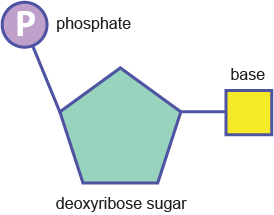
Nucleotides are made up of a sugar, phosphate, and..?
a)
nitrogenous base
b)
nucleic acid
c)
cholesterol
d)
fatty acid
21.

The term used to describe DNA Replication is:
a)
Semi-Conservative
b)
Conservative
c)
AntiParallel
d)
Dispersive
22.
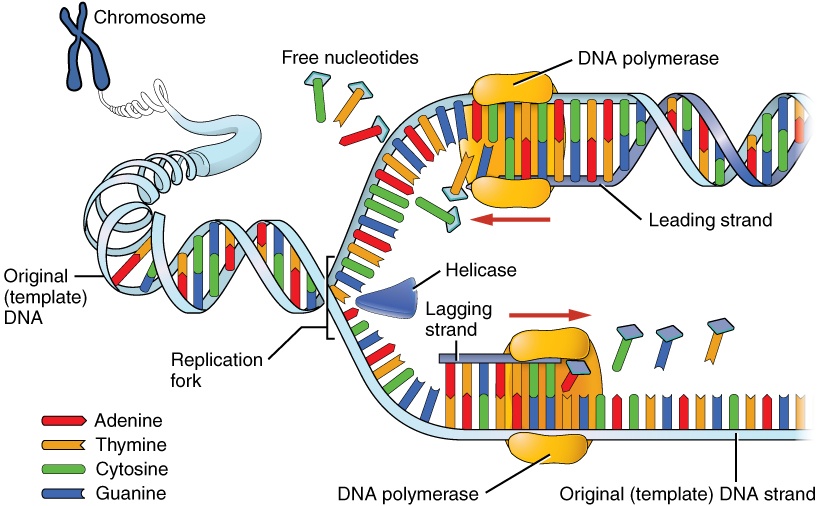
What is the complement to the DNA strand below:
5'-ATGCCAT-3'
5'-ATGCCAT-3'
a)
5'-TACGGTA-3'
b)
3'-TACGGTA-5'
c)
3'-ATGGCAT-5'
d)
5'-ATGGCAT-3'
23.
Daughter cells always end up with ______ DNA to the parent cell after mitosis.
a)
different
b)
half
c)
twice
d)
identical
24.
Helicase is....
a)
The enzyme that is responsible for unwinding DNA during DNA replication
b)
Proofreading enzyme used during DNA replication
c)
Enzyme add nucleotides to the new growing DNA strand.
d)
None of the above
25.
Enzyme that proofreads and adds new nucleotides to the new growing DNA strand during DNA replication.
a)
Amylase
b)
Helicase
c)
RNA polymerase
d)
DNA polymerase
26.

Which of the following best describes a DNA molecule?
a)
double helix
b)
contains ribose
c)
made of amino acids
d)
contains Uracil
27.
Which shows the correct complementary base pairing for DNA?
a)
C-A, T-G
b)
A-G, C-T
c)
C-G, U-A
d)
T-A, G-C
28.
DNA polymerase is a(n)
a)
lipid
b)
enzyme
c)
sugar
d)
starch
29.
Guanine bonds with ______________.
a)
Adenine
b)
Guanine
c)
Cytosine
d)
Thymine
30.
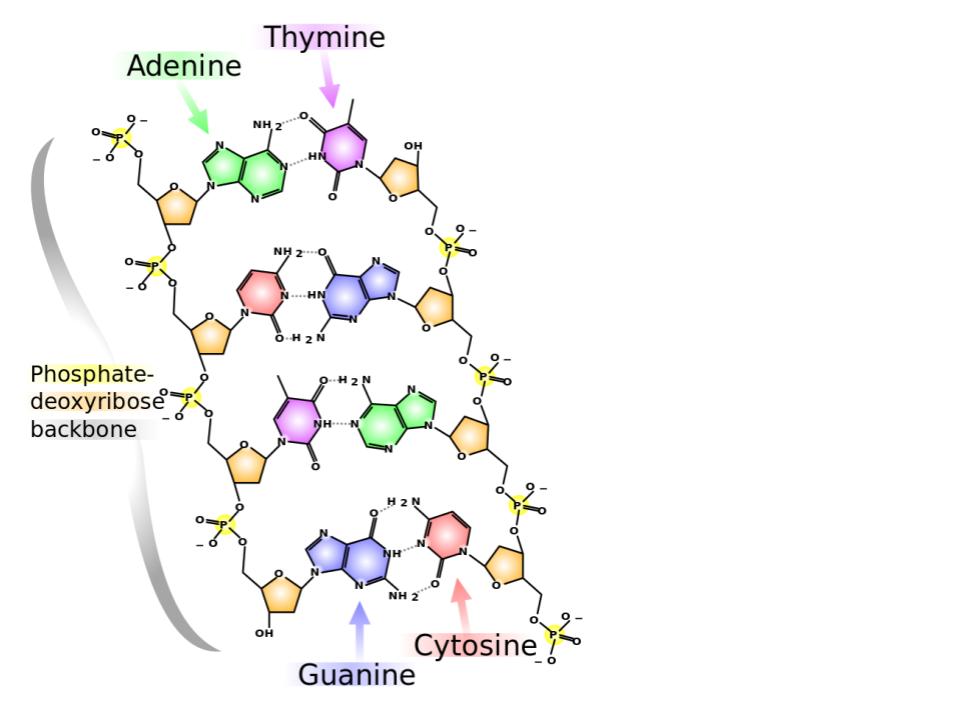
The two strands of DNA are held together by:
a)
Hydrogen Bonds
b)
Phosphodiester Bonds
c)
Glycolsyl Bonds
d)
Glycosidic Linkages
31.

DNA is a polymer made of:
a)
Nucleotides
b)
Ribosomes
c)
Purines
d)
Pyrimidines
32.
What is the correct structure of DNA?
a)
A double strand of nucleotides
b)
A single strand of nucleotides
c)
A double strand of amino acids
d)
A single strand of amino acids
33.

Replicate the following strand of DNA:
AATCATGGA
AATCATGGA
a)
AATCATGGA
b)
TTAGTACCT
c)
UUAGUACCU
d)
GGATAUCUA
34.

The pictures here show the steps of DNA replication, but they are all mixed up! What order should the pictures be in?
a)
3, 2, 1, 4
b)
2, 1, 4, 3
c)
2, 3, 1, 4
d)
3, 4, 1, 2
35.

The enzyme that comes first temporarily gets the single strand ready to add new nucleotides is called "The Initializer" or
a)
Helicase
b)
Primase
c)
Polymerase
d)
Nuclease
36.

Which enzyme is responsible for adding nucleotides ("The Builder")?
a)
Topoisomerase
b)
DNA Polymerase
c)
Ligase
d)
Primase
37.

Which enzyme is responsible for gluing and connecting parts of newly created DNA fragments together ("The Gluer")?
a)
Topoisomerase
b)
DNA Polymerase
c)
Ligase
d)
Primase
38.

The enzyme that unzips the DNA to prepare for replication ("The Unzipper")
a)
helicase
b)
replicase
c)
polymerase
d)
synthase
39.
What is the end result of replication?
a)
Two new identical strands of DNA
b)
One parent strand and one daughter strand of DNA
c)
Two new and different strands of DNA
d)
One new strand of DNA
40.
This is referred to as the energy currency of the cell
a)
ADP
b)
ATP
c)
Mitochondria
d)
Nucleus
41.
This process releases chemical energy from sugars and other carbon-based molecules to make ATP when oxygen is present.
a)
photosynthesis
b)
light-independent reaction
c)
cellular respiration
d)
light-dependent reaction
42.
Cellular respiration takes place in the
a)
nucleus
b)
cytoplasm
c)
ribosomes
d)
mitochondria
43.
Which is not a waste product of cellular respiration?
a)
Water
b)
Heat
c)
Carbon Dioxide
d)
Oxygen
44.
Up to how many ATP molecules are made from the breakdown of one glucose molecule?
a)
2
b)
24
c)
38
d)
45
45.
What is the purpose of cellular respiration?
a)
to break down food
b)
to create energy in the body
c)
to release energy from food
d)
there is none; it's a waste of time
46.
In which way are photosynthesis and cellular respiration different?
a)
Cellular respiration stores ATP, while photosynthesis releases ATP.
b)
Cellular respiration produces oxygen, while photosynthesis uses oxygen.
c)
Photosynthesis releases energy, while cellular respiration stores energy.
d)
Photosynthesis used carbon dioxide, while cellular respiration produces carbon dioxide.
47.
ATP becomes ADP when it
a)
loses a phosphate
b)
is exposed to sunlight
c)
gains a phosphate
d)
gains energy
48.
Which is the correct chemical equation for CELLULAR RESPIRATION?
a)
Glucose (Sugar) + Oxygen --> Carbon Dioxide + Water + ATP (Energy)
b)
ATP (Energy) + Oxygen --> Carbon Dioxide + Water + Glucose (Sugar)
c)
Glucose (Sugar) + Carbon Dioxide --> Oxygen + Water + ATP (Energy)
Glucose (Sugar) + Carbon Dioxide --> Oxygen + Water + ATP (Energy)
Glucose (Sugar) + Carbon Dioxide --> Oxygen + Water + ATP (Energy)
d)
Glucose (Sugar) + Water + Oxygen --> Carbon Dioxide + Oxygen + ATP (Energy)
49.
Cellular Respiration's goal is to
a)
make water
b)
make ATP
c)
make glucose
d)
make oxygen
50.
Which of these statements about cellular respiration and photosynthesis in plants and animals is correct?
a)
Plants do photosynthesis ONLY, animals do cellular respiration ONLY
b)
Both plants and animals do BOTH cellular respiration AND photosynthesis
c)
Plants and Animals BOTH do cellular respiration, but ONLY plants do photosynthesis
d)
Animals do photosynthesis ONLY and plants do cellular respiration ONLY
51.
What is the ultimate ORIGINAL source of energy for living things
a)
Sugar
b)
Sun
c)
Moon
d)
Carbon Dioxide
52.
In the exercise lab, why did the BTB change color faster after exercising?
a)
Your body needed more ATP to exercise, so it increased the rate of cellular respiration, making more CO2
b)
Your body needed more ATP to exercise, so it increased the rate of cellular respiration, making less CO2
c)
Your body needed more ATP to exercise, so it decreased the rate of cellular respiration, making more CO2
d)
Your body needed more ATP to exercise, so it decreased the rate of cellular respiration, making less CO2
53.
Which of these statements about plant and animal cells is true?
a)
Both have mitochondria, only plants have chloroplasts
b)
Both have chloroplasts, only plants have mitochondria
c)
Both have both mitochondria and chloroplasts
d)
Animal and plant cells do not have either mitochondria or chloroplasts
54.
How does ATP/ADP act as the energy currency for our cells?
a)
When a phosphate is removed from ATP, energy is released and ADP is made
b)
When a phosphate is added to ADP, energy is released and ATP is made
c)
When a phosphate is added to ATP, energy is released and ADP is made
d)
When a phosphate is removed from ADP, energy is released and ATP is made
55.
When humans burn fossil fuels, most of the carbon quickly enters the as carbon dioxide.
a)
Water
b)
Atmosphere
c)
Sun
d)
Air
56.
Which one of these does not add CO2 to the atmosphere?
a)
cooking with gas
b)
planting trees
c)
burning wood
d)
riding in a bus
57.
What does not produce carbon dioxide?
a)
Photosynthesis
b)
Burning Fossil Fuels
c)
Animal respiration
d)
Plants decaying
58.
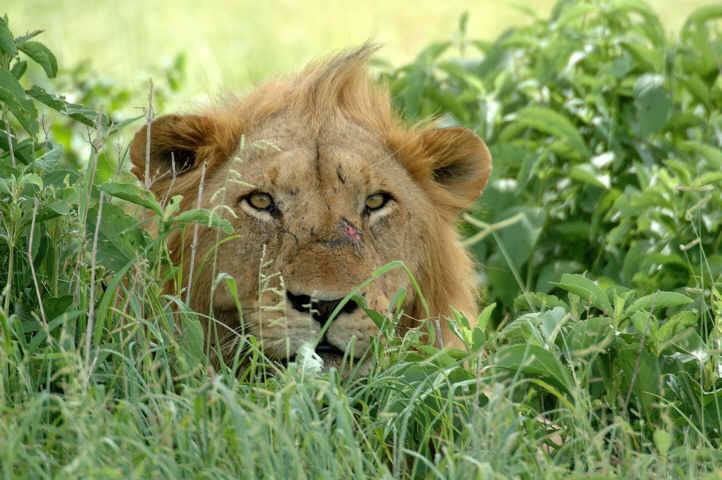
How does the carbon in grass become part of a lion?
a)
The lion eats the grass
b)
Carbon from grass doesn't end up in a lion.
c)
The carbon ends up in the lion's food chain.
d)
The lion breathes in carbon given out by the plant
59.
Which process converts carbon in the form of sugar into carbon dioxide gas?
a)
Bioremediation
b)
Photosynthesis
c)
Respiration
d)
Transpiration
60.
Which of the following is the correct equation for PHOTOSYNTHESIS?
a)
CO2 + light + H2O --> O2 + Sugar
b)
CO2 + sugar + H2O --> O2 + light
c)
O2 + light + H2O --> CO2 + Sugar
d)
CO2 + O2 + H2O --> Light+ Sugar
61.
Which organisms perform Photosynthesis?
a)
Only Autotrophs
b)
Only Heterotrophs
c)
Autotrophs and Heterotrophs
62.
What is the pigment in chloroplasts that performs photosynthesis?
a)
Chlorosynthesis
b)
Chlorophyll
c)
ADP
d)
Electron Transport
63.
Which gas is removed from the atmosphere during photosynthesis?
a)
hydrogen
b)
oxygen
c)
nitrogen
d)
carbon dioxide
64.
What are the products of photosynthesis?
a)
water and carbon dioxide
b)
oxygen and glucose
c)
oxygen and carbon dioxide
d)
oxygen and water
65.
Plants need ________ for photosynthesis
a)
oxygen
b)
soil
c)
carbon dioxide
d)
sugar
66.

Where do plants get most of their mass?
a)
Plants get their mass mostly from water
b)
Plants get their mass mostly from soil.
c)
Plants get their mass mostly from sunlight.
d)
Plants get their mass mostly from carbon dioxide
67.
Which statement about photosynthesis is correct?
a)
Plants get the energy they need for photosynthesis from water.
b)
Plants get the energy they need for photosynthesis from soil.
c)
Plants get the energy they need for photosynthesis from sunlight.
d)
Plants do not require energy to perform photosynthesis.
68.
A student decides she wants to know how different colors of light impact plant growth. She grows 4 plants, giving each the same amount of water each day, soil to start, and keeping each at the same temperature. One plant gets white light, one gets green light, one gets blue light, and one gets red light. She checks on the plants each day for a month, and measures how tall they are in cm.
What was the independent (manipulated) variable in this experiment?
What was the independent (manipulated) variable in this experiment?
a)
The amount of water
b)
The color of light
c)
The height of the plant
d)
The time she grew the plants
69.
A student decides she wants to know how different colors of light impact plant growth. She grows 4 plants, giving each the same amount of water each day, soil to start, and keeping each at the same temperature. One plant gets white light, one gets green light, one gets blue light, and one gets red light. She checks on the plants each day for a month, and measures how tall they are in cm.
What was the dependent (responding) variable in this experiment?
What was the dependent (responding) variable in this experiment?
a)
The amount of water
b)
The color of light
c)
The height of the plant
d)
The time she grew the plants
70.
A student decides she wants to know how different colors of light impact plant growth. She grows 4 plants, giving each the same amount of water each day, soil to start, and keeping each at the same temperature. One plant gets white light, one gets green light, one gets blue light, and one gets red light. She checks on the plants each day for a month, and measures how tall they are in cm.
Which of these would NOT be a control?
Which of these would NOT be a control?
a)
The amount of water given to each plant
b)
The color of light
c)
The temperature of the plants
d)
The time she grew the plants
71.
Which is an example of a carbohydrate?
a)
butter
b)
bread
c)
water
d)
red meat
72.
Which is an example of a protein?
a)
butter
b)
sugar
c)
water
d)
red meat
73.
What primary function do carbohydrates serve in the human body?
a)
Used as a building material
b)
Stores genetic information
c)
Helps to form boundaries
d)
Used as an energy source
74.
Which type of molecule is necessary to create all the different types of tissues the body needs for growth and repair?
a)
carbohydrates
b)
lipids
c)
proteins
75.
Oil and butter are both examples of which food molecule?
a)
carbohydrates
b)
lipids
c)
proteins
76.

In this image, what is the part labeled A?
a)
Seed Coat
b)
Cotyledon
c)
Embryo
d)
Xylem
77.
In this image, what is the part labeled B?
a)
Seed Coat
b)
Cotyledon
c)
Embryo
d)
Xylem
78.
In this image, what is the part labeled C?
a)
Seed Coat
b)
Cotyledon
c)
Embryo
d)
Xylem
79.
What is the job of the cotyledon in a seed?
a)
Baby plant
b)
Energy storage
c)
Protects the seed
80.
What is the job of the seed coat in a seed?
a)
Baby plant
b)
Energy storage
c)
Protects the seed
81.
What is the job of the embryo in a seed?
a)
Baby plant
b)
Energy storage
c)
Protects the seed
82.
Where in a plant does most photosynthesis take place?
a)
Stems
b)
Roots
c)
Leaves
d)
Flowers
83.
Where in a plant cell does photosynthesis take place?
a)
Nucleus
b)
Chloroplast
c)
Mitochondria
d)
Vacuole
84.

The primary consumer in this food chain is...
a)
Grass
b)
Grasshopper
c)
Frog
d)
Python
85.
Which organism in this food chain would have the most energy?
a)
Grass
b)
Grasshopper
c)
Frog
d)
Python
86.
The autotroph in this food chain is
a)
Grass
b)
Grasshopper
c)
Frog
d)
Python
87.
The secondary consumer in this food chain is
a)
Grass
b)
Grasshopper
c)
Frog
d)
Python
88.
In an ecosystem, a rock is considered a _____________ factor
a)
Biotic
b)
Abiotic
89.
Which of these is NOT required for something to be considered alive
a)
Having Cells
b)
Having DNA
c)
Being able to move
d)
Can grow and change
90.
How much energy is passed from one trophic level to the next?
a)
10%
b)
50%
c)
90%
d)
100%
91.
Another word for a consumer is...
a)
A producer
b)
A heterotroph
c)
An autotroph
d)
A trophic level
92.
Organisms that recycle nutrients and feed on dead/decaying plants and animals
a)
Producer
b)
Autotroph
c)
Decomposer
d)
Predator
93.
An organism that makes its own food through photosynthesis is called...
a)
Consumer
b)
Producer
c)
Heterotroph
d)
Decomposer
100 %

