
 Worksheets
Atoms Review
Total questions: 75
Worksheet time: 1hrs 20mins
Name
Class
Date
1.
all matter is made of what
a)
energy
b)
atoms
c)
electrons
d)
compounds
2.
The positive particles of an atom are
a)
electrons
b)
positrons
c)
neutrons
d)
protons
3.
the central region of an atom where its neutrons and protons are is its
a)
nucleus
b)
electron cloud
c)
core
d)
center
4.
an atom with atomic number 6 would have how many protons
a)
6
b)
12
c)
3
d)
cannot be determined
5.
Particles in an atom that are neutral and have no charge are
a)
negatrons
b)
electrons
c)
neutrons
d)
protons
6.
True or False? Neutrons have a negative charge
a)
True
b)
False
7.
What is the atomic number for an element with three protons?
a)
2
b)
1
c)
3
d)
6
8.
A particle that moves around the nucleus is a(n)...
a)
Proton
b)
Neutron
c)
Electron
d)
Quark
9.
In the modern periodic table elements are arranged by:
a)
atomic mass
b)
atomic number
c)
valence electrons
d)
number of isotopes
10.

What does the 1.00794 stand for?
a)
Hydrogen
b)
atomic number
c)
atomic mass
d)
atomic explosion
11.

What is the atomic mass of "F"
a)
9
b)
18
c)
17
d)
19
12.
The first energy level can hold up to how many electrons?
a)
8
b)
4
c)
2
d)
5
13.
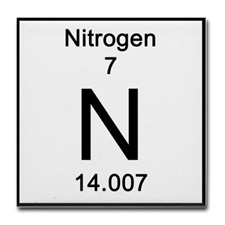
What is the number of protons that the element in this image contain?
a)
14
b)
7
c)
15
d)
18
14.
An atoms overall charge is
a)
positive
b)
depends on its mood
c)
neutral
d)
negative
15.
Which of the following is a negatively charged subatomic particle?
a)
Electron
b)
Proton
c)
Neutron
d)
Quark
16.
Where are electrons of an atom found?
a)
Nucleus
b)
Electron Cloud
c)
Some are in the nucleus and some in the electron cloud.
d)
They are moving everywhere.
17.
Most of the mass in an atom is concentrated in the...
a)
electrons
b)
nucleus
c)
protons
d)
empty space
18.
What does the nucleus consist of?
a)
Protons + Electrons
b)
Neutrons + Electrons
c)
Atoms
d)
Protons + Neutrons
19.
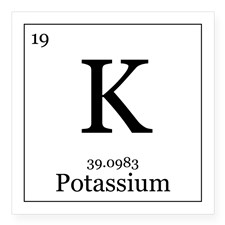
How many neutron are in the atom "K"?
a)
7
b)
2
c)
39
d)
12
20.

What is the number of protons that the element in this image contain?
a)
14
b)
7
c)
15
d)
18
21.
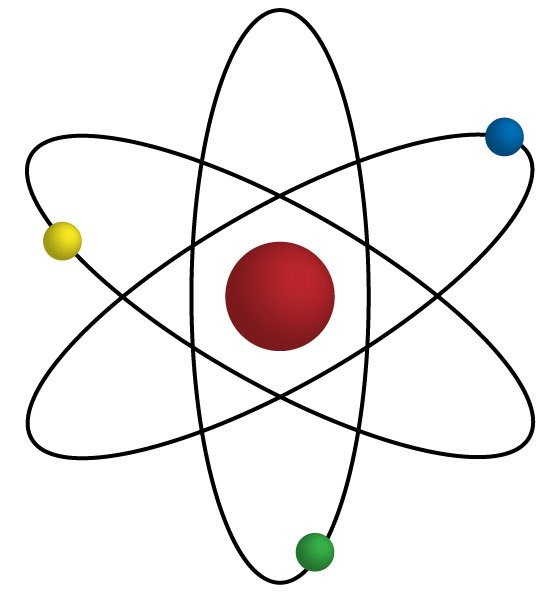
What are the 3 particles that make-up the atom?
a)
protons, neutrons, and isotopes
b)
neutrons, isotopes, and electrons
c)
positives, negatives, and electrons
d)
protons, neutrons, and electrons
22.
Which one of these is NOT located in the element square on the Periodic Table?
a)
Atomic Number
b)
Atomic Mass
c)
Room Temperature
d)
Chemical Symbol
23.
If an atom has 10 protons, 10 neutrons, and 10 electrons, what is the mass of the atom?
a)
10
b)
20
c)
30
24.
Atoms are mostly filled with?
a)
electrons
b)
empty space
c)
protons
25.
An atom with an unequal number of protons and electrons is said to have (a) ___.
a)
no charge
b)
balance
c)
charge
d)
unbalance
26.
The smallest particle of any particular type of matter is known by which of the following terms?
a)
Compound
b)
Atom
c)
Chemical
d)
Element
27.
True or False? Isotopes are atoms of the same element that differ in mass number and number of neutrons
a)
True
b)
False
28.
Matter always has mass.
a)
true
b)
false
29.
Electrons are___________
a)
Extremely small even in comparison to protons.
b)
part of the nuclues.
c)
Super Positive, like cheerleaders!
d)
very large
30.
Anything that has mass and takes up space is called
a)
heterogeneous
b)
homogeneous
c)
matter
d)
density
31.
Which particle has a similar mass to a proton?
a)
Electron
b)
Neutron
c)
Photon
d)
Marble
32.
Isotopes are atoms of the same element that have the same number of __________ but different number of __________ . Therefore, isotopes of the same element have different masses.
a)
protons, neutrons
b)
protons, electrons
c)
neutrons, protons
d)
electrons, protons
33.

What is an ion?
a)
A Charged Atom
b)
A Large Atom
c)
A Small Atom
d)
A Cute Atom
34.

An atom becomes _________ when it gains electrons.
a)
Positive
b)
Negative
c)
Neutral
d)
Invinsible
35.

An atom becomes _______ when it loses electrons.
a)
Positive
b)
Negative
c)
Neutral
d)
Invinsible
36.

Which particles change the charge in atoms when ions are formed?
a)
Protons
b)
Electrons
c)
Neutrons
d)
Kittens
37.
This is the simplest of all atoms and contains only one proton and one electron
a)
Oxygen
b)
Hydrogen
c)
Water
38.
The first person to ever talk about an atom was
a)
Democritus
b)
Rutherford
c)
Dalton
39.
How did Rutherford discover the proton?
a)
Cathode tube ray experiment
b)
Gold Foil Experiment
c)
Planetary Model
d)
Plum Pudding Model
40.
Who stated that all atoms of the same element are excacty alike?
a)
Democritus
b)
Dalton
c)
Thomson
d)
Borh
41.

What scientist is best known for his "Plum Pudding" model of the atom?
a)
J.J. Tomson
b)
Ernest Rutherford
c)
John Dalton
d)
Democritus
42.

Place the following scientists in order, from earliest to latest:
A) Ernest Rutherford
B) J.J. Thomson
C) John Dalton
A) Ernest Rutherford
B) J.J. Thomson
C) John Dalton
a)
B,C,A
b)
C,A,B
c)
A,C,B
d)
C,B,A
43.

J.J. Thomson provided evidence that an atom...
a)
is the smallest particle of matter
b)
contains negatively charged particles
c)
has an overall negative charge
d)
has an overall positive charge
44.
Rutherford's gold foil experiment provided evidence that...
a)
negative and positive charges are spread evenly throughout the atom.
b)
alpha particles have a positive charge.
c)
gold is not a dense as previously thought.
d)
there is a dense positively charged nucleus at the center of an atom.
45.

People have always agreed that matter is made of atoms.
a)
True
b)
False
46.

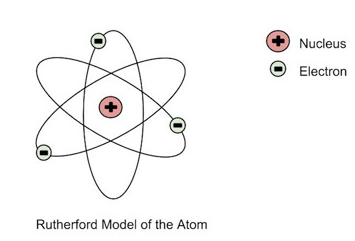
Who came up with this model of an atom?
a)
J.J. Thompson
b)
Ernest Rutherford
c)
Neils Bohr
d)
James Chadwick
47.
Contributes basically no mass to an atom.
a)
protons
b)
neutrons
c)
electrons
d)
protons and neutrons
48.
The impossibility to know simultaneously the exact position and momentum of a particle is called the:
a)
Einstein Uncertainty Principle
b)
Moseley Uncertainty Principle
c)
Heisenburg Uncertainty Principle
d)
Bohr Uncertainty Principle
49.
Discoverer of the neutron?
a)
Jimmy
b)
Chadwick
c)
Charleston
d)
Rutherford
50.
Earth, Air, Fire, and Water were the fundamental elements propose by ___.
a)
Aristotle
b)
Democritus
c)
Plato
d)
Galileo
51.
The atom is mostly empty space is a confirmed idea made by who?
a)
Rutherford
b)
Nagaoka
c)
Bohr
d)
Chadwick
52.

number of neutrons = _____
a)
atomic number - mass number
b)
isotope number - atomic weight
c)
mass number - atomic weight
d)
mass number - atomic number
53.

In the Bohr model of the atom, what is the maximum number of electrons in the second shell?
a)
2
b)
6
c)
8
d)
18
54.

For an atom to be electrically neutral, it must contain the same number of _____
a)
protons and neutrons
b)
neutrons and electrons
c)
protons and electrons
d)
nucleons and electrons
55.
Niels Bohr suggested that electrons.......
a)
are found in specific orbits
b)
electrons are scattered throughout the atom
c)
electrons move according to their energy level
d)
electrons are positive
56.

Which is the correct sequence of the scientists who made major changes in the model of the atom?
1-JJ Thomson
2-Erwin Schrodinger
3-John Dalton
4-Niels Bohr
5-Ernest Rutherford
1-JJ Thomson
2-Erwin Schrodinger
3-John Dalton
4-Niels Bohr
5-Ernest Rutherford
a)
2, 1, 4, 3, 5
b)
3, 1, 5, 4, 2
c)
5, 3, 2, 1, 4
d)
4, 3, 2, 1, 5
57.

Which of the following is proposed by Erwin Schrodinger?
a)
Solar system model of the atom
b)
Plum pudding model of the atom
c)
Billiard ball model of the atom
d)
Electron cloud model of the atom
58.
The word atom comes from a Greek word "atomos" that means
a)
Invisible
b)
Indivisible
c)
Undivided
d)
Indestructable
59.

Whose model of an atom is displayed in the picture?
a)
Thomson
b)
Rutherford
c)
Dalton
d)
Bohr
60.
According to modern atomic theory, electrons are found ___.
a)
occupying unspecified regions around the nucleus, based on how much energy each electron has
b)
in totally random and varying orbits around the nucleus
c)
in fixed orbits at well-defined distances from the nucleus
d)
closely attached to the nucleus
61.
One of the Dalton's conclusions concerning his atomic theory was that all the atoms of the same element are ___.
a)
the same
b)
different
c)
combined
d)
reacted
62.

Order the atomic models below from the oldest to the mot recent.
a)
2, 1, 3, and 4
b)
1, 2, 4, and 3
c)
3, 2, 4, and 1
d)
3, 1, 2, and 4
63.

True or False: The elements, on the periodic table, are arranged in order of increasing atomic number.
a)
True
b)
False
64.
___________________ is an explanation for many observations
a)
meniscus
b)
weight
c)
law
d)
theory
65.
__________________ is a summary of manu experimental results and observations
a)
law
b)
theory
c)
physics
d)
biology
66.
__________________ is the measure of how much matter is in a given volume
a)
dancer
b)
density
c)
Geology
d)
science
67.
________________ is the measure of the force of gravity of an object
a)
time
b)
weight
c)
mass
d)
theory
68.
A _____________________ is something that scientists use to represent an object or process
a)
mass
b)
matter
c)
model
d)
weight
69.
When scientists create a representation of a complex process, they are:
a)
inferring
b)
predicting
c)
classifying
d)
making models
70.
Which variable do "I" change intentionally?
a)
Independent variable
b)
Dependent variable
c)
Constant
71.
Which variable may change and probably will change in the experiment, but "I" don't change it?
a)
Independent variable
b)
Dependent variable
c)
Constant
72.
A statement that uses "If"....."then" is called a -
a)
observation
b)
conclusion
c)
prediction
d)
hypothesis
73.
What axis is the independent variable used on?
a)
Y axis
b)
quadrant 1
c)
quadrant 2
d)
X axis
74.
What is the best written dependent variable for this hypothesis:
"If I add salt to the plant, then it will grow taller."
"If I add salt to the plant, then it will grow taller."
a)
grow taller
b)
rate of growth
c)
amount of salt
d)
add salt
75.
What are other NAMES for independent variable?
a)
dependent variable and outcome
b)
change and outcome
c)
effect and change
d)
manipulated variable and test
100 %

