
 Worksheets
ES Atmosphere Char Vocab
Total questions: 106
Worksheet time: 2hrs 24mins
Name
Class
Date
1.
The gas that is most abundant in the atmosphere is
a)
oxygen
b)
nitrogen
c)
carbon dioxide
d)
argon
2.
What absorbs ultraviolet rays in the atmosphere?
a)
troposphere
b)
stratosphere
c)
ozone layer
d)
greenhouse gases
3.
Which of these sets of three items produce CFCs
a)
cars, factories, and cardboard
b)
spray cans, cardboard, insulation
c)
spray cans, refrigerant, cardboard
d)
spray cans, refrigerant, insulation
4.
How many oxygen atoms does a molecule of ozone contain?
a)
1
b)
2
c)
3
d)
4
5.
Where is the ozone located?
a)
troposphere
b)
stratosphere
c)
mesosphere
d)
thermosphere
6.
What do we call gases such as carbon dioxide, methane, nitrous oxide, water vapor, and ozone in the atmosphere which are involved in the greenhouse effect?
a)
Bad Gases
b)
Ozone Gases
c)
Greenhouse Gases
d)
Atmospheric Gases
7.
Without the Greenhouse Effect the Earth would be
a)
warm
b)
cold
c)
dead
8.
Where weather occurs.
a)
stratosphere
b)
thermosphere
c)
troposphere
d)
mesosphere
9.
The only layer that contains water vapor and carbon dioxide.
a)
stratosphere
b)
thermosphere
c)
troposphere
d)
mesosphere
10.
Where we live.
a)
stratosphere
b)
thermosphere
c)
troposphere
d)
mesosphere
11.
Considered to be a part of the thermosphere.
a)
ionosphere
b)
thermosphere
c)
troposphere
d)
mesosphere
12.
The coldest layer.
a)
troposphere
b)
thermosphere
c)
exosphere
d)
mesosphere
13.
The hottest layer.
a)
troposphere
b)
thermosphere
c)
exosphere
d)
mesosphere
14.
Where you will find Aurora Borealis (Northern Lights)
a)
troposphere
b)
ionsophere
c)
exosphere
d)
mesosphere
15.
The most common gas in the atmosphere (78%).
a)
Nitrogen
b)
Oxygen
c)
Carbon Dioxide
d)
Trace gases
16.
Which order is correct from the earth to space?
a)
thermosphere
troposphere
exosphere
mesosphere
stratosphere
ionosphere
troposphere
exosphere
mesosphere
stratosphere
ionosphere
b)
thermosphere
troposphere
stratosphere
exosphere
mesosphere
ionosphere
troposphere
stratosphere
exosphere
mesosphere
ionosphere
c)
exosphere
ionosphere
thermosphere
mesosphere
stratosphere
troposphere
ionosphere
thermosphere
mesosphere
stratosphere
troposphere
d)
troposphere
thermosphere
troposphere
stratosphere
exosphere
mesosphere
thermosphere
troposphere
stratosphere
exosphere
mesosphere
17.
What happens to the air pressure the higher up in space you go?
a)
the air pressure increases
b)
the air pressure decreases
c)
the air pressure stays the same
d)
there is no air pressure
18.
What is the function of the ozone layer?
a)
to allow UV rays to get to Earth
b)
to block UV rays from getting to Earth
c)
To keep oxygen in
d)
to allow meteors to get to Earth
19.

In what layer of the atmosphere do meteors burn up?
a)
Mesosphere
b)
Exosphere
c)
Stratosphere
d)
Troposphere
20.

What layer of the atmosphere merges with space?
a)
Exosphere
b)
Mesosphere
c)
Troposphere
d)
Stratosphere
21.

In what layer of the atmosphere does the International Space Station orbit?
a)
Thermosphere
b)
Troposphere
c)
Mesosphere
d)
Stratosphere
22.
At the bottom of which layer do planes usually fly to avoid turbulence?
a)
Mesosphere
b)
Thermosphere
c)
Exosphere
d)
Stratosphere
23.

What layer of the atmosphere is the lowest (letter D)?
a)
mesosphere
b)
stratosphere
c)
thermosphere
d)
troposphere
24.

What layer of the atmosphere is the highest (letter A)?
a)
thermosphere
b)
troposphere
c)
stratosphere
d)
mesosphere
25.

Which layer of the atmosphere matches letter C?
a)
trophosphere
b)
stratosphere
c)
mesosphere
d)
thermosphere
26.

Which layer of the atmosphere matches letter B?
a)
troposphere
b)
thermosphere
c)
stratosphere
d)
Mesosphere
27.
What do we call the point when equal sun is received?
a)
Summer Solstice
b)
Equinox
c)
Winter Solstice
d)
Seasons
28.
What do we call the point when the sun is highest in the sky?
a)
Winter Solstice
b)
Summer Solstice
c)
Seasons
d)
Spring Equinox
29.
What do we call the point when the sun is lowest in the sky?
a)
Spring Equinox
b)
Summer solstice
c)
Fall Equinox
d)
winter solstice
30.
The term equinox means....
a)
equal amount of day light and equal amount of night
b)
Equal amount of winter and summer
c)
Equal amounts of hot dogs for everyone
d)
The longest day of the year
31.
What is the longest day of the year?
a)
winter solstice
b)
summer solstice
c)
fall equinox
d)
spring equinox
32.
What do June 21 and December 21 have in common?
a)
equinox dates
b)
the moon is full
c)
solstice dates
d)
the cold fronts blow in
33.
What is the longest day of the year?
a)
winter solstice
b)
summer solstice
c)
fall equinox
d)
spring equinox
34.
The term equinox means....
a)
equal amount of day light and equal amount of night
b)
Equal amount of winter and summer
c)
Equal amounts of hot dogs for everyone
d)
The longest day of the year
35.
Seasons are caused by Earth's ......
a)
rotation
b)
revolution
c)
tilt
d)
weather
36.

Why is the Equator warmest?
a)
Because it is closest to the sun.
b)
Because it receives the most direct sunlight
c)
Because no clouds form here.
d)
Because it is far from the sun
37.

What is the first day of spring called?
a)
Easter Solstice
b)
Vernal Equinox
c)
Spring Solstice
d)
Green Equinox
38.
When is the winter solstice?
a)
December
b)
June
c)
March
d)
September
39.
How are the distances from Earth to the sun on the first day of summer and first day of winter similar?
a)
the sun is farthest from the equator
b)
the sun is nearest the equator
c)
the sun has nothing to do with the equator
d)
none of the above
40.
What is the time when the sun is directly above the equator?
a)
Equinox
b)
Northern Hemisphere
c)
Southern Hemisphere
d)
Solstice
41.
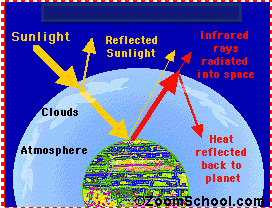
What does this diagram illustrate?
a)
Ozone Layer
b)
The Greenhouse Effect
c)
Ultraviolet Radiation
d)
Layers of the atmosphere
42.
Where you will find Aurora Borealis (Northern Lights)
a)
troposphere
b)
ionsophere
c)
exosphere
d)
mesosphere
43.
What enables atmosphere of earth to stay in place?
a)
gravity
b)
air pressure
c)
types of air molecules
d)
clouds
44.
What is Radiation?
a)
Transfer of thermal energy by collisions between particles of matter
b)
Being bounced off
c)
Something getting soaked up
d)
The transfer of energy by electromagnetic waves
45.

Differences in air pressure are caused by
a)
Equal heating of the atmosphere
b)
An increase in greenhouse gases
c)
A decrease in ozone
d)
Uneven heating of the earth
46.

What percentage of the solar energy that enters earth's atmosphere is reflected by the earth's surface?
a)
50%
b)
5%
c)
20%
d)
25%
47.
If an air mass is sinking, it must be
a)
cold and less dense
b)
cold and more dense
c)
warm and more dense
d)
warm and less dense
48.
The Coriolis Effect is caused by
a)
Earth rotating around the sun
b)
Earth rotating on its axis
c)
The tides
d)
Gravity
49.
What would happen if Earth had no atmosphere?
a)
The days would be cold and the nights would be hot.
b)
The days would be hot and the nights would be cold.
c)
Earth would not have days.
d)
Earth would not have nights.
50.
What form of energy transfer heats Earth?
a)
radiation
b)
conduction
c)
convention
d)
recycling
51.

From the figure, which layer of the atmosphere do you find rain, snow, and clouds?
a)
troposphere
b)
stratosphere
c)
mesosphere
d)
thermosphere
52.
What types of solid particles are naturally found in the atmosphere?
a)
extraterrestrial particles
b)
organic particles
c)
pollen, dust, and salt particles
d)
clay particles
53.

The ozone is located in this layer
a)
Troposphere
b)
Stratosphere
c)
Mesosphere
d)
Thermosphere
54.
Which layer contains has the weather and water vapor?
a)
Troposphere
b)
Stratosphere
c)
Mesosphere
d)
Thermosphere
55.
Which contains ionosphere?
a)
Troposphere
b)
Stratosphere
c)
Mesosphere
d)
Thermosphere
56.
Which layer has most of the mass of the atmosphere?
a)
Troposphere
b)
Stratosphere
c)
Mesosphere
d)
Thermosphere
57.

The layers of the atmosphere are based on:
a)
Temperature
b)
Altutude
c)
Density
58.

Which of the following is the best conclusion that can be made from this graph?
a)
atmospheric carbon dioxide levels have been decreasing since 1960
b)
Hawaii has a lot of carbon dioxide
c)
humans have been working hard to decrease carbon dioxide levels
d)
atmospheric carbon dioxide levels have increased steadily since 1960
59.
Which of the following natural events would be most likely to contribute to the cooling of Earth's atmosphere?
a)
Earthquake
b)
Hurricane
c)
Volcanism
d)
Monsoon
60.
What is the main source of energy that drives all weather patterns?
a)
Sun
b)
Moon
c)
Oceans
d)
Mountains
61.
What is the definition of CONDUCTION?
a)
When heat is transferred from objects like rays of light or electromagnetically.
b)
a hot liquid or air that expands, becomes less dense, and rises or becomes more dense, and sinks.
c)
When heat transfers from objects that are touching.
d)
When heat transfers through the heater or AC in your house.
62.
What is the definition of CONVECTION
a)
When heat transfers through waves.
b)
When heat transfers from objects that are touching.
c)
a hot liquid or air that expands, becomes less dense, and rises or becomes more dense, and sinks.
d)
Heat traveling from the sun
63.
What kind of heat transfer happens when the sun is heating your body?
a)
Conduction
b)
Radiation
c)
Convection
d)
Density
64.
Which of the following is an example of convection?
a)
A hair dryer is drying up your hair.
b)
When the AC or heater changes the temperature.
c)
When a car engine turns hot after being turned on.
d)
When you are making soup and the water is rising and lowering.
65.
What heat transfer happens when you burn your hand by touching a fire?
a)
Radiation
b)
Conduction
c)
Convectio
d)
I don't know!!!!!!!!!!!
66.
Which of the following is needed for convection to happen?
a)
Fluid/s
b)
Light in the form or rays
c)
Electromagnetic waves
d)
Fire
67.
When a pot is touching a stove that is on, what heat transfer is happening?
a)
I don't know??????
b)
Radiation
c)
Conduction
d)
Convection
68.

The way the heat is moving from the hot coffee is called...
a)
convection
b)
radiation
c)
insulation
d)
conduction
69.
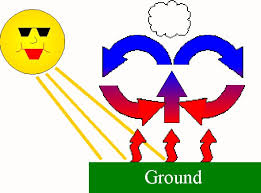
Warm air rises and the cool air sinks demonstrates this type of heat transfer.
a)
conduction
b)
convection
c)
radiation
d)
Insolation
70.

The baby chickens are kept warm from the heat lamps demonstrates this type of heat transfer.
a)
conduction
b)
convection
c)
radiation
71.
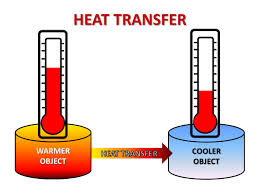
Heat transfers from an area of ____temperature to an area of ___ temperature.
a)
high to low
b)
low to high
c)
high to high
d)
It can travel high to low and low to high.
72.
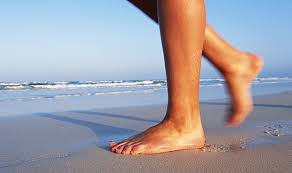
Walking on the warm sand sand with your bare feet demonstrates this type of heat transfer.
a)
conduction
b)
convection
c)
radiation
73.

The Gulf Stream is a current that brings warm ocean water from the south to the north. What type of heat transfer is this?
a)
conduction
b)
convection
c)
radiation
d)
Insolation
74.
Ironing a shirt is an example of...
a)
condensation
b)
conduction
c)
convection
d)
radiation
75.
Warm air is __________ dense than cold air and rises creating convection currents.
a)
more
b)
less
76.

Johnny accidentally grabbed the handle of the hot pot.
a)
conduction
b)
convection
c)
radiation
77.

A group of friends gather around a fire to stay warm.
a)
conduction
b)
convection
c)
radiation
78.
Transfer of thermal energy through "space"
a)
conduction
b)
convection
c)
radiation
79.
Transfer of thermal energy through "flow"
a)
conduction
b)
convection
c)
radiation
80.
Transfer of thermal energy through "touch"
a)
conduction
b)
convection
c)
radiation
81.
Near the ceiling of a room the air is warmer. The warm air rises because of
a)
conduction
b)
convection
c)
radiation
82.
A huge rock at the state park gets so hot during the day because of
a)
conduction
b)
convection
c)
radiation
83.
You get sunburned due to __________ from the sun.
a)
conduction
b)
convection
c)
radiation
84.
A chair is placed several feet from a fireplace. The fireplace has a glass screen. The side of the chair facing the fireplace gets warm because of
a)
conduction
b)
convection
c)
radiation
85.
The cause of weather systems on earth is
a)
conduction
b)
convection
c)
radiation
86.
Ice cubes keeping lemonade cold.
a)
Conduction
b)
Convection
c)
Radiation
87.
Eggs cooking in a frying pan.
a)
Conduction
b)
Convection
c)
Radiation
88.
Snowman melting in the sun.
a)
Conduction
b)
Convection
c)
Radiation
89.

What is this day called?
a)
solstice
b)
equinox
c)
albedo
d)
equinimbus
90.

What is season is it in the northern hemisphere
a)
summer
b)
fall
c)
winter
d)
spring
91.
What has the highest albedo?
a)
the oceans
b)
glacial ice
c)
the ground
d)
roads
92.
Light entering the atmosphere bends in a process known as ______________________ .
a)
refraction
b)
distension
c)
insertion
d)
reflection
93.
______________ is the molecule-to-molecule transfer of heat energy as it diffuses through a substance.
a)
Advection
b)
Transmission
c)
Radiation
d)
Conduction
94.
Albedo is properly associated with the ___________________ of shortwave radiation.
a)
reflection
b)
conduction
c)
consumption
d)
transmission
95.
An increase in albedo caused by clouds resulting in the cooling of Earth’s climate is described by the term _______________ .
a)
albedo scattering
b)
the greenhouse effect
c)
radiation absorption
d)
cloud-albedo forcing
96.
Rainbows and mirages are examples of _______________ .
a)
transmission scattering
b)
diffuse radiation
c)
albedo-forcing
d)
refraction
97.
Holding all other factors constant, air temperature diminishes with increasing altitude because the _____________ of the atmosphere decreases.
a)
specific heat
b)
latitude
c)
density
d)
continentality
98.
What is albedo?
a)
A Pasta
b)
Colors
c)
Reflectivity
d)
None of the Above
99.

Why does the sun heat and cool land faster?
a)
Water has albedo to reflect the heat.
b)
Water does not heat up fast, but holds heat well.
c)
Land has a lower specific heat and does not take as much energy to heat.
d)
All are correct.
100.

Which type of surface would have the highest albedo effect?
a)
Forest
b)
Snow
c)
Water
d)
Rock
101.
Which has a higher albedo, an asphalt parking lot or a snow-covered field?
a)
Asphalt parking lot
b)
Snow-covered field
c)
They have the same albedo
d)
More information is needed to answer this question
102.
Currently, about 10% of Earth is covered with ice year-round. If this ice melts, what could happen to Earth’s temperature?
a)
Increase
b)
Decrease
c)
Remain the Same
d)
Not enough information
103.
Earth’s temperatures are stable because we are surrounded by ________ which allows the right amount of sunlight in to warm the Earth.
a)
A cloud layer
b)
The atmosphere
c)
Gravity
d)
Water
104.
Certain gases in the atmosphere: water vapor, carbon dioxide, methane and nitrous oxide, help maintain the Earth’s temperatures and climate. These are called: __________ .
a)
Ozone gases
b)
Solar gases
c)
Greenhouse gases
d)
Stomach gases
105.

What type of map is shown?
a)
satellite
b)
radar
c)
isobar
d)
isotherm
106.
You want to determine the temperature present in Texas for the Super Bowl. What type of map should you look at?
a)
satellite
b)
radar
c)
isobar
d)
isotherm
100 %

