wayground logo

Free Printable Worksheets

Font size

S
M
L
XL
Worksheets

Review for CA 6

Total questions: 102

Worksheet time: 2hrs 41mins

Name
Class
Date
1.
An organism that produces its own food supply from inorganic compounds is called a(an)
a)
heterotroph
b)
consumer
c)
detritivore
d)
autotroph
2.
What is the original source of almost all energy in most ecosystems?
a)
carbohydrates
b)
sunlight
c)
water
d)
carbon
3.
What is the term for each step in the transfer of energy and matter within a biological community?
a)
energy path
b)
food web
c)
trophic level
d)
food pyramid
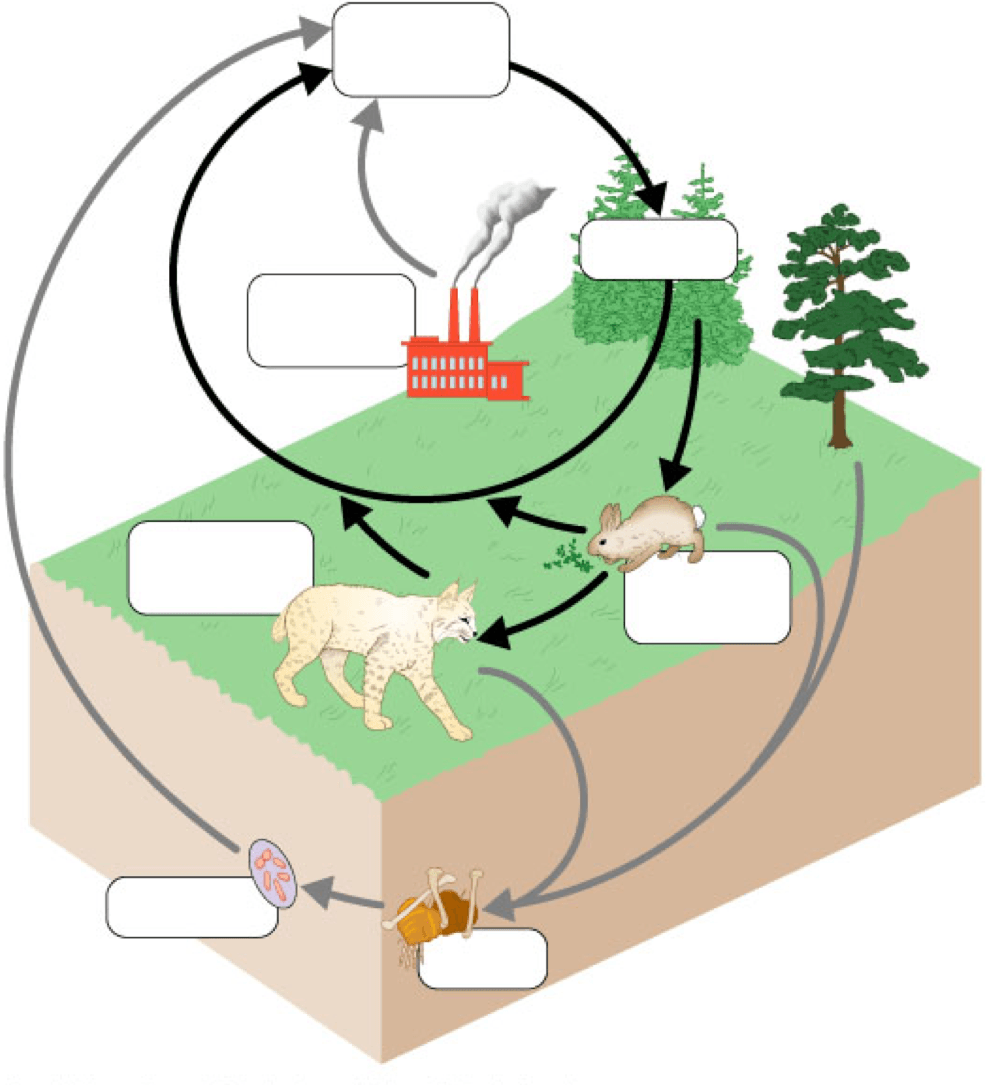
4.
Autotrophs make up the _______ level in all ecosystems.
a)
First
b)
Second
c)
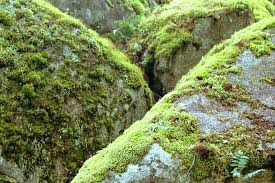
Third
d)
Fourth
5.
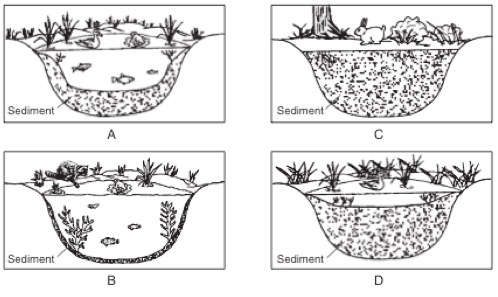
which symbiosis is this 
a)
parasitism 
b)
mutualism
c)
commensalism
d)
nonalism 
6.
symbiotic relationship in which both organisms benefit
a)
competition
b)
Mutualism
c)
nitrogen fixation
d)
energy pyramid
7.
A living relationship between two species in which one organism is harmed is called...
a)
mutualism
b)
commensalism
c)
parasitism
d)
niche
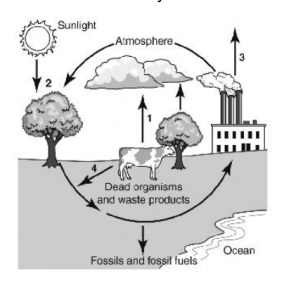
8.
What does a food web represent?
a)
All connections of energy flow throughout all organisms in a habitat.
b)
The specific ways that mutualism is carried out.
c)
A single pathway or energy flow between organisms. 
d)
How carnivores get their food. 
9.
The image provided is an example of a(n):
a)
Carnivore
b)
Herbivore
c)
Producer
d)
Autotroph
10.
The image provided is an example of a(n):
a)
Producer
b)
Autotroph
c)
Consumer
d)
Insect
11.
The amount of energy that usually transfers from one trophic level to the next...
a)
10%
b)
20%
c)
80%
d)
50%
12.
Which of the following would be the definition of a detritivore?
a)
Animals that eat insects.
b)
Organisms that feed on rocks, recycling the nutrients back into the ground.
c)
Organisms that eat only pants
d)
Things that feed on dead organisms, recycling the nutrients back into the ground.
13.
An illustration that uses arrows to show the many possible directions in which matter and energy can pass through the organisms in an ecosystem.
a)
Food chain
b)
Food web
c)
Energy Pyramid
d)
Succession Map
14.
The nonliving aspects of an ecosystem.
a)
Abiotic factors
b)
Biotic factors
15.
The living portions of the ecosystem.
a)
Biotic factors
b)
Abiotic factors
16.
Water temperature would be an example of ...
a)
A biotic factor
b)
An abiotic factor
17.
A collection of organisms that belong to different populations but all live in the same area and interact with one another.
a)
Population
b)
Ecosystem
c)
Community
d)
Ecosphere
18.
A place where an organism lives.
a)
Terrain
b)
Habitat
c)
Community
d)
Population
19.
A collection of organisms that make up a community as well as all of the nonliving aspects of the environment.
a)
Population
b)
Community
c)
Habitat
d)
Ecosystem
20.
Organisms that feed on both living producers and other consumers.
a)
Carnivores
b)
Omnivores
c)
Herbivores
d)
Detritivores
21.
An organism at the second trophic level would be considered a...
a)
Top carnivore
b)
Producer
c)
Herbivore
d)
Carnivore
22.
A graphic illustration that shows each trophic level and the amount of useable energy contained within.
a)
Food chain
b)
Food web
c)
Energy Pyramid
d)
All of these
23.
True or False:  It is possible for a carnivore to be a producer.
a)
False
b)
True
24.
An individual belonging to a specific species
a)
Biotic
b)
Community
c)
Organism
d)
Reptile
25.
All of the living and nonliving things in an area that interact with each other are called a/an ______.
a)
community
b)
habitat
c)
population
d)
ecosystem
26.
The living part of an ecosystem
a)
Biotic
b)
Abiotic
c)
Mother Earth
d)
Flowers
27.
Two or more members of a particular species living and interacting in the same area
a)
Community
b)
Population
c)
Organisms
d)
Biosphere
28.
Different populations living and interacting with each other in the same area
a)
Biome
b)
Ecosystem
c)
Community
d)
Niche
29.
The area between the highest mountain and the deepest ocean where life can be found
a)
Biosphere
b)
Biome
c)
Farm
d)
Ecosystem
30.
In this Food Web Pyramid Which type of consumer gets only 10% of the energy stored in plants?
a)
Herbivore
b)
Carnivore
c)
Omnivore
d)
Secondary Consumer
31.
The rabbit in this food web would be considered a:
a)
Decomposer
b)
Producer
c)
Secondary Consumer
d)
Primary Consumer
32.
relationship in which two species live closely together
a)
resource
b)
mutualism
c)
succession
d)
symbiosis
33.
What are the Abiotic factors in this image? 
a)
water, sunlight, dirt, air
b)
birds and plants
c)
birds, water, dirt
d)
plants, water
34.
How would the removal of the earth worms affect the other organisms.
a)
The number of bass will increase
b)
The number of crayfish will decrease
c)
The crayfish will get their energy directly from the sun 
d)
The number of bass and ospreys will increase
35.
The sun's energy is most directly available to people through
a)
Path A
b)
Path B
c)
Path C
d)
Path D
36.
An organism's specific role in its habitat is called its
a)
consumer
b)
niche
c)
birth right 
d)
mutalism
37.
What is the term for each step in the transfer of energy and matter within a biological community?
a)
energy path
b)
food web
c)
trophic level
d)
food pyramid
38.
In this food web, what is the grasshopper?
a)
producer
b)
tertiary consumer
c)
secondary consumer
d)
primary consumer
39.
In the energy pyramid here, which organisms have the most energy available?
a)
Producers
b)
Carnivores
c)
Herbivores
d)
Top Predator
40.
a relationship between two in which one species, the predator, feeds on the other species, the prey
a)
chemosynthesis
b)
predation
c)
cellular respiration 
d)
commensalism
41.
Organisms that breaks down and absorbs nutrients from dead organisms 
a)
consumer
b)
trophic level
c)
decomposer
d)
species
42.
A food chain is illustrated below:
The arrows represented most likely indicate
a)
A. Energy released from metabolism into the environment as heat.
b)
B. Oxygen released from metabolism produced by cellular respiration.
c)
C. The absorption of energy from the environment that has been created.
d)
D. The transport of glucose away from the organism through photosynthesis.
43.
A pond ecosystem is shown in the diagram below. Which statement describes an interaction that helps maintain the dynamic equilibrium of this ecosystem?
Which statement describes an interaction that helps maintain the dynamic equilibrium of this ecosystem?
a)
The frogs make energy available to this ecosystem through the process of photosynthesis.
b)
The algae directly provide food for both the rotifers and the catfish.
c)
The green-backed heron provides energy for the mosquito larvae.
d)
The catfish population helps control the populations of water boatman and waterfleas.
44.
The diagram below shows the cycling of nutrients in an ecosystem.
The removal of which of the following groups would cause an immediate decrease in the amount of energy flowing through the system?
a)
Producers
b)
Consumers
c)
Decomposers
d)
Inorganic nutrients
45.
If there is 1000 Kcal available in the producers in trophic level 1, how much energy is available in the herbivores in trophic level 2?
a)
10 Kcal
b)
1 Kcal
c)
100 Kcal
d)
1000 Kcal
46.
The diagram represents different levels of a marine food pyramid. Between which two levels is the greatest amount of energy transferred
a)
R and Q
b)
S and R
c)
T and S
d)
U and T
47.
What is the order of succession shown in this figure?
a)
A, B, C, D
b)
B, A, D, C
c)
C, D, A, B
d)
D, A, B, C
48.

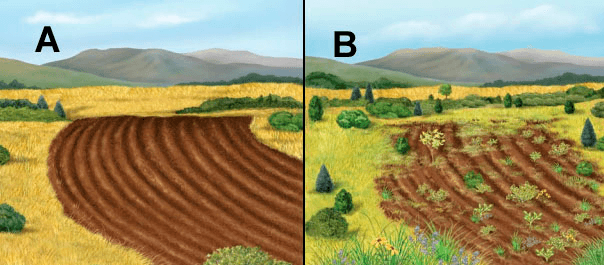
What type of succession is shown going from figure A to figure B? (soil previous)

a)

primary succession

b)

ecological succession

c)

secondary succession

d)

intermediate

49.
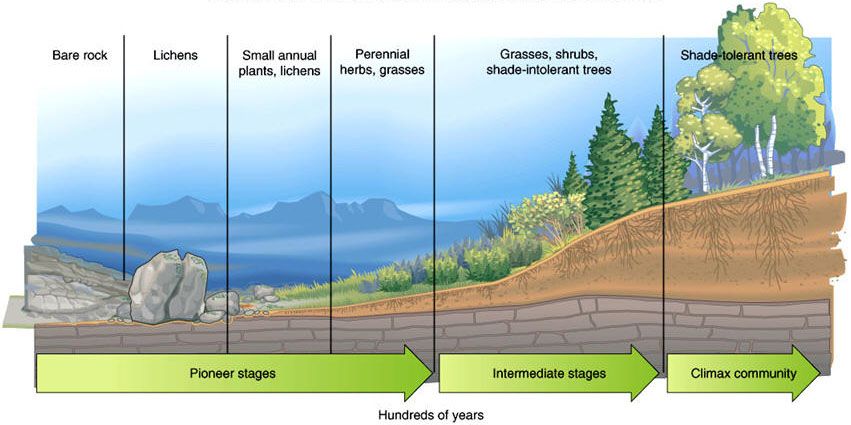
The picture shows what type of succession?
a)
primary
b)
secondary
c)
tertiary
d)
quadanary
50.
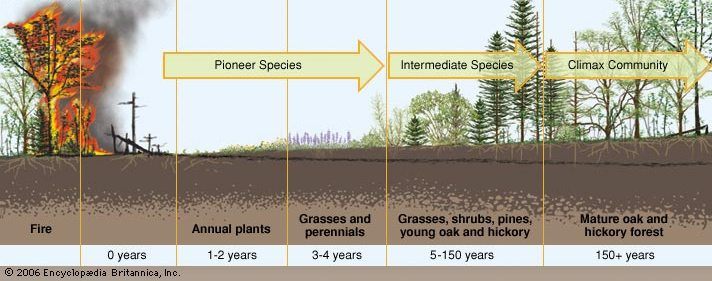
The picture shows what type of succession?
a)
primary
b)
secondary
c)
tertiary
d)
quadanary
51.
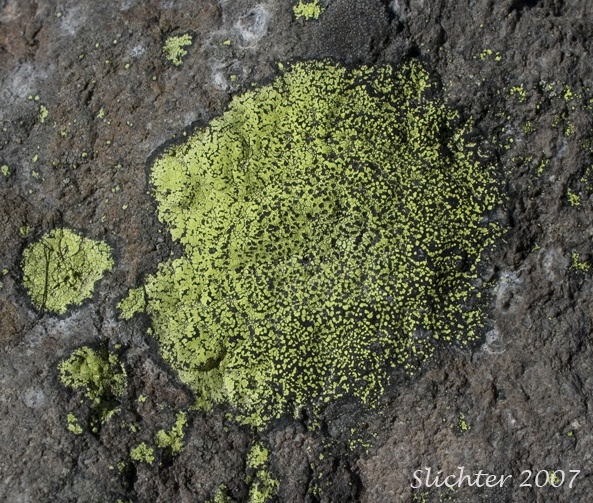
What is the name given to lichen or algae after a primary succession?
a)
pioneer species
b)
volunteer species
c)
founder species
d)
conqueror species
52.
What are examples of pioneer species in a primary succession?
a)
Bushes and Shrubs
b)
Oak trees
c)
Mossess and Lichens 
d)
A rose Bush
53.
After a volcanic eruption, lava covers the land. What is the order that plants grow to repopulate the area?
a)
Lichens → Shrubs → Grasses → Trees
b)
Lichens → tree → shrubs→Grasses
c)
Grasses → Lichens → Shrubs → Trees
d)
Lichens → Grasses → Shrubs → Trees
54.
the process by which a new community forms where no community lived before 
a)
resource
b)
invasive (non- native) species
c)
primary succession
d)
competition
55.
What is the correct order from oldest (happened first) to youngest (happened last) in this pond succession?
a)
A, B, C, D
b)
D, C, B, A
c)
B, A, D, C
d)
C, D, A, B
56.
Final illustration (#8) shows
a)
pioneer species
b)
climax community
c)
only biotic factors
d)
only abiotic factors
57.
This is an example of...
a)
Secondary Succession
b)
Primary succession
c)
Utter and complete destruction! RAWR!
d)
Climax Communities
58.
What is the most important function of pioneer species?
a)
To create rocks
b)
To create soil and add nutrients to the environment 
c)
To look nice
d)
Food for animals 
59.
After a forest fire, an ecosystem would start regrowth through -
a)
primary succession
b)
secondary succession
c)
climax community
d)
limiting factors
60.
What type of growth is represented behind?
a)
exponential
b)
logistics
c)
a good kind
d)
representative
61.
What will happen to the population when the birth rate is larger than the death rate?
a)
grow
b)
shrink
c)
stay the same
62.
An environmental factor such as predation, disease, and competition that depends on the number of members in a population per unit
a)
dispersion
b)
density- independent factor
c)
density- dependent factor
d)
population growth rate
63.
An environmental factor such as storms and extreme heat or cold that affects population regardless of their density
a)
density- dependent factor
b)
population density
c)
dispersion
d)
density- independent factor
64.

Type of growth that occurs when disease and parasites are present...

a)

exponential

b)

J-shaped

c)

predator-prey

d)

logistic or S curve

65.
Will competition increase/decrease the carrying capacity of an ecosystem for the animal in competition?
a)
Decrease
b)
Increase
66.
What kind of factor: flood?
a)
density-independent
b)
density-dependent
67.
What kind of factor: predation?
a)
density-independent
b)
density-dependent
68.
What kind of factor: temperature?
a)
density-independent
b)
density-dependent
69.
The  number of individuals a habitat can sustain with the resources it has available
a)
Carrying capacity
b)
Limiting factors
c)
Resources
d)
Population
70.
When humans burn fossil fuels, most of the carbon quickly enters the                       as carbon dioxide.
a)
Water
b)
Atmosphere
c)
Sun
d)
Air
71.
Which one of these does not add CO2 to the atmosphere?
a)
cooking with gas
b)
planting trees
c)
burning wood
d)
riding in a bus
72.
Combustion is another word for _______________.
a)
a train
b)
a bus
c)
a dog
d)
burning
73.
What does not produce carbon dioxide?
a)
Photosynthesis
b)
Burning Fossil Fuels
c)
Animal respiration
d)
Plants decaying
74.
In what process is Carbon transformed into chemical energy?
a)
Photosynthesis
b)
Respiration
c)
Primary Production
d)
Secondary Production
75.
Organisms that do not decompose can be buried and become what?
a)
water
b)
nutrients
c)
air
d)
fossil fuels
76.
Carbon can be found in...?
a)
The atmosphere
b)
Inside of the Earth
c)
Fossil fuels
d)
All of the above!
77.
How does carbon affect global warming?
a)
Speeds up the effects of global warming
b)
Slows down the effects of global warming
c)
Does nothing to the speed of global warming
d)
Global warming is FAKE
78.

Which of the following statements is true?

a)

Biotic matter contains carbon, but abiotic matter does not

b)

We can still have life on Earth without carbon

c)

Plants contain carbon compounds called "carbohydrates" but animals (including people) do not

d)

Carbon is an element that forms millions of compounds that make life possible

79.
Organisms require nitrogen to make which of the following?
a)
glucose and starch
b)
lipids and nucleic acids
c)
proteins and nucleic acids
d)
carbohydrates and proteins
80.

What is the process of combining nitrogen gas with other elements to make nitrogen into usable compounds?

a)

nitrogen composition

b)

ammonia

c)

nitrogen fixation

d)

denitrification

81.
How nitrogen is "fixed" into useable form for plants...
a)
through action of bacteria only
b)
through lightning only
c)
through action of bacteria & lightning
d)
through photosynthesis
82.
How much of the atmosphere is composed of nitrogen gas?
a)
87%
b)
38%
c)
78%
d)
21%
83.
How do plants get the nitrogen they need?
a)
from the air
b)
from the soil or water in which they live
c)
from the Sun
d)
from broken-down rocks
84.
What is happening at 1?
a)
respiration: releasing CO2
b)
decomposing CO2 in the soil
c)
photosynthesis: absorbing CO2
d)
turning CO2 from the atmosphere into organic molecules
85.
Nitrogen is the most plentiful gas in the atmosphere.
a)
True
b)
False
86.
What part of the water cycle does this picture show?
a)
condensation
b)
precipitation
c)
evaporation
87.
Does evaporation happen before or after condensation?
a)
before
b)
after
c)
during
88.
What is it called when plants give off water vapor as a waste product?
a)
condensation
b)
evaporation
c)
sublimation
d)
transpiration
89.
what does the #4 show in the diagram?
a)
condensation
b)
evaporation
c)
precipitation
d)
run off
90.
In this ecosystem, what is there the LEAST of?
a)
hyperparasites
b)
herbivores
c)
producers 
d)
parasites
91.
Identify the cycle pictured.
a)
The Water cycle
b)
The Carbon cycle
c)
The Nitrogen cycle
d)
The Phosphorus cycle
92.
A symbiotic relationship in which both organisms benefit:
a)
Competition.
b)
Mutualism.
c)
Commensalism.
d)
Parasitism.
93.

What Is This?

a)

Graph of predator-prey relationship

b)

graph of mutualism

c)

graph of parasitism

94.
Group of Cheetahs: Name it!
a)
organism
b)
population
c)
community
95.
Rain forest plants and animals: Name it!
a)
organism
b)
population
c)
community
96.

A stable environment can allow the ecosystem to have

a)

more biodiveristy

b)

less biodiversity

97.
Where do crickets get their energy?
a)
Cattails
b)
Marsh Grass
c)
Grasshoppers
d)
Shrews
98.
If there is 1000 Kcal for the producers, how much energy would be transferred to the 1st Level Consumers?
a)
10 Kcal
b)
1 Kcal
c)
100 Kcal
d)
1000 Kcal
99.
What would happen if I came through with a helicopter and dropped a million rabbits in this ecosystem?
a)
Hawk population would decrease
b)
Grass population would increase 
c)
Grass population would decrease
d)
Snake population would decrease
100.
Which animal is the 2nd level consumer?
a)
Snake
b)
Rabbit
c)
Wildflowers
d)
Mouse
101.
Which animal can be a 2nd level consumer or a 3rd level consumer?
a)
Snake
b)
Mouse
c)
Rabbit
d)
Hawk
102.
If these organisms were arranged in an ecological biomass pyramid, which organism would have the least amount of biomass?
a)
coyote
b)
insect
c)
lizard
d)
shrub