
 Worksheets
unit 3 test review
Total questions: 111
Worksheet time: 2hrs 42mins
Name
Class
Date
1.
How are biodiversity and sustainability connected?
a)
When biodiversity increases, sustainability also increases
b)
When biodiversity increases, sustainability decreases
c)
Biodiversity and sustainability are not related
d)
When biodiversity decreases, sustainability stays the same
2.
Which biome is the MOST sustainable?
a)
Temperate Deciduous Forest
b)
Tropical Rainforest
c)
Tropical Savanna
d)
Desert
3.
Permafrost is
a)
only found in the taiga
b)
a layer of permanently frozen soil
c)
helpful in growing trees like fir and spruce
d)
easily melted
4.
A variety of life in an ecosystem is known as...
a)
a biome
b)
biodiversity
c)
biotic
d)
sustainability
5.
This biome receives about an inch of rain annually and is hot during the day and cool at night
a)
Tropical Savanna
b)
Grasslands
c)
Tropical Rainforest
d)
Desert
6.
Which of the following is NOT considered to be ABIOTIC?
a)
soil type
b)
fungi
c)
climate
d)
wind
7.
This biome is characterized by its nutrient-rich topsoil that allows for great biodiversity.
a)
Tropical Savanna
b)
Grasslands
c)
Temperate Deciduous Forest
d)
Tropical Rainforest
8.
Which best describes the relationship between biotic and abiotic factors in an ecosystem?
a)
biotic factors affect abiotic factors
b)
abiotic factors affect biotic factors
c)
both are equally affected
d)
they do not have a relationship with each other
9.
When biodiversity goes up...
a)
sustainability stays the same
b)
sustainability goes down
c)
sustainability goes up
d)
sustainability is unaffected
10.
The biotic factors of the desert include
a)
dry, hot climate
b)
camels, saguaro cacti, Gila monsters, and rattlesnakes
c)
zebras, lions, and wildebeest
d)
cold, harsh winters
11.
One characteristic feature of tundra is that only the surface thaws in the summer and refreezes in the winter, leaving a layer of permanently frozen subsoil. This characteristic is known as
a)
glaciation
b)
permafrost
c)
crystallization
d)
soilfrost
12.
Which biome is characterized by low temperatures and low amounts of rainfall?
a)
tundra
b)
desert
c)
temperate deciduous forest
d)
tropical rain forest
13.
This biome contains mostly spruce trees and Douglas firs, which are both evergreen. The winters are long and cold and the summers are short and rainy. The soil is very rich. Moose and elk live here. This biome is classified as a
a)
taiga
b)
tundra
c)
deciduous forest
d)
temperate forest
14.

The biome known for trees with broad leaves that fall off the trees in the winter.
a)
Coniferous Forests
b)
Deciduous Forests
c)
Deserts
d)
Tundra
15.
Which statement about photosynthesis is correct?
a)
Plants get the energy they need for photosynthesis from water.
b)
Plants get the energy they need for photosynthesis from soil.
c)
Plants get the energy they need for photosynthesis from sunlight.
d)
Plants do not require energy to perform photosynthesis.
16.
The products of photosynthesis are
a)
water and carbon dioxide
b)
oxygen and water
c)
sugar and cabon dioxide
d)
oxygen and sugar (glucose)
17.
Which gas is removed from the atmosphere during photosynthesis?
a)
hydrogen
b)
oxygen
c)
nitrogen
d)
carbon dioxide
18.
The main source of energy for all life comes from ____.
a)
the Earth
b)
the moon
c)
the sun
d)
the food we eat/make
19.
In what part of the cell does photosynthesis occur?
a)
Nucleus
b)
Chloroplast
c)
Epidermis
d)
Vacuole
20.

The reactants of photosynthesis are
a)
sugar and water.
b)
sugar and oxygen.
c)
carbon dioxide and water.
d)
carbon dioxide and oxygen.
21.

Which statement about photosynthesis is correct?
a)
Plants get the energy they need for photosynthesis from water.
b)
Plants get the energy they need for photosynthesis from soil.
c)
Plants get the energy they need for photosynthesis from sunlight.
d)
Plants do not require energy to perform photosynthesis.
22.

What are the products of photosynthesis?
a)
Carbon dioxide and water
b)
Carbon dioxide and oxygen
c)
Glucose and oxygen
d)
Glucose and water
23.

Which of the following is the correct equation for PHOTOSYNTHESIS?
a)
6CO2 + 6H2O --> 6O2 + C6H12O6
b)
6CO2 + C6H12O6 + 6H2O --> O2
c)
6O2 + 6H2O --> 6CO2 + C6H12O6
d)
C6H12O6 + 6O2 ---> 6H2O + 6CO2
24.

Which gas is removed from the atmosphere during photosynthesis?
a)
hydrogen
b)
oxygen
c)
nitrogen
d)
carbon dioxide
25.
What are the products of photosynthesis?
a)
water and carbon dioxide
b)
oxygen and glucose
c)
oxygen and carbon dioxide
d)
oxygen and water
26.
What is the ultimate ORIGINAL source of energy for living things
a)
Sugar
b)
Sun
c)
Moon
d)
Carbon Dioxide
27.

Which organelle from the plant cell is primarily responsible for converting sunlight to energy?
a)
Mitochonria
b)
Nucleus
c)
Vacuole
d)
Chloroplast
28.

What process is the diagram representing?
a)
Photosynthesis
b)
Soil development
c)
Plant reproduction
d)
Nitrogen Cycle
Nitrogen cycle
Nitrogen cycle
29.
Which of the following shows the correct order of the energy transformations that occur when green plants produce their food from the Sun’s energy?
a)
chemical to thermal
b)
light to chemical
c)
thermal to light
d)
chemical to electrical
30.

What energy transformation occurs during photosynthesis?
a)
thermal --> chemical
b)
kinetic --> radiant
c)
chemical --> radiant
d)
radiant --> chemical
31.
How does carbon dioxide get into the leaves of a plant?
a)
it is absorbed by the roots
b)
it is made in a chemical reaction in the stem
c)
it goes through the stomata
d)
it enters through the flowers
32.
6CO2 + 6H20 + light energy -> C6H12O6 + 6O2
In this chemcial equation, the highlight red is called the ______.
In this chemcial equation, the highlight red is called the ______.
a)
product
b)
reactant
c)
yields
d)
production
33.
After you run 100m as fast as you can, you will be breathing hard and your heart will be pumping faster. What causes your breathing to return to normal?
a)
stimuli
b)
homeostasis
c)
impulses
d)
reasoning
34.
Cause: Effect::
a)
homeostasis : stimulant
b)
reflex : response
c)
response : fever
d)
stimulus : response
35.

As a seedling is sprouting through the soil, the force it exerts to move up must be greater than which of the following forces that are pulling downward?
a)
geotropism
b)
gravity
c)
friction
d)
inertia
36.

What caused this plant's behavior?
a)
response to gravity
b)
negative homeostasis
c)
excessive humidity
d)
lack of turgor pressure
37.
Organisms that are confronted with external stimuli in their environment respond to such stimuli internally. Which of the following correctly identifies an external stimulus that triggers an internal response?
a)
hunger causes eating food
b)
thirst causes drinking water
c)
fever causes sweating
d)
being frightened causes muscles to tense
38.
You quickly move your head when a baseball is thrown toward your face. You are responding to ________________
a)
an external stimulus
b)
hormones
c)
pigments
d)
an internal stimulus
39.
Janice is hungry. She knows this because her stomach has begun to ache, and she is felling a bit weak. This is an example of:
a)
an external stimulus in order to maintain homeostasis
b)
an equilibrium response in order to maintain homeostasis
c)
an internal stimulus in order to maintain homeostasis
d)
a control response in order to maintain equilibrium
40.
When a barking dog rushes at you baring its teeth and growling, you turn and run faster than you've ever run before. This is caused by your endocrine system pumping the hormone adrenalin into your bloodstream. This is called:
a)
fastest runner syndrome
b)
canineaphobia
c)
fight or flight response
d)
emergency exit
41.
Which of the following is a stimulus?
a)
a red light
b)
a fire alarm
c)
a change in air pressure
d)
all of the above
42.
Turgor pressure is caused by:
a)
plants growing toward the light
b)
plant roots growing toward the center of the Earth
c)
a water vacuole in plant cells putting pressure on the cell wall
d)
xylem in plants sucking water into the leaves
43.

This picture would represent which type of tropism?
a)
Phototropism
b)
Geotropism
c)
Hydrotropism
d)
Thigmotropism
44.

What type of tropism response to touch?
a)
Geotropism
b)
Phototropism
c)
Thigmotropism
d)
Hydrotropism
45.

What kind of response is this?
a)
Gravitropism
b)
Photosynthesis
c)
Thigmotropism
d)
Hydrotropism
46.

What is this an image of
a)
thigmatropism
b)
gravitropism
c)
phototropism
d)
photoperiodism
47.
The shoot of a plant growing up.
a)
Positive Gravitropism
b)
Negative Gravitropism
c)
Thigmotropism
d)
Hydrotropism
48.

What does this picture represent?
a)
thigmotropism
b)
Phototropism
c)
Hydrotropism
d)
Geotropism
49.

A vine plant brushes against a fence and wraps itself around the fence. To what stimulus is the plant responding?
a)
phototropism
b)
hydrotropism
c)
thigmotropism
d)
gravitropism
50.
This picture would represent which type of tropism?
a)
Phototropism
b)
Geotropism
c)
Hydrotropism
d)
Thigmotropism
51.
Which of the following is an example of the effects of geotropism?
a)
Monarch butterflies migrate from Canada to Mexico each year.
b)
A hippopotamus submerges itself in water until the Sun goes down.
c)
A wilted flower returns to an upright position after being watered.
d)
A potted plant falls on its side, but it roots still grow downward.
52.

What do you do when you see your plant do this?
a)
nothing, it's fine
b)
water it because it has high turgor pressure
c)
water it because it has turgor pressure
d)
breathe carbon dioxide into it
53.

Why do plants wilt?
a)
low turgor pressure
b)
high turgor pressure
c)
too much water
d)
no cell membrane
54.

This organelle is formed from the cell membrane, and stores food, water, and waste. It is bigger in the plant cell than in the animal cell
a)
Vacuole
b)
Nucleus
c)
Mitochondria
d)
Cytoplasm
55.
When a plant wilts due to a drought, it is responding to which of the following internal stimuli?
a)
Decreased water pressure within the plant cells.
b)
lack of nutrients carried by water in the plant.
c)
Decreased rate of photosynthesis in the stem.
d)
Increased storage of glucose in the leaves.
56.
Steven sets a brand new plant near the window. After several weeks Steven realizes the flower is starting to tilt towards the sunlight. What would be considered the stimuli in this scenario?
a)
Water
b)
The dirt in the flower pot
c)
The sunlight
d)
The window
57.
Jackson is around his friend who is constantly sick. Jackson begins coughing and sneezing the next day at school. What is the possible stimulus and response?
a)
Internal stimulus is coughing, the response is getting sick
b)
External stimulus is coughing, the response is getting sick
c)
Internal stimulus is germs/bacteria, the response is coughing
d)
External stimulus is germs/bacteria, the response is coughing
58.
Which of the following is an example of an external Stimuli?
a)
Becoming dehydrated and then taking a drink of water
b)
Getting a headache and then taking Excedrin
c)
Having hunger pains and then eating a sandwich
d)
Smelling Pizza and then eating a piece
59.
There is high temperature outside. What type of response can a person's body have to regulate body temperature?
a)
Wearing a jacket
b)
Sweating
c)
Taking an ice bath
d)
Wearing a visor
60.
Steven sets a brand new plant near the window. After several weeks Steven realizes the flower is starting to tilt towards the sunlight. What would be considered the stimuli in this scenario?
a)
Water
b)
The dirt in the flower pot
c)
The sunlight
d)
The window
61.
Homeostasis...
a)
A stimulus from inside an organism
b)
How an organism reacts to a change
c)
The ability to maintain a stable internal environment (type of equilibrium or balance)
d)
A stimulus from outside an organism
62.
A student places a plant in a dark room next to a growth lamp, while providing sufficient water and nutrients to ensure the plant's growth and survival. The plant is likely to respond by-
a)
bending towards the lamp.
b)
wilting and eventually dying.
c)
shedding all of its leaves.
d)
increasing its rate of photosynthesis
63.
What are the products of photosynthesis?
a)
Carbon dioxide and water
b)
Carbon dioxide and oxygen
c)
Glucose and oxygen
d)
Glucose and water
64.

What three things are needed for a plant to do photosynthesis?
a)
Glucose, Oxygen, Sunlight
b)
CO2, Oxygen, Sunlight
c)
CO2, Water, Sunlight
d)
Oxygen, Water, Sunlight
65.
If you have a fever and it breaks, meaning you break out in a sweat, how is your body maintaining homeostasis?
a)
Sweat is cooling your body down
b)
Sweat is letting other people know you are sick
c)
Sweat is maintaining your moisture level
d)
Sweat makes your stomach feel better
66.

Which plant has more turgor pressure and how can you tell?
a)
Plant A because it is full
b)
Plant B because it is full
c)
Plant A because it is wilting
d)
Plant B because it is wilting
67.

A wilted plant has:
a)
increased turgor pressure
b)
decreased turgor pressure
c)
increased photosynthesis
d)
decreased nutrients
68.
Which of the following is an example of a response to an internal stimulus?
a)
You pull your hand away when you touch a hot object.
b)
You cough and sneeze when you have a cold.
c)
You duck when someone throws a ball at you.
d)
You seek cover when its starts to rain hard.
69.

Plant’s roots grow down, anchoring it into the soil. To what stimulus is the plant responding?
a)
thigmotropism
b)
hydrotropism
c)
phototropism
d)
gravitropism
70.

A plant’s roots grow thicker near the stream than away from the stream. To what stimulus is the plant responding?
a)
thigmotropism
b)
hydrotropism
c)
phototropism
d)
gravitropism
71.

This before and after picture involving celery can best be described with which term?
a)
phototropism
b)
gravitropism
c)
turgor pressure
d)
thigmotropism
72.

What does this picture represent?
a)
thigmotropism
b)
Phototropism
c)
Hydrotropism
d)
Geotropism
73.

Which type of tropism?
a)
hydrotropism
b)
thigmotropism
c)
phototropism
d)
gravitropism
74.

What is the difference between biotic and abiotic?
a)
Biotic are non-living things
b)
Abiotic are living organisms
c)
Biotic is life,
Abiotic is non-living
Abiotic is non-living
d)
Biotic is non-living, Abiotic is living
75.

Under a rock is a good place to view a micro habitat.
a)
True
b)
False
76.

A drought has hit this grassland biome. How will this effect the rabbit population?
a)
The rabbits will increase in number.
b)
The rabbit population will stay the same.
c)
The rabbit population will decrease.
d)
The rabbit population will become extinct immediately.
77.

In this tundra food web, if grasses were removed what would happen to the sustainability of the ecosystem?
a)
There would be an overpopulation of arctic hares and lemmings.
b)
Polar bears would move to a new ecosystem
c)
The ecosystem would collapse because it lost its main producer
d)
Wildflowers would die out from the ecosystem
79.

How would the biodiversity of this ecosystem be affected if the lantern fish disappeared?
a)
The ocean sunfish population would increase.
b)
The large shark population would die out.
c)
The squid would die out.
d)
There would be no change.
79.
How would the biodiversity of this ecosystem be affected if the lantern fish disappeared?
a)
The ocean sunfish population would increase.
b)
The large shark population would die out.
c)
The squid would die out.
d)
There would be no change.
80.
How would the biodiversity of this ecosystem be affected if the lantern fish disappeared?
a)
The ocean sunfish population would increase.
b)
The large shark population would die out.
c)
The squid would die out.
d)
There would be no change.
81.
Why is biodiversity important in fighting disease in food crops?
a)
It prevents one disease from wiping out an entire food crop.
b)
It prevents habitat loss of native species.
c)
It provides different foods for different populations.
d)
It prevents fungal disease from wiping out corn crops.
82.
The lower the biodiversity the ____________ the sustainability.
a)
lower
b)
higher
83.
The more biodiversity....
a)
the less healthier it is.
b)
the more damage it will have.
c)
the more stable it is.
d)
the less stable it is
84.
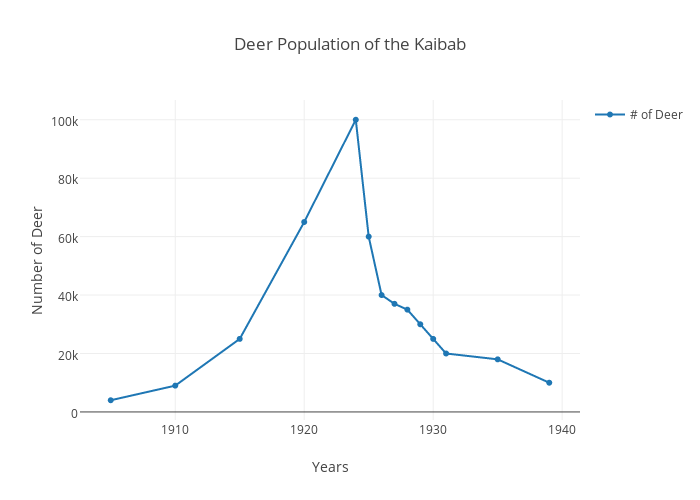
The graph above shows the variation in the deer population in the Kaibab Plateau from 1905 to 1939. Between 1907 and 1923, the natural predators of deer were eliminated from the area by hunters. What was the most likely reason for the decline in the deer population after 1924?
a)
The deer stopped competing for resources because they had no predators.
b)
The increased number of deer led to increased competition for resources.
c)
A large number of deer left the region in search of new predators.
d)
The removal of predators caused fewer resources to be available to the deer.
85.
In a particular habitat, owls eat mice and mice eat grass. If the owl population suddenly grows, then most likely
a)
the number of mice will decrease and the amount of grass will not change.
b)
the number of mice will increase and the amount of grass will increase.
c)
the number of mice will increase and the amount of grass will not change.
d)
the number of mice will decrease and the amount of grass will increase.
86.

Which habitat exhibits the greatest biodiversity?
a)
A habitat with 15 different species with about 300 individuals each
b)
A habitat with 10 different species with about 75 individuals each
c)
A habitat with 4 different species with about 150 individuals each
d)
A habitat with only one species with about 2000 individual
87.

What is the MOST likely consequence if a fungal disease killed the grass in this WOODLAND ECOSYSTEM?
a)
Only the rabbits would be affected, because they are the ones who eat the grass.
b)
The blueberry bush would begin to grow wild, because it would have more space to grow.
c)
Nothing would happen; the animals would eat something else.
d)
The ecosystem would most likely be disrupted, because the grass is one of its primary producers
88.
Some students are studying a vacant city lot as a small ecosystem. Which of the following yields the most information for evaluating the biodiversity of this ecosystem?
a)
identifying all of the species found living in the ecosystem
b)
testing the speed of decomposition of organic matter in the ecosystem
c)
creating a food-web diagram among key species in the ecosystem
d)
observing the feeding habits of the insect predators in the ecosystem
89.
Why is biodiversity so important?
a)
Because all species depend on each other to survive, so if one becomes extinct another species that relies on it could go extinct as well
b)
Because it’s better to have only one variation of each species.
c)
Because it better to only have a few species on Earth.
d)
Honestly, I have no idea what biodiversity is!
90.
High biodiversity in an ecosystem is important, because it increases -
a)
The stability and sustainability of the area
b)
The amount of radiant energy from the Sun
c)
The rate of photosynthesis in plants and algae
d)
The value of the land for urban development
91.
A producer is a (n) ______________.
a)
heterotroph
b)
omnitroph
c)
autotroph
d)
oscartroph
92.
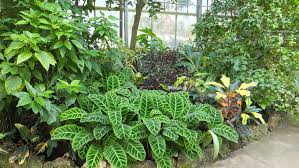
All food chains begin with a ____________.
a)
primary consumer
b)
secondary consumer
c)
producers
d)
scavengers
93.

The shrew provides energy for the _______?
a)
cricket
b)
grasshopper
c)
frog
d)
snake
94.

Which of the following is a herbivore?
a)
cricket
b)
frog
c)
hawk
d)
shrew
95.

In the energy pyramid below, which organism has the least amount of energy available?
a)
Producers
b)
Herbivores
c)
Carnivores
d)
Top Predator
96.

In the energy pyramid here, which organisms have the most energy available?
a)
Producers
b)
Carnivores
c)
Herbivores
d)
Top Predator
97.

If there is 1000 Kcal available in the producers in trophic level 1, how much energy is available in the herbivores in trophic level 2?
a)
10 Kcal
b)
1 Kcal
c)
100 Kcal
d)
1000 Kcal
98.

The diagram represents a pyramid of energy in an ecosystem. Which level would most likely contain members of the plant kingdom?
a)
A
b)
B
c)
C
d)
D
99.

The deer, grasshopper, and bird are all examples of which type of consumers on this food pyramid?
a)
decomposers
b)
omnivores
c)
carnivore
d)
herbivore
100.

Which organism is a secondary consumer in the food chain pictured?
a)
sea lion
b)
killer whale
c)
penguin
d)
small fish
101.

Which organism is the tertiary consumer in this ecosystem?
a)
algae/seaweed
b)
sea lion
c)
killer whale
d)
penguin
102.

Which organism do the owl and the weasel compete for in the food web?
a)
Hawk
b)
Spider
c)
Grasshopper
d)
Shrew
103.

Which of the following is a herbivore?
a)
cricket
b)
frog
c)
hawk
d)
shrew
104.
What might happen if you remove a primary consumer from the ecosystem?
a)
There would be more food for secondary consumers.
b)
The number of primary consumers would increase.
c)
The number of plants would increase.
d)
The number of secondary consumers would increase.
105.

Which of the following would be the most likely effect, if there were a sudden increase in the cricket population?
a)
There would be a decrease in the small bird population.
b)
There would be a decrease in the grass/flowers population.
c)
There would be a decrease in the mice population.
d)
There would be an increase in the grass/flowers population.
106.

Which of the following best describes the small bird in the food web above?
a)
primary and secondary consumer
b)
secondary and tertiary consumer
c)
primary consumer only
d)
secondary consumer only
107.

How many herbivores are in this web?
a)
1
b)
2
c)
3
d)
4
108.

How many primary producers?
a)
1
b)
2
c)
3
d)
4
109.

How many primary consumers are there in this food web?
a)
1
b)
2
c)
3
d)
4
110.
The arrows in a food chain or web represents what?
a)
They point to the organism that is being eaten.
b)
It shows how sunlight flows within an ecosystem.
c)
They show what direction the energy is flowing between organisms.
d)
They represent how water is transferred within a habitat.
111.

If the grasshopper were to be removed completely from the food web, what organism would be most effected?
a)
The squirrel
b)
The shrew
c)
The deer
d)
The rabbit
100 %

