
 Worksheets
Midterm Review
Total questions: 107
Worksheet time: 2hrs 30mins
Name
Class
Date
1.
Students want to learn which of two soils holds more water. They put clay in one bottle and sand in the other. Then they put equal amounts of water in the bottles. Some of the water drained into beakers. Which of these is the manipulated, independent variable?
a)
Amount of water
b)
Type of soil
c)
Type of beaker
d)
Number of bottles
2.
Which variable do "I" change intentionally?
a)
Independent variable
b)
Dependent variable
c)
Constant
d)
s
3.
Which variable may change and probably will change in the experiment, but "I" don't change it?
a)
Independent variable
b)
Dependent variable
c)
Constant
4.
What number is the metric system based?
a)
10
b)
20
c)
1
d)
100
5.
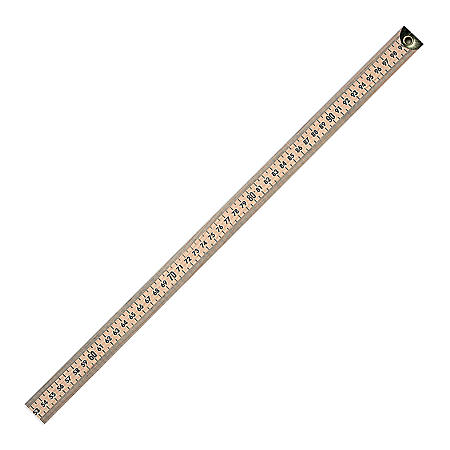
The base unit of metric length.
a)
Meter
b)
Liter
c)
Gram
d)
Metric
6.
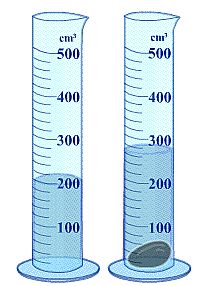
The basic unit of metric volume is called a_____.
a)
Meter
b)
Gram
c)
Liter
d)
Metric
7.
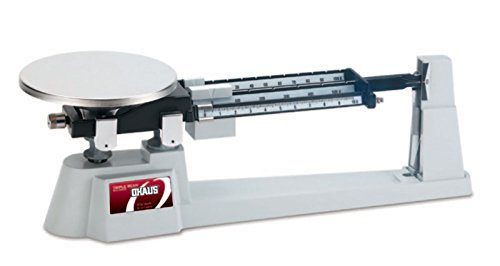
The base unit for mass is the
a)
Meter
b)
Gram
c)
Metric
d)
Liter
8.
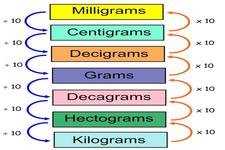
Which unit is the largest?
a)
m
b)
km
c)
cm
d)
dm
9.
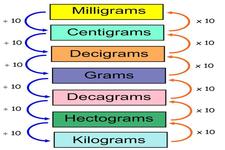
Which unit is the smallest?
a)
km
b)
hm
c)
m
d)
mm
10.

What is the reading at point A?
a)
1.5 cm
b)
1.5 mm
11.
The ___ is the basic unit of sturucture and function of organisms
a)
atom
b)
cell
c)
matter
d)
all other answers are correct
12.
Which statement is a part of the cell theory?
a)
all cells come from preexisting cells
b)
bacteria are prokaryotic cells
c)
eukaryotic cells are complex
d)
humans are multicellular
13.
Who looked at cork and named the cell?
a)
Robert Hooke
b)
Van Leeuwenhoek
c)
Robert Brown
d)
Francesco Redi
14.
The Cell Theory states...
a)
atoms create all matter
b)
living things evolve
c)
the cell is the backbone of all matter
d)
cells are the basic unit of structure and organization of organisms
15.
"All animals are made of cells". This fact was discovered by...
a)
Matthias Schleiden
b)
Theodor Schwann
c)
Robert Hooke
d)
Rudolf Virchow
16.
All plants are made of cells. This was discovered by....
a)
Matthias Schleiden
b)
Rudolf Virchow
c)
Robert Hooke
d)
Aristotle
17.
What tool do you use to view the cells?
a)
metric ruler
b)
centrifuge
c)
microscope
d)
pipette
18.

Who was the "scientist" who observed pond water and teeth scrapings in his microscope?
a)
Hooke
b)
Leeuwenhoek
c)
Schleidian
d)
Virchow
19.

Which of the following is NOT one of the basic points of Cell Theory?
a)
All living things are made of cells.
b)
The cell is the smallest living thing that can perform all the functions of life.
c)
Cells are too small to see without a microscope.
d)
All cells must come from pre-existing cells.
20.
Convinced others that cells come only from other cells.
a)
Schleiden
b)
Hooke
c)
Schwann
d)
Virchow
21.
Who observed the first cell wall, and coined the word cell?
a)
Robert Hooke
b)
Rudolph Virchow
c)
Matthias Schleiden
d)
Theodor Schwann
22.
Which is NOT consistent with Cell Theory?
a)
All cells come from pre-existing cells
b)
All living things are made of cells
c)
All cells are identical in structure and function
d)
Cells are the basic units of structure and function
23.
What organelle gives support and shape to the cell?
a)
Cell Membrane
b)
Cell Wall
c)
Lysosome
d)
Vacuole
24.
What organelle breaks down or digests substances in the cell?
a)
Lysosome
b)
Ribosome
c)
Nucleus
d)
Cell Wall
25.
What organelle controls what goes in and out of the CELL?
a)
Cytoplasm
b)
Cell Membrane
c)
ER
d)
Chloroplasts
26.
What organelle directs the cell's activities?
a)
Vacuole
b)
Cell Membrane
c)
Nucleus
d)
Lysosomes
27.
What organelle makes food for the cell through photosynthesis?
a)
Chloroplast
b)
nucleus
c)
Cell Membrane
d)
Ribosomes
28.
Which organelles make protein?
a)
Vacuole
b)
Golgi Apparatus
c)
Nucleus
d)
Ribosomes
29.
Which organelle fills most of the cell and holds the organelles?
a)
Cytoplasm
b)
Cell Wall
c)
Lysosome
d)
Golgi Apparatus
30.
Which organelle produces many substances and transports things around the cell?
a)
Ribosomes
b)
Nucleus
c)
ER
d)
Cell Membrane
31.
Which organelle makes energy for the cell?
a)
Chloroplast
b)
Mitochondria
c)
Vacuole
d)
Lysosome
32.
Which organelle packages materials to be moved out of the cell?
a)
ER
b)
Vacuole
c)
Golgi Apparatus
d)
Lysosome
33.
Which organelle stores water and other substances?
a)
Mitochondria
b)
ER
c)
lysosome
d)
vacuole
34.

Plants need what to do photosynthesis?
a)
Food absorbed from ground
b)
Sun's energy
c)
Food broken down
d)
Minerals from the soil
35.

What gas goes into the plant before photosynthesis?
a)
Carbon Dioxide
b)
Carbon Monoxide
c)
Oxygen
d)
Nitrogen
36.

What three things are needed for a plant to do photosynthesis?
a)
Glucose, Oxygen, Sunlight
b)
CO2, Oxygen, Sunlight
c)
CO2, Water, Sunlight
d)
Oxygen, Water, Sunlight
37.

What two products does a plant make during photosynthesis?
a)
Water and Glucose
b)
Oxygen and Glucose
c)
Oxygen and Water
d)
CO2 and Glucose
38.

What is the name of the green pigment inside plants?
a)
Monophyll
b)
Chlorophyll
c)
Epiphyll
d)
Glorophyll
39.

Which of these is NOT A TRUE statement about why photosynthesis is important:
a)
It captures and makes the sun's energy available to all species
b)
It turns deadly CO2 into Oxygen for us to breath
c)
It helps plants create energy to send to rest of food chain
d)
It makes the water for our planet
40.
What is one of the reactants of cellular respiration?
a)
energy
b)
glucose
c)
carbon dioxide
d)
water
41.
All living things do which of the following?
a)
Chemosynthesis
b)
Respiration
c)
photosynthesis
d)
all of the answers
42.
Aerobic respiration is different from anaerobic respiration in that aerobic respiration needs...
a)
chlorophyll
b)
carbon dioxide
c)
glucose
d)
oxygen
43.
What is the correct equation for cellular respiration?
a)
6O2 + C6H12O6 -> 6CO2 + 6H2O + Energy
b)
6O2 + C6H12O6 + Energy -> 6CO2 + 6H2O
c)
6CO2 + 6H2O -> 6O2 + C6H12O6 + Energy
d)
6CO2 + 6H2O + Energy -> 6O2 + C6H12O6
44.
What are the reactants for Cell Respiration?
a)
CO2 + H20
b)
Sugar + CO2
c)
Sugar + O2
d)
CO2 + H20 + 38 ATP
45.
What are the products for Cell Respiration?
a)
CO2 + H20
b)
Sugar + CO2
c)
Sugar + O2
d)
CO2 + H20 + 38 ATP
46.
In what organelle does cell respiration take place?
a)
Mitochondria
b)
Chloroplast
c)
Golgi Apparatus
d)
Nucleus
47.
True or False: Plants do Cell Respiration and Photosynthesis?
a)
TRUE
b)
FASLE
48.

Where is there a low concentration of dye?
a)
at the bottom of cup
b)
in the color
c)
at the top of cup
d)
no concenteraion gradient
49.

The picture below is an example of _________________.
a)
osmosis
b)
isotonic
c)
diffusion
d)
active transport
50.
Osmosis is the movement of _____ across a membrane.
a)
food
b)
energy
c)
oxygen
d)
water
51.
During osmosis
a)
water moves from high to low concentration
b)
large or oddly shaped molecules move across a cell membrane
c)
water moves when energy is used
d)
proteins are built
52.
Permeable means
a)
things can pass through
b)
the concentration levels are different
c)
it is permanent
d)
things are stuck
53.
The diffusion of WATER through a semi-permeable membrane is called?
a)
Osmosis
b)
Cell wall
c)
Diffusion
d)
Respiration
54.

Where is there a low concentration of perfume?
a)
in the bottle
b)
on the hand
c)
in the room
d)
in the top
55.
What is diffusion?
a)
when molecules move
b)
when molecules move from a high concentration to a low.
c)
no movement
d)
molecules move everywhere
56.
The term used to describe the diffusion of water.
a)
Diffusion
b)
Osmosis
c)
Selective Permeability
d)
Equilibrium
57.
Molecules will move from an area of high concentration to an area of low concentration until they reach
a)
osmosis
b)
equilibrium
c)
selective permeability
d)
diffusion
58.
What are the steps of the cell cycle in order?
a)
Interphase, Mitosis, Cytokinesis
b)
Interphase, Cytokinesis, Mitosis
c)
Mitosis, Cytokinesis, Interphase
d)
Cytokinesis, Mitosis, Interphase
59.
In which phase of mitosis do the sister chromatids line up on the equator of the cell?
a)
Prophase
b)
Metaphase
c)
Anaphase
d)
Telophase
60.
Which step of the cell cycle do cells spend a majority of their time?
a)
Prophase
b)
Interphase
c)
Mitosis
d)
Cytokinesis
61.
Why do cells go through cell division
a)
Growth
b)
Reproduction
c)
Repair
d)
All of the above
62.
Before cells can divide, what must be copied?
a)
mitochondria
b)
cytoplasm
c)
DNA
d)
Cell Wall
63.

a)
Anaphase
b)
Cytokinesis
c)
Telophase
d)
Metaphase
64.

a)
Cytokinesis
b)
Interphase
c)
Anaphase
d)
Metaphase
65.
the two halves of the doubled chromosome structure
a)
centromeres
b)
sister chromatids
c)
spindle
d)
tissues
66.

This picture shows which process?
a)
mitosis
b)
meiosis
c)
the cell cycle
67.

This picture shows which process?
a)
mitosis
b)
meiosis
c)
the cell cycle
68.
Eukaryotic cells store their genetic information(DNA) in __________.
a)
Chromosomes
b)
Centromeres
c)
karyotypes
d)
Proteins
69.
Uncontrollable cell growth is known as _____
a)
obesity
b)
cancer
c)
diabetes
d)
hepatitis
70.

Highly coiled strand of DNA
a)
Chromatin
b)
Chromosome
c)
Sister Chromatid
d)
Centeromere
71.

a)
prophase
b)
metaphase
c)
anaphase
d)
telophase
72.

a)
prophase
b)
metaphase
c)
anaphase
d)
telophase
73.
Which of the following cells is a gamete?
a)
egg
b)
bone
c)
heart
d)
muscle
74.
The cells produced via meiosis are called:
a)
sex cells
b)
somatic cells
c)
body cells
d)
skin cells
75.
If a body cell in a butterfly contains 24 chromosomes, a butterfly egg would contain
a)
3
b)
6
c)
12
d)
24
76.
How many daughter cells are produced from meiosis ?
a)
10
b)
6
c)
4
d)
2
77.
Which of the following produces identical nuclei in cells?
a)
fertilization
b)
osmosis
c)
mitosis
d)
pollution
78.
Which of the following cell types is formed by meiosis?
a)
skin cells
b)
sperm cells
c)
blood cells
d)
muscle cells
79.
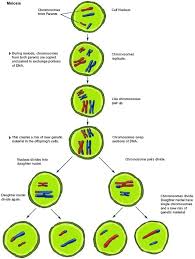
This diagram shows which cellular process that occurs in organisms?
a)
endocytosis
b)
mitosis
c)
meiosis
d)
phagocytosis
80.
What is a phenotype?
a)
The expression of a trait; physical appearance.
b)
refers to the genetic makeup of an individual
c)
An organism that has the same genes for a trait (ex. TT or tt)
d)
the passing of traits from parent to offspring
81.
What does heterozygous mean?
a)
An organism that has the same genes for a trait (TT or tt)
b)
An organism that has different genes for a trait (Tt)
c)
When neither gene is fully dominant; offspring is a mixture of both
d)
the different forms of a trait (hair color--> brown, blonde, red
82.
An allele whose trait only shows up when no dominant allele is present.
a)
hidden allele
b)
dominant allele
c)
recessive allele
d)
present allele
83.
Two heterozygous (Tt)tall pea plants are crossed. Which describes their offspring?
a)
50% tall and 50% short
b)
75%tall and 25% short
c)
100%short
84.
Pea plants can have green or yellow seeds. In a pea plant that is heterozygous for seed color, the allele for yellow seeds masks the effects of the allele of green seeds. Which of the following terms best describes the allele for yellow seeds?
a)
codominant
b)
recessive
c)
dominant
d)
sex-linked
85.
A human usually has _____ total chromosomes.
a)
6
b)
22
c)
4
d)
46
86.
Which of the following alleles is homozygous recessive?
a)
Tt
b)
tt
c)
TT
d)
T
87.
What determines gender in humans?
a)
the X and Y chromosome
b)
chromosome 21
c)
codominance
d)
epistasis
88.
Characteristics passed from parents to their offspring.
a)
behavior
b)
learned trait
c)
inherited trait
d)
function
89.
What is NOT an example of an inherited TRAIT?
a)
eye color
b)
tongue rolling
c)
height
d)
speaking a language
90.
A deer inherits some of its features from its parents. Other features come from its environment. Which feature would a deer most likely inherit from its parents?
a)
a long scar
b)
brown eyes
c)
missing teeth
d)
a broken antler
91.
A young couple is having a baby. Which best describes an inherited trait the baby may have?
a)
The baby will live in the same house as its parents.
b)
The baby will grow up to love pizza like its mother.
c)
The baby may have the same eye color as its father.
d)
The baby may grow to have a fear of heights like its parents.
92.
Are recessive traits shown with capital or lowercase letters?
a)
Capital
b)
Lowercase
93.
The physical appearance or the way a gene looks is known as it's....
a)
genotype
b)
allele
c)
gene
d)
phenotype
94.
The different forms of genes are known as
a)
environment
b)
probability
c)
traits
d)
alleles
95.
An allele or gene that always shows is
a)
recessive
b)
dominant
c)
hidden
d)
present
96.
Two of the same genes for a trait (sometimes called purebred). BB or bb
a)
homozygous
b)
hetrozygous
c)
protein
d)
chromosome
97.
Two different genes for a trait (sometimes called hybrid). Bb
a)
protein
b)
homozygous
c)
heterozygous
d)
genotype
98.

G = dominant green and y = recessive yellow
A fish has a Gy genotype, what will its phenotype be?
A fish has a Gy genotype, what will its phenotype be?
a)
yellow
b)
green
c)
greenish-yellow
d)
red
99.
Dominant alleles are represented by a:
a)
Male gene
b)
lowercase letter
c)
recessive trait
d)
capital letter
100.

A ________________________ is used to predict the possible genotype from certain parents
a)
Mendel Grid
b)
Genetic Tic Tac Toe
c)
Punnett Square
d)
Pedigree Plot
101.
Heredity is the passing of traits from _____________________ to _____________________
a)
predators to prey
b)
water to rain
c)
parents to offspring
d)
fungi to protists
102.
___________________________ is the field of science that studies of how traits are passed on, or inherited.
a)
dominant traits
b)
ratio
c)
phenotype
d)
genetics
103.

He is known as the father of modern day genetics.
a)
Gregory Mendel
b)
Greg Mendel
c)
Gregor Mendel
d)
Grace Mendel
104.

Which is a true statements about this picture?
a)
Brown is recessive
b)
Brown is dominant
c)
Blue is dominant
d)
Blue is codominant
105.
What is a gene?
a)
An entire chromosome that codes for a trait
b)
a piece of clothing
c)
a piece of a DNA on chromosome that codes for a trait
d)
Chemical messengers in your brain that code for a trait
106.
What is a genotype?
a)
The genetic make up (code)
b)
The physical trait
107.
Tall is dominant to short. What is the phenotype of this organism?
Tt
Tt
a)
tall
b)
short
100 %

