wayground logo

Free Printable Worksheets

Font size

S
M
L
XL
Worksheets

Fall review (benchmark on wednesday)

Total questions: 110

Worksheet time: 2hrs 43mins

Name
Class
Date
1.

What is the function of DNA?

a)

to provide the information to code for a protein

b)

to make up the structure of the plasma membrane

c)

to store energy for active trtansport

d)

to transport oxygen to blood cells

2.
the main structure that differentiates a eukaryote from a prokaryote is the:
a)
cell wall
b)
ribosome
c)
mitochondria
d)
nucleus
3.

If a cell has a cell wall (cellulose a sugar) and chloroplasts, what kind of cell is it?

a)

animal

b)

plant

4.

Where are proteins made in the cell?

a)

golgi apparatus

b)

nucleus

c)

mitochondria

d)

ribosome

5.

choose the correct one from simplest to most complex

a)

molecule - organelle- cells - tissue- organ

b)

cells - organism - tissues - organs - organ systems

c)

cells - molecule - organs - organ systems - organism

d)

organism - cells - tissues - organs - organ systems

6.
The purpose of the cell membrane is to:
a)
help release enzymes from the cell
b)
increase the surface area of the cell
c)
allow for the select transport of molecules into and out of the cell
d)
help capture sunlight to make food through photosynthesis
7.

Which is an example of a molecule?

a)

Heart

b)

Lipid

c)

animal cell

d)

carbon

8.

Which biomolecule is responsible for insulation and long term stored energy?

a)

Protein

b)

Nucleic Acid

c)

Lipid

d)

Carbohydrate

9.
Which biomolecule has sugars and starches?
a)
Lipids
b)
Proteins
c)
Carbohydrates
d)
Nucleic Acid
10.
Which biomolecule contain your genetics?
a)
Carbohydrate
b)
Lipid
c)
Nucleic Acid
d)
Protein
11.
Which biomolecule is made of amino acids?
a)
Nucleic Acid
b)
Carbohydrate
c)
Protein
d)
Lipid
12.
Which biomolecule is a main source of quick energy?
a)
Nucleic Acid
b)
Protein
c)
Lipid
d)
Carbohydrate
13.

Which this cell membrane is made up of lipids, what are the large molecules floating in it?

a)

lipids

b)

protein

c)

nucleic acid

d)

carbohydrate

14.

What is the function of a nucleotide?

a)

Storing Energy

b)

Catalyzing cellular reactions

c)

Building tissue

d)

Storing genetic information

15.
Why does a cell move materials across the cell membrane?
a)
to maintain homeostasis
b)
because it wants to
c)
It doesn't. Materials move on their own.
d)
To create energy
16.
Osmosis is the diffusion of _____ across a selectively permeable membrane.
a)
food
b)
air
c)
water
d)
oxygen
17.
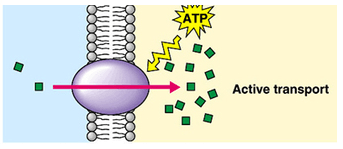
The picture shown here is an example of _________________.
a)
osmosis
b)
isotonic
c)
diffusion
d)
active transport
18.
When particles move from an area of high to an area of low concentration, this is...
a)
passive transport
b)
active transport
19.

When particles move from an area of low to an area of high concentration, moving against the concentration gradient is

a)

passive transport

b)

active transport

20.
Which of these is NOT a method of active transport?
a)
endocytosis
b)
exocytosis
c)
protein channels
d)
osmosis
21.
ATP is a form of energy.
a)
Passive Transport
b)
Active Transport
22.
Solutes move against the concentration gradient, therefore energy is needed
a)
Passive Transport
b)
Active Transport
23.
This takes substances into a cell
a)
endocytosis
b)
exocytosis
c)
both
24.
The cell below is in a _________ solution.
a)
Hypotonic
b)
Hypertonic
c)
Isotonic
25.
Identify the Cell Cycle Stage.
a)
Anaphase
b)
Cytokinesis
c)
Telophase
d)
Metaphase
26.
Identify the Cell Cycle Stage.
a)
Cytokinesis
b)
Interphase
c)
Anaphase
d)
Metaphase
27.
Identify the Cell Cycle Stage.
a)
Anaphase
b)
Cytonkinesis
c)
Interphase
d)
Prophase
28.
Identify the Cell Cycle Stage.
a)
Interphase
b)
Anaphase
c)
Telophase
d)
Prophase
29.

what stage is the first cell in this image?

a)

interphase

b)

telophase

c)

Cytokinesis

d)

metaphase

30.

The process by which the nuclear material is divided equally between two new IDENTICAL cells

a)

mitosis

b)

cancer

c)

spindle

d)

centromere

31.
In mitosis, the two resulting cells are
a)
different from the starting cell and identical to each other.
b)
different from the starting cell and different from each other.
c)
identical to the starting cell and different from each other.
d)
identical to the starting cell and identical to each other.
32.
During which state of the cell cycle is DNA Replicated?
a)
Interphase
b)
Prophase
c)
Anaphase
d)
Cytokinesis
33.
Which of the following is NOT a reason we need mitosis.
a)
Growth
b)
Recovering from injuries
c)
Replacement of dead cells
d)
Reproducing
34.
Which of the following shows the correct sequence of the cell cycle?
a)
Mitosis-> G1->S->G2->cytokinesis
b)
S->G1-> G2-> mitosis-> cytokinesis
c)
cytokinesis->mitosis->G1->S->G2
d)
 G1->S->G2->mitosis->cytokinesis
35.
What is the end result of mitosis?
a)
2 identical gametes (sex cells)
b)
2 identical daughter cells
c)
2 daughter cells with different genetic information
d)
4 identical daughter cells
36.
Reasons that viruses are considered to be nonliving is because
a)
They are not cellular
b)
They cannot reproduce on their own
c)
They cannot make proteins
d)
all of the above
37.
Viruses are...
a)
prokaryotic
b)
eukaryotic
c)
non-living
d)
endospores
38.
What is a pathogen?
a)
Bacteria
b)
Virus
c)
Type of disease infection
d)
Protist
39.
Viruses are not alive because they do not  ___.
a)
have DNA
b)
release energy
c)
reproduce
d)
have protein
40.

What do viruses have in common with living cells? They both...

a)

store genetic information and contain proteins

b)

have chloroplasts and mitochondria

c)

use glucose for cellular respiration

d)

have endoplasmic reticulum

41.

What is the basic structure of a virus?

a)

nucleic acid and proteins

b)

carbs and lipids

c)

nucleus and cell membrane

d)

nucleus and cell wall

42.
What helps prevent viral diseases?
a)
Vaccines
b)
Antibiotics
c)
Herbal tea
d)
Gene Therapy
43.
What happens during lysis?
a)
Virus injects DNA
b)
Cell kills virus
c)
Cell makes more viruses
d)
Cell bursts and viruses are released
44.

What happens after the virus attaches to a cell host?

a)

Attachment

b)

Injects

c)

Replication

d)

Assembly

45.

What is the 1st step of virus infection (lytic and lysogenic)?

a)

Entry

b)

Attachment

c)

Replication

d)

Assembly

46.

HIV infects cells but does not activate for years. HIV is an example of which type of virus?

a)

Lysogenic

b)

Bacterial

c)

Lytic

d)

None of the above

47.
Which virus reproduction cycle causes the cell to immediately rupture and die?
a)
Lytic Cycle
b)
Lysogenic Cycle
c)
Mitosis
d)
Meiosis
48.
What is the difference between the lytic and lysogenic virus reproductive cycles?
a)
lysogenic is longer
b)
they are the same
c)
Lytic is longer
d)
Both are different each time
49.
Which sequence of DNA bases would pair with this partial strand
ATG TGA CAG
a)
ATG TGA CAG
b)
TAC ACT GTC
c)
GTA AGT GAC
d)
CAT TCA CTG
50.
Which of the following best describes the shape of a DNA molecule?
a)
double helix
b)
contains ribose
c)
made of amino acids
d)
contains Uracil
51.
Which of the following units are repeatedly joined together to form a strand of DNA?
a)
amino acids
b)
nucleotides
c)
fatty acids
d)
polysaccharides
52.
Guanine bonds with ______________.
a)
Adenine
b)
Guanine
c)
Cytosine
d)
Thymine
53.
What are the 4 nitrogen bases?
a)
adenine, thymine, cytoplasm, and guanine
b)
adenine, thymine cytosine, and guanine
c)
adenine, thymine, cytosine, and gylcerol
d)
adenine, thymine, cytosine, and glucose
54.
Nucleotides are made up of a sugar, phosphate, and..?
a)
nitrogen base
b)
nucleic acid
c)
cholesterol
d)
fatty acid
55.
Which organelle is DNA usually found in?
a)
cell membrane
b)
vacuole
c)
chloroplast
d)
nucleus
56.
What are the three components of a nucleotide?
a)
sugar, hydrogen, nitrogen base
b)
sugar, oxygen, nitrogen base
c)
sugar, phosphate, nitrogen base
d)
sugar, phosphate, protein
57.
Replicate the following strand of DNA: 
AATCATGGA
a)
AATCATGGA
b)
TTAGTACCT
c)
UUAGUACCU
d)
GGATAUCUA
58.
Why is DNA important?
a)
it is very small and very complicated
b)
it's in everything
c)
it serves as the blueprint for traits of all living things
d)
because we eat it every day for energy
59.
When a group of organs work together to perform a particular function they create a/an
a)
organ system
b)
organism
c)
tissue
d)
organ
60.
The smallest level of organization of life in an organism
a)
tissue
b)
cell
c)
organ
d)
organ system
61.
Tissue that works together to perform a function
a)
organ
b)
cell
c)
organ system
d)
organism
62.

Nitrogenous bases are joined by which type of bond?

a)

polar bonds

b)

ionic bonds

c)

hydrogen bonds

63.

When a cell cycle is unregulated what can happen ?

a)

Cancer (tumor)

b)

Cold

c)

allergies

64.
When is an organism's DNA replicated?
a)
During G1 of Interphase
b)
During G2 of Interphase
c)
During Prophase
d)
During S phase of Interphase
65.
No nucleus
a)
Eukaryote
b)
Prokaryote
c)
Both
66.
Bacteria
a)
Eukaryote
b)
Prokaryote
c)
Both
67.
Cell membrane
a)
Eukaryote
b)
Prokaryote
c)
Both
68.
A single-celled organism that lacks a membrane-bound nucleus, mitochondria, or any other membrane -bound organelle .
a)
Prokaryote
b)
Eukaryote
c)
Nucleus
d)
Single-celled organism
69.
Plants and animal cells are examples of ___ cells 
a)
prokaryotic cells 
b)
eukaryotic cells 
70.

Movement of materials down the concentration gradient through a large protein channel is an example of

a)

facilitated diffusion

b)

active transport

c)

respiration

d)

osmosis

71.
Which list includes only structures that would be found in a prokaryotic cell? 
a)
Cell wall, plasma membrane, mitochondria
b)
Central vacuole, cell wall, lysosome
c)
Cell wall, plasma membrane, cytoplasm
d)
Plasma membrane, nucleus, mitochondria
72.
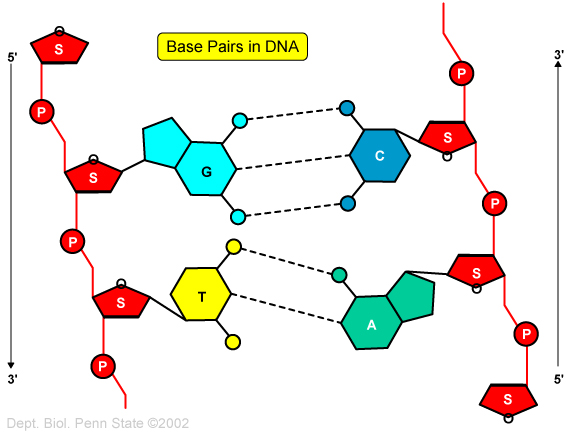
The diagram shows the base sequence of a strand of DNA.
From left to right, what is the sequence of the complementary strand of DNA in this molecule?
a)
T G A A C
b)
A C T  T G
c)
T G U U C
d)
U C T T G
73.

The diagram below represents division of a cell that produces two daughter cells. When new cells are formed through the process of mitosis, the number of chromosomes in the new cells. when does this process occur

a)

during reproduction

b)

skin injury

74.
phase during the cell cycle in which the nucleus is divided resulting in identical daughter cells 
a)
mitosis
b)
lipids
c)
proteins
d)
cell cycle
75.
Which of these lists organizes the phases of mitosis in order from first to last?
a)
prophase, anaphase, telophase, metaphase
b)
metaphase, prophase, telophase, anaphase
c)
prophase, metaphase, anaphase, telophase
d)
metaphase, anaphase, prophase, telophase
76.
What is one similarity between active and passive transport?
a)
both involve using chemical energy
b)
both involve producing new cells
c)
both involve moving substances against their concentration gradient
d)
both involve moving substances across a membrane
77.

Which of these lists organizes the parts of a complex organism from most basic to most complex?

a)

animal cell - heart - protein

b)

skin - plant cell - lung

c)

nucleus - animal cell - brain

d)

lipid - bacteria cell - animal cell

78.

The function of mitosis is:

a)

to create egg and sperm

b)

cell growth & repair

c)

to reduce the chromosome number by half

d)

is for plants only

79.
DNA and RNA are examples of 
a)
Carbohydrates
b)
Lipids
c)
Proteins
d)
Nucleic Acids
80.
Waxes, oils and fats are examples of
a)
Carbohydrates
b)
Lipids
c)
Proteins
d)
Nucleic Acids
81.

the organelle smooth endoplasmic reticulum would fall under which biomolecule

a)

Carbohydrates

b)

Lipids

c)

Proteins

d)

Nucleic Acids

82.
This structure supports and protects plant cells.
a)
Nucleus
b)
Cell Wall
c)
Cell membrane
d)
Cytoplasm
83.
Directs all cell activities through the DNA located there.
a)
Lysosomes
b)
Nucleus
c)
ribosomes
d)
Mitochondria
84.

which biomolecule stores energy

a)

carbohydrate

b)

lipids

c)

protein

d)

nucleic acid

85.
I am a protein packaging and shipping machine! Who am I?
a)
vacuole
b)
ribosome
c)
mitochondrion
d)
golgi apparatus
86.

what is true about DNA

a)

has common components in all living things

b)

its different in all living things

c)

its living

d)

its only found in eukaryotic cells

87.

what does Active transport do

a)

moves from a high to low concentration gradient

b)

maintains homeostasis by using energy

c)

it moved large materials out of the cell membrane

d)

it moves small materials into the cell membrane
88.

what part of the cell cycle checks that DNA was replicated correctly

a)

G1

b)

S-phase

c)

G2

d)

cytokinesis

89.
A group of tissues that work together to perform a similar function is called_____. (Examples include the heart, lungs or stomach)
a)
cells
b)
tissues
c)
organs
d)
organ system
90.

what is true about proteins

a)

change chemical rates

b)

gives structure

c)

transport large molecules

d)

all of the above

91.

what is true about biomolecules

a)

needed by all living things

b)

its living

c)

makes energy

d)

makes up atoms

92.

what is true about eukaryotes

a)

has membrane bound organelles

b)

all bacteria

c)

makes genetic material

d)

only found in water

93.
Which biomolecule is this?
a)
protein
b)
nucleic acid
c)
lipid
d)
carbohydrate
94.
Which biomolecule is responsible for insulation and energy storage?
a)
Protein
b)
Nucleic Acid
c)
Lipid
d)
Carbohydrate
95.
What type of molecule is this?
a)
Nucleic acid
b)
Protein
c)
Carbohydrate
d)
Lipid
96.

what is true about bacteria

a)

can be good for you

b)

can be bad for you

c)

are prokaryotes

d)

all of the above

97.
A bacterial infection may be treated with antibiotics, but a virus cannot
a)
True
b)
False
98.

what stage is occurring in the image (look at the arrow)

a)

prophase

b)

metaphase

c)

anaphase

d)

telophase

99.

the cell wall is composed of which biomolecule

a)

carbohydrates

b)

lipids

c)

protein

d)

nucleic acid

100.

choose the correct one from simplest to most complex

a)

biomolecule - organelle- cells - tissue- organ

b)

cells - organism - tissues - organs - organ systems

c)

cells - biomolecule - organs - organ systems - organism

d)

organism - cells - tissues - organs - organ systems

101.

Identify the Cell Cycle Stage that occurs AFTER the image below

a)

Anaphase

b)

Cytokinesis

c)

Telophase

d)

Metaphase

102.

Identify the Cell Cycle Stage that occurs BEFORE the image below

a)

Anaphase

b)

Cytokinesis

c)

Telophase

d)

Metaphase

103.

Identify the Cell Cycle Stage that occurs AFTER the image shown

a)

Cytokinesis

b)

Interphase

c)

Anaphase

d)

Metaphase

104.

Identify the Cell Cycle Stage that occurs BEFORE the image shown

a)

Prophase

b)

Interphase

c)

Anaphase

d)

Metaphase

105.

the organelle rough endoplasmic reticulum would fall under which biomolecule

a)

Carbohydrates

b)

Lipids

c)

Proteins

d)

Nucleic Acids

106.

which is evidence that the chromosomes are being pulled away

a)

1

b)

2

c)

3

d)

4

107.

which is a prokaryotes (1 2 3 4)

a)

1

b)

2

c)

3

d)

4

108.

where is DNA being replicated

a)

G1

b)

S

c)

G2

d)

mitosis

109.

how are bacteriophage and bacterial alike

a)

both are living

b)

lack membrane bound organelles

c)

have antibodies

d)

can reproduce by themselves

110.

that are the protein outside of a virus used for

a)

move

b)

attach

c)

contract

d)

smell