
 Worksheets
Anatomy Midterm Review 2018
Total questions: 70
Worksheet time: 5hrs 32mins
Name
Class
Date
1.
The head is ______ to the chest.
a)
superior
b)
dorsal
c)
inferior
d)
ventral
2.
The bone is _____ to the skin.
a)
inferior
b)
superficial
c)
deep
d)
posterior
3.
The right shoulder is ______ to the sternum.
a)
medial
b)
proximal
c)
distal
d)
lateral
4.
The chin is _____ to the orbital socket.
a)
superior
b)
deep
c)
inferior
d)
lateral
5.

Away from midline
a)
Lateral
b)
Distal
c)
Superior
d)
Transverse
6.

A body part is above another part, or is closer to the head
a)
Superficial
b)
Lateral
c)
Superior
d)
Deep
7.

Toward the back; opposite of Anterior
a)
Superior
b)
Posterior
c)
Inferior
d)
Lateral
8.

Closer to midline in relation to another part
a)
Deep
b)
Distal
c)
Medial
d)
Proximal
9.

Away from the origin or trunk
a)
Deep
b)
Distal
c)
Proximal
d)
Posterior
10.
The body's attempt to return to a normal state is called-
a)
response
b)
adaptation
c)
homeostasis
d)
evolution
11.
A scientist studies how a pitcher throws to determine if they will be prone to an injury. This would be part of-
a)
anatomy
b)
physiology
12.
Which is an example of homeostasis?
a)
a bear protecting it's cubs
b)
salmon swimming upstream to breed
c)
a dog panting when it's hot
d)
a skunk spraying it's a predator as defense
13.
Which would be considered the "least" organized or complex?
a)
the body
b)
tissues
c)
organs
d)
organ systems
14.

The rib cage is _____ to the heart.
a)
proximal
b)
medial
c)
superficial
d)
distal
15.

Which is the correct structural order?
a)
tissue-cells-organ-organ system
b)
cells-tissue-organ system-organ
c)
tissue-cells-organ system-organs
d)
cells-tissue-organ-organ system
16.
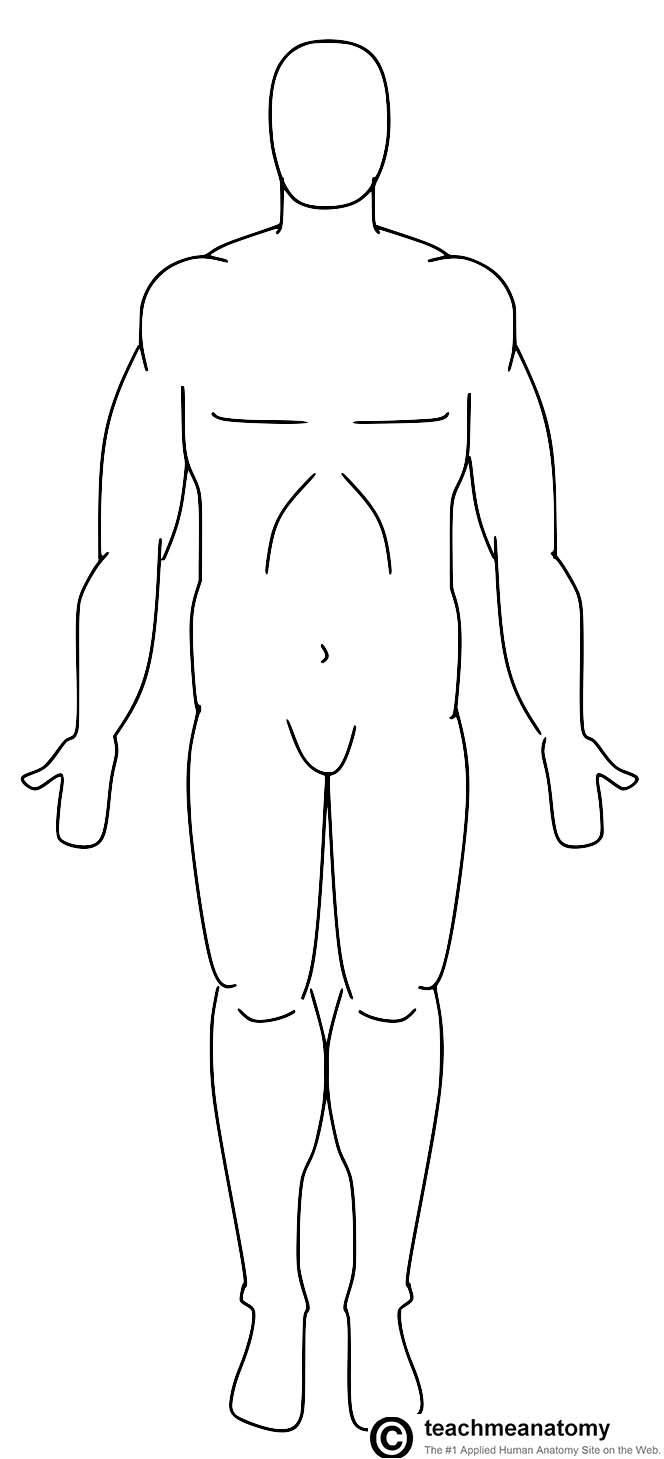
In the anatomical position, the palms are facing-
a)
forward
b)
backward
17.

The cranial cavity and the spinal (vertebral) cavity are both contained within the _______ cavity.
a)
dorsal
b)
ventral
c)
abdominal
d)
throacic
18.

The thoracic cavity and the abdominopelvic cavity are both contained within the _______ cavity.
a)
dorsal
b)
ventral
c)
cranial
d)
spinal
19.
A location closer to the trunk of the body.
a)
Proximal
b)
Superficial
c)
Medial
d)
Lateral
20.

Divides body into left and right portions
-Mid-: equal right & Left halves
-Mid-: equal right & Left halves
a)
Superficial
b)
Sagittal
c)
Proximal
d)
Transverse
21.
The knee is _______ to the ankle.
a)
proximal
b)
lateral
c)
distal
d)
medial
22.
Compared to the heart, the skin is a _____ organ
a)
Deep
b)
Superficial
c)
Proximal
d)
Dorsal
23.
a plane that divides the body into left and right halves.
a)
sagittal
b)
midsagittal
c)
transverse
d)
frontal
24.
a plane that divides the body into top and bottom halves.
a)
sagittal
b)
midsagittal
c)
transverse
d)
frontal
25.
a plane that divides the body into front and back.
a)
sagittal
b)
midsagittal
c)
transverse
d)
frontal
26.
What type of bond results from shared electrons?
a)
Covalent Bond
b)
Ionic Bond
c)
Hydrogen Bond
d)
Water Bond
27.
Which subatomic particle is neutral?
a)
Neutron
b)
Positron
c)
Proton
d)
Electron
28.
Which subatomic particle is positive?
a)
Electron
b)
Proton
c)
Neutron
d)
Quark
29.
Which subatomic particle is negative?
a)
Proton
b)
Neutron
c)
Electron
d)
Negatron
30.
Which subatomic particles are found in the nucleus?
a)
Protons and Electrons
b)
Neutrons and Electrons
c)
Protons and Neutrons
d)
Electrons only
31.
What is the charge of a proton?
a)
Neutral
b)
Depends on the location
c)
Positive
d)
Depends on the size
32.

How many electrons would an atom of Krypton have?
a)
83.80
b)
36
c)
12
d)
none
33.
If I gain electrons I become
a)
Positive because I've added to my atom
b)
negative because I've added electrons
c)
same because i'm balanced
d)
equal because now I have electrons
34.
The electrons in the outermost energy level are called
a)
neutrons
b)
protons
c)
valence electrons
d)
isotopes
35.
All matter is made of what
a)
energy
b)
atoms
c)
electrons
d)
compounds
36.
When atoms combine, they may gain, lose, or share:
a)
protons
b)
electrons
c)
neutrons
d)
nuclei
37.
Carbon has an atomic number of 6. The number of electrons found in the first shell is:
a)
2
b)
4
c)
6
d)
8
38.
The transfer of electrons occurs during
a)
ionic bonding
b)
covalent bonding
c)
metallic bonding
d)
the formation of molecules
39.
An atom with atomic number 6 would have how many protons
a)
6
b)
12
c)
3
d)
cannot be determined
40.

What does the number 39.083 represent?
a)
Atomic Number
b)
Chemical Symbol
c)
Average Atomic Mass
d)
Number of electrons
41.
If the atomic number is 10 and the atomic mass is 23.10, how many protons does that atom have?
a)
10
b)
23.10
c)
13
d)
23
42.
If the atomic number is 10 and the atomic mass is 23.10, how many electrons does that atom have?
a)
10
b)
23.10
c)
13
d)
23
43.
If the atomic number is 10 and the atomic mass is 23.10, how neutrons does that atom have?
a)
10
b)
23.10
c)
13
d)
23
44.

How many valence electrons does this atom have?
a)
2
b)
4
c)
6
d)
8
45.

Which is an electron?
a)
A
b)
B
c)
C
46.

How many electrons does Si contain? (click to see image)
a)
14
b)
28
c)
2
d)
None of these
47.

How many electrons does potassium K contain? (click to see image)
a)
19
b)
39
c)
20
d)
40
48.
In the periodic table, what does C stand for?
a)
cat
b)
calcium
c)
carbon
d)
crypton
49.
A tissue is:
a)
the most complex organizational unit of the body.
b)
a thin sheet of cells embedded in a matrix.
c)
a group of similar cells that perform a common function.
d)
a membrane that lines body cavities.
50.
Uses electrical signals to carry out functions
a)
epithelial.
b)
connective.
c)
muscle.
d)
nervous.
51.
Supports and reinforces body organs
a)
epithelial.
b)
connective.
c)
muscle.
d)
nervous.
52.
Cell of this tissue may absorb and/or secrete substances
a)
epithelial.
b)
connective.
c)
muscle.
d)
nervous.
53.
Forms the brain and spinal cord
a)
epithelial.
b)
connective.
c)
muscle.
d)
nervous.
54.
Characterized by having large amounts of extracellular matrix.
a)
epithelial.
b)
connective.
c)
muscle.
d)
nervous.
55.
Its cells shorten to exert force
a)
epithelial.
b)
connective.
c)
muscle.
d)
nervous
56.
Lines cavities, tubes, covers body
a)
epithelial.
b)
connective.
c)
muscle.
d)
nervous
57.

a)
Stratified squamous
b)
Simple columnar
c)
Simple squamous
58.

a)
Stratified squamous
b)
Simple columnar
c)
Simple squamous
59.
Epithelium that appears layered due to the varying levels at which nuclei are found in cells, but in reality is not layered, is _________________.
a)
transitional epithelium
b)
pseudostratified columnar epithelium
c)
stratified squamous epithelium
d)
stratified columnar epithelium
60.
Choosing from the following list of connective tissues, which one consists of cells in a fluid matrix?
a)
loose connective tissue
b)
adipose tissue
c)
bone
d)
blood
61.
Which muscle tissue is multinucleate, voluntary, and bears striations?
a)
skeletal muscle
b)
smooth muscle
c)
multiunit smooth muscle
d)
cardiac muscle
62.
Connetive tissues that connects bone to bone
a)
Tendon
b)
Ligaments
63.
Connetive tissues that connects bone to muscle
a)
Tendon
b)
Ligaments
64.
The common term for adipose tissue is
a)
Fat
b)
Blood
c)
Bone
d)
Cartilage
65.
Cardiac muscle is specific to which organ?
a)
Heart
b)
Brain
c)
Pancreas
d)
Lungs
66.
The stomach consists of what type of muscle?
a)
Smooth muscle
b)
Skeletal muscle
c)
Cardiac muscle
d)
Deoxygenated muscle
67.

What tissue type is this?
a)
Adipose tissue
b)
Cardiac muscle
c)
Nervous tissue
d)
Skeletal muscle
68.
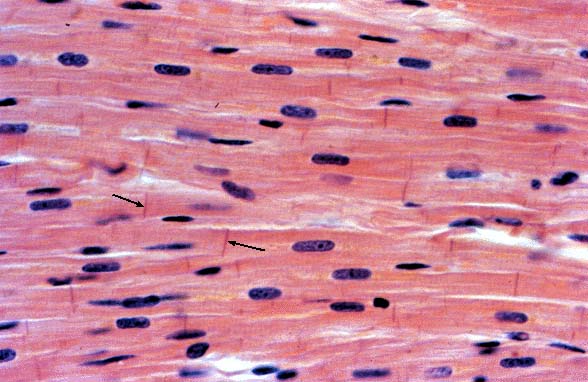
What tissue type is this? (The arrows are a clue)
a)
Cardiac muscle
b)
Skeletal muscle
c)
Smooth muscle
d)
Nervous tissue
69.
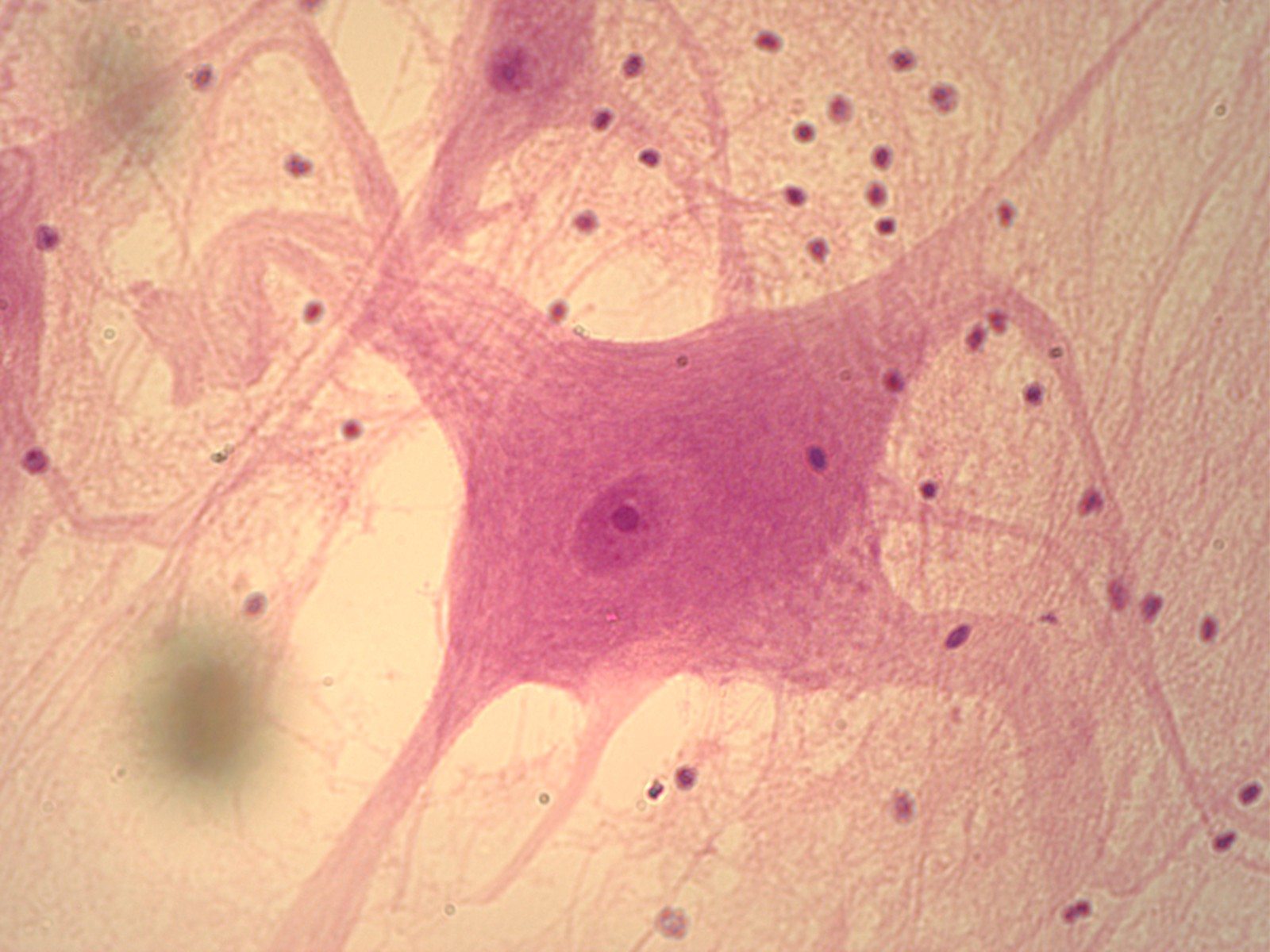
What tissue type is this?
a)
Nervous tissue
b)
Cardiac muscle
c)
Smooth muscle
d)
Connective tissue proper
70.

What tissue type is this?
a)
Skeletal muscle
b)
Nervous tissue
c)
Adipose tissue
d)
'Specialised' connective tissue
100 %

