Wayground logo

Free Printable Worksheets

Font size

S
M
L
XL
Worksheets

MP3 Exam Review

Total questions: 100

Worksheet time: 35mins
Name
Class
Date
1.
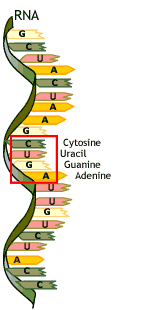
In RNA, Uracil pairs with ______. 
a)
cytosine
b)
adenine
c)
guanine
d)
thymine
2.
The process to go from DNA to mRNA is _______
a)
translation
b)
transcription
c)
replication
3.
The process to go from mRNA to a protein is called ____
a)
transcription
b)
rRNA
c)
replication
d)
translation
4.
DNA holds the code for
a)
lipids
b)
carbohydrates
c)
protein
d)
sugar
5.
Choose the nucleotide sequence of the RNA strand that would be complementary to the following strand: 
GTAGTCA
a)
UATUAGA
b)
ACGACTG
c)
CAUCAGU
d)
CATCAGT
6.
The main function of tRNA is to...
a)
carry a message that, when translated, forms proteins
b)
form a portion of ribosomes
c)
string together complementary RNA and DNA strands
d)
bring amino acids from the cytoplasm to the ribosomes
7.
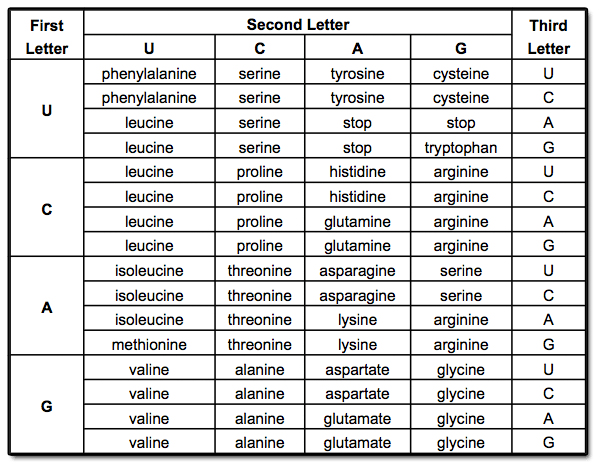
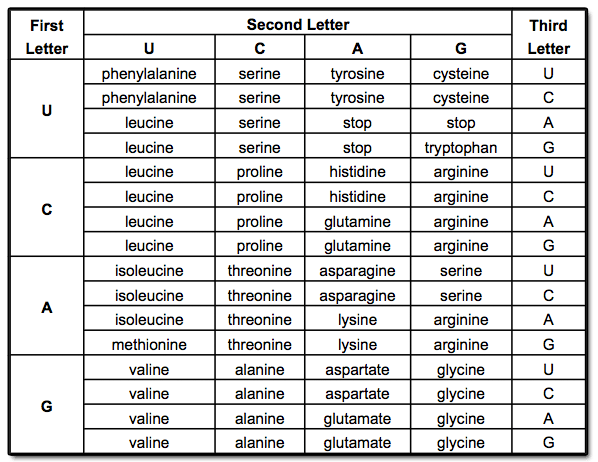
What amino acid is represented by the codon UUA?
a)
Phenylalanine
b)
Tyrosine
c)
Leucine
d)
Stop codon
8.
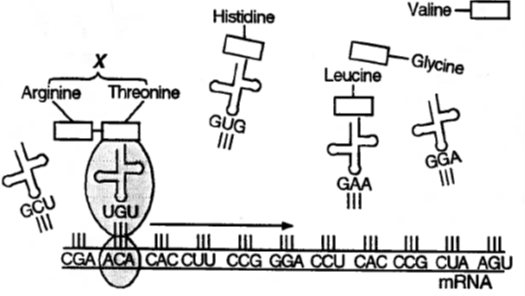
What process is going on in this photo? 
a)
Transcription 
b)
Translation 
c)
Replication 
d)
All the above 
9.
Which component of DNA determines the traits of an organism? 
a)
Nitrogen Bases
b)
Sugar-Phosphate Backbone
c)
Hydrogen bonds
10.
What is the location in the cell for translation?
a)
nucleus
b)
mitochondria
c)
ribosome
d)
chloroplast
11.
What is the three base sequence of mRNA that codes for a single amino acid?
a)
Anticodon
b)
Codon
c)
Protein
12.
What are the backbones (sides) of the DNA structure made up of?
a)
repeating phosphates and sugars
b)
nitrogen bases
c)
nucleotides
d)
adenine and thymine
13.
What is the location in the cell for transcription?
a)
nucleus
b)
cytoplasm
c)
ribosome
d)
mitochondria
14.
Which is the mRNA molecule that would be transcribed from this DNA template:
TGGCAAGTACGT
a)
ACCGTTCATGCA
b)
UGGCAAGUACGU
c)
UCCGUUCUUGCU
d)
ACCGUUCAUGCA
15.
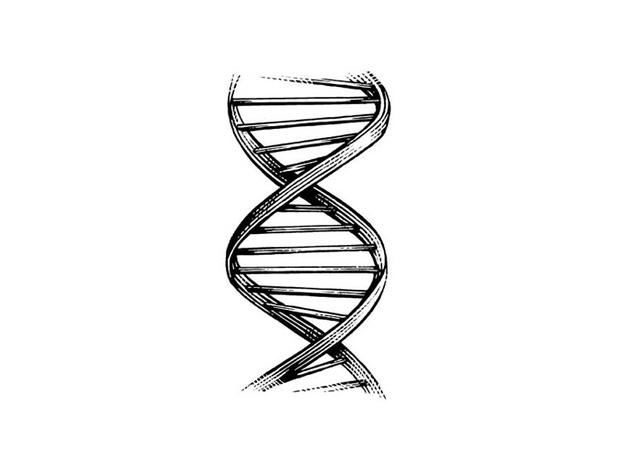
DNA has a _____________ structure. 
a)
double helix
b)
single strand
c)
ring 
d)
chain
16.
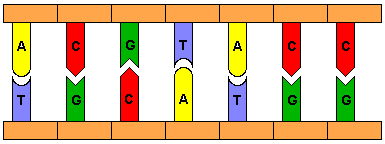
In DNA, Adenine pairs with ___________. 
a)
Guanine
b)
Cytosine
c)
Thymine
d)
Uracil
17.
Does the order of amino acids in a protein matter?
a)
YES!
b)
NO!
18.
Translation is the process where
a)
mRNA is created in the Nucleus
b)
mRNA is decoded to form a protein 
c)
glucose molecules are made
d)
is where lipids are synthesised
19.
What is the correct amino acid sequence for the mRNA code AUGCCAGUAUGA
a)
Met-Pro-Ala-Val
b)
Met-Pro-Val
c)
Tyr-Gly-His
d)
Tyr-Gly-Arg-His
20.
How many amino acids are coded for by this sequence of nucleotides:
ATG GGA ACT CCA
a)
4
b)
2
c)
6
d)
12
21.
Who is the father of evolution?
a)
Darwin
b)
Mendel
c)
Newton
d)
Einstein
22.
What is another name for natural selection?
a)
survival of the smartest
b)
survival of the fastest
c)
survival of the biggest
d)
survival of the fittest
23.
What is a change in an organism that allows for it to survive in its environment?
a)
homologous
b)
vestigial
c)
variation
d)
adaptation
24.
When all of the organisms of a species have died it is called
a)
evolution
b)
extinction
c)
adaptation
d)
natural selection
25.
What is the study of organisms at the early stages of development?
a)
DNA studies
b)
embryology 
c)
extinction
d)
fossil record
26.
What is this an example of?
a)
diversity of species
b)
variation
c)
vestigial structures
d)
DNA studies
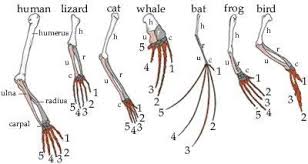
27.
What is this an example of?
a)
vestigial structures
b)
embryology
c)
homologous structures
d)
fossil record
28.
Which layer is the oldest?
a)
1
b)
2
c)
3
d)
4
29.
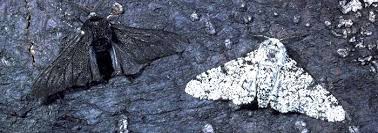
Predict which moth would increase in population
a)
light 
b)
dark
30.
When the DNA of an organism is altered it is referred to as…
a)
Mutation
b)
Gene Flow
c)
Genetic Drift
d)
Sexual Selection
31.
When individuals choose traits possessed by the opposite sex it is called…
a)
Mutation
b)
Gene Flow
c)
Genetic Drift
d)
Sexual Selection
32.
The cause of artificial selection is…
a)
The environment
b)
Humans
c)
Mutation
d)
Gene Flow
33.
Darwin wrote that organisms with traits that are best suited to the environment will ________________
a)
increase in number
b)
become extinct
34.

The trait that helps a living thing survive and reproduce

a)

air

b)

adaptation

c)

the earth

d)

water

35.

When members of a species must fight with each other to survive

a)

competiton

b)

UFC

c)

game

d)

match

36.

What proves that living things have changed over time and left evidence?

a)

paperwork

b)

fossils

c)

cast

d)

dead animals / plants

37.

When can new species form?

a)

when they are isolated from the rest of the species to evolve

b)

when they reproduce

c)

when they wish on a star

d)

when they move locations

38.

When do fossils form?

a)

when organisms sink to the bottom of the river

b)

when organisms die and become buried in sediment

c)

when organisms move to a new land

d)

when organisms die and are left alone

39.

Differences between individuals of the same species

a)

gradualism

b)

siblings

c)

variation

d)

change

40.
Why are advantageous traits more likely to be passed onto offspring?
a)
Because they are more likely to survive and reproduce.
b)
Because they come from dominant alleles.
c)
Because they come from recessive alleles.
d)
Because the trait is an acquired phenotype.
41.
Tigers, Jellyfish, Gorillas and Sponges are all part of kingdom _______.
a)
Animalia
b)
Plantae
c)
Fungi
d)
Bacteria
42.
Which kingdom is autotrophic AND has a cell wall?
a)
Bacteria
b)
Fungi
c)
Plantae
d)
Protista
43.
 You would find mushrooms in which kingdom?
a)
Plantae
b)
Protists
c)
Fungi
d)
Animalia
44.
Which kingdom do humans belong to?
a)
Plantae
b)
Fungi
c)
Animalia
d)
Protista
45.
The scientific name for an organism is made from the:
a)
class and family name
b)
genus and species name
c)
domain and kingdom name
d)
kingdom and phylum name
46.
The 8 levels of classification, most broad to most specific.
a)
Domain, Genus, Family, Order, Class, Phylum, Kingdom, Species
b)
Domain, Species, Kingdom, Genus, Phylum, Family, Class, Order
c)
Domain, Kingdom, Phylum, Class, Order, Family, Genus, Species
d)
Order, Kingdom, Species, Domain, Phylum, Family, Class, Genus
47.
An illustration and a dichotomous key are given. What is the correct classification for this organism?
a)
Class Insecta
b)
Order Amblygygi
c)
Order Araneae
d)
Order Scorpiones
48.
Which of the following organisms are MOST closely related?
a)
organisms that share a domain
b)
organisms that share a family 
c)
organisms that share a genus 
d)
organisms that share an order  
49.
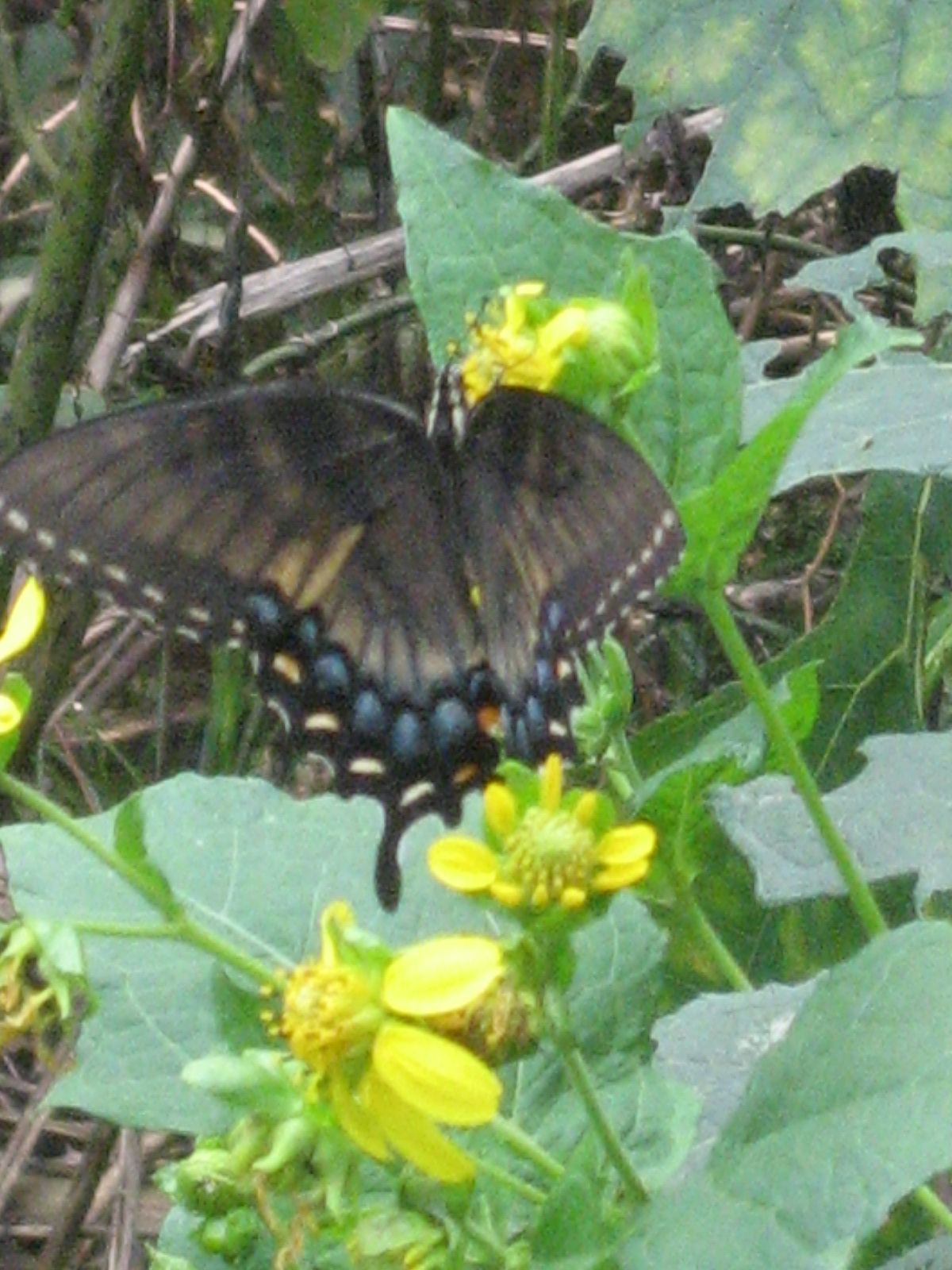
Which of the following characteristics will most likely be helpful in identifying a butterfly using a dichotomous key?
a)
Migrates north every spring
b)
hangs on branches
c)
flutters wings fast on hot days
d)
Wings have long extensions
50.
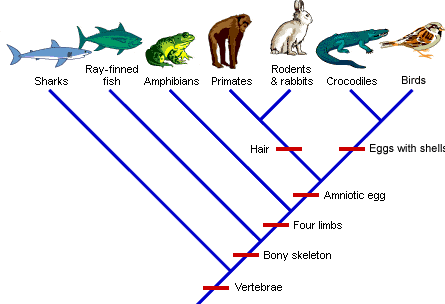
Which two orgainsms have hair? 
a)
Sharks & Ray Finned Fish
b)
Primates & Rodents
c)
Birds & Crocodiles
d)
Rabbits & Birds
51.
According to this cladogram, birds are LEAST related to: 
a)
Amphibians
b)
Sharks
c)
Ray Finned Fish
d)
Crocodiles
52.
Who first proposed binomial nomenclature as a way of classifying organisms?
a)
Carolus Linnaeus
b)
Carl's Jr.
c)
Charles Darwin
d)
Henry Groseclose
53.
What is the most specific level of classification?
a)
Family
b)
Domain
c)
Species
d)
Carolus Linnaeus
54.
What do viruses need to reproduce?
a)
they need genetic material
b)
They need a host cell
c)
They need  bacteria
d)
They need insulin
55.
How does a virus cause a person to develop the common cold?
a)
invades the host cell to reproduce
b)
removes energy from the host cell
c)
produces toxins in the host cell
d)
protects the host cell from bacteria
56.
A virus can be classified by its type of
a)
mitochondria
b)
chromosomes
c)
nucleic acid
d)
carbohydrates
57.
A(n) _____ is a virus that enters a bacterial cell.
a)
endospore
b)
decomposer
c)
plasmid
d)
bacteriophage
58.
What part of the phage is the DNA?
a)
A
b)
B
c)
C
d)
D
59.
When a virus invades a living cell, its _______
takes over the cell's functions.
a)
outer coat
b)
genetic material
c)
core
d)
cytoplasm
60.
True or False
The flu is caused by a virus.
a)
true
b)
false
61.
Antibiotics kill viruses
a)
True
b)
False
62.
What part of a virus is the protein capsule that houses the genetic material (DNA/RNA)?
a)
tail
b)
nucleus
c)
capsid
d)
glycoprotein
63.
Which viral life cycle kills its host cell by lysing?
a)
lytic
b)
mitosis
c)
lysogenic
d)
S phase
64.
Which viral life cycle allows viral genetic material to lay dormant while the host cell reproduces?
a)
lytic
b)
mitosis
c)
lysogenic
d)
S phase
65.

_____________ live in extreme environments.

a)

Archaea

b)

Bacteria

66.

Bacteria contain a nucleus and membrane-bound organelles.

a)

True

b)

False

67.

Bacteria can only be aerobic.

a)

True

b)

False

68.

Bacteria have a sticky outer....

a)

Capsule

b)

Nucleus

c)

Flagella

69.

Spirillum shaped bacteria are

a)

rod-shaped

b)

spherical

c)

spiral

70.

Bacillus shaped bacteria are

a)

Rod-shaped

b)

Spherical

c)

Spiral

71.

Coccus shaped bacteria are

a)

rod-shaped

b)

spherical

c)

spiral

72.

Staphylo- groupings are

a)

2 bacteria

b)

a chain of bacteria

c)

a cluster of bacteria

73.

Diplo- grouped bacteria are

a)

2 bacteria

b)

a chain of bacteria

c)

a cluster of bacteria

74.

Strepto- grouped bacteria are

a)

2 bacteria

b)

a chain of bacteria

c)

a cluster of bacteria

75.

A ________________________________ cannot live with oxygen.

a)

Obligate Aerobe

b)

Obligate Anaerobe

c)

Facultative Anaerobe

76.

A ________________________ requires oxygen to live.

a)

Obligate Aerobe

b)

Obligate Anaerobe

c)

Facultative Anaerobe

77.

A ________________________ does not need oxygen to survive but won't be killed by it.

a)

Obligate Aerobe

b)

Obligate Anaerobe

c)

Facultative Anaerobe

78.

This kind of reproduction results in identical cells.

a)

Binary Fission (asexual)

b)

Conjugation (sexual)

79.

During conjugation, 2 bacteria are held together by their

a)

Flaglla

b)

Pili

80.

Endospores are really easy to destroy.

a)

True

b)

False

81.

Bacteria that decompose material and return vital nutrients to the environment contribute to...

a)

Nutrient Cycling

b)

Nitrogen Fixing

c)

Normal Flora

82.

Bacteria that live in the root nodules of certain plants carry out...

a)

Nutrient cycling

b)

Nitrogen fixing

c)

Normal flora

83.
Name this protist?
a)
Euglena 
b)
Amoeba 
c)
Paramecium 
d)
Volvox
84.
Name this protist?
a)
Paramecium 
b)
Amoeba 
c)
Volvox
d)
Euglena 
85.
How does this protist move? 
a)
Pseudopods 
b)
Cilia 
c)
Flagellum
86.
How does this protist move? 
a)
Flagellum
b)
Cilia 
c)
Pseudopods
87.
How does this protist move? 
a)
Cilia
b)
Pseudopods
c)
Flagellum 
88.
A protist that can not make its own food is called what? 
a)
Autotroph
b)
Heterotroph 
89.
A protist that can make its own food is called what? 
a)
Heterotroph
b)
Autotroph
90.
Fine hairs that allow protist to move is called what? 
a)
Pseudopods 
b)
Euglena 
c)
Flagella 
d)
Cilia 
91.
What are the finger like projections called? 
a)
Flagella 
b)
Cilia 
c)
Pseudopods
d)
Veela 
92.
How are protist classified? 
a)
How the eat
b)
How they reproduce 
c)
Where they live
d)
How they move
93.
What type of cells are protists?
a)
Prokaryotic 
b)
Eukaryoitc 
94.

Fungi obtain energy

a)

Directly from the sun

b)

From inorganic (unnatural) materials in their environment

c)

By absorbing organic (natural) materials

d)

From nuclear fusion

95.

Fungi

a)

Do not contain chlorophyll

b)

Do not produce their own food

c)

Have cell walls that contain chitin

d)

All of these

96.

Fungi are important to an ecosystem as

a)

Producers

b)

Controllers

c)

Decomposers

d)

Regulators

97.

Fungi are _____, which means they cannot make their own food.

a)

Autotrophs

b)

Heterotrophs

c)

Carnivores

d)

Omnivores

98.

Which is not true about fungi?

a)

All are consumers

b)

All are multicellular

c)

Are eukaryotic

d)

Can be useful to humans

99.

What part of plants would we compare hyphae to?

a)

Roots

b)

Stem

c)

Leaves

d)

Seed

100.
What is an example of a fungus?
a)
moss
b)
mold
c)
bryophyte
d)
protist