wayground logo

Free Printable Worksheets

Font size

S
M
L
XL
Worksheets

Big Idea 1 AP CHEM Review

Total questions: 150

Worksheet time: 3hrs 26mins

Name
Class
Date
1.

Which state of matter has no definite shape but has definite volume?

a)

solid

b)

gas

c)

liquid

d)

plasma

2.

Which of the following name chemical changes only?

a)

ripping, melting, freezing

b)

rusting, rotting, condensation

c)

rotting, digestion, rusting

d)

boiling, melting, freezing

3.

When scientists use their 5 senses they are...

a)

observing

b)

conducting an experiment

c)

validating their results

d)

predicting the outcome

4.

Which of the following would dissolve in water?

a)

sand

b)

salt

c)

oil

d)

basil leaves

5.

What method would you use to separate a mixture of sugar and water?

a)

flitration

b)

flotation

c)

magnetism

d)

evaporation

6.

What type of molecules are shown in the image?

a)

solid

b)

liquid

c)

gas

d)

plasma

7.

Joe is conducting an investigation. He wants to see which type of light bulb can make a plant grow. Joe has 4 plants, 1 gets a incandescent bulb, 1 gets a florescent bulb, 1 gets a neon bulb and the other gets a low wattage bulb. What could Joe do to make his investigation valid?

a)

Joe should measure the plants only at the end.

b)

Joe should get a friend to do the experiment with him.

c)

Joe should add a 5th plant with a black light.

d)

Joe should add a control group that gets light from the sun.

8.

Heating up matter causes it to

a)

gain energy

b)

lose energy

c)

keep the same amount of energy

d)

both gain and lose energy

9.

Water changing from a a gas to a liquid is called

a)

melting

b)

freezing

c)

evaporting

d)

condensation

10.

Water changing from a solid to a liquid is called

a)

melting

b)

freezing

c)

evaporating

d)

condensation

11.
Which particles make up the nucleus of an atom?
a)
protons and neutrons
b)
electrons and protons
c)
electrons, protons, and neutrons
d)
electrons and neutrons
12.
The particles of the atom you can find by knowing the atomic number.
a)
neutrons
b)
protons and electrons
c)
protons and neutrons
d)
atomic mass
13.
Matter that cannot be broken down into a simpler substance – building blocks of life.
a)
neutron
b)
atom
c)
electron
d)
quarks
14.
Most of the mass of an atom is contained here.
a)
electron orbitals 
b)
nucleus
c)
shells
d)
atomic #
15.
Which letter represents an electron?
a)
A
b)
B
c)
C
d)
D
16.
Which letter represents the nucleus?
a)
A
b)
B
c)
D
d)
E
17.
How many protons does this atom have?
a)
2.5
b)
6
c)
5
d)
10.811
18.
How many Electrons
a)
2.5
b)
5
c)
6
d)
10.81
19.
A covalent bond is formed when two atoms ____ electrons
a)
share
b)
lose
c)
transfer
d)
gain
20.
Which type of bond transfers electrons?
a)
Covalent bond
b)
Ionic bond
21.
Covalent bonds and Ionic bonds are both similar in what way
a)
They are both bonds
b)
They are both elements
22.
Two or more atoms held together by a chemical bond is called what?
a)
A molecule
b)
A molecure
23.
What is a valence electron?
a)
The sum of neutrons and protons.
b)
The # of electrons in the last shell.
c)
A type of bond.
d)
A popular compound.
24.
Why do elements bond?
a)
To be friends
b)
To create a new element
c)
To become stable
25.
How are ionic bonds formed?
a)
Transfer of electrons
b)
Sharing of electrons
26.
How are covalent bonds formed?
a)
Sharing of electrons
b)
Transfer of electrons
27.
An element is one type of atoms.
a)
True
b)
False
28.

Which of the following will you observe, when asked to add reagent until change is observed.

a)

gas is evolved

b)

precipitate is formed

c)

change in color

d)

all of the above

29.

To test for gas is to

a)

observe the colour and odour of the gas

b)

test with litmus paper

c)

carry out specific test to identify gas

d)

all of the above

30.
What is the percent by mass of magnesium in MgO?
a)
20%
b)
40%
c)
50%
d)
60%
31.
What is the percent by mass of sodium in NaCl?
a)
39%
b)
61%
c)
35%
d)
65%
32.
How many molecules are there in 0.04 moles of CaF?
a)
2.4 x 10²³
b)
2.4 x 10²²
c)
2.36
d)
1450
33.
What is the percent composition on Oxygen in NO2? (rounded)
a)
40%
b)
50%
c)
60%
d)
70%
34.
You are given the following percentages: 40.05% S and 59.95% O. Find the empirical formula for these elements. (keep two decimal places throughout calculations)
a)
SO
b)
SO2
c)
SO3
d)
SO4
35.
What is the empirical formula if you have 88.80% copper and 11.20% oxygen?
a)
Cu3O8
b)
CuO4
c)
Cu2O
d)
Cu4O10
36.
What is the empirical formula for the following molecular formula: C6H14
a)
C6H14
b)
C3H7
c)
CH2
d)
CH3
37.
What is the empirical formula for the following:
C3H8O
a)
C1.5H4O0.5
b)
C3H8O
c)
C6H16O2
d)
C3H2O
38.
What is the empirical formula for the following:
Pb5Cr5O20
a)
Pb2Cr2O10
b)
PbCr2O7
c)
Pb9Cr4O2
d)
PbCrO4
39.
What is the percent composition of Benzene, C6H6?
a)
C = 50%
H = 50%
b)
C = 85.7 %
H = 14.3%
c)
C = 92.2%
H = 7.8%
d)
C = 71.9%
H = 28.1%
40.
N2 + 3H2 --> 2NH3
What is the total number of moles of NH3 produced when 10 moles of H2 reacts completely with N2?
a)
6.7
b)
2.0
c)
3.0
d)
15.0
41.
4NH+ 5O2-->4NO + 6H2O
What is the total number of moles of NO produced when 1 mole of O2 is completely consumed?
a)
1
b)
1.2
c)
0.8
d)
4
42.
What is the mole used for? 
a)
To measure the amount of grams in a substance
b)
To measure the amount of atoms or molecules in a substance
c)
To measure the amount of energy in a substance
d)
To measure the amount of bonding in a substance 
43.
What is Avogadro's Number? 
a)
6.02 x 10²³
b)
- 6.02 1023
c)
6.02 x 10²²
d)
6,020,000,000,000
44.
What is the molar mass of H2O?
a)
6.02 x 10²³
b)
16 grams
c)
18 grams
d)
15.99999 grams
45.
How many atoms are in 1 mole of NaCl? 
a)
6.02 x 10²³
b)
58 
c)
11
d)
17
46.
How many moles are in 20 grams of Ca (Calcium)?
a)
0.5 
b)
1
c)
3
d)
20
47.
How are the mole and atomic masses of elements related?  
a)
The atomic mass of any substance is always equal to 1 mole of that substance 
b)
The atomic mass added up with itself by 6.02 x 10²³ equals the amount of atoms
c)
The atomic mass is the amount of protons plus number of atoms
d)
Atoms combined make up molecules, which are the measurement of atomic masses 
48.
What variable is a Coulomb the unit for?
a)
Charge
b)
Force
c)
Distance
d)
Mass
49.
What happens to the force between two charged objects when you double the distance between them?
a)
2X
b)
1/2X
c)
4X
d)
1/4X
50.
What happens to the force between two charged objects when you double the distance between them?
a)
2X
b)
1/2X
c)
4X
d)
1/4X
51.
What happens to the force between two charged objects if you double the distance between them and double the magnitude of one charge?
a)
4X
b)
6X
c)
1/2X
d)
1/6X
52.
If each of the charges doubles, what happens to the force?
a)
Quadruples
b)
Doubles
c)
Stays the same
d)
Reduced by half
53.
If the distance doubles, what happens to the force?
a)
Reduced by half
b)
Reduced by 1/4
c)
Stays the same
d)
Quadruples
54.
Electrostatic force F is directly proportional to:
a)
r^2 (distance squared)
b)
q1
c)
q2
d)
both q1 and q2
55.
When distance increases, electrostatic force ____________; we call this relationship ____________ proportional
a)
decreases;directly
b)
decreases;inversely
c)
increases;inversely
d)
increases;directly
56.

The graph shows the relationship between the force of interaction and the magnitude of charge. What type of relationship is this?

a)

Direct

b)

Indirect

c)

Inverse

d)

Reverse

57.

Recap:

Coulomb’s law states that the force between two charged objects will __________ when the magnitude of the object’s charge increases.

Coulomb’s law also states that the force between two charged objects will __________ when the distance between objects increases.

a)

increase; increase

b)

increase; decrease

c)

decrease; increase

d)

decrease; decrease

58.
A material in which electrons are not able to move easily 
a)
Circuit 
b)
Insulator 
c)
Resistance 
d)
Conductor
59.
Which of these substances conducts electricity the best?
a)
wood
b)
brick
c)
copper
d)
plastic
60.
The plastic covering is there to:
a)
Provide a conductor for electrical energy to flow.
b)
Provide an insulator so that electrical energy will not pass outside of the wires.
c)
Provide a conductor so that electrical energy can NOT flow.
d)
Provide an insulator so that electrical energy can flow.
61.
How do electrons differ from protons?
a)
They are the same thing
b)
Electrons hold a negative charge and protons hold a positive charge.
c)
Electrons are positively charged and protons are negatively charged.
d)
Protons are neutral 
62.

The image shows two charged particles with a force of 2.4 N. What would you predict the force of interaction would be when the magnitude of charge on q2 doubles?

a)

9.6 N

b)

4.8 N

c)

1.2 N

d)

.6 N

63.
The Electric Force is strongest when charges are...
a)
close together
b)
far apart
c)
the electric force is constant everywhere
64.
What atom matches this electron configuration?
1s22s22p63s23p64s23d10
a)
Zinc
b)
Copper
c)
Nickel
d)
Germanium
65.
What atom matches this electron configuration?
1s22s22p63s2
a)
Neon
b)
Magnesium
c)
Aluminum
d)
Potassium
66.
How many electrons does Si contain? (click to see image)
a)
14
b)
28
c)
2
d)
4
67.
What electron configuration matches an oxygen atom?
a)
1s22s22p63s2, 3p64s23d104p5
b)
1s22s22p4
c)
1s22s22p6
d)
1s22s22p63s23p64s23d1
68.
Electrons occupy orbitals of lowest energy first is part of what electron configuration rule?
a)
Hund’s Rule
b)
Aufbau Principle
c)
Pauli Exclusion Principle
69.
Electron arrangement that uses arrows
a)
Electron configuration
b)
Shorthand configuration
c)
Lewis dot structure
d)
Orbital diagram
70.
What is the shorthand electron configuration for Sulfur atom?
a)
[Ar] 3p4
b)
[He] 3s23p4
c)
[Ne] 3s23p4
d)
[Na] 3s23p3
71.
There are 4 different types of subshells s,p,d,f
a)
true
b)
false
72.
Where are the noble gases located on the periodic table?
a)
far left column
b)
far right column
c)
2nd column on left
d)
2nd column from right
73.
Where are the alkali metals located on the periodic table?
a)
far left column
b)
far right column
c)
2nd column from left
d)
2nd column from right
74.
Where are the halogens located on the periodic table?
a)
far left column
b)
far right column
c)
2nd column from the left
d)
2nd column from the right
75.
Where are the transition metals located on the periodic table?
a)
large middle section "d-block" elements
b)
four rows of elements on right side
c)
two rows of elements are very bottom of table
d)
they are not located on the periodic table
76.
How many valence electrons does fluorine have?
a)
4
b)
5
c)
6
d)
7
77.
Size of the atomic radii ____ as you move across a row.
a)
decreases
b)
increases
78.
Size of the atomic radii _____ as you move down a column.
a)
increases
b)
decreases
79.
Which element has a larger atomic radius?
a)
K
b)
Ca
80.
The ability of an atom to attract electrons to itself when it is chemically combined with another element is called
a)
electronegativity
b)
electron affinity
c)
atomization
d)
ionization energy
81.
Which element has a larger ionization energy?
a)
Na
b)
Mg
c)
Al
d)
S
82.
Which group of elements have no electronegativity?
a)
halogens
b)
alkali metals
alkali metals
c)
noble gases
d)
alkali earth metals
83.
What is the Pauli Exclusion Principle?
a)
An atomic orbital can only hold a maximum of 2 electrons, each with opposite spins
b)
An atomic orbital can hold a minimum of 6 electrons, each with opposite spins
c)
An atomic orbital can hold a maximum of 6 electrons, each with the same spin
d)
An atomic orbital can hold a minimum of 2 electrons, each with opposite spins
84.
What shape are P Orbitals? 
a)
Cloverleaf shaped
b)
Spherical shaped
c)
Hybrid structure
d)
Dumbell shaped
85.
Hund’s rule states…
a)
Atomic orbitals have opposite spins and 2 electrons each
b)
Electrons occupy orbitals of highest energy first and energy level changes as you go up
c)
Electrons occupy orbitals of lowest energy first, starting with 1s
d)
Electrons occupy orbitals of equal energy, one electron enters EACH orbital ONE AT A TIME until orbitals of the entire energy level have one electron with the SAME SPIN.
86.
How many orbitals are there in a  "p" sublevel?
a)
2
b)
1
c)
4
d)
3
87.
How many electrons can each p orbital hold?
a)
6
b)
3
c)
2
d)
4
88.
How many orbitals are there in the "d" sublevel?
a)
1
b)
3
c)
5
d)
7
89.
How many electrons can the d sublevel hold?
a)
8
b)
10
c)
2
d)
4
90.
Which is associated with more energy? 
a)
2p
b)
2s
c)
3p
d)
1s
91.
What is the electron configuration for this atom?
a)
1s22s22p6
b)
1s22s22p5
c)
1s22s22p3
d)
2s22p3
92.
He found the positively charged protons in the nucleus and said that electrons moved around the nucleus
a)
J.J. Thomson
b)
Ernest Rutherford
c)
Niels Bohr
d)
James Chadwick
93.
He found that electrons have specific amounts of energy and move in specific orbits around the nucleus, like planets orbiting the sun. 
a)
J.J. Thomson
b)
Ernest Rutherford
c)
Niels Bohr
d)
James Chadwick
94.
He found that atoms have smaller parts and found negative electrons that he theorized were surrounded in a sphere of positive charges
a)
J.J. Thomson
b)
Ernest Rutherford
c)
Niels Bohr
d)
James Chadwick
95.
He discovered the neutron in the nucleus and completed the current atomic model.
a)
J.J. Thomson
b)
Ernest Rutherford
c)
Niels Bohr
d)
James CHadwick
96.
Which of the following was not part of John Dalton's theory of an atom?
a)
Matter can be created and destroyed
b)
All atoms of the same element are exactly alike
c)
Every compound is composed of atoms of different elements in a specific ratio
d)
All elements are composed of atoms that can not be divided
97.
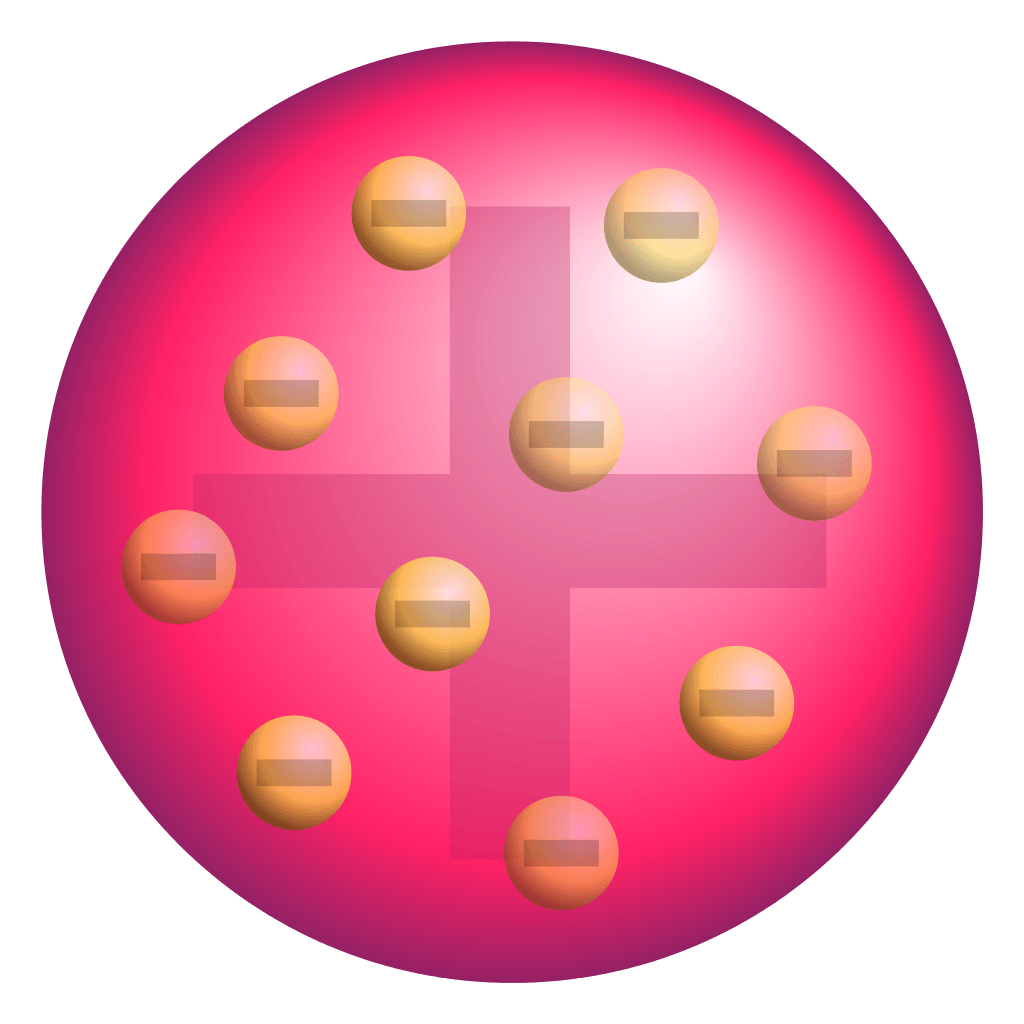
This model was developed after J.J. Thompson discovered electrons, a particle smaller than an atom. Is shows electrons floating freely in a positive space.
a)
The "Plum Pudding Model" of the atom
b)
The "Rutherford Model" of the atom
c)
Democritus's model of the atom
d)
The "Solar System Model" of the atom
98.

What are fundamental particles?

a)

Quarks

b)

Electrons

c)

Protons

d)

Neutrons

99.

Ernest Rutherford proposed which model of the atom?

a)

The Plum Pudding Model

b)

The Planetary Model

c)

The Quantum Model

d)

The Bohr Model

100.
What are the steps of operation in the mass spectrometer?
a)
Accelerate, Deflect,Ionize, Detect
b)
Deflect,Ionize, Accelerate, Detect
c)
Ionize, Accelerate, Deflect, Detect
d)
Detect, Accelerate, Deflect, Ionize
101.
What do the peaks on the mass spectrum represent?
a)
anions
b)
different isotopes
c)
atoms with differing numbers of electrons
d)
numbers of electrons
102.
Which element does this mass spectrum most likely represent?
a)
neon
b)
scandium
c)
boron
d)
sodium
103.
What do the heights of the peaks represent in the mass spectrum?
a)
number of isotopes
b)
relative abundance of each isotope
c)
average atomic mass
d)
charge:mass ratio
104.
How many isotopes are shown in this mass spectrum?
a)
1
b)
84
c)
86
d)
4
105.
Carbon has three known isotopes. Which is the most abundant?
a)
carbon-12.011
b)
carbon-12
c)
carbon-13
d)
carbon-14
106.
What is the average atomic mass for this element?
a)
10 amu
b)
10.8 amu
c)
19.9 amu
d)
11 amu
107.
Which one of these does not add CO2 to the atmosphere?
a)
cooking with gas
b)
planting trees
c)
burning wood
d)
riding in a bus
108.
Combustion is another word for _______________.
a)
a train
b)
a bus
c)
a dog
d)
burning
109.
What does not produce carbon dioxide?
a)
Photosynthesis
b)
Burning Fossil Fuels
c)
Animal respiration
d)
Plants decaying
110.
How do living organisms return carbon to the atmosphere in the carbon cycle?
a)
respiration and photosynthesis
b)
 decomposition and respiration
111.
What type of reaction occurs between an element and a compound?
Zn + 2HCl --> ZnCl2 + H2
a)
Synthesis
b)
Decomposition
c)
Single Replacement
d)
Double Replacement
112.
What kind of reaction is this:
2H2 + O2 --> 2H2O
a)
Synthesis
b)
Decomposition
c)
Single Replacement
d)
Double Replacement
113.
What kind of reaction is this:
2H2O2 →2 H2+ O2
a)
Synthesis
b)
Decomposition
c)
Single Replacement 
d)
Combustion
114.
What kind of reaction is this:
2C3H7OH +9O2 -> 6CO2 + 8H2O
a)
Double Replacement
b)
Combustion
c)
Single Replacement
d)
Decomposition
115.
What kind of reaction is this:
Fe + CuSO4 -> Cu + FeSO4
a)
Double Replacement
b)
Decompostion
c)
Single Replacement
d)
Combustion
116.
An element plus additional element reacts to form one product is an example of which type of chemical reaction? 
a)
combustion
b)
decomposition 
c)
synthesis 
d)
single replacement
117.
Which type of reaction takes place in the presence of oxygen and produces carbon dioxide and water?
a)
double replacement 
b)
decomposition 
c)
combustion 
d)
single replacement
118.
True or false: as you move along the spectrum, left to right, the wavelengths decrease in size (get smaller)
a)
true
b)
false
119.
A wave with a large wavelength will have a ______ frequency and _____ energy
a)
high, low
b)
high, high
c)
low, high
d)
low, low
120.
Select the correct order of waves on the EMS 
a)
Radio, Micro, Infra, Visible, Ultra, X-ray, Gamma
b)
Gamma, X-ray, Ultra, Vis, Infra, Micro, Radio
c)
Vis, Micro, Infra, Ultra, X-ray, Gamma, Radio
d)
Micro, Radio, Vis, Infra, Ultra, X-ray, Gamma
121.
Which has the LONGEST wavelength and, therefore, the lowest frequency/energy
a)
Gamma Rays
b)
Radio Waves
c)
Visible Light
d)
Infrared rays
122.
Which has the SHORTEST wavelength and, therefore, the highest frequency/most energy
a)
Radio waves
b)
Ultraviolet Rays
c)
Gamma Rays
d)
X-rays
123.
Put the visible light colors in order from longest wavelength to shortest wavelength
a)
Violet, Indigo, Blue, Green, Orange, Yellow, Red
b)
Red, Yellow, Green, Orange, Violet, Blue, Indigo
c)
Red, Orange, Yellow, Green, Blue, Indigo, Violet
124.
Which of the following electromagnetic waves is given off as heat? 
a)
Radio Waves
b)
Infrared Rays
c)
Visible Light
d)
Gamma Rays
125.
The _______________ determines the color of visible light. 
a)
wavelength
b)
speed
c)
amplitude
d)
light
126.
How are electromagnetic waves different from other waves? 
a)
They have very short wavelengths 
b)
They transmit energy instead of matter 
c)
They can travel through a vacuum 
d)
They can change direction by reflection 
127.
Which of the following electromagnetic waves has the lowest energy?
a)
gamma ray
b)
infrared wave
c)
visible light wave
d)
microwave
128.
As the frequency of an electromagnetic wave increases, the amount of energy in that wave...
a)
increases.
b)
decreases.
c)
stays the same.
129.
Which color has the least amount of energy?
a)
red
b)
orange
c)
green
d)
blue
130.
High frequency waves have _________ wavelengths.
a)
varying
b)
long
c)
the same
d)
short
131.
Measure of the amount of matter 
a)
mass
b)
volume
c)
weight
d)
density
132.
Anything that has mass & takes up space
a)
gravity
b)
force
c)
matter
d)
volume
133.
Smallest unit of an element
a)
compound
b)
atom
c)
molecule
d)
product
134.
Number written below & to the right of a chemical symbol
a)
subscript
b)
reactant
c)
product
d)
coefficient
135.
Number placed in front of a chemical formula
a)
product
b)
coefficient
c)
reactant
d)
subscript
136.
What are the REACTANTS :
H2O + CO2 → HCO + HO
a)
H2O and CO2
b)
HCO and HO
c)
H2O ONLY
d)
HCO ONLY
137.
What happens to the atoms when baking soda combines with vinegar?
a)
New CO2 gas atoms are created when the chemicals mix
b)
The vinegar and baking soda atoms are destroyed, leaving only gas
c)
The atoms break apart and recombine to form new molecules
138.
PRODUCTS are always on what side of the equation?
a)
right
b)
left
c)
top
d)
bottom
139.
In a chemical equation, you will ________________ have the same number of atoms on the reactant and product side.  
a)
always
b)
never
c)
sometimes
140.
Anything that has mass & takes up space
a)
gravity
b)
force
c)
matter
d)
volume
141.
Which formula matches the molecule shown?
a)
O3
b)
O2
c)
NO2
d)
H2O2
142.
The picture above represents what?
a)
An Atom
b)
A Molecule
c)
An Element
d)
A Proton
143.
What element is shown?
a)
Hydrogen
b)
Helium
c)
Lithium
d)
Boron
144.
 P4 + 3 O2 ---> 2 P2O3
20g      ?      ---->    50g
What is the missing mass?
a)
20g
b)
30g
c)
50g
d)
Cannot be determined
145.
In a chemical equation, you will ________________ have the same number of atoms on the reactant and product side.  
a)
always
b)
never
c)
sometimes
146.
If there are 4 H atoms on the reactant side, how many H atoms will be on the product side? 
a)
2
b)
4
c)
6
d)
You need more information to answer this question
147.
Is the following equation balanced? (Does it have the same number and types of atoms on both sides)
C + O2 --> CO2
a)
yes
b)
no
c)
impossible to tell
d)
need more information 
148.
How many TOTAL atoms are on the REACTANT side of this equation?
CH4 + O2 → CO2 + 2H2
a)
5
b)
7
c)
9
d)
11
149.
How many oxygen atoms are in this chemical formula?
a)
7 oxygen atoms
b)
4 oxygen atoms
c)
3 oxygen atoms
d)
1 oxygen atoms
150.
Law of conservation of mass states that 
a)
matter is created
b)
matter is destroyed
c)
matter is neither created nor destroyed
d)
matter does not change