
 Worksheets
Human Reproduction Review
Total questions: 65
Worksheet time: 2hrs 26mins
What type of reproduction human beings have?
asexual reproduction
sexual reproduction
hermaphroditic
The female reproductive organs are
vulva, uterus, vagina, cervix, and testes
vulva, uterus, penis, cervix, and ovaries
vulva, uterus, vagina, cervix, and ovaries
penis, testes and prostate gland
The male reproductive organs are
penis, uterus, vas deferens, and testes
penis, testes, urethra, and ovaries
penis, testes, vas deferens, urethra, and prostate gland
vulva, testes, urethra, and prostate gland
The baby grows inside the
uterus
vulva
vagina
ovaries
The baby is connected to the mother by the
uterus
vagina
navel
umbilical cord
The baby receives nutrients and oxygen through...
the mouth and nose
the digestive system and the respiratory system
the umbilical cord
The baby leaves the mother's uterus through
the ovaries
the testes
the prostate gland
the vagina
What is the correct term for sex cells?
Blastocysts
Zygotes
Gametes
Periods
When the egg and sperm join together, it is known as
intercourse
ovulation
fertilization
mitosis
Where do the egg and sperm meet?
The ovary
The fallopian tube / oviduct
The vas deferens
The uterus
An organ that provides the chemical substances needed by a fetus is called the
ovary
uterus
placenta
fallopian tube
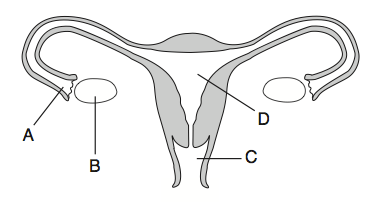
The function of part B is to _______.
produce eggs
produce sperm
allow fertilization to take place
release the sperm
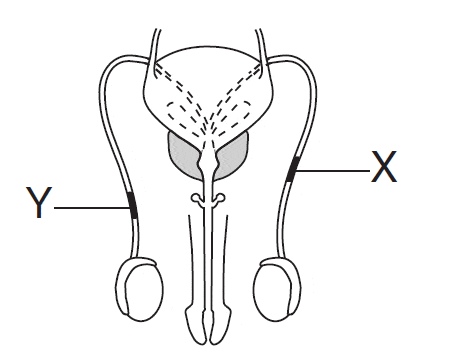
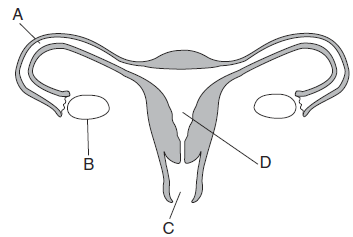


Which hormone regulates the male reproductive cycle?
estrogen
testosterone
Which two structures are responsible for producing the male gamete and delivering the gametes for internal fertilization?
testes and penis
prostate and bladder
testes and ovaries
prostate and vas deferens
What is the path of the sperm out of the body?
testes, bladder penis
testes, vas deferens, urethra
prostate, vas deferens, urethra
What structure serves both reproductive and excretory functions?
testes
urethra
bladder
prostate
What is the function of sperm?
conveys a chemical message to receptors of the reproductive system.
to deliver a diploid number of chromosomes to the diploid egg.
provides necessary nutrients for the fetus.
transfer of genetic material.



