
 Worksheets
Unit 1 Chemistry AS
Total questions: 125
Worksheet time: 3hrs 42mins


When 0.23 g of sodium, Na is added to water, the metal will react vigorously at the surface of the water, find the mass sodium hydroxide, NaOH produced.
RAM Na= 23, O= 16 , H= 1
0.2g
1.3g
0.4g
4.7g

1.12 g of Iron burns completely in chlorine. What is the mass of the product. RAM [ Cl= 35.5, Fe = 56]
0.38
3.25
4.88
6.50

3.84 g of magnesium was burnt in oxygen gas to produced magnesium oxide in a laboratory. Find the mass of magnesium oxide produced.
[Relative atomic mass: Mg, 24; O, 16]
10.7g
5g
12.8g
6.4 g
2Al + _____HCl → 2AlCl3 + 3H2
What is the precipitate formed when you mix silver nitrate with copper chloride?
copper nitrate
copper chloride
silver chloride
silver nitrate
CuCl2 + NaOH → Cu(OH)2 + NaCl
Which product is insoluble?


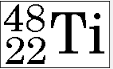


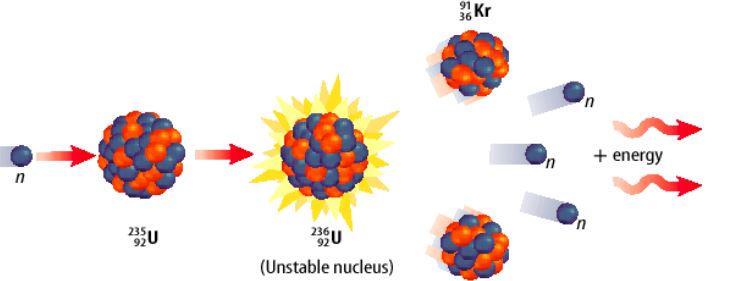
X → 86Rn222 + 2He4
1s2 2s2 2p6 3s2 3p3
Atoms of an element, X, have the electronic configuration shown above. The compound most likely formed with magnesium, Mg, is:
Mg3X2
Mg2X
MgX2
MgX3
Which atom below contains exactly two unpaired electrons?
Ni
Ca
P
I

The table shows the first ionization energy and atomic radius of several elements. Which of the following best helps to explain the deviation of the first ionization energy of oxygen from the overall trend?
The atomic radius of oxygen is greater than the atomic radius of fluorine.
The atomic radius of oxygen is less than the atomic radius of nitrogen.
There is repulsion between paired electrons in oxygen’s 2p orbitals.
There is attraction between paired electrons in oxygen’s 2p orbitals.

The ionization energies for element X are listed in the table on the right. On the basis of the data, element X is most likely to be
Be
B
C
F

For element X represented above, which of the following is the most likely explanation for the large difference between the second and third ionization energies?
The effective nuclear charge decreases with successive ionizations.
The shielding of outer electrons increases with successive ionizations.
The electron removed during the third ionization is, on average, much closer to the nucleus than the first two electrons removed were.
The ionic radius increases with successive ionizations.
Which of these configurations correctly shows an atom in an excited state?
1s2 2s2 2p6 3s2 3p6 4s3
1s2 2s2 2p6 3s2 3p5
1s2 2s2 2p6 3s1 3p6
1s2 2s2 2p6 2d10
What are the trends of electronegativity across the period and down the group?
across the period = electronegativity decreases
down the group = electronegativity decreases
across the period = electronegativity inreases
down the group = electronegativity increases
across the period = electronegativity increases
down the group = electronegativity decreases
across the period = electronegativity decreases
down the group = electronegativity increases
It is even easier to pull away a second electron from a sodium atom compared to pulling away the first electron.
true
false
Why do group 1 elements have the lowest first ionization energy?
because they have the fewest shells
because they are happy to lose their electron
because they have the fewest protons
because they are very happy to keep all their electrons
What causes the decrease in the radius of an atom as we go across the period
increase in number of electrons
increase in number of neutrons
increase in number of protons
increase in number of shells
Which of the following metals will be the most reactive (meaning that it is easiest to pull away its electron)
Caesium (Cs)
Sodium (Na)
Rubidium (Rb)
Lithium (Li)


add two to only the one with the half
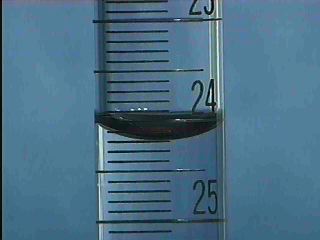
HCl + KOH --> H2O + KCl
If a student uses 25.0 mL of a 0.5M solution of KOH, what is the molarity of the acid if 15.0mL of acid neutralized?
Ca(OH)2 + H2CO3 -->
Actual yield = 62g
Calculate the percent yield.
How many grams of NO are formed if 6.30g of ammonia react with 1.80g of oxygen?
What is shown by a half reaction
neutralization of an ion or molecule
oxidation or reduction of an element
decomposition of an ion or molecule
none of the abve
Which element is the reducing agent in the following?
Na + KCl= NaCl + K
None
Na
K
Cl
Who is the oxidizing agent in the following?
F2 + LiBr = LiF + Br2
None
F
Li
Br
What is the oxidation number for P in H3PO4?
3
4
5
6
Oxidation is
lose of oxygen
gaining electrons
gaining Hydrogen
losing electrons
What is lost or gained in a redox reaction?
atoms
ions
protons
electrons
Which of the following is a oxidation half-reaction.
Fe+3 + e = Fe+2
Cl2 + 2e = 2Cl-
O2 + 4H+ + 4e = 2H2O
Sn+2 = Sn+4 + 2e
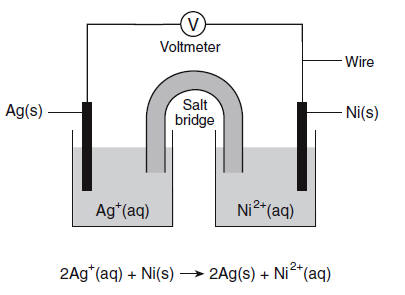
which element, if any, is oxidized?
...... is released when alkali metal react with water.
Hydrogen
Oxygen
Metahne
Carbon di oxide
Alkali earth metals are found in which group of the periodic table?
Group 1
Group 2
Group 7
group 8
What is the flame color of Barium metal or Barium containing compound when they are burned?
Blue
Red
Green
Yellow
Would carbon dioxide dissolve in water or carbon tetrachloride?
water
carbon tetrachloride
Would methane, CH4, dissolve in water or carbon tetrachloride?
water
carbon tetrachloride
Which "Halogen" can able to replace Chlorine in Sodium Chloride?
Flourine
Bromine
Iodine
Astatine
which statement is true about halogens?
form covalent compounds with other non-metallic elements
A less reactive halogen will displace a more reactive element form its ionic salt
Form ionic compound with hydrogen
form negative ion of charge -2
silver nitrate is added to an aqueous solution containing Br- to give a precipitate X, which is then tested for its solubility in concentrated ammonia. which of the following correctly describes the the colour of X and its solubility in ammonia.
white insoluble
cream slightly soluble
white slightly soluble
yellow insoluble
An excess of aqueous solution of silver nitrate is added to an aqueous solution containing both potassium chloride and potassium bromide. the precipitate formed is the filtered off and washed with distilled water. The precipitate is then shaken with aqueous ammonia and filtered off again.which ion does the final filtrate contain?
chloride
silver
iodide
potassium
I2(s) + I–(aq) <--> I3–(aq)
PCl5(s) <-> PCl3(l) + Cl2(g)
What is the best explanation for this?
Cr2O72–(aq) + H2O(l) <-> 2CrO42–(aq) + 2H+(aq)
What will happen to the position of equilibrium and the value of Kc when more H+ ions are added at constant temperature?
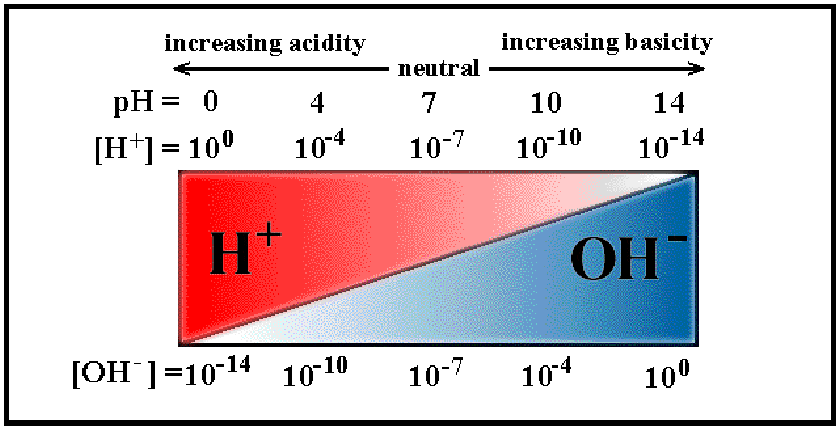
True or false: a neutral solution has equal amounts of H+ and OH-.
True
False
What is the formula for nitric acid?
HNO2
HNO3
HNO4
H2NO3
Zn(OH)2 + HNO3 ---> H2O + Zn(NO3)2
Complete the following reaction:
HCl + Mg(OH)2 -->
MgCl2 + H2O
Mg +H2O
MgCl2 + H2
MgCl2 + H2O + CO2
HCl + KOH --> H2O + KCl
If a student uses 25.0 mL of a 0.5M solution of KOH, what is the molarity of the acid if 15.0mL of acid neutralized?
What is the endpoint of a titration
Where the amount of acid and base are equal as shown by a color change
Where there is no base
When the volume of base in the burette is used up
When there is no acid

