Wayground logo

Free Printable Worksheets

Font size

S
M
L
XL
Worksheets

Biology STAAR/EOC Review #2

Total questions: 80

Worksheet time: 2hrs 30mins

Name
Class
Date
1.
In what phase of the cell cycle does DNA replication take place?
a)
G1
b)
S
c)
G2
d)
M
2.
Which sequence of DNA bases would pair with this partial strand
ATG TGA CAG
a)
ATG TGA CAG
b)
TAC ACT GTC
c)
GTA AGT GAC
d)
CAT TCA CTG
3.
The building block of nucleic acids are nucleotides.  Nucleotides are composed of a sugar, a phosphate group, and a _________________ base.
a)
oxygen
b)
hydrogen
c)
nitrogen
d)
carbon
4.
What kind of information does DNA carry?
a)
genetic
b)
nuclear
c)
cell structure
d)
it doesn't carry any info
5.

The "genetic code" is referring to which part of the DNA molecule?

a)

Phosphates

b)

Sugars

c)

Nitrogenous bases

d)

Hydrogen bonds

6.
Enyzmes are a very important type of protein used to
a)
Build bones in skeleton
b)
Send hormonal signals throughout body
c)
Speed up chemical reactions
d)
Photosynthesize glucose in plants
7.
What is the monomer of proteins?
a)
amino acids
b)
polypeptides
c)
nucleotides
d)
monosaccharides
8.
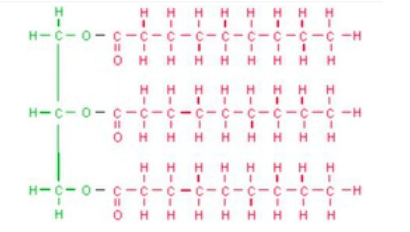
Which macromolecule is this?
a)
carbohydrate
b)
lipid
c)
protein
d)
nucleic acid
9.

Which macromolecules are shown?

a)

carbohydrates

b)

lipids

c)

proteins

d)

nucleic acids

10.
With what 3 letters do enzymes typically end?
a)
-ose
b)
-ase
c)
-ese
d)
-tic
11.
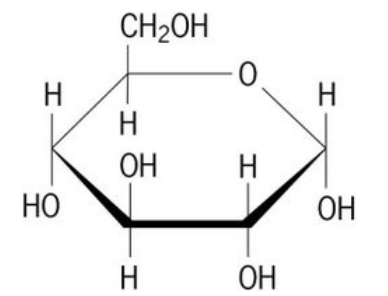
Which biomolecule is this a picture of?
a)
Protein
b)
Nucleic Acid
c)
Lipid
d)
Carbohydrate
12.
Which biomolecule is this a picture of?
a)
Protein
b)
Nucleic Acid
c)
Lipid
d)
Carbohydrate
13.
What do monomers do?
a)
Bonds to make a Polymer
b)
Creates Protiens
c)
Stores energy
d)
Splits to make more cells
14.

Building blocks or monomers of lipids are

a)

amino acids

b)

nucleotides

c)

monosaccharides

d)

glycerol and fatty acids

15.
When the DNA of an organism is altered it is referred to as…
a)
Mutation
b)
Gene Flow
c)
Genetic Drift
d)
Sexual Selection
16.
The cause of artificial selection is…
a)
The environment
b)
Humans
c)
Mutation
d)
Gene Flow
17.
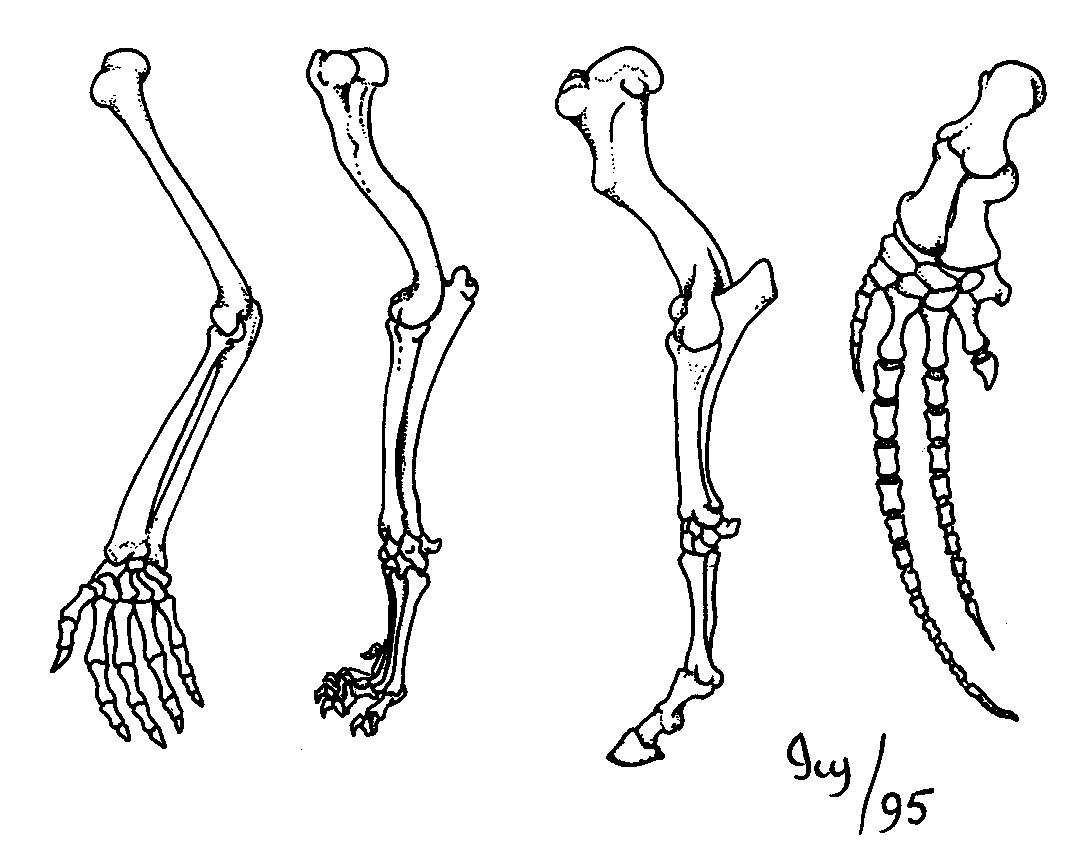
Structures with the same parts have different functions; suggests that organisms share a common ancestry
a)
vestigial structures
b)
homologous structures
c)
adaptive radiation
d)
fossil
18.
Inherited trait that helps an organism survive is a(n) __________.
a)
Fossil
b)
Adaptation
c)
Ancestor
d)
Natural selection
19.
The ability of an organism to survive and reproduce in its specific environment 
a)
diversity.
b)
evolution
c)
adaptation
d)
 fitness
20.
What is another name for natural selection?
a)
survival of the smartest
b)
survival of the fastest
c)
survival of the biggest
d)
survival of the fittest
21.
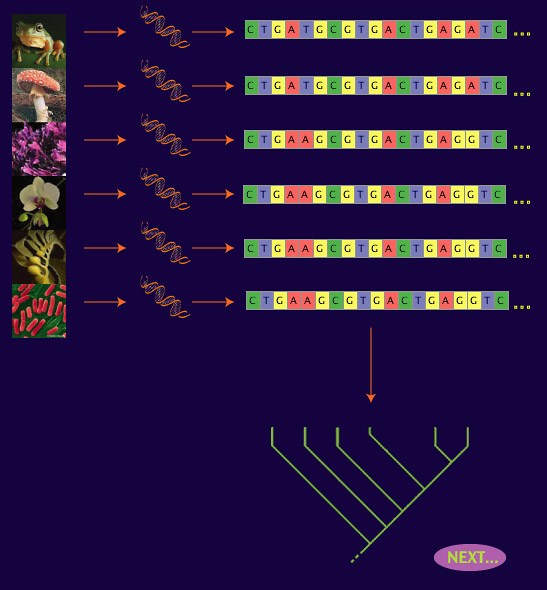
Two organisms that are closely related would have
a)
very similar DNA sequence
b)
exactly the same DNA sequences
c)
no proteins in common
d)
completely different DNA sequence
22.
If an organism has a vestigial structure, that structure likely once had a function in a(n)
a)
close relative
b)
early ancestor
c)
unrelated organism
d)
embryological stage
23.
The site of photosynthesis
a)
ribosome
b)
mitochondria
c)
chloroplast
d)
nucleus
24.
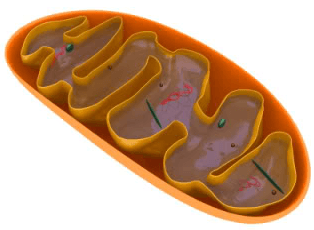
What are tiny organelles that convert glucose into ATP?
a)
Ribosomes
b)
Vesicles
c)
Cytoskeleton
d)
Mitochondria
25.
What organelle helps with cell digestion?
a)
Lysosomes
b)
Ribosomes
c)
Golgi Complex
d)
ER
26.
What is the function of the vacuole?
a)
Sac that stores water, nutrients, and waste products
b)
Sac filled with digestive chemicals
c)
Jelly-like substance within the plasma membrane
d)
stack of membranes that packages chemicals
27.
I make proteins for the cell. What am I?
a)
ribosome
b)
mitochondria
c)
chloroplast
d)
lysosome
28.
The two kinds of cells are Prokaryotes and Eukaryotes. How are they different?
a)
Prokaryotes have a nucleus.
b)
Eukaryotes have a nucleus.
c)
Prokaryotes are plant cells.
d)
There is no difference.
29.
The introduction of new genes into a population due to new individuals moving into an area is known as what?
a)
genetic drift
b)
gene flow
c)
gene pool
d)
mutation
30.
a)

Prophase

b)

Interphase

c)

Anaphase

d)

Telophase

31.
a)
Anaphase
b)
Cytokinesis
c)
Telophase
d)
Metaphase
32.
a)
Cytokinesis
b)
Interphase
c)
Anaphase
d)
Metaphase
33.
a)
Anaphase
b)
Cytonkinesis
c)
Interphase
d)
Prophase
34.
a)
Cytokinesis
b)
Anaphase
c)
Telophase
d)
Prophase
35.
In which phase does the cell spend most of it's life?
a)
Interphase
b)
Nuclear Division
c)
Telophase
d)
Mitosis
36.
Which of the following statements best explains the overall purpose of MITOSIS?
a)
Asexual reproduction of body cells
b)
To produce gametes (sex cells)
37.
Which of the following statements best explains the overall purpose of MEIOSIS?
a)
Asexual reproduction of body cells
b)
To produce gametes (sex cells)
38.
Daughter cells are diploid
a)
mitosis
b)
meiosis
c)
both
39.
Daughter cells are haploid
a)
mitosis
b)
meiosis
c)
both
40.
The diffusion of WATER across a semi-permeable membrane is
a)
osmosis
b)
diffusion
c)
endocytosis
d)
exocytosis
41.
The difference in the concentration of a substance from one location to another is called a/an
a)
diffusion
b)
osmosis
c)
concentration gradient
d)
passive transport
42.
The movement of molecules against a concentration gradient
a)
simple diffusion
b)
facilitated diffusion
c)
active transport
d)
osmosis
43.
The movement of molecules down a concentration gradient is all of the following except: 
a)
simple diffusion
b)
facilitated diffusion
c)
active transport
44.
Osmosis is the movement of _____ across a membrane.
a)
food
b)
energy
c)
oxygen
d)
water
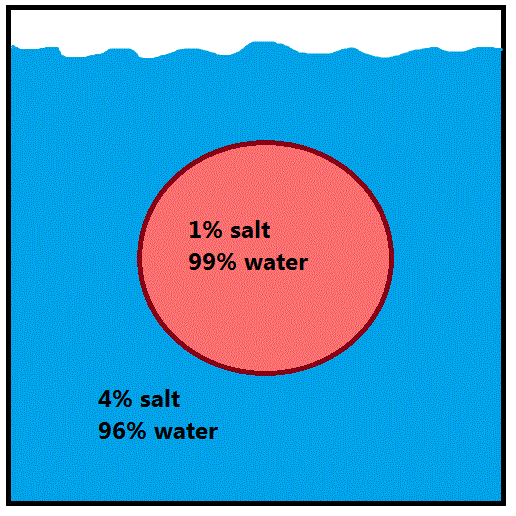
45.

Where will the water go?

a)

Into the cell

b)

Out of the cell

c)

Equally in & out - it's isotonic

d)

There is no water

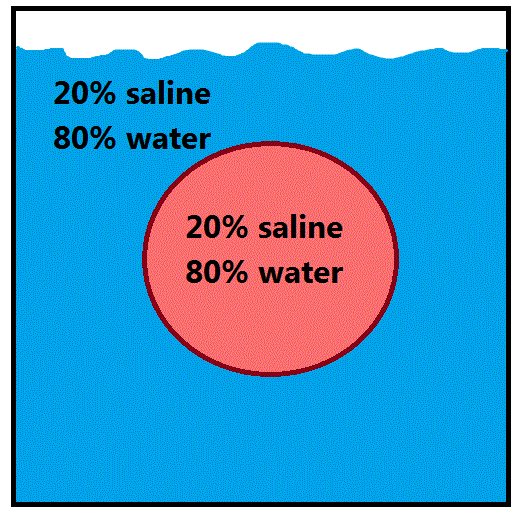
46.

A blood cell is placed into the jar, as seen. Where will the water go?

a)

Into the cell

b)

Out of the cell

c)

Equally in & out - it's isotonic

d)

The water is a lie

47.
The scientific name for an organism is made from the:
a)
class and family name
b)
genus and species name
c)
domain and kingdom name
d)
kingdom and phylum name
48.
The 8 levels of classification, most broad to most specific.
a)
Domain, Genus, Family, Order, Class, Phylum, Kingdom, Species
b)
Domain, Species, Kingdom, Genus, Phylum, Family, Class, Order
c)
Domain, Kingdom, Phylum, Class, Order, Family, Genus, Species
d)
Order, Kingdom, Species, Domain, Phylum, Family, Class, Genus
49.
Term given to describe the 2 name naming system is:
a)
dichotmous key
b)
binomial nomenclature
c)
2 scientific names
d)
binomial key
50.
The passing of traits from parent to offspring 
a)
Heredity 
b)
Genetics 
c)
Hybrid 
d)
Probability 
51.
Which of the following is a phenotype?
a)
BB
b)
Bb
c)
bb
d)
Blue eyes
52.

If a person has a phenotype that is recessive what is their genotype?

a)

TT

b)

Tt

c)

tt

d)

tT

53.

Characteristics that are inherited.

a)

traits

b)

genetics

c)

heredity

d)

genotype

54.

What our DNA says, TT, Tt, or tt.

a)

traits

b)

genetics

c)

phenotype

d)

genotype

55.

Both parents have different forms of the same trait.

a)

hybrid

b)

heterozygous

c)

homozygous

d)

purebred

56.
Which sex chromosomes would indicate a typical human male?
a)
XX
b)
X
c)
XY
d)
XXY
57.

Based on the karyotype, what is the sex of this baby?

a)

Male

b)

Female

58.
Crossing over helps promote 
a)
male genotype
b)
genetic variation
c)
DNA replication
d)
mitosis
59.
The image shown is that of a...
a)
Chromosome
b)
Pedigree
c)
Punnet Square
d)
Karyotype 
60.
True or False: Your hypothesis can never be wrong.
a)
True
b)
False
61.
A possible explanation to a problem that has not yet been tested. 
a)
data
b)
theory
c)
hypothesis
d)
fact
62.

Is science ever proven?

a)

Yes, hypotheses and theories prove scientific explanations.

b)

No, its only backed by evidence and is ever changing.

63.
What is the correct order of organization
a)
tissues-cells-organs-organ systems-organism
b)
cell-tissue-organs-organ systems-organism
c)
organism-cells-tissues-organ systems-organism
d)
tissues-cells-organs-organ sytems-organism
64.
Which system absorbs oxygen and releases carbon dioxide?
a)
respiratory
b)
excretory
c)
endocrine
d)
immune
65.
What is the function of the digestive system?
a)
to break down and absorb nutrients
b)
to support and protect our bodies
c)
to produce vitamin D
d)
to help us move
66.
The main function of the excretory system is....
a)
To filter waste from the blood stream and carry it outside of the body.
b)
To transport nutrients to the body.
c)
To break down nutrients for absorption.
d)
To provide structure and support for the body.
67.
Which system produces sperm and egg cells?  In females, it also nourishes the fetus.
a)
reproductive
b)
endocrine
c)
nervous
d)
lymphatic
68.
Which system detects information from the environment and directs the way your body responds to this information?
a)
excretory
b)
circulatory
c)
respiratory
d)
nervous
69.

A function of the pancreas is to make certain hormones, because of this it is part of what system?

a)

Endocrine

b)

Digestive

c)

Circulatory

d)

Immune

70.
My body is moist and smooth, I lay eggs, and live in or near the water.  What am I?
a)
Amphibian
b)
Reptile
c)
Bird
d)
Fish
71.
My body is warm and covered in feathers.  I lay eggs which hatch into chickens.  What am I?
a)
Reptile
b)
Amphibian
c)
Mammal
d)
Bird
72.
My body is warm, I have fur, feed my young on milk, and have live births.  What am I?
a)
Reptile
b)
Bird
c)
Mammal
d)
Fish
73.
I am covered in dry scales and I lay eggs.  What am I?
a)
Mammal
b)
Fish
c)
Amphibian
d)
Reptile
74.
My body is cold, am covered in scales, use gills to breathe under water, and I lay eggs.  What am I?
a)
Fish
b)
Mammal
c)
Reptile
d)
Amphibian
75.
Which type of respiration does not require oxygen
a)
aerobic
b)
Anaerobic
76.
Which type of respiration requires oxygen
a)
aerobic 
b)
anaerobic 
77.
Which type of respiration is most efficient?
a)
Aerobic
b)
Anaerobic
78.

Aerobic respiration produces how many ATP molecules

a)

2

b)

26

c)

36-38

d)

50

79.

Anaerobic respiration (fermentation) produces how many ATP molecules

a)

2

b)

26

c)

36

d)

50

80.
The projections on the surface of this virus allow the virus to —
a)
move inside a host cell
b)
 attach to a host cell
c)
control a host cell’s DNA
d)
signal other viruses to infect a host cell