wayground logo

Free Printable Worksheets

NEW

Font size

S
M
L
XL
Worksheets

Plant structure and responses

Total questions: 75

Worksheet time: 47mins

Name
Class
Date
1.

What does xylem carry up the stem?

a)

Water

b)

Nutrients

c)

Water and MInerals

d)

None of the above

2.
What does phloem carry up the stem
a)
Sugar
b)
Water
c)
Oxygen
d)
All of the above
3.
Xylem tissue is made up of dead cells
a)
True
b)
False
4.

Root hairs are...

a)

Mycorrhizal fungi that look like hair

b)

cells that are part of Phloem tissue

c)

tiny extensions of the root to help with absorption

5.
Mycorrhizal fungi is...
a)
A symbiotic relationship between plants and fungi
b)
An aid in plant absorption
c)
A fungus that grows from the roots
d)
All of the above
6.
Transpiration is the loss of water through leaves by evaporation
a)
True
b)
False
7.

Cohesion is...

a)

water molecules attracted to other water molecules

b)

water molecules attracted to other molecules

c)

water molecules evaporating through the leaf

8.
An example of adhesion is
a)
Water molecules sticking to each other
b)
Water molecules sticking to cellulose in xylem walls
c)
Magnets sticking to a metal wall
d)
Gravity pulling water down
9.
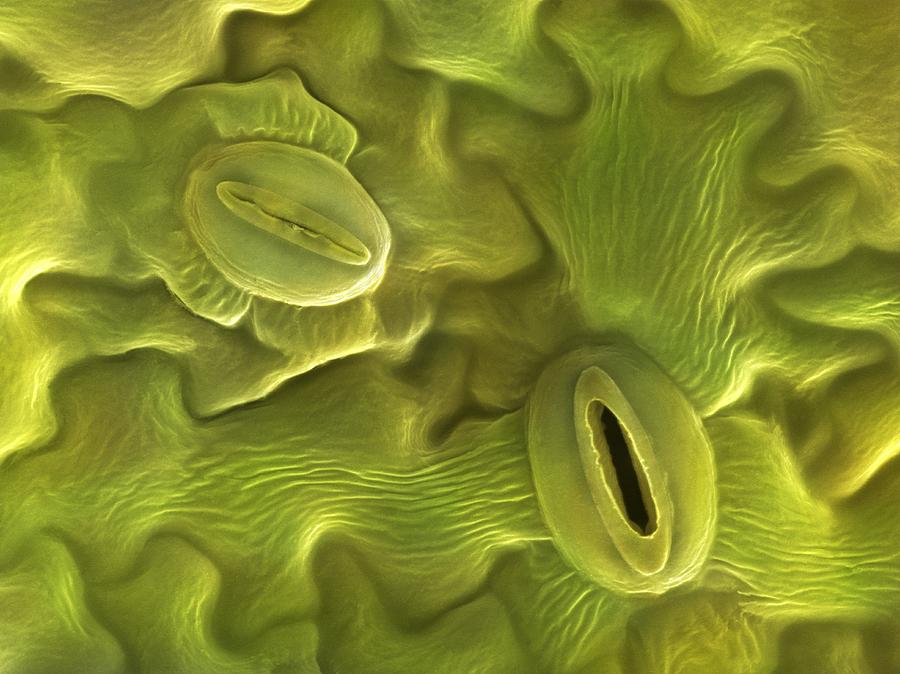
Stomatas are openings in the roots of a plant
a)
True
b)
False
10.

What are guard cells?

a)

Cells that regulate photosynthesis

b)

Cells that push nutrients and water up xylem

c)

Cells that turn sunlight into energy

d)

Cells that regulate water loss through stomata

11.

How is the age of a tree determined?

a)

The height

b)

The number of leaves

c)

The xylem rings

d)

The phloem rings inside the trunk

12.
Type of root
a)
fibrous root
b)
taproot
13.
What is this?
a)
Xylem
b)
Phloem
14.

IN this structure, water moves UP

a)

Xylem

b)

Phloem

15.
Moves sugar from leaves to roots
a)
Xylem
b)
Phloem
16.
Roots absorb water into the __.
a)
Xylem
b)
Phloem
17.
Xylem and Phloem are both __.
a)
Transpiration
b)
Absorption
c)
Photosynthesis
d)
Vascular tissue
18.
Both the xylem and phloem are considered-
a)
Stomata
b)
Leaves
c)
Roots
d)
Vascular tissue
19.
Opening that allows gas exchange
a)
Stomata
b)
Leaves
c)
Roots
d)
Vascular tissue
20.
Water exits the leaf through the __.
a)
Stomata
b)
Flower
c)
Roots
d)
Phloem
21.
___ opens and closes the stomata.
a)
Guard cells
b)
Xylem
c)
Roots
d)
Phloem
22.
The part of the plant that makes food.
a)
stem
b)
leaves
c)
roots
d)
flower
23.
Type of root
a)
fibrous root 
b)
taproot
24.
The male part of the flower is known as the _____.
a)
stamen
b)
pistil
c)
ovary
d)
petal
25.
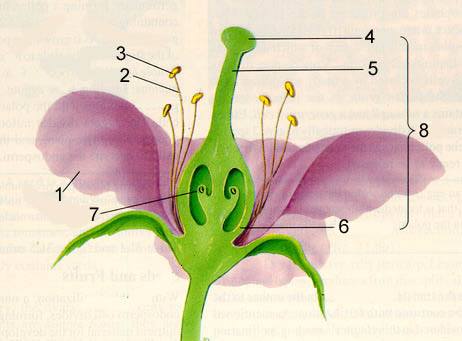
What is #3 pointing to?
a)
stigma
b)
filament
c)
ovary
d)
anther
26.
What is #4 pointing to?
a)
anther
b)
style
c)
stigma
d)
ovary
27.
What is #6 pointing to?
a)
stigma
b)
style
c)
ovary
d)
petal
28.
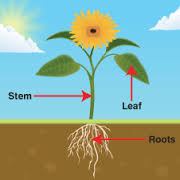
What supports the plant and holds the leaves up to the light?
a)
roots
b)
stem
c)
xylem
d)
phloem
29.
What anchors the plant, absorbs water and nutrients from the soil, and stores food for the plant?
a)
leaves
b)
stem
c)
xylem
d)
roots
30.
What increases the surface area of the roots so they can absorb more water and nutrients from the soil?
a)
leaves
b)
xylem
c)
root hairs
d)
filaments
31.
What are the colorful, sometimes scented, parts of the flower that attract insects and other animals for pollination?
a)
petals
b)
sepals
c)
stigmas
d)
styles
32.
What is the male organ of a flower?
a)
stigma
b)
style
c)
pistil
d)
stamen
33.
What is the sticky top of the pistil where pollen grains land during pollination?
a)
anther
b)
filament
c)
stigma
d)
style
34.
What is the tube that grows down the style of the pistil after pollination and takes the pollen which contains the sperm to the egg?
a)
pollen tube
b)
stigma
c)
style
d)
anther
35.
What grows from the ovary in the flower to protect the seeds?
a)
embryo
b)
seed coat
c)
fruit
d)
phloem
36.
What are plants' responses to changes in their environment by growing their stems, roots, or leaves toward or away from a stimulus?
a)
xylems
b)
stigmas
c)
tropisms
d)
dormants
37.
What is the way a plant grows or responds to light called?
a)
photosynthesis
b)
phototropism
c)
hydrotropism
d)
thigmotropism
38.

Roots grow towards gravity and shoots grow away from gravity. This is known as

a)

hydrotropism

b)

phototropism

c)

gravitropism

d)

thigmotropism

39.

THE OUTER LAYER OF A WOODY STEM IS CALLED?

a)

PITH

b)

BARK

c)

CAMBIUM

d)

XYLEM

40.
What is #1 pointing to?
a)
ovary
b)
petal
c)
stigma
d)
stamen
41.

The female part of the flower is known as the ____.

a)

stamen

b)

anther

c)

filament

d)

pistil or carpel

42.
What is #7 pointing to?
a)
anther
b)
ovary
c)
ovule
d)
petal
43.
In what part of the flower does fertilization take place?
a)
anther
b)
stigma
c)
ovary
d)
filament
44.
Where is pollen made?
a)
ovary
b)
petal
c)
pistil
d)
anther
45.
Which of the following processes is responsible for the bending of the stem of a plant toward a light source?
a)
The amount of chlorophyll produced on the side facing the light increases
b)
The rate of cell division on the side facing the light increases
c)
The rate of cell division on the side away from the light increases
d)
The cells on the side of the stem away from the light elongate
46.
Which of the following mechanisms is most important in the movement of water from root to leaves in the xylem?
a)
gravity
b)
root pressure
c)
transpiration
d)
osmosis
47.
Hydrogen bonding plays a particularly important role in which plant process?
a)
Bulk flow of solutes from source to sink
b)
Photoperiodism resulting in flowering
c)
Attraction of the sperm and egg
d)
The transpiration-cohesion-tension mechanism
48.
How does the sperm of flowering plants reach the egg?
a)
Via a pollen tube that grows from the pollen grain through the carpel tissues to the egg
b)
Via raindrops of a dew film that allows the sperm to swim from the male plant to the female plant
c)
Usually via an insect, which places sperm in the ovary while probing for nectar
d)
By actively swimming down though the style to the egg
49.
Plants that have true roots, stems and leaves are called ____.
a)
nonvascular plants
b)
vascular plants
c)
seed plants
d)
spore plants
50.
____ are plants that produce naked, or not covered, seeds.
a)
Nonvascular
b)
Vascular
c)
Gymnosperms
d)
Angiosperms
51.

Plant Hormone that causes leave and stems to respond positively to light.

a)

Long-day plan

b)

Day Neutral Plant

c)

Choloraphyll

d)

Auxin

52.
primary growth in plants starts in 
a)
apical meristem
b)
lateral meristem
c)
tracheids
d)
vascular cambium
53.
hormone for ripening fruit
a)
abscisic acid
b)
gibberlin
c)
auxin
d)
ethylene
54.

Which are growth hormones that are produced by the apical meristem?

a)

Gibberelins

b)

Auxins

c)

Cytokins

d)

Etiolations

55.
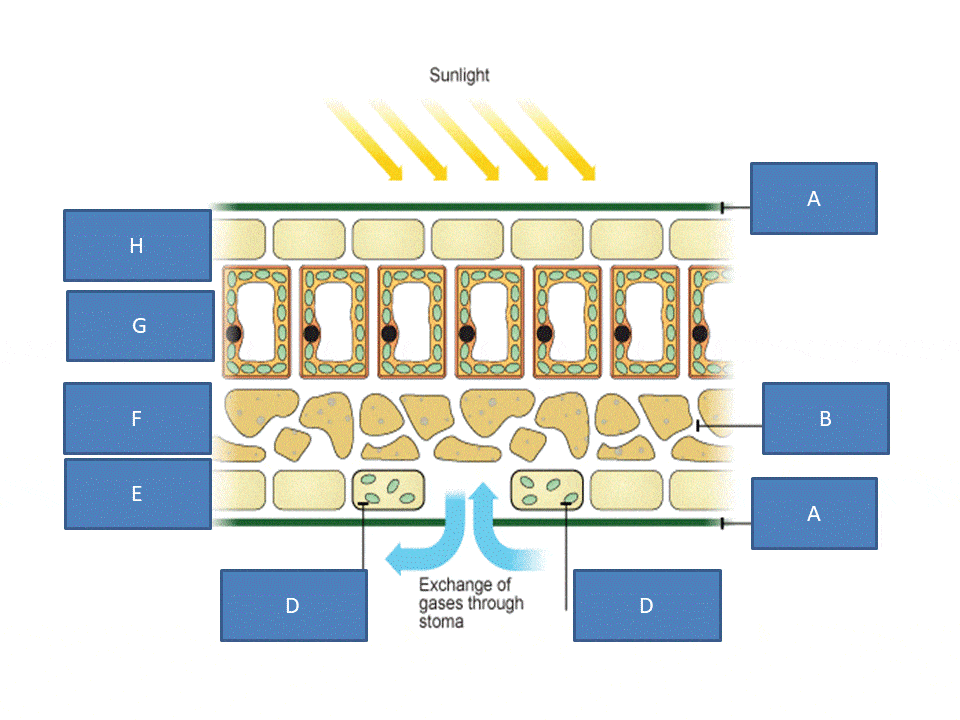
What is the name of part A?
a)
Wax cuticle
b)
Air space
c)
Guard cell
d)
Upper epidermis
56.
What is the name of part H?
a)
Wax cuticle
b)
Air space
c)
Guard cell
d)
Upper epidermis
57.
What is the name of part G?
a)
Palisade mesophyll
b)
Guard cell
c)
Spongy Mesophyll
d)
Lower epidermis
58.

What is the name of part D?

a)

Palisade mesophyll

b)

Guard cell

c)

Spongy Mesophyll

d)

Lower epidermis

59.
In which structure does photosynthesis take place?
a)
Cuticle
b)
Epidermis
c)
Palisades mesophyll
d)
Guard cells
60.
This type of plant has netted veins in their leaves.
a)
dicot
b)
monocot
c)
broad leaf
d)
needle leaf
61.
A layer of delicate tissue between the bark and the wood that produces new xylem and phloem.
a)
cambium
b)
cortex
c)
vascular bundle
d)
mesophyll
62.
Name part 3
a)
Palisade cells
b)
Spongy mesophyll
c)
Palisade mesophyll
d)
Stomata
63.
Name part 6
a)
Palisade mesophyll
b)
Spongy mesophyll
c)
Stomata
d)
Stoma
64.

So from top to bottom, a leaf's structure is

a)
  1. Palisade cells
  2. Waxy cuticle and epidermis cells
  3. Spongy mesophyll
  4. Epidermis and cuticle, with stomata
b)
  1. Waxy cuticle and epidermis cells
  2. Palisade cells
  3. Spongy mesophyll
  4. Epidermis and cuticle, with stomata
c)
  1. Epidermis and cuticle, with stomata
  2. Waxy cuticle and epidermis cells
  3. Palisade cells
  4. Spongy mesophyll
d)
  1. Waxy cuticle and epidermis cells
  2. Spongy mesophyll
  3. Palisade cells
  4. Epidermis and cuticle, with stomata
65.

What happens when you place an over ripe banana in a fruit bowl with other fruit?

a)

Nothing will happen

b)

The other fruit will grow in size

c)

Ethylene gas will cause the fruit to grow mold

d)

Ethylene gas will cause the other fruit to ripen

66.

In the story 'Jack and the beanstalk', Jack grew a beanstalk that grew way into the clouds. If I wanted to try and grow one myself, which plant hormone would I give my beanstalk?

a)

Cytokinesis

b)

Ethylene

c)

Auxins

d)

Gibberellins

67.
Which hormone promotes seed germination?
a)
abscisic acid
b)
ethylene
c)
gibberellin
d)
auxin
68.

Where is auxin formed

a)

Tip of stem and root

b)

Leaves

c)

Embryo

d)

All

69.

Stimulates cell division

a)

abscisic acid

b)

auxin

c)

cytokinins

d)

gibberellin

e)

ethylene

70.

Stimulates dramatic stem growth

a)

abscisic acid

b)

auxin

c)

cytokinins

d)

gibberellin

e)

ethylene

71.

Which statement correctly identifies the substance and direction it is transported in the xylem?

a)

Water, only upwards

b)

Glucose, only upwards

c)

Water, up and down the plant

d)

Glucose, up and down the plant

72.

What is the best words to describe sugar source and sugar sink

a)

Both are plants organ and act as storage

b)

Sugar sink can be either roots, fruit or mature leaves and sugar source is shoots

c)

Sugar source act as site for sugar production and sugar sink will store sugar

d)

Companion tube carry food from a sugar source to a sugar sink

73.

Movement of sugar from source to other parts of plant is assist by

a)

active transport

b)

diffusion

c)

endosmosis

d)

capillary action

74.

In water transport, water is _____________ up the xylem

a)

actively transported

b)

pulled up by cohesion

c)

pushed up by water pressure

d)

diffusion

75.

In phloem, sucrose and sugars are actively transported. This creates a high concentration of solutes. What will happen next?

a)

water will enter the phloem and create a water pressure

b)

water will be pulled up through the xylem

c)

water will be actively transported next

d)

plants will close their guard cells to conserve water