
 Worksheets
Body Systems Final
Total questions: 80
Worksheet time: 53mins
Name
Class
Date
1.

What do capillaries, the smallest blood vessels, do?
a)
Exchange O2 only
b)
Exchange CO2 only
c)
exchange nutrients and oxygen for waste
d)
break down foods
2.

What are the 4 components of blood?
a)
White blood cells, Platelets, bone marrow, and oxygen
b)
Plasma, Platelets, yellow blood cells, and nutrients
c)
Plasma, White blood cells, red blood cells, and Platelets
d)
Platelets, Red blood cells
3.

Which does not make up the circulatory system?
a)
heart
b)
blood
c)
lungs
d)
blood vessels
4.

Where does blood go after the right atrium?
a)
left atrium
b)
left ventricle
c)
right ventricle
d)
aorta
5.

Where does the blood go after it goes into the pulmonary arteries?
a)
lungs
b)
heart
c)
head
d)
hands
6.

Which blood vessels carry blood to the heart?
a)
Aorta
b)
veins
c)
arteries
d)
arterioles
7.

Which blood vessels carry blood away from the heart?
a)
capillaries
b)
veins
c)
arteries
8.

Un-oxygenated blood enters the right atrium from the top of the heart.
a)
inferior vena cava
b)
superior vena cava
c)
aorta
9.

Un-oxygenated blood enters the right atrium from the bottom of the heart.
a)
inferior vena cava
b)
superior vena cava
c)
pulmonary veins
10.

2?
a)
Heart
b)
Right Ventricle
c)
Left Atrium
d)
Left Ventricle
11.

1?
a)
Septum
b)
Right Pulmonary Vein
c)
Superior Vena Cava
d)
Inferior Vena Cava
12.
1?
a)
Septum
b)
Right Pulmonary Vein
c)
Superior Vena Cava
d)
Inferior Vena Cava
13.
1?
a)
Septum
b)
Right Pulmonary Vein
c)
Superior Vena Cava
d)
Inferior Vena Cava
14.

A flap of tissue that prevents blood from flowing backward
a)
Aorta
b)
Atrium
c)
Septum
d)
Valve
15.

How many chambers does the heart have ?
a)
4
b)
6
c)
3
d)
1
16.
Inhale!!!!
Your lungs are ___________ air
Your lungs are ___________ air
a)
taking in
b)
letting out
17.
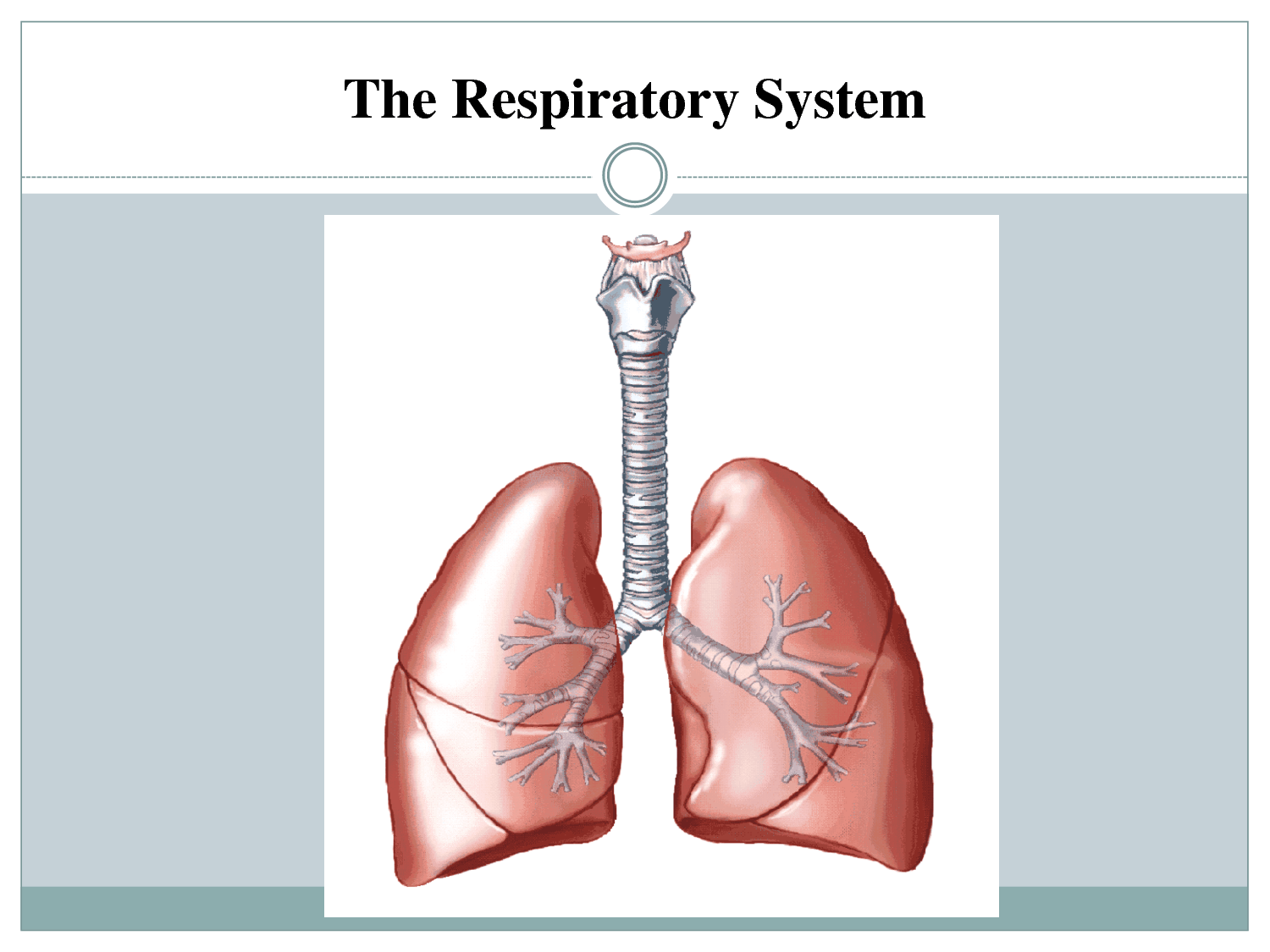
What is the main function of the respiratory system?
a)
to provide oxygen and remove carbon dioxide from the body
b)
to bring oxygen to the body
c)
to break down food and absorb nutrients
d)
to remove oxygen from the body and deliver carbon dioxide
18.
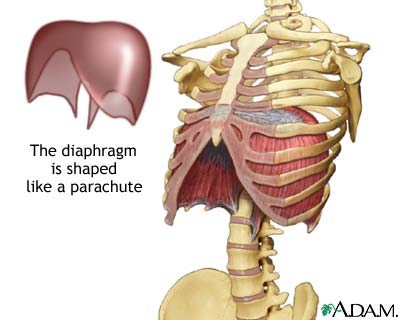
What is function of the dome-shaped diaphragm?
a)
This is where gas exchange happens.
b)
Air passes through the diaphragm on the way to the lungs.
c)
It attaches to the lungs to help in breathing.
d)
It is under the lungs and keeps them from falling down to your stomach.
19.
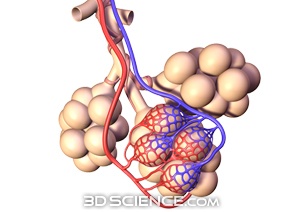
When you breathe, your lungs take in ___ and remove ___.
a)
air/oxygen
b)
oxygen/carbon dioxide
c)
carbon dioxide/waste
d)
waste/air
20.
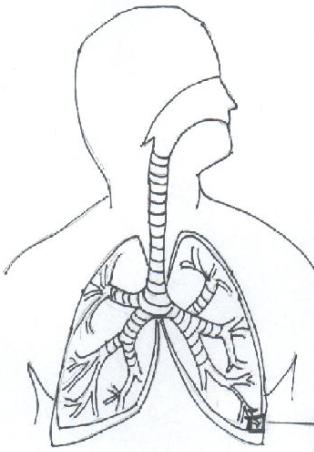
What is the function of the bronchi?
a)
Transport air from nose to lungs
b)
Transport air from trachea to lungs
c)
Transport air from lungs to alveoli
d)
Transport air from alveoli to blood
21.
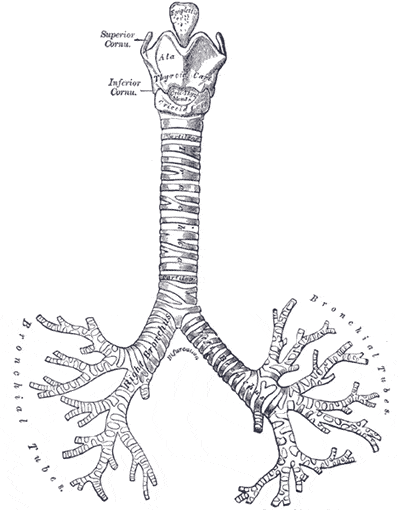
The two main branches from the trachea (one to each lung)
a)
bronchi
b)
alveoli
c)
capillaries
d)
bronchioles
22.
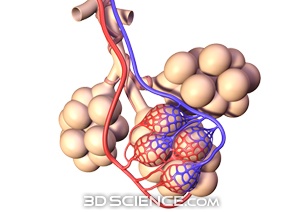
The air sacs that are covered with capillaries where gas exchange takes place
a)
bronchi
b)
lungs
c)
oxygen
d)
alveoli
23.
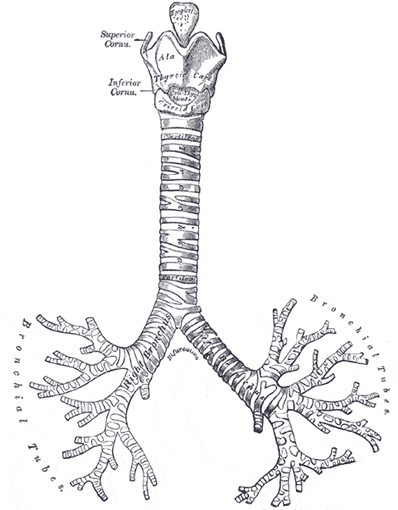
What is tube that is also known as your wind pipe?
a)
esophogus
b)
bronchi
c)
trachea
d)
alveoli
24.
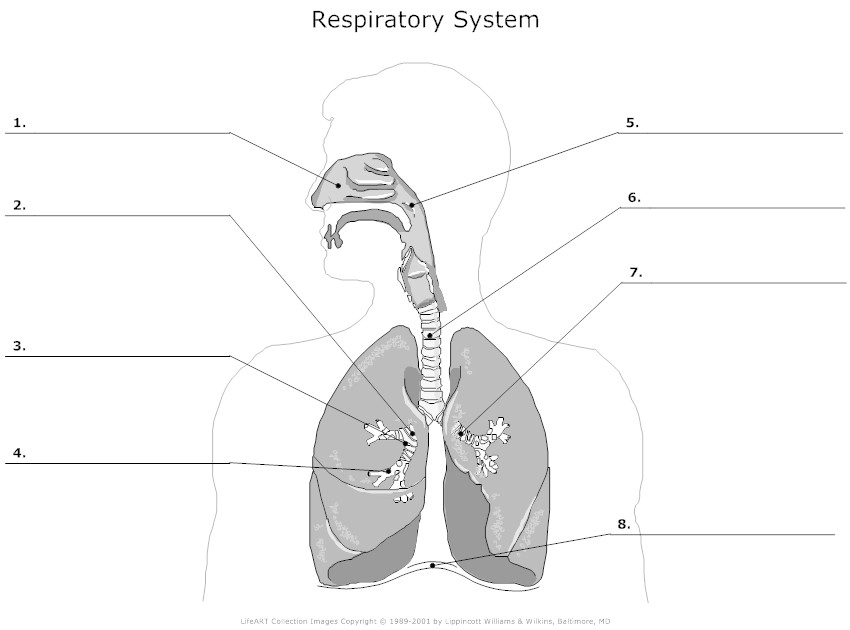
Name the organ label # 6.
a)
alveoli
b)
bronchi
c)
trachea
d)
lungs
25.
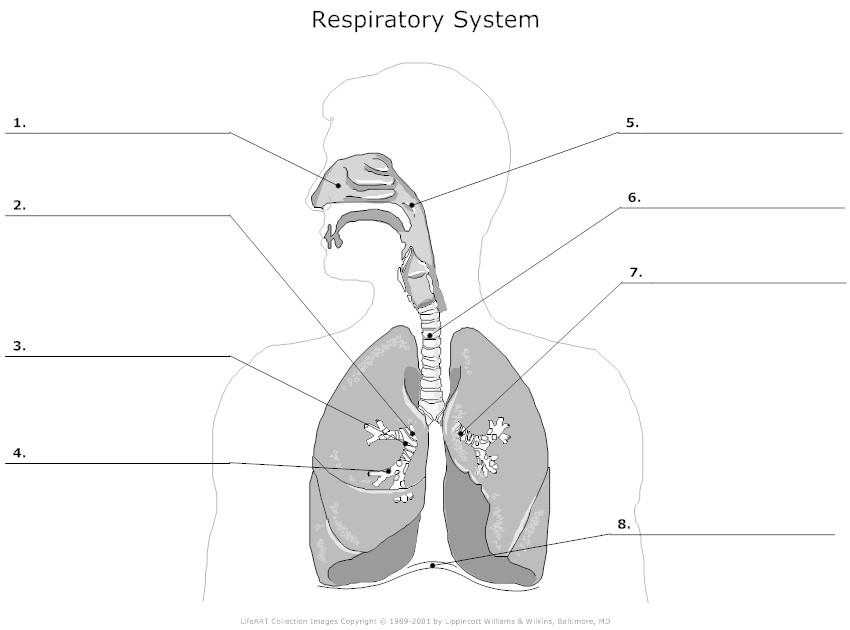
Name the structure labeled 8
a)
lungs
b)
trachea
c)
diaphragm
d)
alveoli
26.
The passageway that is shared by both the digestive and respiratory system is the....
a)
larynx
b)
pharynx
c)
trachea
d)
nose
27.
What does the Larynx hold ?
a)
The larynx holds the whole respitory system.
b)
The larynx holds the trachea.
c)
The larynx holds the vocal chords.
d)
The larynx hold the wind pipe.
28.

The chewing and grinding of food into smaller pieces is an example of...
a)
Mechanical Digestion
b)
Chemical Digestion
29.

Bile is made by which digestive organ?
a)
Gallbladder
b)
Stomach
c)
Rectum
d)
Liver
30.

Nutrients from digested food are absorbed in which digestive organ?
a)
Small Intestine
b)
Stomach
c)
Large Intestine
d)
Gallbladder
31.

Number 3 is pointing to the...
a)
Small intestine
b)
Rectum
c)
Large intestine
d)
Stomach
32.

Number 5 is pointing to the...
a)
Liver
b)
Gallbladder
c)
Pancreas
d)
Stomach
33.

As waste moves through the digestive system, the ______ absorbs water before storing waste in the rectum.
a)
Small intestine
b)
Stomach
c)
Esophagus
d)
Large intestine
34.

Bile is stored in which secondary digestive organ?
a)
Stomach
b)
Liver
c)
Gallbladder
d)
Pancreas
35.
What is the substance found in the stomach that allows for chemical digestion to take place?
a)
Gastric Juices
b)
Saliva
c)
Bile
36.

Which secondary organ makes digestive juices like insulin to help absorb food in the small intestine?
a)
Large intestine
b)
Pancreas
c)
Liver
d)
Gallbladder
37.

Number 7 is pointing to...
a)
Mouth
b)
Esophagus
c)
Small intestine
d)
rectum
38.

Number 8 is pointing to the...
a)
small intestine
b)
stomach
c)
anus
d)
rectum
39.
What two things are found in the central nervous system?
a)
brain/spinal cord
b)
spinal cord/motor neurons
c)
motor/sensory neurons
d)
only brain
40.
Which part of a neuron RECIEVES information?
a)
axon
b)
dendrite
c)
cell body
d)
axon terminal
41.
Which part of the neuron is a long fiber that send information to other cells?
a)
dendrite
b)
terminal
c)
cell body
d)
axon
42.
What are specialized nerve endings that detect change inside and outside the body?
a)
interneurons
b)
receptors
c)
motor neurons
d)
reflex arc
43.
Which of the TWO nervous systems contains motor and sensory neurons?
a)
central nervous system
b)
peripheral
c)
motor
d)
sensory
44.
What is the LARGEST of the 3 parts of your brain?
a)
cerebellum
b)
cerebrum
c)
spinal cord
d)
medulla
45.
Which part of your brain controls memory?
a)
cerebrum
b)
cerebellum
c)
medulla
d)
neurons
46.
Which part of the brain controls breathing?
a)
neurons
b)
medulla
c)
cerebellum
d)
cerebrum
47.
Which part of the brain controls balance and body position?
a)
cerebrum
b)
medulla
c)
cerebellum
d)
impluses
48.
The spinal cord is protected by the _____?
a)
vertebrae
b)
skull
c)
lungs
d)
rib cage
49.
The impulse changes to _______________ as it moves ACROSS the synapse to other neurons.
a)
electrical
b)
chemical
c)
it stays the same
d)
liquid
50.
If I step on a nail...what type of neuron take that signal TO the CENTRAL NERVOUS SYSTEM?
a)
interneurons
b)
motor
c)
sensory
d)
receptors
51.
If I step on a nail...what type of neurons take the response to my muscles?
a)
motor
b)
interneurons
c)
sensory
d)
not neurons, muscle tissue sends the response
52.

What does the cerebrum control?
a)
controls thoughts and voluntary actions
b)
controls vital and involuntary actions
c)
controls balance
d)
controls the uvula
53.

Which part of the brain controls vital functions such as breathing and heart rate?
a)
Diencephalon
b)
Frontal Lobe
c)
Brain Stem
d)
Cerebellum
54.

What is the part highlighted in red?
a)
Cerebrum
b)
Cerebellum
c)
Brain Stem
d)
Diencephalon
55.

Identify the lobe of the brain that is highlighted.
a)
frontal
b)
temporal
c)
occipital
d)
parietal
56.

Identify the lobe of the brain
a)
frontal
b)
temporal
c)
occipital
d)
parietal
57.
Wrinkled part of the brain's surface where the body processes information
a)
Brain stem
b)
Cerebral Cortex
c)
Corpus Callosum
d)
Cerebellum
58.

Two major branches of the nervous system
a)
central and peripheral
b)
peripheral and motor
c)
motor and sensory
d)
central and motor
59.

The brain is part of the ____ nervous system.
a)
central
b)
peripheral
c)
motor
d)
internal
60.

Neurons send signals in the brain and body via...
a)
neurotransmitters only
b)
electrical impulses only
c)
wifi
d)
neurotransmitters AND electrical signals
61.

This portion of a neuron allows the electrical signal to move very quickly
a)
Dendrites
b)
myelin sheath
c)
nucleus
d)
axon terminals
62.

The spinal cord is part of the ____ nervous system.
a)
Central
b)
Peripheral
63.

The nerves in your legs are part of the ____ nervous system.
a)
Central
b)
Peripheral
64.

Motor neurons are involved with
a)
all 5 senses
b)
all movement
c)
involuntary movement only
d)
voluntary movement only
65.

Movement can be:
a)
only voluntary
b)
only involuntary
c)
voluntary OR involuntary
d)
none of these
66.

An example of involuntary movement would be:
a)
heart beating
b)
walking
c)
talking
d)
wiggling toes
67.

An example of voluntary movement would be:
a)
smiling
b)
heart beat
c)
digestion
d)
breathing
68.

Sensory information is processed in the ____ lobe of the brain
a)
frontal
b)
occipital
c)
parietal
d)
temporal
69.

Concentration, language production, and decision making are features of the ___ lobe in the brain.
a)
Temporal
b)
Frontal
c)
Occipital
d)
Brain stem
70.

This lobe of the brain is responsible for processing your sight
a)
Occipital
b)
Frontal
c)
Brain stem
d)
Temporal
71.
Sensory information is processed in the ____ lobe of the brain
a)
frontal
b)
occipital
c)
parietal
d)
temporal
72.
The purpose of the endocrine system is to
a)
maintain homeostasis by reacting quickly to stimuli
b)
produce substances that protect the body from bacteria
c)
maintain metabolism, growth and development in homeostasis
d)
transport molecules throughout the body
73.
Endocrine glands produce __________ which maintain the body in homeostasis
a)
oils
b)
neurotransmitters
c)
tears
d)
hormones
74.
regulates blood-sugar levels.
a)
Endocrine System
b)
Pancreas
c)
Flight or Fight Response
d)
Glands
75.
a disease that is characterized by high levels of sugar in the blood. Usually caused by the pancreas producing too little insulin or body not responding to insulin.
a)
Hormones
b)
Pituitary Gland
c)
Endocrine System
d)
Type 2 Diabetes
76.
The gland that stimulates body metabolism
a)
Thyroid
b)
testes
c)
ovary
d)
adrenal
77.
The gland that stimulates secondary sex characteristics in females.
a)
Thyroid
b)
testes
c)
ovary
d)
adrenal
78.
Gigantism is a disorder in which an individual has a very large body; caused by excess human growth hormons
a)
True
b)
False
79.
a condition in which the thyroid gland produces TOO much of the thyroid hormones and many body systems become too active. Can cause rapid unhealthy weight loss
a)
Hypothyroidism
b)
Hyperthyroidism
c)
Testosterone
d)
Estrogen
80.
The response to stress is called
a)
Flight or Fussy Response
b)
Fight or Afraid
c)
Fish or Flee
d)
Fight or Flight Response
100 %

