wayground logo

Free Printable Worksheets

Font size

S
M
L
XL
Worksheets

Gen Bio Spring Final

Total questions: 155

Worksheet time: 2hrs 58mins

Name
Class
Date
1.
If a heterozygous tall pea plant is crossed with a purebred short pea plant, what is the probability their offspring will be tall?
a)
100%
b)
75%
c)
25%
d)
50%
2.
True or False: A Punnett Square can tell you the actual phenotypes and genotypes of the offspring.
a)
True
b)
False
3.
True or False: Heterozygous is the same as hybrid. 
a)
True
b)
False
4.
If the genotype is heterozygous, is the phenotype dominant or recessive?
a)
Dominant
b)
Recessive
5.
If a homozygous tall plant is crossed with a homozygous short plant,
a)
the offspring will be short.
b)
the offspring will be medium in height.
c)
the offspring will be tall.
6.
True or False: A heterozygous genotype can show a recessive phenotype.
a)
True
b)
False
7.
If a homozygous tall plant is crossed with a homozygous short plant,
a)
the offspring will be short.
b)
the offspring will be medium in height.
c)
the offspring will be tall.
8.
If you cross a heterozygous tall pea plant (Tt) with a heterozygous tall pea plant (Tt), what are the possible offspring phenotypes?
a)
25% TT, 50% Tt, 25% tt
b)
75% tall, 25% short
9.
A labradoodle is a mix between a lab and a poodle. A labradoodle is a
a)
purebred
b)
genotype
c)
hybrid
d)
phenotype
10.
structures that lost their function
a)
vestigial
b)
homologous
c)
analogous
d)
fitness
11.
process of change over time in a species
a)
evolution
b)
fitness
c)
acquired characteristics
d)
fossils
12.
mankind changing traits
a)
artificial selection
b)
natural selection
c)
adapatation
d)
fitness
13.
ability to survive and reproduce
a)
fitness
b)
adapation
c)
natural selection
d)
artificial selection
14.
heritable characteristics that increases chance of survival
a)
fitness
b)
adpatation
c)
natural selection
d)
homologous structure
15.
organisms best suited to environment survive and reproduce
a)
natural selection
b)
artificial selection
c)
fitness
d)
adpatation
16.
common function, but not ancestor
a)
homologous
b)
analogous
c)
vestigial
17.
change by using or not using parts of their body
a)
acquired characteristics
b)
natural selection
c)
fitness
d)
adapation
18.
common ancestor, but function can vary
a)
homologous structure
b)
analogous structure
c)
vestigial structure
19.
preserved remains of ancient organsims
a)
fossils
b)
acquired characteristics
c)
vestigial structures
d)
adapations
20.
What did Darwin notice about organisms and their environments?
a)
they seemed well suited to their specific environments
b)
they were not well suited to survive
c)
they all became fossils
d)
they Galapagos tortoises looked very similar to his own reflection
21.
The Galapagos is home to many species of finches and several species of tortoise.  What did Darwin think of this?
a)
different species may have had a common ancestor in the past
b)
finches and tortoises are the same species
c)
if they were all actually one species 
d)
that finches probably evolved from tortoises
22.
The Galapagos is home to many species of finches and several species of tortoise.  What did Darwin think of this?
a)
different species may have had a common ancestor in the past
b)
finches and tortoises are the same species
c)
if they were all actually one species 
d)
that finches probably evolved from tortoises
23.
Local variation of species suggests _______.
a)
artificial selection
b)
adapation
c)
acquired characteristics
d)
vestigial structures
24.
Lamarck suggested evolution works by organisms ___________ . 
a)
use or do not use a trait
b)
inheriting genetic variation
c)
magic
d)
voodoo
25.
The possession of adaptations gained DURING an organisms lifetime are  
a)
not useful in evolution because they are not inherited
b)
explanations for evolution by natural selection
c)
choices made by organisms to get stronger or be more perfect
d)
no possible.  Organisms are unchanging throughout their lives.
26.
Which of the following is NOT a requirement for evolution by natural selection?
a)
struggle for existence (more born than can survive)
b)
variation and adaptation
c)
survival of the fittest
d)
acquired characteristics
27.
Common descent states
a)
some seemingly unrelated species share many traits / characteristics
b)
Lamarck was correct
c)
environments change to fit its organisms
28.
Molecular evidence of evolution includes
a)
the universal genetic code.
b)
physical traits.
c)
acquired characteristics.
d)
the tendency towards perfection.
29.
What did the Grants study?
a)
finch beaks
b)
finch feathers
c)
tortoise shells
d)
marine iguanas
30.
RNA codons specify the same amino acids in most organisms, for example, GGG codes for Glycine in humans, bacteria and fungi.
a)
True
b)
False
31.
The sharing of genes and proteins indicates
a)
common ancestry.
b)
age or organisms.
c)
modification with descent.
d)
independence.
32.
Darwin's finches beaks change over time as a result of
a)
natural selection.
b)
artificial selection.
c)
the inheritance of acquired characteristics.
d)
Mr. Cook willing it them to change.
33.
REVIEW: What does a cladistic analysis show about organisms?
a)
a.  the importance of each derived character
b)
a.  the relative degrees of relatedness among lineages
c)
a.  the general fitness of the organisms analyzed
d)
a.  all traits of each organism analyzed
34.
REVIEW: 1.  A species at equilibrium migrates into a new environment and soon begins a period of rapid evolution. The type of evolution that occurred is most likely  ______  _____ .
a)
punctuated equilibrium
b)
genetic mutation
c)
coevolution
d)
convergent evolution
35.
REVIEW: Multicellular organisms evolved a few hundred million years after the evolution of sexual reproduction. What type of evolution likely resulted in this change to create the great diversity of multicellular organisms today?
a)
adaptive radiation 
b)
convergent evolution   
c)
coevolution
d)
1.  Miller-Urey experiment
36.
REVIEW: The first photosynthetic organisms caused Earth to COOL as they converted CARBON DIOXIDE to oxygen. 
a)
True
b)
False
37.
REVIE: Which of the following statements below sequence early life on Earth correctly?
a)
sexual reproduction, development of eukaryotic cells, photosynthesis, free oxygen in the atmosphere
b)
free oxygen in the atmosphere, development of eukaryotic cells, sexual reproduction, photosynthesis
c)
development of eukaryotic cells, free oxygen in the atmosphere, sexual reproduction, photosynthesis 
d)
photosynthesis, free oxygen in the atmosphere, development of eukaryotic cells, sexual reproduction
38.
Natural selection acts on 
a)
genotypes
b)
phenotypes
39.
How does pesticide resistance occur? 
a)
organisms that are born with an adaptation to survive reproduce and pass on the gene
b)
organisms acquire resistance and pass it on to offspring
c)
DO NOT CHOOSE ACQUIRE resistance... you cannot pass on acquired traits
40.
Lamarck said organisms ACQUIRE traits by using or not using organs and pass them on to offspring.
a)
He was WRONG... you do not pass on acquired traits.
b)
He was right and had a really cool name... Jean-Baptiste Pierre Antoine de Monet, Chevalier de Lamarck
41.
Linnaeus developed binomial nomenclature, a ___- ____ naming system. 
a)
1-part
b)
2-part
c)
3-part
42.
Scientific names have two parts, ___ and ____.
a)
domain, kingdom
b)
kingdom, species
c)
genus, species
d)
C3PO, R2D2
43.
Scientific names are useful instead of common names because they ____.
a)
refer to a single species
b)
are the same throughout the world
c)
both options are correct
44.
Panthera concolor belongs to which species name?
a)
Panthera
b)
concolor
c)
Mountain Lion
d)
Eukarya
45.
Traditional classification uses ___________ to organize species.
a)
physical features
b)
derived characters
c)
DNA analysis
d)
imaginaiton
46.
The three domains are: 
a)
Eukarya, Bacteria, Archaea
b)
Plant, Animal, Protist
c)
Bacteria, Plant, Animal
d)
philosophy, psychology, sociology
47.
The two most closely related organisms are
a)
hagfish and chimp
b)
perch and mouse
c)
salamander and bird
d)
mouse and chimp
48.
All plant cells have chloroplasts, this makes them a ___________ in evolutionary classification.
a)
acquired trait
b)
derived character
c)
conincidence
d)
physical feature
49.
Which probably existed first?
a)
RNA
b)
DNA
50.
How has the atmosphere changed from Earth's early atmosphere to today's atmosphere?
a)
more oxygen, cooler now
b)
more carbon, cooler now
c)
more oxygen, warmer now
d)
more water vapor now
51.
Which came first?  Photosynthesis or Free Oxygen in the Atmosphere
a)
photosynthesis
b)
free oxygen
52.
Which came first?  Eukaryotas or Sexual Reproduction?
a)
Eukaryotes
b)
Sexual Reproduction
53.
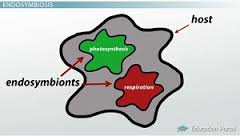
The theory that mitochondria and chloroplasts were once ancient prokaryotic is called
a)
endosymbiotic theory
b)
seed theory
c)
primordial soup
d)
origin of life
54.
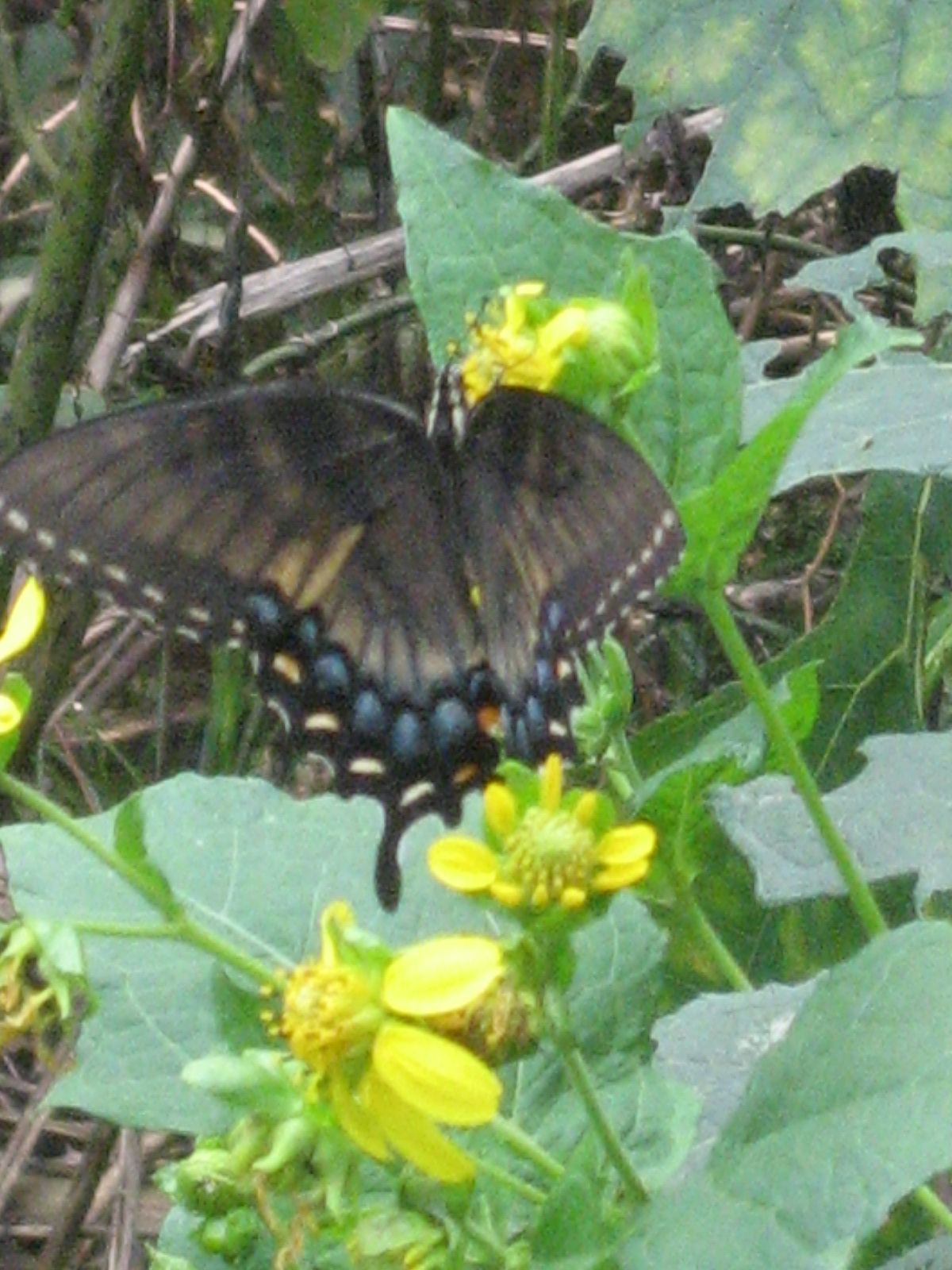
Identify the insect and the step.
a)
Dragonfly
b)
Fruit Fly
c)
Black Fly
d)
Housefly
55.
Tigers, Jellyfish, Gorillas and Sponges are all part of kingdom _______.
a)
Animalia
b)
Plantae
c)
Fungi
d)
Bacteria
56.
Which kingdom do humans belong to?
a)
Plantae
b)
Fungi
c)
Animalia
d)
Protista
57.
The scientific name for an organism is made from the:
a)
class and family name
b)
genus and species name
c)
domain and kingdom name
d)
kingdom and phylum name
58.
Term given to describe the 2 name naming system is:
a)
dichotmous key
b)
binomial nomenclature
c)
2 scientific names
d)
binomial key
59.
The 8 levels of classification, most broad to most specific.
a)
Domain, Genus, Family, Order, Class, Phylum, Kingdom, Species
b)
Domain, Species, Kingdom, Genus, Phylum, Family, Class, Order
c)
Domain, Kingdom, Phylum, Class, Order, Family, Genus, Species
d)
Order, Kingdom, Species, Domain, Phylum, Family, Class, Genus
60.
An illustration and a dichotomous key are given. What is the correct classification for this organism?
a)
Class Insecta
b)
Order Amblygygi
c)
Order Araneae
d)
Order Scorpiones
61.
Cladograms are constructed by grouping organisms together based on their____________ characteristics.
a)
shared
b)
different
c)
similar
d)
opposite
62.
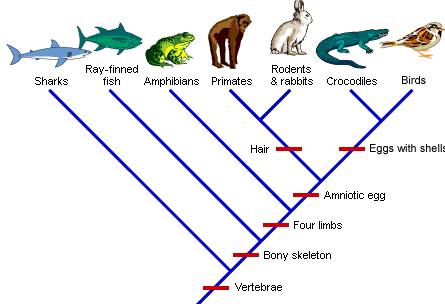
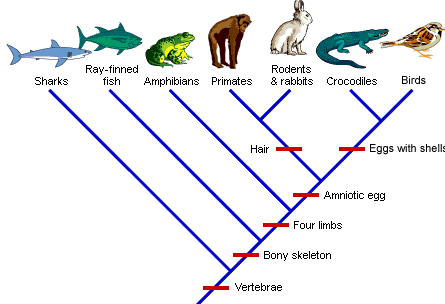
According to this cladogram, sharks are MOST closely related to which organism? 
a)
Amphibians
b)
Ray finned fish
c)
Crocodiles
d)
Birds
63.
Which two orgainsms have hair? 
a)
Sharks & Ray Finned Fish
b)
Primates & Rodents
c)
Birds & Crocodiles
d)
Rabbits & Birds
64.
According to this cladogram, birds are LEAST related to: 
a)
Amphibians
b)
Sharks
c)
Ray Finned Fish
d)
Crocodiles
65.
Which trait do only humans have, according to the cladogram?
a)
jaws
b)
mammary glands & hair
c)
terrestrial during all life stages
d)
bipedal & opposable thumbs
66.
This experiment was conducted by the scientists:
a)
Stanley Miller and Harold Urey
b)
Harold Urey and Albert Einstine
c)
Harrison Ford and Denzel Washington
d)
James Watson and Francis Crick
67.
Which question were the scientists trying to answer with this experiment?
a)
Where do cells come from?
b)
What came first the chicken or the egg?
c)
How are biomolecules formed?
d)
What gave rise to the Eukaryotic cell?
68.
The apparatus in the experiment was used to mimic what?
a)
proteins
b)
Earth's present conditions
c)
early Earth's conditions
d)
they didn't mean to mimic anything in particular
69.
The gas in the apparatus mimicked? 
a)
space
b)
time
c)
stars
d)
atmosphere
70.
The electrical sparks mimicked?
a)
heat waves
b)
lightening
c)
volcano
d)
hurricane
71.
The water used in the apparatus was used to mimic what part of early Earth?
a)
sea
b)
swimming pool
c)
ocean
d)
rain
72.
What was the result of the Miller-Urey Experiment?
a)
amino acids
b)
nucleotides
c)
lipids
d)
glucose
73.
Why is the fossil record incomplete?
a)
fossils get eroded away over time
b)
scavengers and decomposers eat them too quickly
c)
most organisms never became fossils
d)
All of theses
74.
Earth's first atmosphere contained little or no
a)
hydrogen cyanide
b)
nitrogen
c)
hydrogen sulfide
d)
oxygen
75.
Theory that says eukaryotic cells formed from symbiosis among several different prokaryotes.
a)
Natural Selection
b)
Biogenesis Theory
c)
Evolutionary Theory
d)
Endosymbiotic Theory
76.
An important early effect of life on the environment was the
a)
cooling of the Earth.
b)
increase in atmospheric oxygen.
c)
fall in sea level.
d)
reduction of volcanic activity.
77.
The endosymbiotic theory states that
a)
the first organisms were microscopic algae and bacteria.
b)
viruses arose from fragments of prokaryotic cells.
c)
prokaryotic cells arose from organelles of eukaryotes.
d)
eukaryotic cells arose from communities of prokaryotes.
78.
Scientist theorize that oxygen buildup in the atmosphere resulted from _________________ .
a)
respiration
b)
photosynthesis
c)
chemosynthesis
d)
rock weathering
79.

Each of the following is an abiotic factor in the environment EXCEPT

a)

temperature

b)

soil

c)

sunlight

d)

plant life

80.

Bacteria primarily carry out...

a)

Nitrogen fixation

b)

denitrification

c)

phosphorication

d)

the carbon cycle

81.

A nutrient whose supply limits productivity

a)

nitrogen fixation

b)

aibiotic factor

c)

biotic factor

d)

limiting nutrient

82.

Which of these is NOT a common biogeochemical cycle

a)

carbon

b)

nitrogen

c)

iron

d)

phosphorous

83.

an important molecule necessary for life

a)

nutient

b)

cycle

c)

matter

d)

none of the above

84.

the conversion of nitrogen gas to usable nitrogen by bacteria

a)

Nitrogen fixation

b)

denitrofication

c)

carbon cycle

d)

nutrient

85.

the conversion of usable nitrogen to nitrogen gas by bacteria

a)

carbon cycle

b)

Nitrogen fixation

c)

denitrification

d)

water cylce

86.

Based on your knowledge of the carbon cycle, what would happen if large areas of forests are cleared?

a)

decrease of carbon dioxide in the atmosphere

b)

increase of carbon dioxide in the atmosphere

c)

increase of oxygen in the atmosphere

d)

decrease of calcium carbonate

87.

What is the relationship between energy and nutrients in the ecosystem?

a)

energy increases, nutrients decrease

b)

energy is recycled, nutrients decrease

c)

energy decreases, nurtrients are recycled

d)

energy increases, nutrients are recycled

88.

A bird stalks, kills, and then eats an insect. Based on its behavior, which ecological terms describe the bird?

a)

Herbivore, Decomposer

b)

Producer, Heterotroph

c)

Carnivore, Consumer

d)

Autotroph, Herbivore

89.

If the first trophic level has 100% energy, what percent of emery will the 3rd trophic level have according to the 10% rule.

a)

100%

b)

10%

c)

1%

d)

.1%

90.

Eats dead or or decaying animal carcasses

a)

carnivore

b)

scavenger

c)

herbivore

d)

omnivore

91.

kills, hunts, stalks and eats its prey

a)

carnivore

b)

herbivore

c)

scavenger

d)

decomposer

92.

eats both animals and plants

a)

carnivore

b)

herbivore

c)

omnivore

d)

decomposer

93.

The branch of biology dealing with interactions among organisms and between organisms and their environment is called

a)

ecology

b)

modeling

c)

recycling

d)

economy

94.

shows all feeding relationships in an ecosystem, multiple food chains

a)

food web

b)

food chain

c)

food cycles

d)

herbivore

95.

illustration that shows who eats whom

a)

food web

b)

food chain

c)

food cycle

d)

herbivore

96.

Another name for producer that means "self eater"

a)

autotroph

b)

consumer

c)

heterotroph

d)

preditor

97.

Another name for consumer that means to consume other organisms

a)

autotroph

b)

heterotroph

c)

producer

d)

prey

98.

What role do decomposers play in biogeochemical cycles?

a)

fossilize dead animals

b)

break down dead organisms and return their nutrients to the nutrient cycles

c)

increase biomass of a trophic level

d)

combine with consumers to create new limiting nutrients

99.
What does biodiversity mean?
a)
Only one species in an area.
b)
The different amount of species in an area
c)
All abiotic life
d)
Nitrogen fixation
100.
Which organism receives the least energy from the sun?
a)
large shark
b)
phytoplankton
c)
mahi mahi
d)
zooplankton
101.
A drought has hit this grassland biome. How will this effect the rabbit population?
a)
The rabbits will increase in number.
b)
The rabbit population will stay the same.
c)
The rabbit population will decrease.
d)
The rabbit population will become extinct immediately.
102.
Which biome is more biodiverse?
a)
Desert
b)
Sand
c)
Tundra
d)
Rainforest
103.
What does this picture represent?
a)
species diversity
b)
ecosystem diversity 
c)
genetic diversity
d)
biodiversity
104.
Globally, the leading cause of biodiversity loss is 
a)
invasive species
b)
poaching and overharvesting
c)
pollution
d)
habitat change and loss 
105.
Most foxes of the desert have a reddish brown coat but the artic fox has a white coat. How has this adaptation allowed the arctic fox to survive over many years?
a)
it gives it warmth during the summer
b)
it makes the fox look meaner
c)
it keeps it warm
d)
its protects it from predators using camoflauge 
106.
 Characteristic or trait that helps an organism survive in its environment
a)
skills
b)
speciation
c)
natural instinct
d)
adaptation
107.
What would have to happen to this ecosystem in order to introduce and support a frog population?
a)
Nothing, they're already there.
b)
A wildfire to clear the land.
c)
They will just naturally migrate to the area on their own.
d)
A flood occurs leaving pools of water.
108.
What is the order of succession shown in this figure?
a)
A, B, C, D
b)
B, A, D, C
c)
C, D, A, B
d)
D, A, B, C
109.
What type of succession is shown going from figure A to figure B?
a)
primary succession
b)
eutrophication
c)
secondary succession
d)
intermediate
110.
Starts with BARE ROCK followed by lichen
a)
primary succession 
b)
secondary succession
c)
both types of succession
111.
What is Ecological Succession?
a)
Competition between plants in a society
b)
A natural disaster such as a flood or fire
c)
The cycle of a tomato plant
d)
The change an ecosystem experiences over time
112.
Environments always have both living and _________.
a)
nonliving factors
b)
bio-geochemical cycles
c)
nutrients
d)
ecosystem
113.
What is the difference between biotic and abiotic?
a)
Biotic are non-living things
b)
Abiotic are living organisms
c)
Biotic is life,
Abiotic is non-living
d)
Biotic is non-living, Abiotic is living
114.
Which of the following is true in a climax community?
a)
the community will constantly evolve and change
b)
if one species dies, a new species will fulfill the same role
c)
They are stable for a long time, with the same species maintaining their population
d)
it goes through a major change called "climax" every few hundred years
115.
A drought has hit this grassland biome. How will this effect the rabbit population?
a)
The rabbits will increase in number.
b)
The rabbit population will stay the same.
c)
The rabbit population will decrease.
d)
The rabbit population will become extinct immediately.
116.
Succession that occurs in an area with NO SOIL
a)
ecological succession 
b)
primary succession 
c)
secondary succession
d)
pioneer speciles
117.
The first organisms that appear in an ecological community
a)
ecological succession 
b)
primary succession 
c)
secondary succession
d)
pioneer species
118.
The picture shows what type of succession?
a)
primary
b)
secondary
c)
tertiary
d)
quadanary
119.
Biodiversity is the variety of ________ in a community.
a)
genes
b)
population
c)
species
d)
community
120.
A place where plants and animals live and grow naturally is called a ______________.
a)
shelter
b)
tree
c)
habitat
d)
organism
121.
After a volcanic eruption, lava covers the land. What is the order that plants grow to repopulate the area?
a)
Lichens → Shrubs → Grasses → Trees
b)
Lichens → tree → shrubs→Grasses
c)
Grasses → Lichens → Shrubs → Trees
d)
Lichens → Grasses → Shrubs → Trees
122.
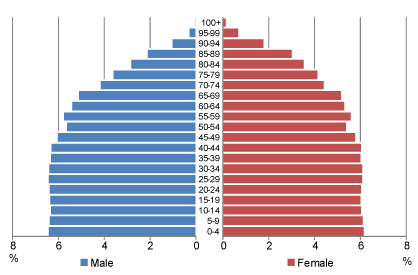
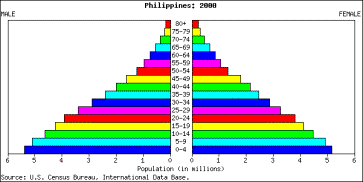
Age structure data include all of the following except
a)
the number of members of a population who are between 5 and 11 years old.
b)
the ratio of males to females in a population
123.
What kind of growth is this country experiencing?
a)
Exponential Growth
b)
Stable Growth
c)
Declining Growth
124.
According to the population pyramid of this country, its population is most likely...
a)
growing slowly.
b)
growing rapidly.
c)
decreasing.
d)
not changing.
125.
The number of individuals an environment can support is known as the
a)
Total Fertility Rate
b)
Exponential Growth
c)
Limiting Factor
d)
Carrying Capacity
126.
In recent years, the human population has 
a)
increased exponentially
b)
decreased exponentially
c)
decreased slowly
d)
increased slowy
127.
What is the carrying capacity of the following graph?
a)
1000
b)
8000
c)
800
d)
600
128.
What type of population change does this graph represent
a)
Exponential Growth
b)
Massive Die-off
c)
Linear Growth
d)
Decrease in Birth-Rate
129.
The average number of people living in a square kilometer is called...
a)
urbanization. 
b)
internal migration. 
c)
population density. 
d)
pull factors. 
130.
Number of organisms per unit of living area
a)
Population density
b)
dispersion
c)
carrying capacity
d)
population growth rate
131.
What is the genotype of a person with type A blood, who had a father with type O blood?
a)
AB
b)
AO
c)
AA
d)
OO
132.
What are the blood types of the possible children that a woman (type O) and man (type AB) can have?
a)
O and AB
b)
O and A
c)
O and B
d)
A and B
133.
which blood type is the universal donor (all people can receive it)?
a)
O
b)
AB
c)
A
d)
B
134.
Which blood type is he universal recipient (a person with this blood type can get blood from any other type)?
a)
O
b)
AB
c)
A
d)
B
135.
What is a possible phenotype of a child that results from a woman with type AB blood and a man with type A blood?
a)
OO
b)
type O
c)
AA
d)
type A
136.
A woman has type B blood and her husband has type O blood.  What must be the woman's genotype, if they have a child with type O blood?
a)
BO
b)
BB
c)
OO
d)
type B
137.
Jim has type AB blood. His dad could be type O.
a)
True
b)
False
138.
What percentage of the offspring will have this recessive disease?
a)
0%
b)
25%
c)
50%
d)
75%
139.
What percentage of the female offspring will be a carrier for this recessive disease?
a)
0%
b)
50%
c)
100%
d)
25%
140.
Looking at this pedigree, how many female family members are carriers?
a)
1
b)
3
c)
10
d)
7
141.
Looking at this pedigree, how many family members have the disease?
a)
4
b)
7
c)
All
d)
None
142.
How many PAIRS of chromosomes do humans have?
a)
23
b)
46
c)
1
d)
2
143.
How many PAIRS of sex chromosomes do humans have?
a)
23
b)
46
c)
1
d)
2
144.
I have 2 X chromosomes. What am I?
a)
Male
b)
Female
145.
I have 1 X chromosome and 1 Y chromosome. What am I?
a)
Male
b)
Female
146.
If a gene is found only on the X chromosome and not the Y chromosome, it is said to be what?
a)
sex-linked trait
b)
polygenic trait
c)
codominant trait
d)
incomplete dominance trait
147.
What do you call heat getting trapped in the ozone layer?
a)
Coriolis Effect
b)
Temperature Inversion 
c)
Greenhouse Effect 
d)
El Nino 
148.
The Earth would freeze if we did not have which of the following
a)
Greenhouse Effect
b)
Volcanoes 
c)
Carbon Dioxide 
d)
Magnets 
149.
What happens in the morning when it's cold in areas of high carbon emissions?
a)
Extreme Warm 
b)
Freezes 
c)
Smog 
d)
Fog
150.
What effect did the increase of the population have on the water quality?
a)
It got better
b)
It stayed the same
c)
It got worse
d)
It remained unchanged 
151.
Which of the following aspects of farming is not harmful to the environment
a)
clearing land
b)
pesticides 
c)
more food production 
d)
cows 
152.
During slash and burn what chemical is added back into the environment as fertilizer? 
a)
Iron
b)
Carbon
c)
Oxygen
d)
Manure 
153.
What is the definition of Ecological Footprint?
a)
The impact of a person on their neighbors 
b)
The impact of a person on the environment 
c)
The impact of the oceans towards erosion 
d)
How much pollution an animal produces 
154.
Which is NOT a contributor to desertification?
a)
Poor treatment of land 
b)
Drought
c)
Crop Rotation
d)
Over cutting of trees and vegetation 
155.
What is the source for geothermal energy?
a)
Energy that comes from the ocean
b)
Energy that comes from the sun
c)
Energy that comes from Earth's internal heat
d)
Energy that comes from fossil fuels