wayground logo

Free Printable Worksheets

NEW

Font size

S
M
L
XL
Worksheets

Twin Oaks Final Review

Total questions: 60

Worksheet time: 58mins

Name
Class
Date
1.
Solubility (dissolves): Chemical or Physical Property
a)
Chemical Property
b)
Physical Property
2.
Flammability (burns): Chemical or Physical Property
a)
Chemical Property
b)
Physical Property
3.
Reacts with Acid: Chemical or Physical Property
a)
Chemical Property
b)
Physical Property
4.
Definition of Physical property
a)
properties are those that can be observed without changing the identity of the substance
b)
Properties that describe how a substance changes into a completely different substance
5.
What kind of properties can only be observed when a substance changes into a different substance?
a)
physical properties
b)
chemical properties
c)
liquid properties
d)
real properties
6.
What does malleable mean?
a)
able to bend
b)
will break easily
c)
can be used for wire
d)
is shiny
7.
What does ductile mean?
a)
electricity flows easily
b)
quacks like a duck
c)
can be drawn into a wire
d)
able to bend
8.
All of these properties describe metals EXCEPT...
a)
malleable
b)
conductors
c)
brittle 
d)
luster
9.
Jack has a rock. The rock has a mass of 14g and a volume of 2cm3. What is the density of the rock?
a)
7 mL
b)
7 g/cm3
c)
28 g/cm3
d)
1/7 g/cm3
10.
I have two objects with the same volume but different masses.  Which object will be more dense?
a)
The object with less weight.
b)
The object with more weight.
c)
The object with more mass.
d)
The object with less mass.
11.
What is the formula for density?
a)
density = mass x volume
b)
density = mass / volume
c)
density = mass + volume
d)
density = mass - volume
12.
An object with which of the following densities will float on water?
a)
0.7 g/cm3
b)
1.2 g/cm3
c)
3.5 g/cm3
d)
11.4 g/cm3
13.
A can of Coke will sink in a bowl of water.  A can of Diet Coke will float in a bowl of water.  What does this tell you about the density of the Diet Coke?
a)
it is bigger than 1
b)
it is smaller than 1
c)
it is equal to 1
d)
it is equal to -1
14.
Which property of matter is determined by dividing its mass by its volume?
a)
elasticity
b)
buoyancy
c)
density
d)
viscosity
15.
What is an enormous mass of ice moving over land?
a)
glacier
b)
iceberg
c)
ice wedging
d)
dune
16.

The Law of Superposition helps scientists to determine what?

a)

The absolute age of rock layers

b)

The age of fossils

c)

The relative age of rock layers

d)

the super powers of squirrels

17.
According to the law of superposition, the oldest fossils are found 
a)
At the top of the rock layers
b)
Near the bottom of the rock layers
c)
In the middle of the rock layers
d)
Somewhat near the surface
18.
Which rock layer in the diagram seems to be the oldest?
a)
F
b)
E
c)
B
d)
A
19.
According to the law of superposition, which layer is the youngest?
a)
A
b)
B
c)
C
20.
What mineral property would look at how the rock breaks?
a)
Luster
b)
Cleavage
c)
Appearance
d)
Reaction to Acid
21.
Which mineral property is being shown here?
a)
luster
b)
hardness
c)
cleavage
d)
streak
22.
Hardness is a property that helps identify minerals. Scientists use a scale of 1-10 to show the hardness of a mineral. What number would be given to the hardest?
a)
1
b)
5
c)
6
d)
10
23.
How do you test the hardness of a mineral? 
a)
Throw it against a wall
b)
Step on it
c)
Scratch Test
d)
Kick it until it breaks
24.
What are the main physical properties of minerals? 
a)
Luster, Streak, Color
b)
Streak, Hardness, Luster
c)
Hardness, Color, Luster, Streak
d)
Hardness, Color
25.
How do Intrusive Igneous rocks cool?
a)
quickly
b)
slowly
c)
really fast
26.
A slow cooling igneous rock will have _____ crystals
a)
large
b)
small
c)
average
d)
black
27.
Igneous rock that formed when magma hardened beneath the surface of Earth is called _____ rock
a)
intrusive
b)
extrusive
c)
clastic
d)
silica
28.
What is the rigid layer of the Earth's surface made up of the  crust and upper mantle called?
a)
asthenosphere
b)
lithosphere
c)
mesosphere
d)
continental crust
29.
Temperature _____________________ as you go deeper into the earth.
a)
increases
b)
decreases
c)
goes up and down depending on the layer
d)
stays the same
30.
Pressure ______________________ as you go deeper into the Earth
a)
increases
b)
decreases 
c)
goes up or down depending on the layer
d)
stays the same
31.

Which layer is the densest?

a)

Z

b)

X

c)

W

d)

V

32.
What is the correct order (starting from the surface) of Earth's layers?
a)
crust, outer core, inner core, mantle
b)
mantle, outer core, inner core, crust
c)
crust, mantle, outer core, inner core
d)
outer core, inner core, crust, mantle
33.
Which layer of Earth has the GREATEST density?
a)
crust
b)
mantle
c)
outer core
d)
inner core
34.
How do warm-water currents affect the coastal areas along which they flow?
a)
Cool the coast
b)
Warm the coast
c)
Cause snow to fall
d)
Cause higher tides
35.
Why would places near the north with the same latitude have very different climates?
a)
One place is near a warm ocean current.
b)
It is not possible
c)
Because of La Nina
d)
Because of El Nino
36.
Where weather occurs.
a)
stratosphere
b)
thermosphere
c)
troposphere
d)
mesosphere
37.
Where we live.
a)
stratosphere
b)
thermosphere
c)
troposphere
d)
mesosphere
38.
In which layer of the atmosphere does weather occur?
a)
Mesosphere
b)
Thermosphere
c)
Stratosphere
d)
Troposphere
39.
After the rain falls down onto Earth's surface, what most likely happens? What is it called?
a)
1. The remains of the water is soaked into the ground.
2.Groundwater
b)
1. Groundwater
2. The remains of the water is soaked into the ground.
c)
1. Groundwater
2. Transpiration happens to the plants.
d)
1. The liquid turns into an gas or an water vapor
2. Evaporation
40.
What follows evaporation during the water cycle? How does this occur?
a)
Water evaporates into water vapor
b)
Water vapor condenses and forms a  cloud
c)
Water precipitates to the ground
d)
Water runs down into the hydrosphere
41.
What is the energy source for the water cycle?
a)
the sun
b)
the earth
c)
water
d)
the moon
42.

What is the next stage after EVAPORATION in the water cycle?

a)

CONDENSATION

b)

GROUNDWATER

43.
Does evaporation happen before or after condensation?
a)
before
b)
after
c)
during
44.
What is precipitation?
a)
The part of the water cycle when the sun heats up water, turning it from a liquid into water vapor or steam. It rises from the ground into the air.
b)
The part of the water cycle when the water vapor in the air gets cold. The water turns back into a liquid and forms clouds.
c)
The part of the water cycle when clouds get heavy and can no longer hold the liquid water. This causes the water to fall from the sky to the earth as rain, snow, sleet, or hail.
45.

Mr. Ficklin says the sun is the brightest and largest thing in the galaxy. Mrs. Schuldt says there are other stars that are brighter and larger than the sun. Who is correct?

a)

Mr. Ficklin

b)

Mrs. Schuldt

c)

Neither

46.
Which sentence supports the claim that the sun is medium in size and brightness?
a)
It is small and far away from Earth than other stars.
b)
The sun is much bigger and closer to Earth than any other stars.
c)
The sun is closer to Earth than any other star, so it appears much larger and brighter than other stars.
d)
The sun is farther from Earth than any other star, so it appears much larger and brighter than other stars.
47.
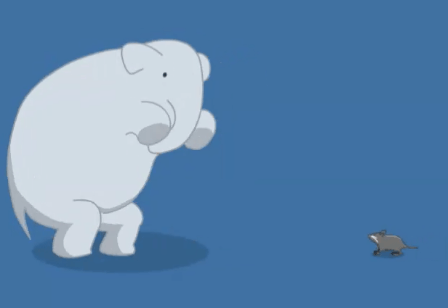
Which objects have a STRONG force of gravity?
a)
Objects with GREATER mass, like elephants
b)
Objects with LESS mass, like mice
48.
As distance between two objects increase the pull of gravity 
a)
Increases
b)
Decreases
c)
Stays the same
49.
Two factors effecting the magnitude of the force of gravity between 2 objects are...
a)
mass and distance 
b)
mass and matter
c)
distance and weight 
d)
weight and mass
50.
Why is the earth's gravity stronger than the moon's gravity? 
a)
The earth is more massive than the moon
b)
The moon is far away from earth
c)
The moon has no mass
d)
The earth has a larger volume than the moon 
51.
What feature occurs at Y?
a)
mid-ocean ridge
b)
deep ocean trench
c)
hot spot
d)
rift
52.
What is happening at Z?
a)
mid-ocean ridge
b)
subduction zone
c)
transform boundary
d)
sea floor spreading
53.
Which type of plate boundaries occur at X?
a)
Divergent
b)
convergent
c)
transform
d)
subducting
54.

Which type of plate boundary would cause mountains to form?

a)

Transform

b)

Convergent

c)

Divergent

d)

Reform

55.
subduction zones in the ocean can create which features?
a)
islands
b)
volcanoes
c)
earthquakes
d)
all of the above
56.
During the phases of the Moon, the Moon appears to change shape.  This change in appearance is due to the Moon...
a)
physically changing size and shape.
b)
moving closer and then farther away from Earth.
c)
reflecting a different amount of light due to alignment with Earth and the Sun.
d)
having craters on its surface.
57.

Our side of the moon being more or less bright is due to

a)

The moon revolving around the Earth

b)

The Earth revolving around the moon

c)

The moon revolving around the Sun

d)

The Earth revolving around the Sun

58.

The ice of glaciers directly caused what?

a)

The river valleys

b)

The lakes

c)

Paul Bunyan

d)

The forests

59.

What force created the Minnesota and Red River Valleys

a)

The ice of glaciers scraping them out.

b)

The weight of glaciers compressing the land.

c)

Melt water from the glaciers weathered and eroded the valleys.

d)

Paul Bunyan

60.

What force is responsible for causing water to fall from the sky?

a)

The sun

b)

Wind

c)

Condensation

d)

Gravity