
 Worksheets
Cells
Total questions: 77
Worksheet time: 55mins
Name
Class
Date
1.
Which structures are found in every living cell?
a)
cell membrane and cytoplasm
b)
chloroplasts and mitochondria
c)
a cell wall and nucleus
d)
chloroplasts and cell wall
2.
Which cell structure is found in plant and animals cells and controls what can come into or leave a cell?
a)
cell membrane
b)
cytoplasm
c)
nucleus
d)
vacuole
3.
All cells need energy to function. Which cell organelle is responsible for producing energy in the cell?
a)
chloroplasts
b)
mitochondria
c)
nucleus
d)
vacuoles
4.
What is the function of a cell wall?
a)
to protect and support the cell
b)
to perform different functions in each cell
c)
to prevent water from passing through it
d)
to prevent oxygen from entering the cell
5.
In what part of the plant cell does the process of photosynthesis take place?
a)
nucleus
b)
mitochondria
c)
chloroplasts
d)
vacuoles
6.
Which of the following is not part of the cell theory?
a)
cells must contain DNA
b)
all living things are made from cells
c)
cells can only come from other cells
d)
cells are the basic unit of life
7.
The basic unit of structure and function in a living things.
a)
chloroplast
b)
nucleus
c)
cell
d)
cell membrane
8.
In a plant cell, a stiff wall surrounds the membrane, giving the cell a rigid, boxlike shape.
a)
cell membrane
b)
cell
c)
ribosome
d)
cell wall
9.
These organelles capture energy from sunlight and use it to produce food for the cell.
a)
cell membrane
b)
chloroplasts
c)
cell wall
d)
ribosomes
10.
A gel-like fluid in which many different organelles are found.
a)
cell membrane
b)
nucleus
c)
organelle
d)
cytoplasm
11.
How many parents do you have in asexual reproduction?
a)
1
b)
3
c)
2
d)
4
12.
How many parents do you have in sexual reproduction
a)
1
b)
2
c)
3
d)
4
13.
In sexual reproduction offspring look___________from their parent.
a)
Identical
b)
different
c)
the opposite
d)
happy
14.
In asexual reproduction the offspring look ________ as their parent.
a)
identical
b)
different
c)
the opposite
d)
as happy
15.

Bacteria like salmonella reproduce________
a)
sexually
b)
asexully
16.

Pea plants are genetically diverse. They reproduce _______.
a)
sexually
b)
asexually
17.
Inherited traits are things that you ________________.
a)
choose
b)
learn and practice
c)
are born with
d)
eat
18.
Lacy and her grandmother are both double jointed. Lacy's double jointed trait is _________.
a)
inherited
b)
acquired
19.
What is a disadvantage of sexual reproduction?
a)
It produces fewer offspring
b)
it produces more offspring
c)
It generate genetically diverse offspring
d)
It generates identical offspring
20.
What is an advantage of asexual reproduction?
a)
It produces more offspring
b)
It produces fewer offspring
c)
It requires a mate
d)
It produces identical offspring
21.
What is a disadvantage to asexual reproduction?
a)
It produces more offspring
b)
It produces fewer offspring
c)
They are all the same and do not have diversity
d)
They are all different and have diversity
22.
Which of these molecules stores the most energy?
a)
NADH
b)
NAD+
c)
ADP
d)
ATP
23.
What organelle does cellular respiration take place in?
a)
Ribosome
b)
Mitochondria
c)
Nucleus
d)
Golgi
24.
Another name for sugar is
a)
ATP
b)
Cellular
c)
Glucose
d)
Fall Out Boy
25.
Which of these is a reactant of cellular respiration?
a)
glucose
b)
oxygen
c)
Both glucose and oxygen.
d)
None of these.
26.
In cell respiration ATP is what type of energy?
a)
radiant
b)
chemical
c)
mechanical
d)
nuclear
27.
What is the gas we breath out that plants use for photosynthesis?
a)
sulfur
b)
carbon dioxide
c)
oxygen
d)
hydrogen
28.
What gas is needed for respiration?
a)
Carbon dioxide
b)
nitrogen
c)
Oxygen
d)
hydrogen
29.
Fermentation is cellular respiration without which molecule?
a)
CO2
b)
O2
c)
C6H12O6
30.
Where is lactic acid produced?
a)
in muscles
b)
in bread
c)
in plants
d)
in cheese
31.

Bread is a product of fermentation that contains bubbles. These bubbles come from:
a)
Carbon Dioxide
b)
Lactic Acid
c)
Oxygen
d)
Water
32.
Fermentation products are:
a)
Oxygen and ATP
b)
ATP and CO2
c)
Oxygen and Yeast
d)
ATP and lactic acid
33.
What unit are all living things made of?
a)
Cells
b)
Skeletons
c)
Hearts
d)
Carapaces
34.
Many cells of the same type form a _____.
a)
Organism
b)
Chloroplast
c)
Tissue
d)
Organ system
35.
Two or more kinds of tissues together form an _____.
a)
Organ
b)
Chloroplast
c)
Cell
d)
Tissue
36.
Organ systems working together form a living _____.
a)
Chloroplast
b)
Tissue
c)
Cell
d)
Organism
37.
Bone cells (osteocytes) make up _____ tissue.
a)
Skeletal
b)
Nervous
c)
Heart
d)
Skin
38.
The lungs expel or get rid of this byproduct.
a)
Nutrients
b)
Blood
c)
Carbon dioxide
d)
Oxygen
39.
The heart is part of the _____ system.
a)
Skeletal
b)
Muscular
c)
Integumentary
d)
Circulatory
40.
The stomach is part of the _____ system.
a)
Skeletal
b)
Respitory
c)
Digestive
d)
Integumentary
41.
The brain is part of the _____ system.
a)
Skeletal
b)
Nervous
c)
Digestive
d)
Respitory
42.
This organelle takes food and turns it into ENERGY for plant and animal cells.
a)
Chloroplast
b)
Mitochondria
c)
Lysosome
d)
Ribosome
43.
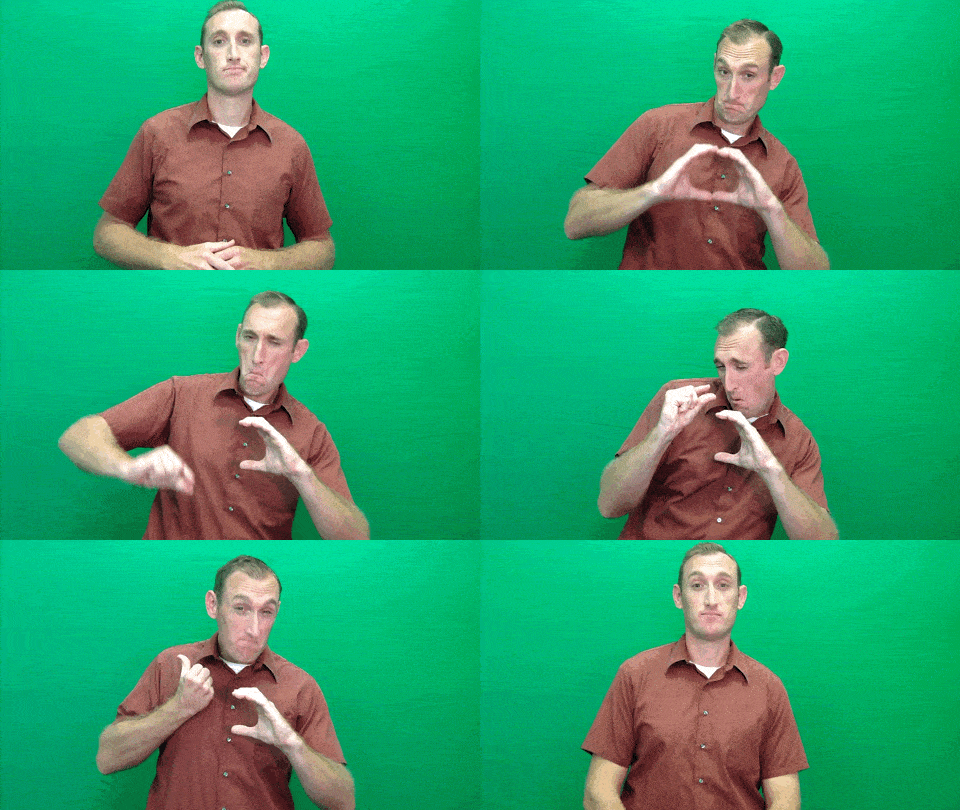
The ___________ is the basic unit of life
a)
organ
b)
cell
c)
atom
d)
tissue
44.
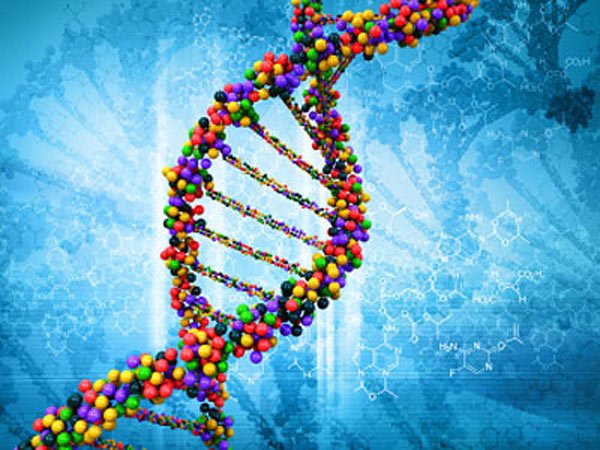
What is the name of the genetic material that is inside the nucleus?
a)
ER
b)
ATP
c)
YOLO
d)
DNA
45.
What is found in plant cells and lets gases and water vapor in/out?
a)
Nucleus
b)
Mitochondria
c)
Chloroplast
d)
Vacuole
46.

All living things start off as
a)
Two Cells
b)
One cell
c)
Nothing
d)
Three cells
47.
What is diffusion?
a)
when molecules move
b)
when molecules move from a high concentration to a low.
c)
no movement
d)
molecules move everywhere
48.
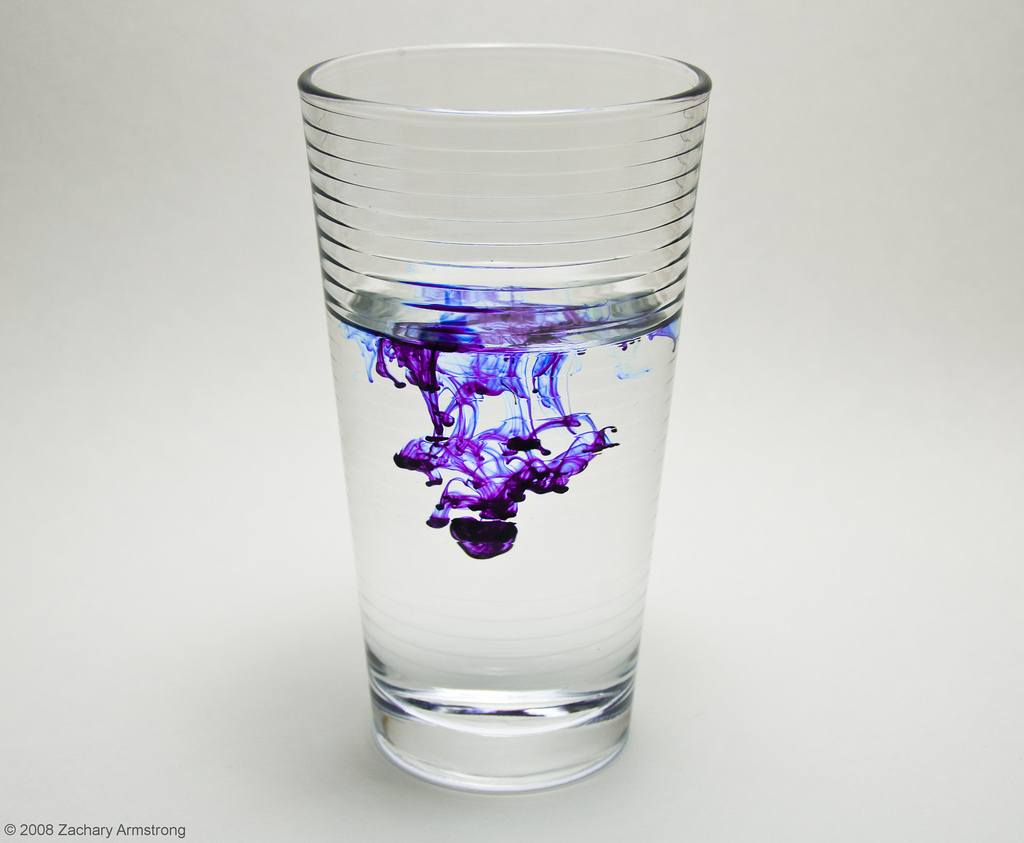
Where is there a low concentration of dye?
a)
at the bottom of cup
b)
in the color
c)
at the top of cup
d)
no concenteraion gradient
49.
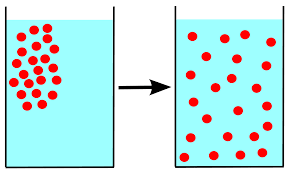
The picture below is an example of _________________.
a)
osmosis
b)
isotonic
c)
diffusion
d)
active transport
50.
Osmosis is the movement of _____ across a membrane.
a)
food
b)
energy
c)
oxygen
d)
water
51.
During osmosis
a)
water moves from high to low concentration
b)
large or oddly shaped molecules move across a cell membrane
c)
water moves when energy is used
d)
proteins are built
52.
Permeable means
a)
things can pass through
b)
the concentration levels are different
c)
it is permanent
d)
things are stuck
53.
The diffusion of water through a semi-permeable membrane is called?
a)
Osmosis
b)
Cell wall
c)
Diffusion
d)
Respiration
54.

Where is there a high concentration of water?
a)
in the flower
b)
cannot be determined by picture.
c)
in the vase
d)
in the leaves
55.

Where is there a low concentration of perfume?
a)
in the bottle
b)
on the hand
c)
in the room
d)
in the top
56.

What is the definition of Selective Permeability?
a)
The movement of materials across the cell membrane that requires NO ENERGY from the cell.
b)
The movement of materials through (or across) the cell membrane
c)
The ability of the cell membrane to allow some things to pass through while preventing other things from passing through.
d)
The movement of molecules from an area of high concentration to a area of low concentration
57.
What a cell needs to transport particles by active transport?
a)
Sun
b)
Wind
c)
Energy
d)
Channels
58.
When both inside and outside of a cell have the same amount of water it is said that the cell has reached a state of
a)
Osmosis
b)
Diffusion
c)
Equilibrium
59.
A person would never have pure water put into their veins in a hospital because their cells would...
a)
Shrink/Dehydrate
b)
Expand
60.
A person should never drink salty water because their cells would
a)
shrink
b)
expand
61.
If there is 5 percent water inside a cell and 5 percent water outside a cell
a)
more water will move inside the cell
b)
more water will move outside the cell
c)
There will be no movement of water cells
62.
Passive transport requires no
a)
concentration gradients
b)
osmosis
c)
motion
d)
energy
63.
The movement of molecules against a concentration gradient
a)
simple diffusion
b)
facilitated diffusion
c)
active transport
d)
osmosis
64.

The picture is an example of...
a)
active tranport
b)
passive transport
c)
diffusion
d)
osmosis
65.
Sometimes, energy is required for ____ molecules to go in or out of the cell because they cannot fit into the membrane.
a)
big
b)
small
c)
crunchy
d)
water
66.
_________ is to make more of their own kind.
a)
reproduce
b)
organ
c)
life process
d)
organism
67.
A group of organs that work together to carry out life processes is?
a)
organ
b)
tissue
c)
organ system
d)
cells
68.
Cells make up tissue, tissues make up _____, ______ make up organ systems.
a)
organs
b)
tissue
c)
cell
d)
stem
69.
Which of the following is an example of an organ
a)
stomach
b)
heart
c)
plant leaf
d)
all of the above
70.

What cell type is this?
a)
plant
b)
animal
c)
bacteria
d)
other
71.

What cell type is this?
a)
plant
b)
animal
c)
bacteria
d)
other
72.

What cell type is this?
a)
plant
b)
animal
c)
bacteria
d)
other
73.
Heredity is the passing of traits from _____________________ to _____________________
a)
predators to prey
b)
water to rain
c)
parents to offspring
d)
fungi to protists
74.
___________________________ is the study of how traits are passed on, or inherited.
a)
dominant traits
b)
ratio
c)
phenotype
d)
genetics
75.
Why did Mendel choose to study pea plants in order to learn how traits are passed from parent to offspring?
a)
Pea plants grow quickly
b)
Pea plants are ultraviolet
c)
Pea plants are rare and expensive
d)
Pea plants are take years to grow
76.
One trait that is ALWAYS present and causes the other traits to disappear is a ________________________
a)
recessive trait
b)
aggressive trait
c)
absent trait
d)
dominant trait
77.

A ________________________ is used to predict the possible genotype from certain parents
a)
Mendel Grid
b)
Genetic Tic Tac Toe
c)
Punnett Square
d)
Pedigree Plot
100 %

