
 Worksheets
Final exam 2018
Total questions: 61
Worksheet time: 48mins
Name
Class
Date
1.
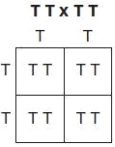
What ratio of the offspring from the cross shown will be homozygous recessive for the trait of tallness?
a)
0 in 4
b)
1 in 4
c)
2 in 4
d)
4 in 4
2.
Aa, DD, bB, yy are all examples of
a)
genotypes
b)
phenotypes
3.

T - tall and t = short
In the punnett square below, what belongs in the missing square
In the punnett square below, what belongs in the missing square
a)
tt
b)
Tt
c)
Bb
d)
TT
4.

B = brown fur b = white fur
In the punnett square, what is the probability for white fur?
In the punnett square, what is the probability for white fur?
a)
0%
b)
25%
c)
50%
d)
75%
5.
Which of the following is the correct equation for PHOTOSYNTHESIS?
a)
CO2 + light + H2O --> O2 + Sugar
b)
CO2 + sugar + H2O --> O2 + light
c)
O2 + light + H2O --> CO2 + Sugar
d)
CO2 + O2 + H2O --> Light+ Sugar
6.
Temperature, light, air, water, and soil are all _____ parts of the environment
a)
alive
b)
biotic
c)
abiotic
d)
living
7.
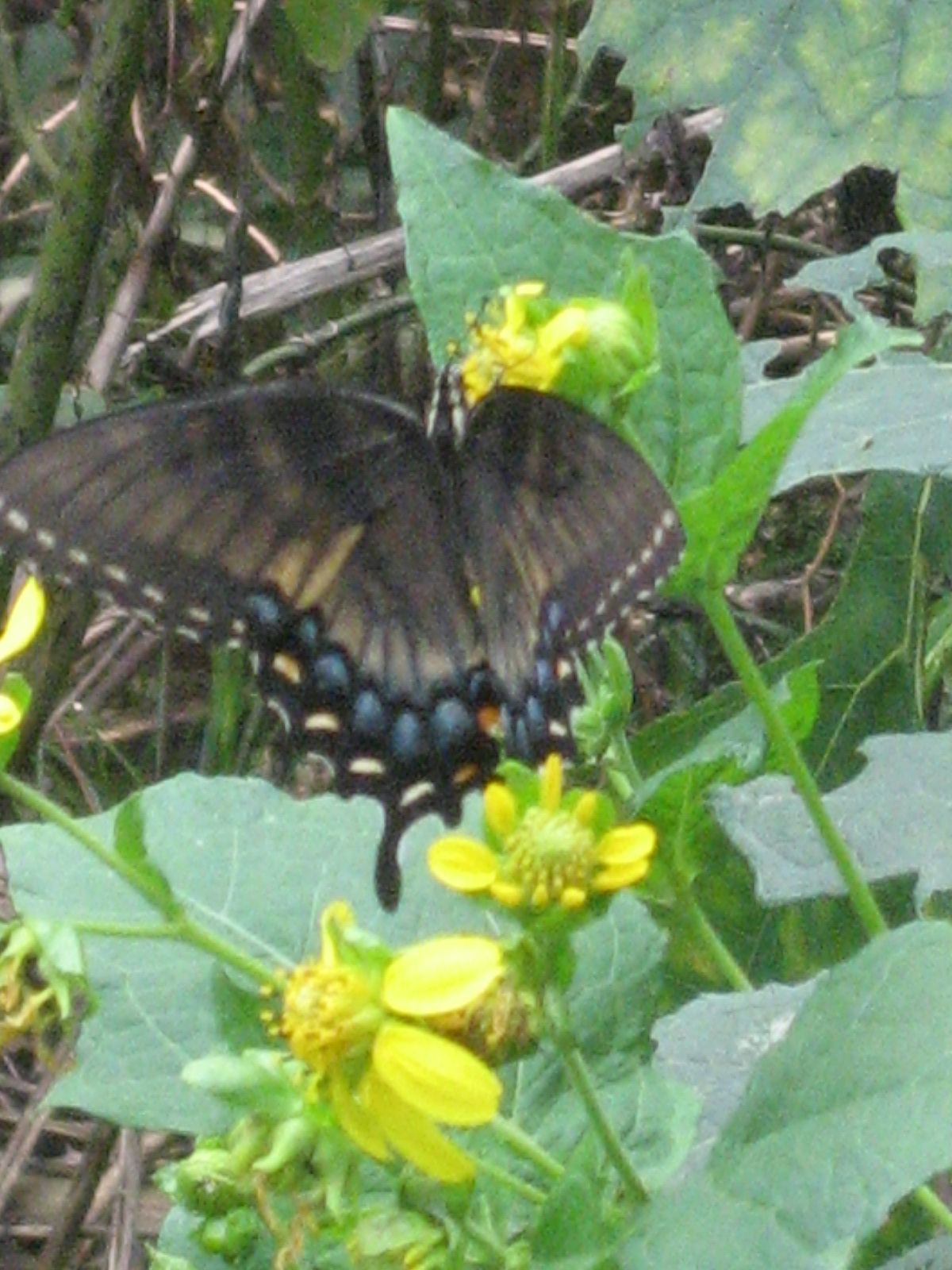
The 8 levels of classification, most broad to most specific.
a)
Domain, Genus, Family, Order, Class, Phylum, Kingdom, Species
b)
Domain, Species, Kingdom, Genus, Phylum, Family, Class, Order
c)
Domain, Kingdom, Phylum, Class, Order, Family, Genus, Species
d)
Order, Kingdom, Species, Domain, Phylum, Family, Class, Genus
8.
In the scientific name, Agkistrodon horribilis, Agkistrodon is the
a)
Kingdom name
b)
Order name
c)
Genus name
d)
species name
9.
This is the cell's "control center."
a)
Endoplasmic Reticulum
b)
Golgi Body
c)
Nucleus
d)
Cell Wall
10.
This is the "powerhouse" of the cell that converts food to energy.
a)
Mitocondria
b)
Endoplasmic Reticulum
c)
Nucleus
d)
Lysosome
11.
In plant cells, this structure captures energy from the sun to produce food.
a)
Ribosomes
b)
Cell Wall
c)
Vacuoles
d)
Chloroplasts
12.
GMO stands for
a)
genetically made organism
b)
genetically modified organism
c)
gene manipulated organism
d)
Genetic mutant organism
13.
An organism that produces its own food supply from inorganic compounds is called a(an)
a)
heterotroph
b)
consumer
c)
detritivore
d)
autotroph
14.

A living organism that puts materials from dead plants and animals back to the soil is called a ____________?
a)
carnivore
b)
decomposer
c)
herbivore
d)
omnivore
15.

I eat fruit, nuts and insects...I am also a
a)
Carnivore
b)
Apeivore
c)
Herbivore
d)
Omnivore
16.
What effect does an increase in temperature have on the decaying process of apples?
a)
independent
b)
dependent
17.
Does the type of shoe worn during a 30 meter dash affect the speed of the runner?
a)
independent
b)
dependent
18.
Does changing the wing shape to make it more narrow affect the distance a paper airplane will fly?
a)
independent
b)
dependent
19.

Fruit fly body cells have 8 chromosomes. After mitosis, you would expect a resulting fruit fly daughter cell to have ...
a)
16 chromosomes.
b)
46 chromosomes.
c)
8 chromosomes.
d)
4 chromosomes.
20.
What process does a multi-cellular organism use to replace its damaged body cells?
a)
mitosis
b)
meiosis
c)
replication
d)
transcription
21.
The process by which the nuclear material is divided equally between two new cells
a)
mitosis
b)
cancer
c)
spindle
d)
centromere
22.
The organism that does the killing in a predation interaction
a)
Predator
b)
Prey
c)
Competition
d)
Adaptation
23.
An organism that is killed and eaten by another organism
a)
Predator
b)
Prey
c)
Competition
d)
Adaptation
24.

Which graph shows a situation in which the number of predatorss in a population depends on the number of prey?
a)
Graph F
b)
Graph G
c)
Graph H
d)
Graph J
25.
Which of these contains steps in the right order?
a)
Ask a question, state your hypothesis, research, experiment, analyze, make a conclusion
b)
State your hypothesis, ask a question, research, experiment, analyze, make a conclusion
c)
Ask a question, research, state your hypothesis, experiment, analyze, make a conclusion
d)
State your hypothesis, ask a question, research, make a conclusion, experiment, analyze
26.
Which organelle belongs in plant cells only?
a)
Cell Membrane
b)
Mitochondrion
c)
Chloroplast
d)
Nucleus
27.
Which organelle is found in plant cells only?
a)
Cell Membrane
b)
Cell Wall
c)
Many Small Vacuoles
d)
Cytoplasm
28.
A species is a group of similar organisms that
a)
can mate with each other and produce fertile offspring.
b)
can live together on an island.
c)
can migrate to an island from the mainland.
d)
all have exactly the same traits.
29.
What did Darwin observe about finches in the Galápagos Islands?
a)
Their feathers were adapted to match their environment.
b)
Their beaks were adaptations related to the foods the finches ate.
c)
Their beaks were adaptations related to the foods the finches ate.
d)
They had identical genotypes in all locations.
30.

Students filled a graduated cylinder with the amount of water shown. How much more water needs to be added to the cylinder to measure 25 mL?
a)
2 mL
b)
4 mL
c)
6 mL
d)
9 mL
31.

What is the mass of this mineral?
a)
5 grams
b)
10 grams
c)
15 grams
d)
20 grams
32.
What is diffusion?
a)
when molecules move
b)
when molecules move from a high concentration to a low.
c)
no movement
d)
molecules move everywhere
33.
Which is NOT a form of active transport?
a)
Endocytosis
b)
Osmosis
c)
Exocytosis
d)
Pinocytosis
34.

What is this image showing?
a)
DNA
b)
Chromosome
c)
Alleles
d)
Phenotype
35.
Why do offspring look like their parents?
a)
They have the same DNA
b)
They have the same TPA
c)
They have the same DMA
d)
They have the same phenotype
36.
Which of the following is a way to represent genes?
a)
DNA
b)
Chromosome
c)
Alleles
d)
Genotype
37.
______ are responsible for the inherited characteristics that distinguish one individual from another.
a)
Genes
b)
Jean
c)
Billie Jean
d)
Chromosome
38.
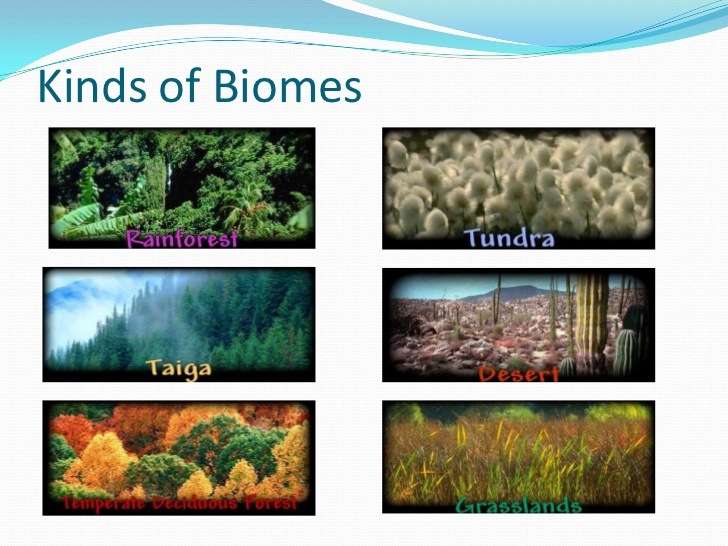
What is the main factor that separates the biomes?
a)
Land
b)
Water
c)
Climate
d)
Longitude
39.
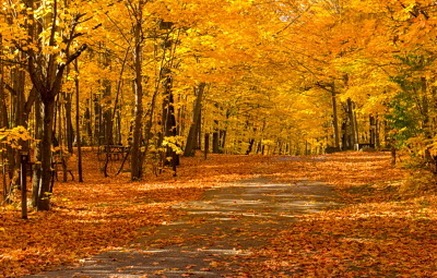
Which biome has deciduous trees (which lose their leaves)?
a)
Temperate Forest
b)
Rainforest
c)
Grasslands
d)
Taiga
40.
What is the ultimate ORIGINAL source of energy for living things
a)
Sugar
b)
Sun
c)
Moon
d)
Carbon Dioxide
41.
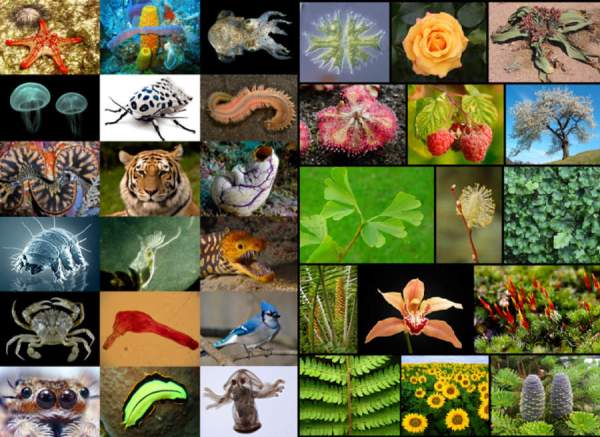
Which biome has the most variety of plants and animals?
a)
Temperate Forest
b)
Rainforest
c)
Tundra
d)
Grasslands
42.
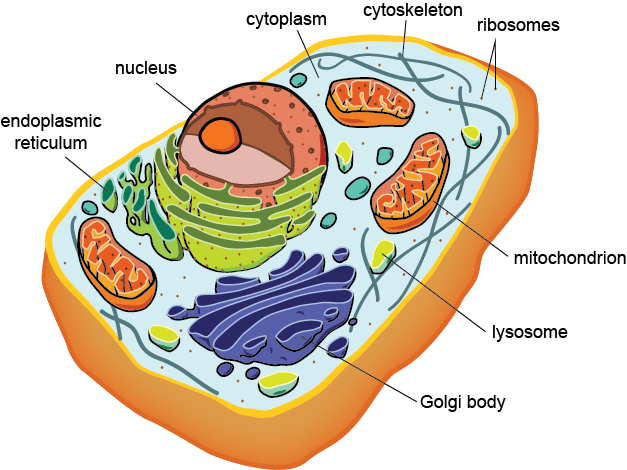
Which of the following statements is not part of the cell theory?
a)
Cells are the basic unit of structure and function in all living things.
b)
All cells are produced from other cells.
c)
Only animal cells are composed of cells.
d)
All living things are composed of cells.
43.
What is the purpose of cell respiration?
a)
produce glucose
b)
make oxygen
c)
remove carbon dioxide
d)
produce usable energy - ATP
44.

In which eukaryotic organelles does photosynthesis occur?
a)
mitochondria
b)
stomata
c)
xylem
d)
chloroplast
45.
What are the products of photosynthesis?
a)
Carbon dioxide and water
b)
Carbon dioxide and oxygen
c)
Glucose and oxygen
d)
Glucose and water
46.

Autotroph or heterotroph?
a)
Autotroph
b)
Heterotroph
47.
What reactants are there in cellular respiration?
a)
Water and Glucose
b)
Oxygen and Glucose
c)
Carbon Dioxide and Water
d)
Twenty One Pilots
48.
What are the products of cellular respiration?
a)
Energy (ATP), Water, and Carbon DIoxide.
b)
Water and Oxygen
c)
Oxygen and Carbon Dioxide
d)
Water and Energy (ATP)
49.

In mitosis, the two resulting cells are
a)
different from the starting cell and identical to each other.
b)
different from the starting cell and different from each other.
c)
identical to the starting cell and different from each other.
d)
identical to the starting cell and identical to each other.
50.
Cells of organism must replicate for ?
a)
growth
b)
repair of damaged cells
c)
replacement of dying cells.
d)
All of the above
51.
The cell spends most of it's life in ________________.
a)
mitosis
b)
cytokinesis
c)
Interphase
d)
None of the above
52.

Number 3
a)
Ocular Lens
b)
Objective Lens
c)
Diaphragm
d)
Base
53.

Number 8
a)
Base
b)
Stage
c)
Tube
d)
Arm
54.
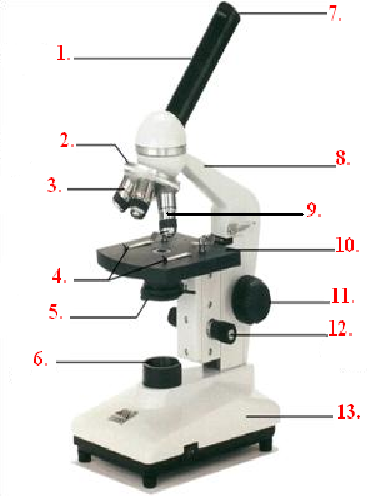
Number 10
a)
Stage
b)
Stage Clips
c)
Diaphragm
d)
Base
55.
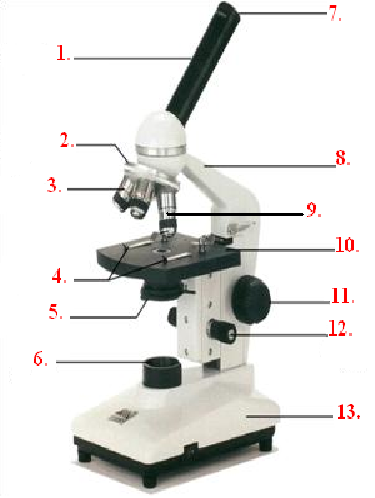
Number 12
a)
Course Adjustment
b)
Fine Adjustment
c)
Small Adjuster
d)
Large Adjuster
56.
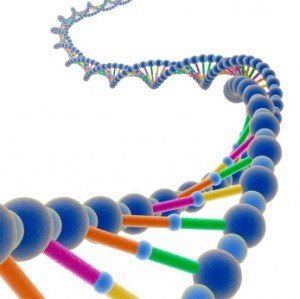
Which of the following best describes a DNA molecule?
a)
double helix
b)
contains ribose
c)
made of amino acids
d)
contains Uracil
57.
Which sequence of DNA bases would pair with this partial strand
ATG TGA CAG
ATG TGA CAG
a)
ATG TGA CAG
b)
TAC ACT GTC
c)
GTA AGT GAC
d)
CAT TCA CTG
58.

In a molecule of double-stranded DNA, the amount of Adenine present is always equal to the amount of
a)
cytosine
b)
guanine
c)
thymine
d)
uracil
59.

Using this image, what organelle is C?
a)
Cell Wall
b)
Mitochondria
c)
Large Cell Vacuole
d)
Chloroplast
60.

I store water in both plant and animal cells. What am I?
a)
cytoplasm
b)
ribosomes
c)
vacuole
d)
lysosomes
61.
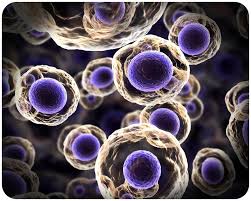
The two kinds of cells are Prokaryotes and Eukaryotes. How are they different?
a)
Prokaryotes have a nucleus.
b)
Eukaryotes have a nucleus.
c)
Prokaryotes are plant cells.
d)
There is no difference.
100 %

