Wayground logo

Free Printable Worksheets

Font size

S
M
L
XL
Worksheets

Science 7 Unit 2 Food and Fibre Review

Total questions: 89

Worksheet time: 2hrs 2mins

Name
Class
Date
1.

The yield of crops that are grown outdoors is highly dependent on

a)

environmental conditions only

b)

environmental conditions and soil types only

c)

climate and soil types only

d)

environmental conditions, soil types and climate

2.

The use of greenhouse is

a)

to control climate

b)

to control environmental conditions

c)

to control soil types

d)

all of the above

3.

When the Sun’s energy is trapped by greenhouse gases, how does this affect the temperature of the Earth?

a)

temperatures will decrease

b)

temperatures will increase

c)

temperatures will stay the same

d)

temperatures will fluctuate

4.
The key component to any greenhouse is....
a)
that it is in the mountains.
b)
that it is made of glass or clear material.
c)
that it is made of bricks.
d)
that it has plenty of water.
5.
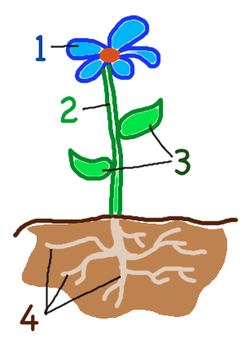
What part of the plant is #4?
a)
leaf
b)
flower
c)
stem
d)
root
6.
Plants need the following:
a)
air, water, space, sunlight
b)
air, water, oxygen, space
7.
The roots absorb what for the plant? 
a)
Water and Nutrients
b)
Soil and Sun
c)
Warmth and Water
d)
Sun and Photosynthesis
8.
Why is photosynthesis important for plants?
a)
It collects sunlight which is used to make food for plants
b)
It gets rid of plant waste products
c)
It changes plant sugar into stronger chemicals
d)
It helps attract insects to flowers
9.
What part of a plant produces a new plant?
a)
root
b)
stem
c)
leaf
d)
seed
10.
What part of a plant collects sunlight?
a)
seed
b)
root
c)
leaf
d)
stem
11.
Why do trees grow so tall?
a)
They are naturally big plants.
b)
They are competing for sunlight.
c)
Their roots can soak up lots of water to make them grow tall.
12.
Root hairs help a plant
a)
transport food to the root
b)
absorb water and nutrients
c)
protect the root
d)
store food
13.
_________________ are scientists who study plants.
a)
botanists
b)
ecologists
c)
zoologists
d)
chemists
14.
The part of the plant that holds the plant in place and absorbs water and minerals from the soil.
a)
stem
b)
roots
c)
leaves
15.
who uses photosynthesis 
a)
us
b)
no body
c)
i dont know 
d)
plants
16.
Small grains that contain a plant's male reproductive cells.
a)
stamen
b)
pollen
c)
anther
d)
stigma
17.
The stalks in a flower that produce the male reproductive cells
a)
pistil
b)
stamen
c)
filament
d)
stigma
18.
Small leaf-like structures forming an outer circle at the base of a flower.
a)
petals
b)
sepal
c)
anthers
d)
dicots
19.
The part of the flower on which the pollen grains land.
a)
pistil
b)
stamen
c)
style
d)
stigma
20.
The part of a flower that produces the male reproductive cells.
a)
anther
b)
style
c)
stigma
d)
filament
21.
Plants that produce their seeds in wood-like cones.
a)
gymnosperms
b)
legumes
c)
deciduous 
d)
conifers
22.
Brightly colored parts of flowers that attract insects.
a)
petals
b)
pistils
c)
stamen
d)
filaments
23.
The stalk connecting the ovaries and stigmas.
a)
filament
b)
pistil
c)
style
d)
anther
24.
They enclose the egg cells inside the ovaries.
a)
ovules
b)
anther
c)
seeds
d)
angiosperms
25.
The transfer of pollen, containing the sperm cells, to the female part of the flower. 
a)
seed disperal
b)
pollination 
c)
germination
d)
fertilization
26.
When a seed sprouts and begins the early growth of a young plant.
a)
germination
b)
pollination
c)
seed dispersal
d)
fertilization
27.
This occurs after a tube grows down from the pollen grain through the style to the ovary.
a)
pollination
b)
germination
c)
fertilization
d)
seed dispersal
28.
What does phloem carry up the stem
a)
Sugar
b)
Water
c)
Oxygen
d)
All of the above
29.
Transpiration is the loss of water through leaves by evaporation
a)
True
b)
False
30.
Stomatas are openings in the roots of a plant
a)
True
b)
False
31.
What are guard cells?
a)
Cells that regulate photosynthesis
b)
Cells that push nutrients and water up xylem
c)
Cells that turn sunlight into energy
d)
Cells that regulate water loss
32.
How is the age of a tree determined?
a)
The height
b)
The leaves
c)
The xylem rings
d)
The phloem inside the trunk
33.
What tissue transports water from the roots to the rest of the plant?
a)
the leaves
b)
phloem
c)
xylem
d)
cambium
34.
Nutrient absorption is a main function of roots
a)
True
b)
False
35.
Roots help to anchor the plant
a)
True
b)
False
36.
What are the two main types of roots?
a)
Creeping & Tuberous
b)
Taproot & Fibrous
c)
Fibrous & Tuberous
d)
Adventitious & Creeping
37.
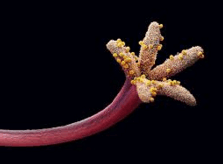
What type of root is this?
a)
Fibrous
b)
Taproot
c)
Adventitious
d)
Creeping
38.
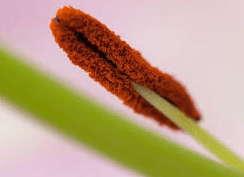
What type of root is this?
a)
Creeping
b)
Tuberous
c)
Taproot
d)
Adventitious
39.
Asexual reproduction in plants is known as vegetative propagation.
a)
true
b)
false
40.
An underground bud with fleshy, colourless leaves attached to a short flat stem.
a)
tuber
b)
bulb
c)
root
d)
gourd
41.
Potatoes are formed from underground stems that become swollen with stored starch.  These are known as:
a)
Vegetables
b)
Tubers
c)
Tasty when fried
d)
Bulbs
42.
Vegetative reproduction occurs when plants are in difficult situations.
a)
True
b)
False
43.
Plants produced vegetatively are clones. This means that they all have the same characteristics found in their parents. 
a)
Yes
b)
No
44.
6.  Runners, tubers, and plantlets are examples of what type of asexual reproduction.
a)
a.  binary
b)
b.  budding
c)
c.  spores
d)
d.  vegetative
45.
What is the growing of one single crop all the time called?
a)
agriculture
b)
monoculture
c)
hydrofracking
d)
geothermal
46.
Wood harvesting leads to __________ and habitat destruction.
a)
monoculture
b)
deforestation
c)
radioactivity
d)
pesticides
47.
What is photosynthesis?
a)
Synthesizing carbon dioxide, water, and ATP from glucose and oxygen.
b)
The process by which plants use sunlight to synthesize glucose and oxygen from carbon dioxide and water. 
c)
Synthesizing glucose from oxygen, sunlight and water.
d)
Synthesizing ATP from carbon dioxide, sunlight, and water. 
48.
Photosynthesis occurs in which organelle? 
a)
Mitochondria
b)
Chlorophyll
c)
Chloroplast
d)
Vacuoles
49.
What is meant by appropriate technology
a)
technology that is suitable to the social and economic conditions of the geographic area in which it is to be applied, is environmentally sound, and promotes self-sufficiency on the part of those using it.
b)
Technology that uses modern techniques in farming 
c)
technology that is imported and costly
50.
Use of crop rotation is solution to which problem 
a)
soil erosion
b)
monoculture
c)
both of the above 
51.
What is the organic matter in soil called?
a)
bedrock
b)
subsoil
c)
parent rock
d)
humus
52.
How does surface area affect the rate of weathering?
a)
The larger the surface area, the faster it weathers.
b)
The smaller the surface area, the faster it weathers.
c)
Surface area does not affect the rate of weathering.
d)
Surface area slows down weathering.
53.
What is a mixture of organic matter, weathered rock, air, and water?
a)
Soil
b)
Humus
c)
Crops
d)
Minerals
54.
Which of the following helps conserve soil?
a)
Replanting the same plant in the same field each year
b)
Deforestation
c)
Replanting trees after cutting them down for farming
d)
Removing grass and plants from fields
55.
Which soil horizon contains the most humus?
a)
Bedrock
b)
Parent rock
c)
Subsoil
d)
Topsoil
56.
True/False: Plants help prevent erosion because their roots hold on to the soil.
a)
True
b)
False
57.

what is the main reason for deforestation?

a)

cattle ranching

b)

using trees to make wood products

c)

space for growing crops

d)

fire wood

58.

how does deforestation impacts the environment

a)

animal's habitats are destroyed and they could become endangered.

b)

less trees so more oxygen in put into the atmosphere

c)

less trees means less oxygen in put into the atmosphere.

d)

animals gain more by forest being cut down

59.
The process by which land becomes increasingly dry to a point of being useless.
a)
desertification
b)
marginal land
c)
drought
d)
pastoral nomads
60.
This process may be caused by climate change, human activities, or both.
a)
marginal land
b)
pastoral nomads
c)
desertification
d)
drought
61.
Which of the following is a positive effect of fertilizer use
a)
Groundwater contamination
b)
Increased nutritional properties
c)
Overfertilization
d)
Runoff/ Erosion
62.
The three primary nutrients necessary for plant growth are:
a)
boron, calcium, and iron.
b)
chlorine, sulfur, and zinc.
c)
magnesium, manganese, and molybdenum.
d)
nitrogen, phosphorus, and potassium.
63.
GMO stands for 
a)
Genetically modified organism
b)
Genetically made organism
c)
Generically made organ
d)
Generically modified organism
64.
What is genetic engineering?
a)
Manipulation/addition of genes
b)
Naturally breeding two animals with desired traits
c)
Cross-pollinating two crops
d)
Harvesting stem cells
65.
When there are not enough plants to hold topsoil in place, water and  _______ carry the topsoil away, leaving the subsoil exposed
a)
sunlight
b)
birds
c)
magnetic fields
d)
wind
66.
 The growing of crops & raising of animals for livestock is called ___________.
a)
sustainable farming
b)
agriculture
c)
precipitation
d)
transpiration
67.
What is the difference between genetics modification and selective breeding? 
a)
Genetic modifications is only in animals
b)
Selective breeding is only in animals
c)
Selective breeding happens in a lab and not in nature
d)
Genetic modification happens in a lab and not in nature 
68.
What is salinization?
a)
The contamination of the land through dangerous toxins.
b)
The presence of salt on the land’s surface
c)
Flooding of the land through the rising water table.
d)
its like bioaccumulation
69.
Chemicals used to kill insects, weeds, and other pests
a)
Salinization
b)
Pesticide
c)
Biological pest control
d)
Genetic engineering
70.

Why do we worry about salinization?

a)

Salinization isn't a problem

b)

Salinization is needed for the growth of crops

c)

Salinization is the overharvesting of our crops.

d)

Salinization leaves salts in our soil making crops harder to grow.

71.
The amount of food that can be produced in a given area.
a)
Compost
b)
Genetic engineering
c)
Aquaculture
d)
Yield
72.
Use of living organisms to control pests
a)
Pesticide
b)
Biological pest control
c)
Salinization
d)
Genetic engineering
73.
Farming practices like plowing, irrigation, and overfarming/grazing lead to loss of topsoil through __________.
a)
contour plowing
b)
lying fallow
c)
leeching
d)
erosion
74.
What are shelterbelts?
a)
Rows of trees or other tall plants that are places along a field,  developed area, or road to decrease wind speeds and prevent soil disturbance
b)
Trees planted in urban areas like cities to prevent wind damage and increase air quality. 
c)
Planting tall trees or plants on top of buildings in cities to increase air quality and decrease the urban island effect. 
d)
Areas of trees planted between urban and suburban areas. 
75.

A mechanical device that places seeds in evenly spaced rows at specific depths is called a....

a)

Crop Rotation

b)

Seed Drill

c)

Livestock Breeding

76.

Switching crops to avoid depleting the soil of nutrients is called....

a)

Crop Rotation

b)

Seed Drill

c)

Livestock Breeding

77.

When people remove vegetation, they slowdown the erosion process.

a)

True

b)

False

78.
What is hydroponics?
a)
Water-based, soilless growing method
b)
Growing in soil
c)
The use of fish to act as a fertilizer for plants
d)
Growing plants that are suspended in the air
79.

The destructive insect or animal or other animal that attacks crops, food, or livestock.

a)

insect

b)

pest

c)

kids

d)

molt

80.

Insect pests are classified by they look.

a)

TRUE

b)

FALSE

81.
a)
Yellow Nutsedge
b)
White Clover
c)
Dandelion
d)
Oxalis
82.
What does disperse mean?
a)
sprout
b)
grow
c)
spread out
d)
blown by sind
83.
What is an example of wind dispersal?
a)
coconuts
b)
pecans
c)
dandelions
d)
grass seed
84.
What is an example of dispersal by animals?
a)
Eating the fruit and seeds in a watermelon.
b)
dandelion
c)
coconut
d)
water washing a seed away from the grass
85.
A ______ plant species is one that occurs in area without human action.
a)
Invasive
b)
Native
c)
Weed
d)
Non-Native
86.
Are all non-natives bad?
a)
Yes
b)
No
87.
Which of the following best describes soil erosion?
a)
A.  the breakdown of soil by chemicals
b)
A.  the improvement of soil quality by fertilizers
c)
A.  the breakdown of soil by drought
d)
A.  the movement of soil by wind or water
88.
Which layer is the bottom of the soil profile?
a)
C - Parent Material
b)
D - Separated rock
c)
C - Melted Rock
d)
A - Topsoil
89.
When taken to a new habitat, non-native plants often threaten native plants of the new habitat.  Why do they do this?
a)
Non-native plants are able to mutate rapidly
b)
Non-native  plants cause native animals to relocate
c)
Non-native plants are able to be used for medicine
d)
Non-native plants compete with native plants for resources