
 Worksheets
Final Review All Topics
Total questions: 142
Worksheet time: 3hrs 38mins
Name
Class
Date
1.
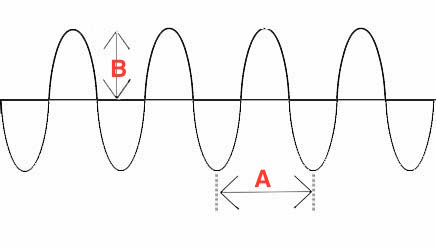
What property of this wave is represented by the letter "A"
a)
amplitude
b)
crest
c)
trough
d)
wavelength
2.
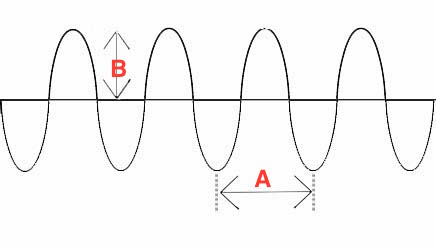
What property of the wave is represented by the letter "B"?
a)
amplitude
b)
crest
c)
trough
d)
wavelength
3.
The highest point on a wave is:
a)
the crest
b)
the trough
c)
the top
d)
the coast
4.
The lowest point on a wave is the:
a)
Amplitude
b)
Crest
c)
Trough
d)
Wavelength
5.
The number of wavelengths that pass a point each per second is:
a)
frequency
b)
period
c)
longitudinal
d)
transverse wave
6.
The type of waves that require medium to pass:
a)
Mechanical Waves
b)
Electromagnetic Waves
7.

Which vocabulary term is used to identify the distance between points C & G?
a)
Amplitude
b)
Crest
c)
Frequency
d)
Wavelength
8.
When the frequency of a wave increases, what happens to the wavelength?
a)
The wavelength is not directly affected by the frequency of a wave.
b)
The wavelength increases.
c)
The wavelength decreases.
d)
More specific information is needed to form a conclusion about the wavelength.
9.
A mechanical wave cannot travel through...
a)
a vacuum(empty space).
b)
water.
c)
air.
d)
glass.
10.
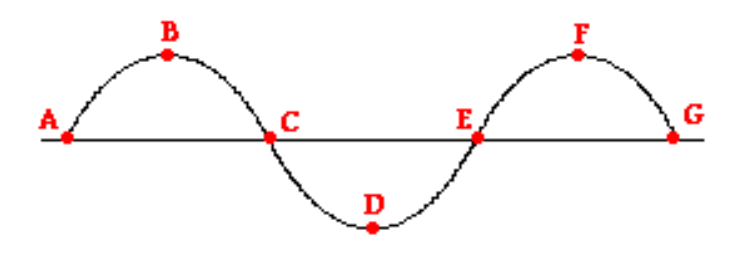
Which letter(s) represent the crest of the wave?
a)
A
b)
B & D
c)
B & F
d)
F
11.
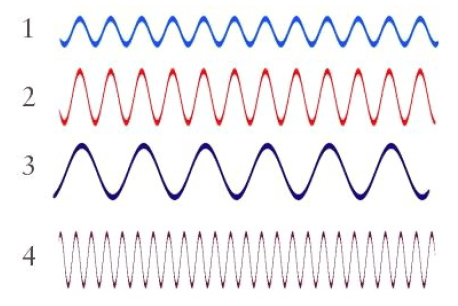
Which wave in the diagram has the greatest frequency?
a)
1
b)
2
c)
3
d)
4
12.
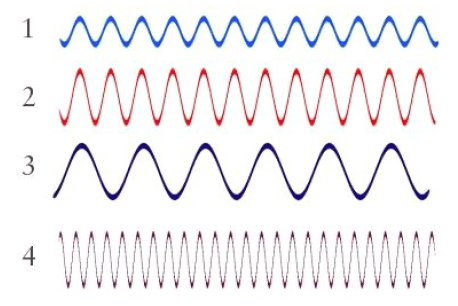
Which wave in the diagram has the greatest wavelength?
a)
1
b)
2
c)
3
d)
4
13.
which material does sound travel the fastest?
a)
solid
b)
liquid
c)
gases
14.
When a wave strikes and object and bounces off. (example echo)
a)
medium
b)
refraction
c)
reflection
d)
interference
15.
When a wave bends as it passes through at an angle from one medium to another.(example: pencil in a glass of water-)
a)
medium
b)
refraction
c)
reflection
d)
interference
16.
What kind of wave can travel through space?
a)
electromagnetic waves
b)
compressional waves
c)
transverse waves
d)
longitudinal waves
17.
A wave carries...?
a)
energy only
b)
matter only
c)
the matter carries the energy
d)
neither
18.

Which wave has a greater frequency?
a)
A
b)
B
19.

Sound is a form of?
a)
energy
b)
pitch
c)
volume
d)
matter
20.
The units for frequency are measured in _____________.
a)
hertz
b)
seconds
c)
m/s
d)
m
21.

What part is represented by the blue lines?
a)
Crest
b)
Resting Point
c)
Wavelength
d)
Amplitude
22.

What is represented by the blue lines?
a)
Trough
b)
Crest
c)
Wavelength
d)
Amplitude
23.

Which wave has a higher frequency?
a)
A
b)
B
24.

Which wave has a longer wavelength?
a)
A
b)
B
25.

What type of wave is this?
a)
Transverse
b)
Longitudinal
26.
What type of wave does an earthquake travel in?
a)
Seismic Waves
b)
Ocean Waves
c)
Big Waves
d)
Slow Waves
27.

Which type of light has the smallest frequency of this group?
a)
red
b)
yellow
c)
green
d)
blue
28.

_____________ wave particles move left to right.
a)
Transverse
b)
Electromagnetic
c)
Longitudinal
d)
Ocean
29.

What kind of waves can travel through space?
a)
electromagnetic waves
b)
compressional waves
c)
longitudinal waves
d)
sound waves
30.
The highest point of a wave is called the ?
a)
crest
b)
trough
c)
wavelength
d)
frequency
31.

You can't hear sounds in outer space because there is no
a)
matter
b)
light
c)
energy
d)
heat
32.

____________occurs when a wave bounces off a surface that it cannot pass through.
a)
Reflection
b)
Refraction
c)
Constructive Interference
d)
Destructive Interference
33.
What is a medium?
a)
something between a small and a large?
b)
the substance through which a wave can travel
c)
a pattern of vibration that simulates when a wave is standing still
d)
the distance from any point on a wave to an identical point on the next wave
34.

Refract or Reflect?
a)
Refract
b)
Reflect
35.
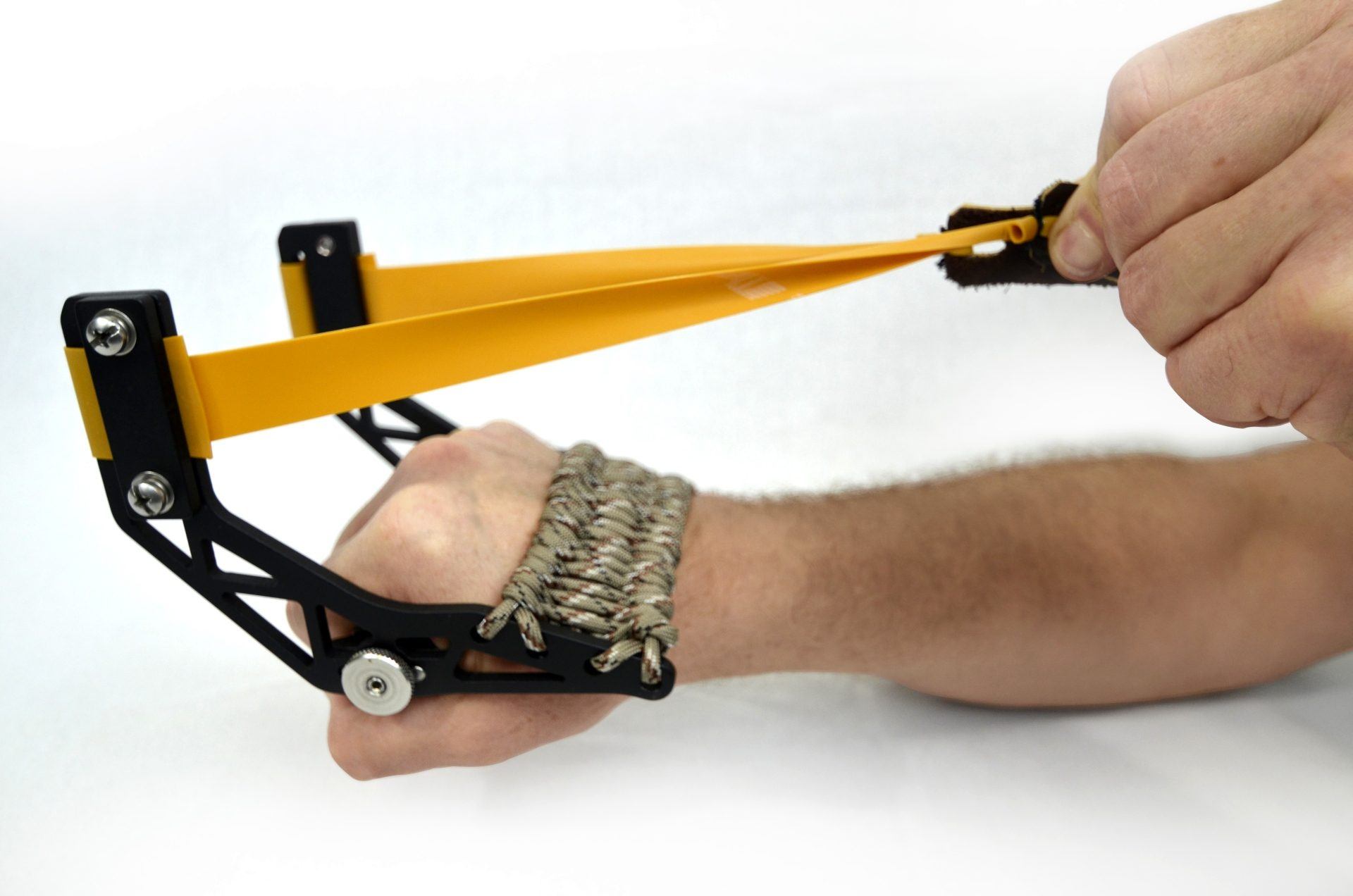
What type of energy is in this picture?
a)
Kinetic
b)
Potential
c)
Chemical
d)
Sound
36.

What kind of energy is represented in this picture?
a)
Thermal
b)
Potential
c)
Nuclear
d)
Mechanical
37.
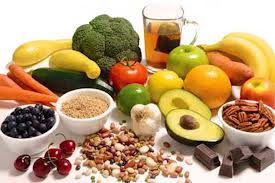
What kind of energy is represented in the picture?
a)
Thermal
b)
Chemical
c)
Sound
d)
Nuclear
38.
Energy due to motion is ____________ energy.
a)
Potential
b)
Energy
c)
Kinetic
d)
Friction
39.
__________ energy is the energy due to an object's position or condition
a)
Potential
b)
Kinetic
c)
None of the above
d)
All of the above
40.
The faster an object moves, the ________ kinetic energy it has.
a)
more
b)
less
c)
none of the above
d)
all of the above
41.
Gravitational potential energy depends on the ________ and ________ of the object.
a)
Height and mass
b)
Friction and movement
c)
Mass and Movement
d)
Height and Friction
42.

Which point has the most potential energy?
a)
D
b)
F
c)
B
d)
A
43.

Why can't the skater reach the same point where he was released when he goes up the other side of the ramp?
a)
because he is heavy
b)
because his mass is slowing him down
c)
because he gets tired
d)
because friction is slowing him down
44.

When a pendulum swings, at which point is kinetic energy highest?
a)
1
b)
2
c)
3
d)
4
45.

When a pendulum swings, at which point is potential energy at its greatest? (assume there is no friction)
a)
1 and 5
b)
2 and 4
c)
3
d)
4 and 5
46.

what type of energy is stored in a battery?
a)
electrical
b)
chemical
c)
thermal
d)
mechanical
47.

Hydroelectric power produces electricity using.....
a)
Wind
b)
Sunlight
c)
Moving water
d)
Dung
48.
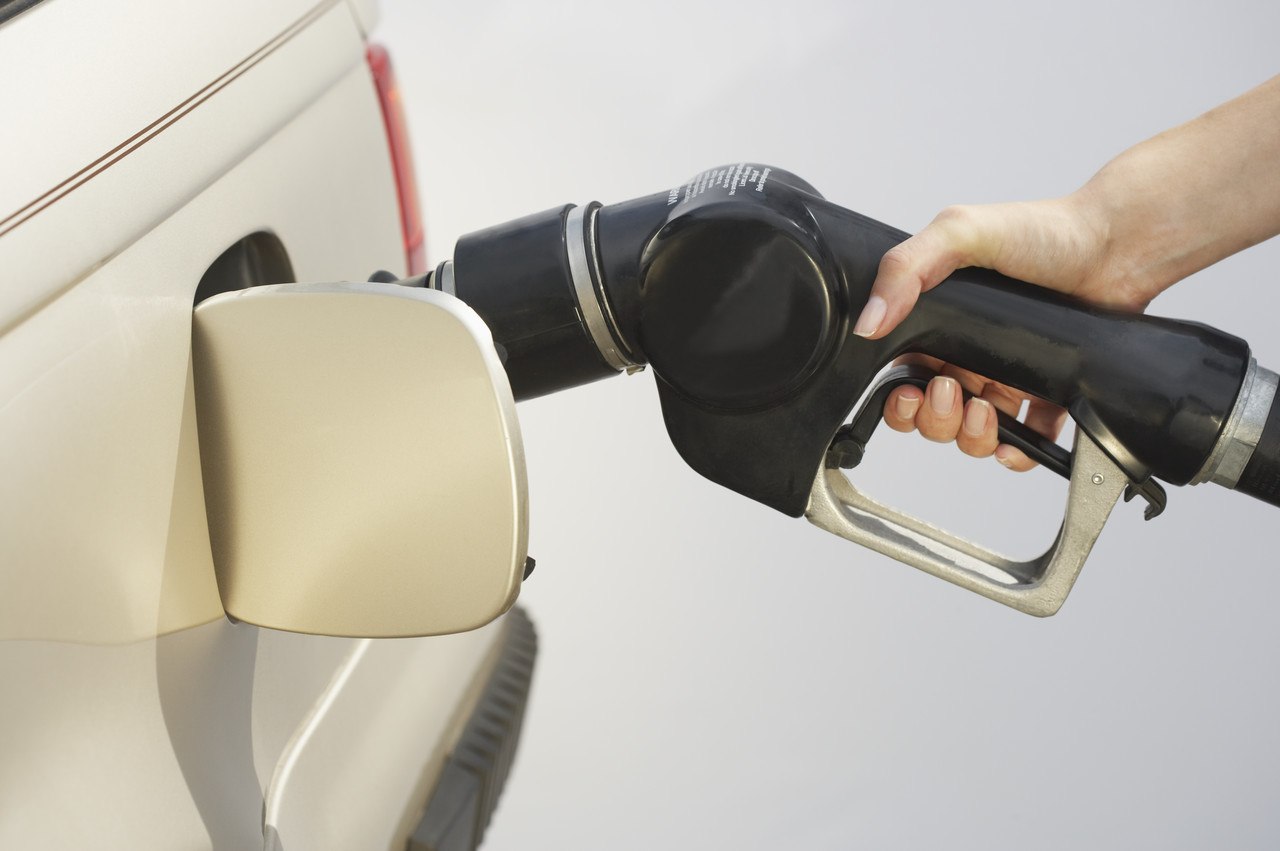
Which energy conversion is taking place when you put gasoline in a car?
a)
thermal -> electrical
b)
mechanical -> electrical
c)
chemical -> mechanical
d)
mechanical -> electromagnetic
49.
What is kinetic energy?
a)
The energy of motion
b)
A combination of two types of energy
c)
Stored energy
d)
How far something goes in a specific time
50.
What is potential energy?
a)
The energy of motion
b)
A combination of two types of energy
c)
Stored energy
d)
How far something goes in a specific time
51.

Stretching a rubber band is an example of...
a)
Potential energy
b)
Kinetic energy
c)
Mechanical energy
52.

Kinetic energy ___ as an object's speed increases.
a)
increases
b)
decreases
c)
stays the same
d)
is destroyed
53.

Food is a form of ____ energy.
a)
solar
b)
geothermal
c)
nuclear
d)
chemical
54.

When a baseball falls from its highest point, the energy is changing from_____.
a)
kinetic to potential
b)
potential to kinetic
c)
thermal to kinetic
d)
chemical to potential
55.

This Picture Represents Which Type of Alternative Energy?
a)
Wind
b)
Solar
c)
Biofuels
d)
Geothermal
56.
The breaking of ___________________ bonds in food releases energy for your body to use.
a)
thermal
b)
elastic
c)
chemical
d)
electrical
57.
Something that takes up space and has mass.
a)
volume
b)
matter
c)
mass
d)
density
58.

Orange juice is an example of a ....
a)
solid
b)
liquid
c)
gas
59.

Which state of matter has particles that are tightly packed?
a)
liquid
b)
gas
c)
solid
60.

Substance that fills its container but will not "spill" into more space unless more of the substance is added...
a)
solid
b)
liquid
c)
gas
61.

Substance with a DEFINITE volume, but NO definite shape...
a)
solid
b)
liquid
c)
gas
62.

Substance with a DEFINITE shape and DEFINITE volume...
a)
solid
b)
liquid
c)
gas
63.

Substance with NO definite volume or shape...
a)
solid
b)
liquid
c)
gas
64.

A pure substance containing only one kind of atom.
a)
element
b)
mixture
c)
compound
65.
What are compounds?
a)
Substances made of one or more types of elements.
b)
Substances made of one or more types of neutrons.
c)
Substances made of one or more types of nuclei.
d)
Substances made of one or more type of electron.
66.
What is a solid?
a)
it keeps its shape and size
b)
it takes the shape of the container that holds it
c)
it has no shape, and spreads to fill the space they are in
d)
it changes with a temperature change
67.
Which state of matter has particles that are tightly packed?
a)
liquid
b)
gas
c)
solid
68.

The difference between elements and compounds is that...
a)
elements can be separated by physical means and compounds cannot.
b)
elements cannot be separated by physical means and compounds can.
c)
elements contain only one kind of atom and compounds contain more than one kind of atom.
d)
elements contain more than one kind of atom and compounds contain only one kind of atom.
69.

An element is a
a)
pure substance.
b)
compound.
c)
mixture.
d)
molecule.
70.
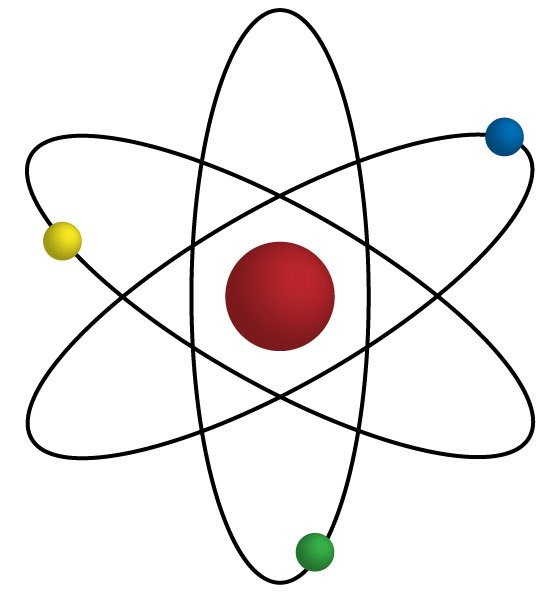
What are the 3 particles that make-up the atom?
a)
protons, neutrons, and isotopes
b)
neutrons, isotopes, and electrons
c)
positives, negatives, and electrons
d)
protons, neutrons, and electrons
71.

Anything that has mass and takes up space.
a)
energy
b)
matter
c)
molecules
d)
atoms
72.

This is formed when two or more atoms combined.
a)
atom
b)
compound
c)
molecule
d)
element
73.
What is matter?
a)
Volume of an object
b)
Anything that has mass and takes up space
c)
Mass of an object
d)
Space of an object
74.

Which statement about atoms is true?
a)
They are all the same
b)
All substances are made of just one kind
c)
You can see them with your eyes
d)
They are too small to be seen with an ordinary microscope
75.
A student was asked to help pass out cups of hot chocolate to two other students. A teacher poured the steaming liquid into cups. Once cup was made of stainless steel and the other was made of thick plastic. As the student walked across the room, he suddenly put one of the cups on a desk and exclaimed "Ouch". Which cup did he put down and why?
a)
He put down the plastic cup because the contents were spilling everywhere.
b)
He put down the steel cup because it was conducting thermal energy from the liquid to his hand.
c)
He put down the steel cup because it was insulating thermal energy from the liquid to his hand.
d)
He put down the plastic cup because it was insulating thermal energy from the liquid to his hand.
76.
What is a mixture?
a)
a combination of elements to make a new substance
b)
a chemically combined substance
c)
a combination of substances where new substances are formed through a reaction
d)
a combination of substances in which the atoms of the substance do not chemically combine
77.
What is matter?
a)
A source of energy that makes food for plants.
b)
Anything that has mass and takes up space.
c)
The green pigment in leaves that captures energy of sunlight.
d)
What does it matter?
78.

What will happen when these magnets are brought close together?
a)
They will attract each other.
b)
They will repel each other.
c)
Both magnets will turn to the left
d)
Both magnets will turn to the right
79.
Magnets have a north and a south ___________
a)
shape
b)
color
c)
pole
d)
region
80.
Iron, Nickel and cobalt are all __________________ materials
a)
Shiny
b)
poles
c)
magnetic
d)
cold
81.
Where is the strongest attraction force of the magnet?
a)
at the poles
b)
in the middle
c)
above the magnet
d)
below the magnet
82.
A magnet will attract scissors if the scissors contain:
a)
copper
b)
aluminum
c)
gold
d)
nickel
83.
What happens when two north poles of a magnet are placed together?
a)
they repel
b)
they attract
c)
they cancel each other out
d)
the strength of the magnet is doubled
84.
Which of the following is true about a bar magnet?
a)
Its magnetic field is strongest near its center.
b)
It is surrounded by a magnetic field.
c)
The north pole is stronger than the south pole.
d)
The south pole is stronger than the north pole.
85.
A device that uses a free-moving magnetic needle to show direction is a:
a)
Ruler
b)
magnet
c)
compass
d)
magnetic field
86.

This is a picture of a ________________ magnet.
a)
bar
b)
circle
c)
horseshoe
d)
paddle
87.
The space around a magnet where the force of a magnet can attract best is called__________
a)
magnetism
b)
bar magnet
c)
horseshoe magnet
d)
magnetic field
88.

How are electromagnets different from magnets?
a)
magnets can be turned on/off
b)
you can turn an electromagnet on/off
c)
magnets are more powerful
d)
magnets have a North and South pole
89.

The strongest part of a magnet is...
a)
the bars.
b)
the force field.
c)
the poles.
d)
the middle.
90.
The further two magnets are apart, the __________________ the force of magnetism.
a)
stronger
b)
weaker
c)
same
91.

If you place the North pole of a magnet next to the South pole of another magnet, they will:
a)
Attract
b)
Repel
c)
Do nothing
d)
Shatter
92.

What do the lines around this magnet represent?
a)
North Pole
b)
South Pole
c)
Magnetic Declination
d)
Magnetic Field
93.
If you cut a magnet in half, what happens to the poles?
a)
One half gets the North Pole, the other half gets the South Pole
b)
Both halves get only a North Pole
c)
Both halves get only a South Pole
d)
Both halves get a North pole and a South Pole
94.
A paper clip is an example of a:
a)
magnetic material
b)
permanent magnet
c)
bar magnet
d)
insulator
95.
Magnetic force can pass through many materials (paper, plastic, etc.)
a)
True
b)
False
96.

This is called an __________________.
a)
bomb
b)
circuit
c)
electromagnet
d)
coil
97.

Magnets that are arranged like this will _______.
a)
move away from each other (repel)
b)
move towards each other (attract)
98.

These magnets will _______.
a)
move away from each other (repel)
b)
move toward each other (attract)
99.

What is the device seen here?
a)
generator
b)
electric motor
c)
electromagnet
d)
magnet
100.

The magnet's shown will
a)
not move
b)
attract
c)
repel
d)
all of the above
101.

Why does a compass needle point north?
a)
The compass is a bar magnet
b)
Because north is up
c)
Because it's magic
d)
It lines up with the Earth's magnetic field
102.
What do magnets stick to?
a)
copper
b)
wood
c)
iron
d)
plastic
103.
How can you make a magnetic field stronger?
a)
Cut it in half
b)
Add two magnets together
c)
Rub it with a paperclip
d)
Bring it closer to a compass
104.
Magnetism is a type of ____________
a)
force
b)
book
c)
plant
d)
animal
105.
When two magnets attract, they ______________
a)
push apart
b)
change color
c)
get colder
d)
pull together
106.
When two magnets repel, they ________________
a)
change color
b)
pull together
c)
push apart
d)
get colder
107.
The force of magnetism can go through many materials.
a)
True
b)
False
108.
The force of magnetism is stronger when magnets are ________________
a)
cold
b)
round
c)
closer together
d)
farther apart
109.

This large crane magnet functions only when the electrical current is ON. The crane magnet is an example of what type of magnet?
a)
NIB Magnet
b)
Ceramic Magnet
c)
Electromagnet
d)
funnel magnet
110.
The force of magnetism is stronger when magnets are ________________
a)
cold
b)
round
c)
closer together
d)
farther apart
111.
Iron, Nickel and cobalt are all __________________ materials
a)
Shiny
b)
poles
c)
magnetic
d)
cold
112.
Where is the strongest attraction force of the magnet?
a)
at the poles
b)
in the middle
c)
above the magnet
d)
below the magnet
113.
The space around a magnet where the force of a magnet can attract best is called__________
a)
magnetism
b)
bar magnet
c)
horseshoe magnet
d)
magnetic field
114.
What can magnets do?
a)
They can make things invisible.
b)
They can make things change color.
c)
They can push and pull things.
d)
They can take a nap.
115.
Magnetism is a type of ____________.
a)
force
b)
book
c)
plant
d)
animal
116.
When two magnets attract, they ______________.
a)
push apart
b)
change color
c)
get colder
d)
pull together
117.
All metals are attracted to magnets.
a)
true
b)
false
118.

________ is an object that attracts certain materials such as iron.
a)
Nickel
b)
Magnets
c)
Metal
d)
Plastic
119.

True or False:
Plastic is magnetic.
Plastic is magnetic.
a)
True
b)
False
120.

________ means an object pulls towards it.
a)
Repel
b)
Magnet
c)
Attract
d)
Poles
121.

Can this object attract a magnet?
Yes or No
Yes or No
a)
Yes
b)
No
122.

True or False:
All magnets have north and south magnetic poles.
All magnets have north and south magnetic poles.
a)
True
b)
False
123.

The regions where the north and south poles of atoms are all lined up in the same direction are called __________.
a)
Magnetic Domains
b)
Magnetic Poles
c)
Magnetic Force
d)
Magnets
124.

You would expect an object that contains ______ to attract to a magnet.
a)
cobalt
b)
copper
c)
magnesium
d)
mercury
125.

A continuous flow of electricity is called_____________
a)
series
b)
circuit
c)
static
d)
current
126.

A pathway for electricity to travel is called___________
a)
current
b)
static electrcity
c)
circuit
d)
circle
127.

What kind of circuit is this?
a)
series
b)
parallel
128.
____________ allows electricity to flow.
a)
A conductor
b)
An insulator
c)
A magnet
129.
The flow of electricity in a circuit-
a)
current
b)
flow
c)
circuit
130.
____________ prevents the flow of electricity.
a)
A conductor
b)
An insulator
c)
A magnet
131.
What happens if you cut a magnet in half?
a)
You have two smaller magnets, each with a north and south pole
b)
You have one with just a north pole, and one with just a south pole
c)
None of the above
132.

Four items are placed the same distance from the magnet. Which one of the objects will be the easiest for the magnet to pull?
a)
eraser
b)
iron nail
c)
aluminum can
d)
piece of paper
133.

A student rubbed a balloon on her head. The student then held the electrically charged balloon over some small pieces of paper.
What will most likely happen to the small pieces of paper?
What will most likely happen to the small pieces of paper?
a)
The pieces will stick to the table.
b)
The pieces will scatter around the table.
c)
The pieces will be attracted to the balloon.
d)
The pieces will move away from the balloon.
134.

Which diagram most likely shows a circuit that will light the bulb?
a)
F
b)
G
c)
H
d)
J
135.

Which diagram shows magnets that will repel each other?
a)
F
b)
G
c)
H
d)
J
136.

Which diagram shows magnets that attract each other?
a)
A
b)
B
c)
C
d)
D
137.

Which one is NOT a good conductor?
Copper
Aluminium
Iron
Rubber
Copper
Aluminium
Iron
Rubber
a)
Copper
b)
Aluminium
c)
Iron
d)
Rubber
138.
What kind of circuit is this?
a)
series
b)
parallel
139.

What will happen to the other bulbs in the circuit if one bulb goes out?
a)
The other bulbs will go out
b)
The other bulbs will get brighter
c)
The other bulbs will get dimmer
d)
They will flash on and off
140.

What will happen when a light bulb is removed from the circuit below?
a)
The remaining bulbs will go out
b)
The remaining bulbs will brighten
c)
The remaining bulbs will dim
d)
The brightness of the remaining bulbs will not change
141.

What type of circuit is shown in the picture?
a)
Series circuit
b)
Parallel circuit
c)
Open circuit
142.
What type of circuit is shown in the picture?
a)
Series circuit
b)
Parallel circuit
c)
Open circuit
100 %

