

wayground logo

Free Printable Worksheets

Font size

S
M
L
XL
Worksheets

Unit E Space Exploration

Total questions: 94

Worksheet time: 1hrs 10mins

Name
Class
Date
1.

The Summer solstice is

a)

period of time when night lasts longer than the day

b)

period of time when the Sun stops rotating

c)

when night and day are equal

d)

longest period of daylight in the year

2.

The winter solstice is

a)

period of time when night lasts longer than the day

b)

period of time when the Sun stops rotating

c)

when night and day are equal

d)

longest period of daylight in the year

3.

What is an equinox?

a)

period of time when night lasts longer than the day

b)

period of time when the Sun stops rotating

c)

when night and day are equal

d)

longest period of daylight in the year

4.
What model is where the earth is in the middle of our universe?
a)
Heliocentric Model
b)
Geocentric Model
c)
Moon phases
d)
Tidal Phases
5.
What Model is where the sun is the center of the universe?
a)
Geocentric
b)
Heliocentric
c)
Earth's rotations
d)
Earth's planets
6.

Why did we switch from geocentric to heliocentric?

a)

The model made the solar system seem too large.

b)

The planets revolve at different speeds.

c)

The future position of the planets could not be predicted accurately.

d)

The model did not match the data that had been observed in the past.

7.

In the geocentric model the plants orbited in a ______________

a)

circle

b)

ellipse

c)

rectangle

d)

square

8.

How do planets orbit the sun?

a)

circle

b)

ellipse

c)

square

d)

rectangle

9.
What is a comet?
a)
rocky, metallic tiny planet that orbits the sun
b)
chunk of dirt and ices
c)
a mixture of gases
d)
a smaller chunk of stony matter, also known as a shooting star
10.
A small space rock that makes it into Earth’s surface without burning up is called a ...
a)
Meteor
b)
Meteoroid
c)
Asteroid
d)
Meteorite
11.
a light year is the distance
a)
light travels in two years
b)
light travels in one year
c)
humans can travel in one year in space
d)
none of the above
12.
A __________________________ is a huge collection of stars, gases, and dust that is classified by shape.
a)
galaxy
b)
Big Bang Theory
c)
light-year
13.
What process takes place inside a star to generate energy?
a)
Nuclear fission
b)
Hydrogen Creation
c)
Nuclear fusion
d)
Helium forming
14.
In the diagram given, what happens as we move to the left?
a)
Stars Get Larger
b)
Stars get Colder
c)
Stars get hotter
15.

An object that is so dense and has such powerful gravity that nothing can escape from it, not even light

a)

White Dwarf

b)

Supernova

c)

Meteor

d)

Black Hole

16.

An object that crosses paths with Earth and enters Earth's atmosphere

a)

Meteor

b)

Moon

c)

Comet

d)

Planet

17.

A star that produced more energy than gravity can hold together and has exploded

a)

White Dwarf

b)

Black Hole

c)

Nebula

d)

Supernova

18.

A huge cloud of gases and dust

a)

Moon

b)

Nebula

c)

Galaxy

d)

Comet

19.

A small and very dense star that shines with a cooler white lgiht

a)

Asteroid

b)

Moon

c)

White Dwarf

d)

Nebula

20.
An object that is sent into space on a mission to explore planets and the solar system and relays information back to Earth
a)
Satellite
b)
Space ship
c)
Space probe
d)
Space shuttle
21.
What color of star is the hottest?
a)
Blue
b)
Red
c)
Yellow
d)
Orange
22.
What color of star is the coolest?
a)
Red
b)
Yellow
c)
Blue
d)
White
23.
What is the name of the largest stars?
a)
Protostars
b)
Supergiants
c)
Red Giants
d)
Dwarf Stars
24.
Which star has the lowest luminosity?
a)
A
b)
B
c)
C
d)
D
25.
Which star has the lowest temperature?
a)
A
b)
B
c)
C
d)
D
26.
Which star is considered a Main Sequence Star?
a)
A
b)
B
c)
C
d)
D
27.
What 3 stages do all stars begin with?
a)
Nebula, Protostar, and Main Sequence
b)
Nebula, Main Sequence, and Supernova
c)
Protostar, Main Sequence, and Blackhole
d)
Main Sequence, Red Giant, and White Dwarf
28.
Why don’t astronauts’ muscles and bones stay strong while in space?
a)
They do not have enough food to eat.
b)
There is no weight to put pressure on their muscles and bones.
c)
They are not able to exercise in space.
d)
They do not have muscles in space.
29.
Why are rockets needed to get to space?
a)
They carry the astronauts in the nozzle.
b)
They have the ability to overcome Earth’s gravity.
c)
They use less fuel than other space craft.
d)
They are the safest mode of travel.
30.
Which season is taking place in the Northern Hemisphere in Position 1?
a)
Winter
b)
Spring
c)
Summer
d)
Fall
31.
Which season is taking place in the Northern Hemisphere in Position 2?
a)
Winter
b)
Spring
c)
Summer
d)
Fall
32.
Which season is taking place in the Northern Hemisphere in Position 3?
a)
Winter
b)
Spring
c)
Summer
d)
Fall
33.

What happens during a solar eclipse?

a)

The sun blocks the moon from Earth.

b)

The moon blocks the light from the sun from Earth.

c)

The Earth blocks the moon from the sun.

d)

The Earth blocks the light from the sun on the moon.

34.
What is a lunar eclipse?
a)
an eclipse in which the moon appears darkened as it passes into the earth's shadow
b)
an eclipse in which the sun is obscured by the moon
35.
Which type of eclipse is shown in the diagram?
a)
Solar Eclipse
b)
Lunar Eclipse
c)
Total Eclipse
d)
Partial Eclipse
36.
Which type of eclipse is shown in this picture?
a)
Solar Eclipse
b)
Orbit
c)
Lunar Eclipse
d)
Total Eclipse
37.

Why was the invention of a telescope important?

a)

they were clearer

b)

could be used in any type of weather

c)

allowed us to see farther than before

d)

they were cheaper to build

38.
The average distance between the earth and the sun is the 
a)
astronomical unit 
b)
Light year
39.
Method for finding distance to a star in another galaxy by using angles when the object appears to shift position.
a)
Triangulation
b)
Focal length
c)
Retrograde motion
d)
Refraction
40.

1 astronomical unit is equal to

a)

150 000 000 km

b)

200 000 000 km

c)

15 000 000

d)

20 000 000

41.
The angular distance of a celestial object above the horizon
a)
Altitude
b)
Latitude
c)
Longitude
d)
Angle of Isolation
42.
For any observer the _____ is the point of the sky directly overhead.
a)
analemma
b)
azimuth
c)
zenith
d)
ecliptic
43.

What is the name of the angle that is circled?

a)

azimuth angle

b)

angle of elevation

c)

zenith angle

d)

horizon angle

44.

We know the sun rotates on an axis by its

a)

corona

b)

solar flare

c)

sunspot

d)

magnitude

45.
Rockets are able to lift off and travel because of
a)
thrust
b)
speed
c)
velocity
d)
escape veocity
46.
What are the four basic parts to a liquid fuel rocket?
a)
Payload, Argon Tank, Oxygen tank, and engine
b)
Payload, Fuel tank , Oxygen tank, and Engine
c)
Nose cone, Fuel tank , Oxygen tank, and Engine
d)
All of the above
47.
A man made object placed in orbit around the earth or moon or another planet in order to collect information or for communication.
a)
Rocket engine
b)
Satellite
c)
Moon 
d)
All of the above
48.

What is the difference between a rocket and ion drive?

a)

nothing they are the same

b)

ion drive uses less fuel than a rocket

c)

ion drive uses more fuel than a rocket

d)

ion drive is a smaller rocket

49.

How do solar sails move?

a)

by the gravity of the earth

b)

by fuel

c)

by the gravity of the sun

d)

by sun light

50.

When a new planet is discovered it has to be approved by

a)

NASA

b)

astronomers

c)

International space Unit

d)

International astronomical Union

51.

Newest innovations for ground-based optical reflecting telescopes is the use of

a)

metal instead of glass

b)

liquid instead of glass

c)

segmented mirrors

d)

mirror arrays

52.
When the sound source moves, the frequency changes
ex. police car siren sounding lower pitch after the car passes
a)
pitch
b)
frequency
c)
Doppler Effect
d)
medium
53.

it is predicted our sun will follow

a)

red super giant to supernova to black hole

b)

red giant to white dwarf

c)

supernova to protostar

54.

Earth is protected from solar winds because

a)

of the moon

b)

of how far away earth is

c)

earth's atmosphere

d)

earth's magnetic field

55.

How is oxygen produced on the International Space Station?

a)

water electrolysis

b)

filtering carbon monoxide

c)

thermal air processing

d)

nitrogen control

56.

place Saturn, Uranus, Mars, Neptune in the correct order

a)

saturn, marus, neptune, uranus

b)

mars, saturn, uranus, neptune

c)

mars, saturn, neptune, uranus

d)

neptune, uranus, saturn, mars

57.

Pluto is now classified as

a)

protostar

b)

dwarf planet

c)

neubula

d)

star

58.
Why are scientists interested in finding out if there was ever water on Mars?
a)
All life needs water. If there was never water on Mars, there was likely never life. 
b)
Water on Mars would prove that humans have lived on Mars. 
c)
Water on Mars would indicate it is safe for humans. 
d)
Scientists are not interested in finding out about water on Mars. 
59.

Which planet is referred to as the water planet

a)

earth

b)

mars

c)

venus

d)

mercury

60.

Which explains why the balloon and rocket have similar actions?

a)

They both fly through the air.

b)

They both have to be started by a human.

c)

People can fly in balloons as well as in rockets.

d)

The balloon releases stored pressure creating thrust, just like a rocket does.

61.

What advantage is there to conducting some experiments in the orbiting space station, rather than performing the same experiments on Earth?

a)

Experiments in space require less energy.

b)

It's cheaper to conduct experiments in space.

c)

Scientists have better control of experimental conditions in space.

d)

Zero gravity allows for experiments that are impossible to do on Earth.

62.

why is space called a vacuum

a)

lots is still unknown

b)

little to no solid material

c)

has intense gravity

d)

no air, water, atmosphere

63.

Living in small spaces could lead to

a)

psychological problems

b)

weight gain

c)

reduced fluid loss

64.

Why is it important to simulate Earth's air pressure inside the shuttle and the space station?

a)

It enables astronauts to breathe.

b)

It allows astronauts to eat solid foods.

c)

It helps regulate the heartbeat of astronauts.

d)

It enables astronauts to talk in space.

65.

Why don't satellites need any fuel?

a)

Because they move in orbit around the Earth

b)

Because they generate their own fuel

c)

Because they don't move

d)

Because they are electrical

66.

The purpose of the Global Positioning System (GPS) is to

a)

pick up radio stations all over the planet

b)

watch television stations from around the world

c)

pinpoint the exact position of an object on the planet

d)

be able to telephone anyone from anywhere on Earth

67.

What kind of telescope does NOT use visible light to collect information?

a)

Radio telescope

b)

Hubble telescope

c)

Refracting telescope

d)

Reflecting telescope

68.
A telescope that uses lenses and mirrors to collect and focus visible light is called an...
a)
Refracting Telescope
b)
Reflecting Telescope
c)
Optical Telescope
d)
Radio Telescope
69.
What does Refracting Telescope have?
a)
Sand
b)
Mirrors
c)
Lens
d)
Batmobile 
70.
Radio telescopes biggest advantage is that they:
a)
Can be used during the day
b)
Can be used in any type of weather
c)
Almost all radio waves make it to the surface
d)
All of these
71.
Both reflecting and refracting telescopes are designed to
a)
break visible light into colors of the spectrum.
b)
separate visible light from ultraviolet and radio waves.
c)
gather and focus visible light.
d)
work better with short-wavelength radiation.
72.
Reflecting telescopes differ from refracting telescopes in having
a)
no eyepiece lens.
b)
two large objective lenses.
c)
a mirror instead of an objective lens.
d)
one large objective lens.
73.
an apparent shift in the position of an object when viewed from different locations
a)
parallax 
b)
doppler shift
c)
pulsar
d)
obstruction
74.

Which of these are optical telescopes?

a)

radio telescopes

b)

reflecting telescopes

c)

refracting telescopes

d)

both reflecting and refracting

75.

The MOST important improvement made to

Canadarm 2 since the Canadarm is its

ability to

a)

reach around corners

b)

bend at the elbow

c)

move object such as satellites

d)

move around the outside of the

space station

76.

Which of the following space accomplishments have Canadians NOT done?

a)

Walked on the moon

b)

Put astronauts into space

c)

Launched satellites

d)

Contributed to the International Space Station

77.

Which of the following would have the GREATEST affect on the quality of images obtained by the Hubble Space Telescope?

a)

moisture in the air

b)

clouds blocking the view

c)

damage from micro-meteoroids

d)

fading due to light pollution from Earth

78.

The Hubble Space Telescope is different from conventional telescopes because

a)

it is on earth

b)

it orbits earth

c)

it doesn't work in bad weather

79.

Astronauts are protected from solar flares through

a)

earth's magnetic field

b)

space suit

c)

being inside the space station

d)

walking on the moon

80.

The stars we see at night

a)

are different than those we have seen in the past

b)

are the same ones people have seen in the past

c)

are closer than the star

81.

As we stand in our backyards and look at the stars and planets, our perspective is best described as

a)

Heliocentric

b)

Selenocentric

c)

Geocentric

d)

Celestial

82.

From our frame of reference on Earth, it takes approximately how long for the stars to rotate once around the Earth?

a)

1 hour

b)

24 hours

c)

28 days

d)

365 days

83.

Which of the following best illustrates an ethical issue?

a)

Who gets the money from space materials?

b)

Is it right or wrong morally to explore space?

c)

Which country should get to claim space as their property?

d)

Who should clean up any space junk left in space?
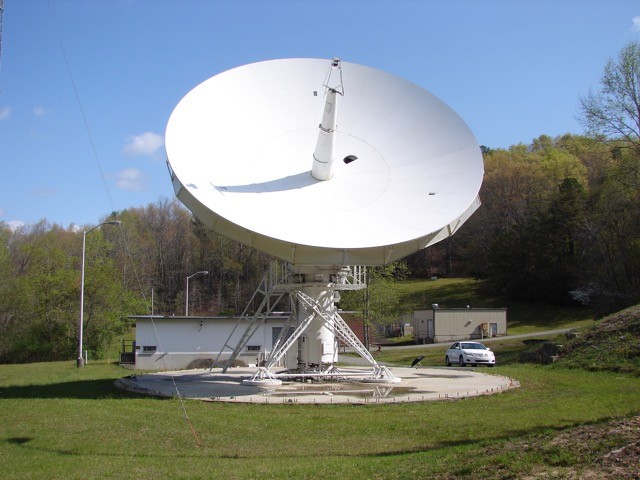
84.

What type of telescope can work 24 hours a day and even be used in the rain?

a)

Refracting Telescope

b)

Radio Telescope

c)

Newtonian Telescope

d)

Solar Telescope

85.

Which of these is a process that is unique to radio telescopes?

a)

Spectrometry

b)

Inferferometry

c)

Photometry

d)

Photography

86.
a)
reflection telescope
b)
refraction telescope
c)
radio telescope
87.
a)
reflection telescope
b)
refraction telescope
c)
radio telescope
88.

An advantage of reflecting telescopes is

a)

cost less & can be larger

b)

cost more and can be smaller

c)

costs less

d)

cost more

89.
What do you call astronomy tools placed in orbit around Earth. They have special instruments and telescopes that collect information from space. This information is sent back to Earth where it is interpreted.
a)
Satellite
b)
Space Probe
c)
Radio telescope
d)
Spectroscope
90.
What do you call the astronomy tool that receive radio waves emitted from objects in space, including waves from very distant stars and galaxies; it can receive information in any weather and during day or night.
a)
Radio telescope
b)
Spectroscope
c)
Space probe
d)
Infrared telescope
91.
What do you call the astronomy tool that collects light from distant stars and separate that light into bands of different colors; by studying these bands, astronomers can identify the elements, density, and temperature of distant stars and perhaps planets.
a)
Space Probe
b)
Spectroscope
c)
Infrared telescope
d)
Satellite
92.
What do you call the astronomy tool that contains specialize instruments to collect data. They often travel out of Earth’s orbit to explore places that would be too dangerous for humans.
a)
Space Probes
b)
Spectroscope
c)
Satellites
d)
Space Shuttle
93.

What has left tons of "space junk" in orbit around the earth?

a)

robots sent on space missions

b)

years of space exploration

c)

lack of recycling

d)

missiles in outer space

94.

Why is it urgent to solve the problem of space junk?

a)

If we don't, the world might end.

b)

Because more and more objects are being sent into space and most of these are tools that help people use their cell phones or computers.

c)

So countries will get along better

d)

It is not urgent.
