
NEW
Font size
S
M
L
XL
 Worksheets
FINAL SCIENCE QUIZ OF THE YEAR!!!
Total questions: 50
Worksheet time: 42mins
Name
Class
Date
1.
What is made up two or more elements that are chemically combined?
a)
Element
b)
Mixture
c)
Compound
d)
Solids
2.
What cannot be broken down into other substances?
a)
Compound
b)
Mixture
c)
Solids
d)
Element
3.
A combination of substances that are not chemically combined is called a(n)____________.
a)
mixture
b)
compound
c)
physical
4.
Which of the following is not a compound?
a)
HCl
b)
Cl
c)
NaCl
d)
CO2
5.
An element is made up of only one kind of _____.
a)
isotope
b)
plastic
c)
atom
d)
metal
6.
Vertical columns in the periodic table are called _________ of elements and have similar properties.
a)
groups
b)
periods
7.

This picture represents which of the following?
a)
element
b)
compound
c)
mixture
8.

This picture represents which of the following?
a)
element
b)
compound
c)
mixture
9.
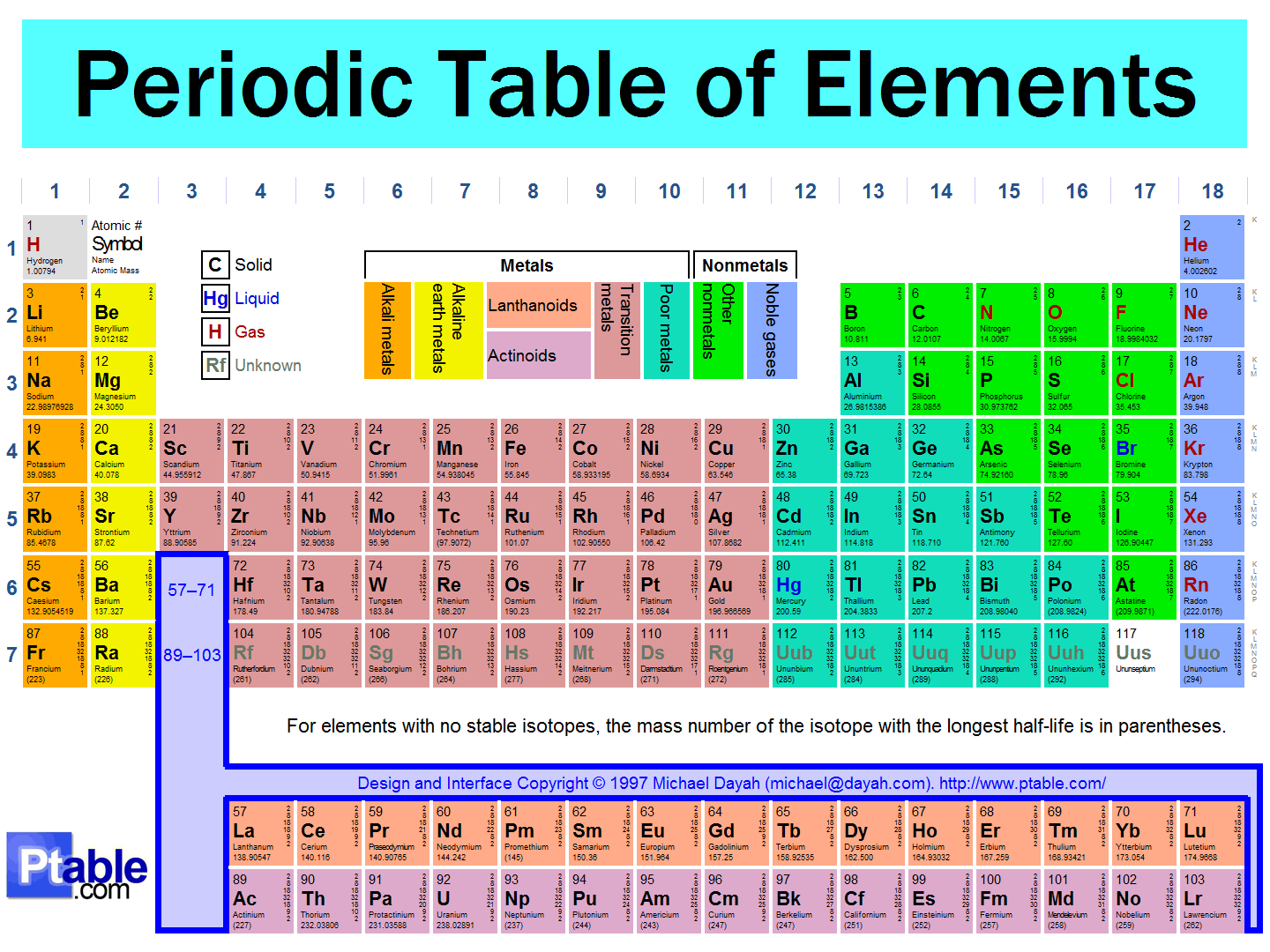
The horizontal row on the periodic table is called a
a)
group
b)
family
c)
period
d)
atomic number
10.

Which of the following is the most metallic element in period 3?
a)
Boron (B)
b)
Sodium (Na)
c)
Argon (Ar)
d)
Silicon (Si)
11.

Which of these element is the least metallic?
a)
Potassium (K)
b)
Carbon (C)
c)
Sulfur (S)
d)
Neon (Ne)
12.
What is speed?
a)
how far you go
b)
how much distance is covered over a period of time
c)
how fast you accelerate
d)
the change in the location of a object
13.
What is the formula to calculate speed?
a)
Speed = time/distance
b)
Speed = distance/time
c)
Speed = distance x time
d)
Speed = time x distance
14.
What is velocity?
a)
the quickness of an object
b)
the location of an object
c)
acceleration
d)
speed in a specific direction
15.
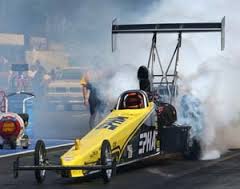
A drag racer accelerated from 0 m/s to 200 m/s in 5 s. What was the acceleration?
a)
0 m/s
b)
40 m/s2
c)
-40 m/s2
d)
40 m/s
16.
Energy due to motion is ____________ energy.
a)
Potential
b)
Energy
c)
Kinetic
d)
Friction
17.
The faster an object moves, the ________ kinetic energy it has.
a)
more
b)
less
c)
none of the above
d)
all of the above
18.
__________ is stored energy.
a)
Potential
b)
Kinetic
c)
None of the above
d)
All of the above
19.

At which point is potential energy greatest?
a)
W
b)
X
c)
Y
d)
Z
20.
What characteristic do all renewable resources share?
a)
Produced by waste products
b)
Form underground from dead organisms.
c)
Replaced in a short period of time
d)
Allow energy to pass through them easily
21.
Which of the following is a fossil fuel?
a)
Wind
b)
Coal
c)
Solar
d)
Biomass
22.
Fossil fuels are classified as nonrenewable because they.......
a)
require expensive equipment
b)
take millions of years to replace
c)
can be found all over
d)
provide all the energy we use
23.
Noble gases, least reactive due to their outer electron shell being full, are found in which group?
a)
Group 1
b)
Group 2
c)
Group 17
d)
Group 18
24.

This symbol warns of
a)
Fire
b)
Acid
c)
Biohazard
d)
Electrical danger
25.

The diagram shows a graduated cylinder containing water. From which position will the most accurate measure of the volume of water be made?
a)
Position 1
b)
Position 2
c)
Position 3
d)
Position 4
26.
Factors in an experiment that must be kept the same are called -
a)
constants
b)
variables
c)
experimental error
d)
hypothesis
27.

The graph shows the amount of rain that fell each day for 5 days. If the pattern continues, what is the BEST prediction for Friday?
a)
There will be no rain on Friday
b)
There will be more than 4 cm of rain.
c)
There will be 2 cm of rain.
d)
There will be 3 cm of rain.
28.
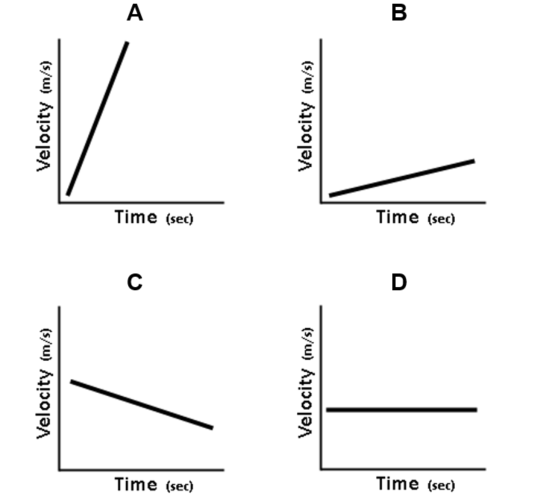
Which graph represents zero acceleration (constant velocity)?
a)
A
b)
B
c)
C
d)
D
29.
All the organisms in a particular location, including their nonliving environment
a)
ecosystem
b)
carnivore
c)
niche
d)
population
30.
Which of the following determines the type of element that an atom makes?
a)
The size of the nucleus.
b)
The number of protons.
c)
How much the atom weighs.
d)
The number of neutrons.
31.
1. particle with on negative charge.
a)
A. neutron
b)
B. electron
c)
C. proton
d)
D. atom
32.
A decomposer?
a)
Eats dead plants or animals and breaks down to put nutrients in the soil
b)
Eats plants or other animals for food
c)
Makes its own food
d)
Machine that gathers trash
33.
A consumer?
a)
Makes its own food
b)
Eats dead plants and animals
c)
Eats plants and other animals for energy
d)
Buys toys for kids
34.
What is H2SO4
made up of?
made up of?
a)
2 hydrogen, 1 sulfur, 4 oxygen
b)
1 hydrogen, 2 sulfur, 4 oxygen
c)
2 hydrogen & 4 sodium
d)
1 hydrogen & 6 sodium
35.

Why is DNA important?
a)
it is very small and very complicated
b)
it's in everything
c)
it serves as the blueprint for traits of all living things
d)
because we eat it every day for energy
36.
Which of the following formulas contain the same number of oxygen atoms?
1. Mg(NO)2
2. NH4NO2
3. Ca(ClO2)2
4. Co(NO3)2
1. Mg(NO)2
2. NH4NO2
3. Ca(ClO2)2
4. Co(NO3)2
a)
Formulas 1 and 2
b)
Formulas 2 and 4
c)
Formulas 1, 2, and 3
d)
Formulas 1, 2, and 4
37.

What conclusion can you make about the elements shown above?
a)
Phosphorus has more valence electrons than nitrogen.
b)
Carbon has fewer protons in its nucleus than nitrogen.
c)
Phosphorus is more like silicon than it is like nitrogen.
d)
Aluminum is smaller than carbon.
38.

Refer to the image above. Which of these is NOT found in the nucleus of an atom?
a)
Neutrons
b)
Protons
c)
Atomic mass
d)
Electrons
39.

Which of the following is the number of valence electrons in the atom represented above?
a)
16
b)
17
c)
6
d)
8
40.
What is the independent (changed) variable in this question?
What affect will the shape of the airplane's nose have on the distance it flies?
What affect will the shape of the airplane's nose have on the distance it flies?
a)
shape of nose
b)
distance it flies
c)
type of paper
d)
room temperature
41.
What is NOT a way to conserve energy?
a)
Take a short shower instead of a long one.
b)
Turn off the lights when leaving a room.
c)
Recycle old newspapers and drink cans.
d)
Driving a car instead of riding a bike.
42.
An organism can be classified as an omnivore because it eats
a)
both plants and animals
b)
neither plants nor animals
c)
only plants
d)
only animals
43.
Which factor would most likely limit the number of mice living in an area?
a)
plentiful resources
b)
stable climate
c)
more predators
d)
less competition
44.
Which factor contributes to global warming?
a)
increased use of solar-powered cars
b)
increased burning of fossil fuels
c)
better long-term weather forecasts
d)
changing distance between Earth and the Sun
45.
What is the original source of almost all energy in most ecosystems?
a)
carbohydrates
b)
sunlight
c)
water
d)
carbon
46.
Heterozygous is when...
a)
the alleles are the same
b)
the alleles are different
c)
the alleles are absent
d)
the alleles are present
47.
Which of the following is a phenotype?
a)
Aa
b)
red hair
c)
heterozygous
d)
BB
48.
What are the reactants to photosynthesis?
a)
Oxygen and Water
b)
Carbon dioxide and water
c)
Water and glucose
d)
All of the above options are correct.
49.
What are the products of photosynthesis?
a)
Oxygen and glucose
b)
Oxygen and carbon dioxide
c)
Carbon dioxide and glucose
d)
All of the options are correct.
50.
Which of the following is the correct equation for PHOTOSYNTHESIS?
a)
CO2 + light + H2O --> O2 + glucose
b)
CO2 + glucose + H2O --> O2 + light
c)
O2 + light + H2O --> CO2 + glucose
d)
CO2 + O2 + H2O --> Light+ glucose
Reset

