wayground logo

Free Printable Worksheets

Font size

S
M
L
XL
Worksheets

KS3 Year 7 Mock Revision

Total questions: 109

Worksheet time: 2hrs 38mins

Name
Class
Date
1.
Hooke's Law describes the behaviour of which kind of material under tension?
a)
plastic
b)
metals only
c)
elastic
d)
non-metals only
2.
Hooke's Law fails when a material reaches:
a)
breakdown
b)
its elastic limit
c)
end of its tether
d)
fracture stress
3.
What is the limit of proportionality/elastic limit.
a)
When the spring stops obeying Hooke's law.
b)
When the spring starts obeying Hooke's law.
c)
The amount a spring will stretch.
4.
Hooke's law describes how as the force increases the rate of increase of ............ is the same.
a)
the length of a spring
b)
gravity
c)
the extension of a spring
5.
If extension = Stretched length - original length. What is the extension of spring D.
a)
1mm
b)
2mm
c)
3mm
d)
0mm
6.
What does refletion mean?
a)
It is when the light changes the material and the direction of it changes as well. 
b)
It is when the material is rebounding the light.
7.
Which images are opaque?
a)
A & C
b)
A,C,E, & F
c)
D, E, & F
d)
A & E
8.
Why do we see objects as white?
a)
They absorb all light
b)
They reflect all light
c)
They absorb some light and reflect some light
9.

Another name for light bending and changing direction is ....

a)

Reflaction

b)

Absorbing

c)

Refraction

d)

mirror

e)

Reflection

10.

The Law of Reflection:

The angle of incidence is _________ the angle of reflection

a)

bigger than

b)

equal to

c)

smaller than

11.
The term for any wave that hits a surface and bounces off
a)
Transparent
b)
Translucent
c)
Refraction
d)
Reflection
12.
Blurs light as it passes through
a)
Transparent
b)
Translucent
c)
Opaque
d)
Refraction
13.
Allows most light through
a)
eflection
b)
Refraction
c)
Translucent
d)
Transparent
14.
Which color absorbs all light?
a)
White
b)
Black
c)
Orange
d)
Green
15.

What does this diagram represent?

a)

refraction

b)

specular reflection

c)

diffuse scattering

d)

absorption

16.

What does this diagram represent?

a)

diffuse reflection

b)

regular reflection

c)

scattering

d)

refraction

17.

What does this diagram represent?

a)

refraction

b)

diffraction

c)

diffuse scattering

d)

specular reflection

18.
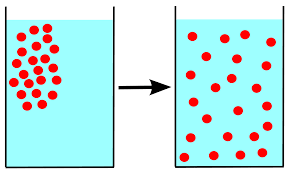
Which diagram best shows the end result of diffusion?
a)
F
b)
G
c)
H
d)
J
19.
The picture  is an example of _________________.
a)
isotonic
b)
diffusion
c)
osmosis
d)
active transport
20.
When particles move from areas of high concentration to areas less concentrated, this has taken place.
a)
diffusion
b)
mitosis
c)
endocytosis
d)
photosynthesis
21.
The picture below is an example of _________________.
a)
osmosis
b)
isotonic
c)
diffusion
d)
active transport
22.
An increase in temperature does what to diffusion?
a)
Speeds it up
b)
Slows it down
c)
Has no effect
d)
I wish i knew. Really I do.
23.
What is diffusion?
a)
when molecules move 
b)
when molecules move from a high concentration to a low concentration.
c)
no movement 
d)
molecules move everywhere
24.
unit for mass (in all physics equations)
a)
kg
b)
N
c)
pound
d)
g
25.
unit for weight (in all physics equations)
a)
N
b)
kg
c)
pound
26.

If mass = 78.9 kg, weight on Earth =

a)

789 N

b)

77.4 N

c)

8 N

d)

789 kg

27.

If mass = 60 kg, weight on Earth =

a)

6.1 N

b)

60 N

c)

600 N

d)

598 N

28.
What is the definition of "weight"?
a)
measure of the force of gravity on your body
b)
the time it takes to get on a ride 
c)
the amount of matter in an object
d)
the size of an object
29.
The weight of an object _________ as it moves away from the center of Earth.
a)
increases
b)
stays the same
c)
triples
d)
decreases
30.
The mass of an object ___________ as it moves away from the center of Earth
a)
stays the same
b)
decreases
c)
increases
d)
doubles
31.

On which celestial object (outer space) would your mass be the greatest?

a)

Earth

b)

Jupiter

c)

Sun

d)

Your mass doesn't change on different celestial objects
32.
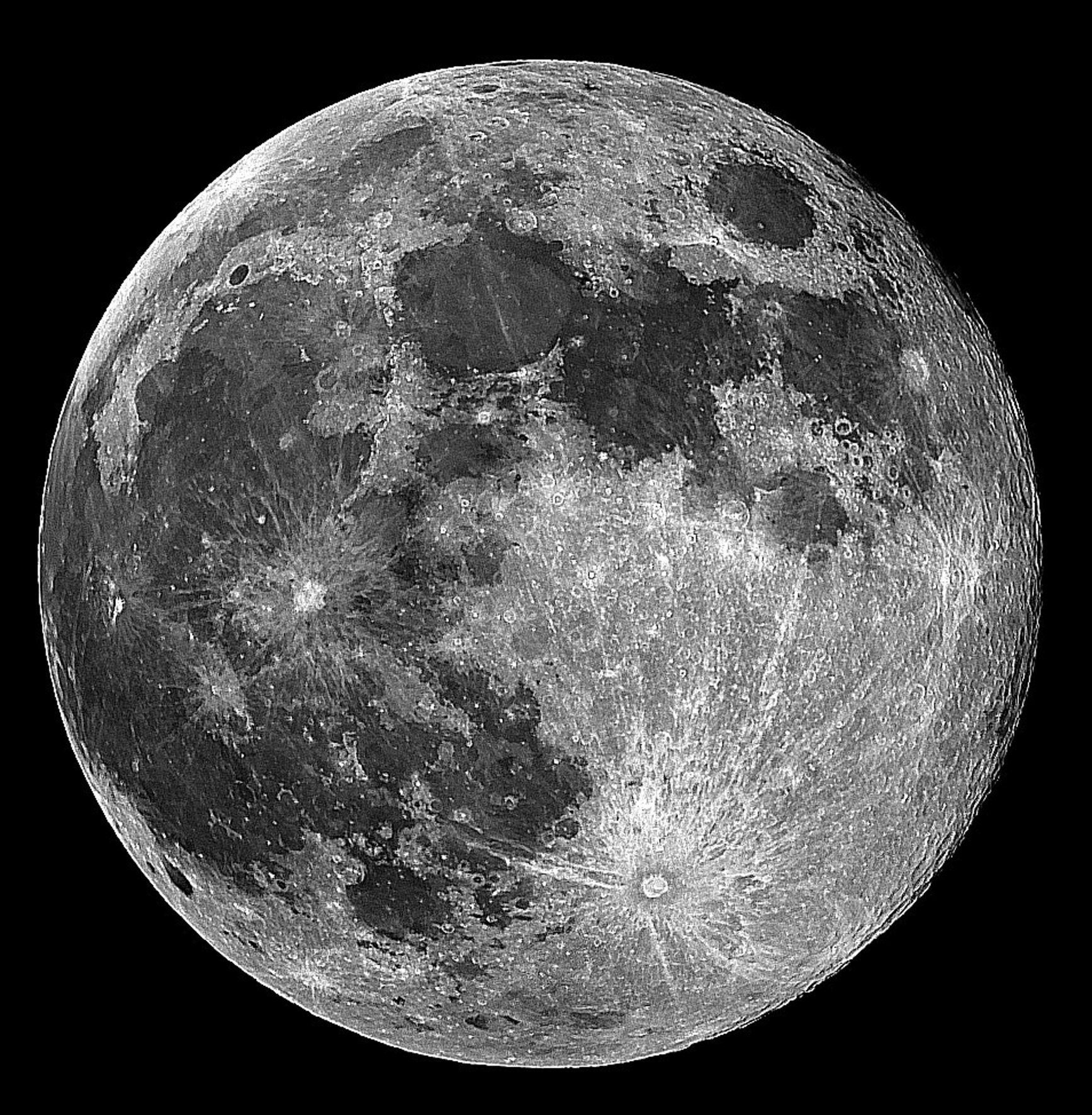
Why would you weigh less on the moon compared to Earth?
a)
less air
b)
less sunlight
c)
more gravitational pull
d)
less gravitational pull
33.
A measure of how much matter an object has is--
a)
weight
b)
gravity
c)
mass
d)
volume
34.
a)
clavicle
b)
ribs
c)
humerus
d)
ulna
35.
a)
rib
b)
spine
c)
scapula
d)
clavicle
36.
a)
ribs
b)
clavicle
c)
humerus
d)
vertebrae
37.
What do your bones protect?
a)
organs
b)
skin
c)
muscles
d)
feelings
38.
a)
tibia
b)
femur
c)
fibula
d)
pelvis
39.
a)
mandible
b)
skull
c)
scapula
d)
spine
40.
a)
ulna
b)
humerus
c)
radius
d)
vertebrae
41.

Give two uses of the skeleton

a)

Movement and protection

b)

Protection and keeping you healthy

c)

Making blood cells and growing

d)

Movement and keeping you healthy

42.

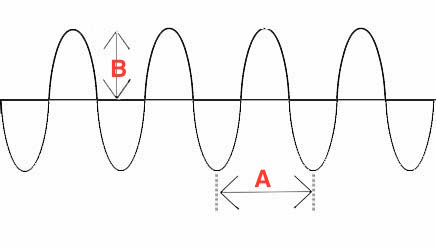
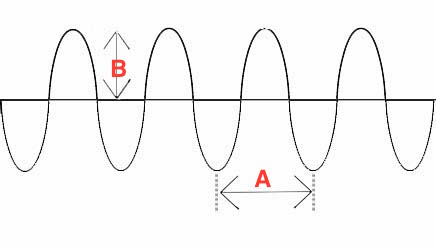
What property of this wave is represented by the letter "A"

a)

amplitude

b)

crest

c)

trough

d)

wavelength

43.
What property of the wave is represented by the letter "B"?
a)
amplitude
b)
crest
c)
trough
d)
wavelength
44.
The highest point on a wave is:
a)
the crest
b)
the trough
c)
the top
d)
the coast 
45.
The lowest point on a wave is the:
a)
Amplitude
b)
Crest
c)
Trough
d)
Wavelength
46.
The number of wavelengths that pass a point each per second is:
a)
frequency
b)
period
c)
longitudinal 
d)
transverse wave 
47.
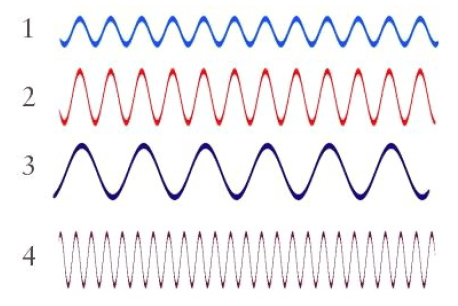
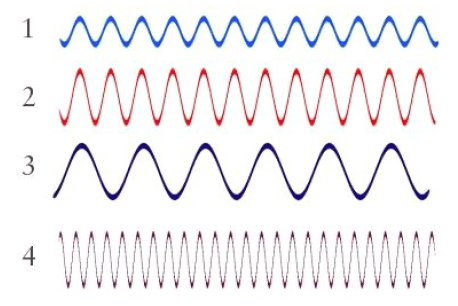
Which wave in the diagram has the greatest frequency?
a)
1
b)
2
c)
3
d)
4
48.
Which wave in the diagram has the greatest wavelength?
a)
1
b)
2
c)
3
d)
4
49.
Which of the following can sound travel through?
a)
solid
b)
liquid
c)
gas
d)
all of the above
50.
What kind of wave can travel through space?
a)
electromagnetic waves
b)
compressional waves
c)
transverse waves
d)
longitudinal waves
51.
A wave carries...?
a)
energy only
b)
matter only
c)
the matter carries the energy
d)
neither
52.
The units for frequency are measured in _____________.
a)
hertz
b)
seconds
c)
m/s
d)
m
53.
What kind of wave is pictured below?
a)
compressional wave
b)
transverse wave
c)
sound wave
d)
mechanical wave
54.
Which is an example of a longitudinal wave?
a)
light wave
b)
sound wave
c)
visible wave
d)
radio wave
55.
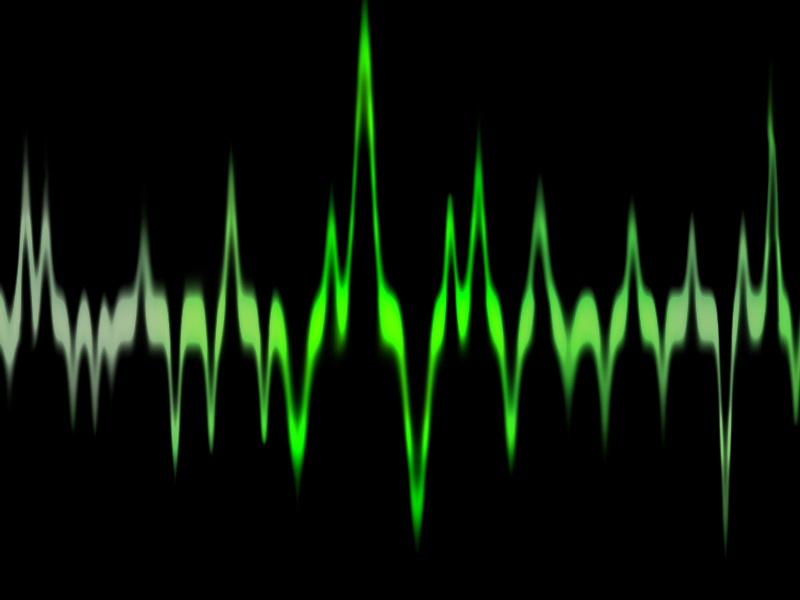
Which wave is pictured?
a)
Transverse
b)
Longitudinal
c)
Both
d)
Neither
56.
I have large petals and are usually brightly coloured. How am I pollinated?
a)
By animals
b)
By birds 
c)
By insects 
d)
All of the above
57.
Pollination is the process by which the pollen grains are transferred from the ________ to the _________. 
a)
anther... ovary
b)
anther ... stigma
c)
stigma ... ovary 
d)
stigma ... filament
58.
Which of the following is/are types of pollination?
A) wind pollination 
B) Insect pollination 
C) explosive pollination  
a)
B only
b)
A and B only
c)
All of the above
59.
Wind-pollinated flowers usually have ______ and ________ petals. 
a)
big ... bright 
b)
small .... bright 
c)
big ... dull 
d)
small ... dull
60.
My flowers are not sweet-scented and I do not produce nectar. How am I likely dispersed by?
a)
By wind 
b)
By insects 
c)
By water 
d)
By explosive action
61.
I have long and feathery stigma that sticks out of the flower. How am I likely to be pollinated by?
a)
By wind 
b)
By insects 
c)
By water 
d)
By explosive action
62.
My pollens are usually sticky and spiky so that they can _______________. 
a)
stay on the pollinators' body without falling off easily 
b)
prevent pollinators from eating them
63.
The spores of the non-flowering plants are dispersed by wind because the spores are _____.
a)
big and flat 
b)
dry and black
c)
hairy and sticky
d)
very tiny and light
64.
What does an ovule become when it is pollinated?
a)
a seed
b)
a sprout
c)
a fruit
d)
it stays an ovule
65.
What is one thing all seeds need in order to start growing?
a)
wind
b)
dirt
c)
water
66.
Fertilization is the process by which an 
a)
egg and pollen combine
b)
embryo grows into a plant
c)
animal carries pollen between plants
67.
What does a plant need to germinate?
a)
water, sunlight, warm temperature
b)
water and dirt
c)
oxygen and sun
68.
What do you need for photosynthesis to take place?
a)
water
b)
sunlight
c)
carbon dioxide and chlorophyll
d)
all of the above
69.
What attracts insects for pollination?
a)
anther
b)
ovary
c)
stigma
d)
petals
70.
In which structure do seeds develop?
a)
Anther
b)
Ovary
c)
Pollen Grain
d)
Spore
71.
What part of the plant attracts bees to aid in pollination? 
a)
Petals
b)
Sepals
c)
Stamen
72.
What is the sticky part of the flower that catches pollen?
a)
style
b)
stigma
c)
ovary
d)
petal
73.
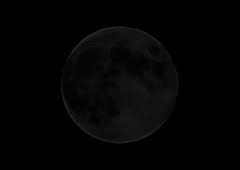
Name the moon phase
a)
First Quarter
b)
Last Quarter
c)
New Moon
d)
Full Moon
74.
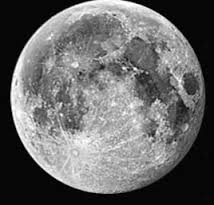
Name the moon phase
a)
First Quarter
b)
Last Quarter
c)
New Moon
d)
Full Moon
75.
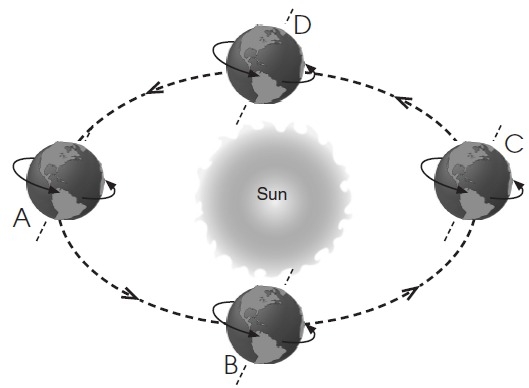
What season is letter A?
a)
Winter
b)
Summer
c)
Spring
d)
Fall
76.
What would be the result if the Earth's axis was not tilted but straight up and down?
a)
Nothing would change
b)
There would be no seasons
c)
Days would get longer
d)
The Equator would burn up and the poles would freeze
77.
Name the phase of the moon for letter a
a)
First Quarter
b)
Last Quarter
c)
Waxing Gibbous
d)
Waning Gibbous
78.
Name the phase of the moon for letter f
a)
Waning Gibbous
b)
Waxing Gibbous
c)
Waning Crescent
d)
Waxing Crescent
79.
Why does the area around the equator stay the same temperature all year?
a)
The equator rotates slower than the poles.
b)
The equator remains the same distance from the sun.
c)
The equator always receives direct sunlight.
d)
The equator has 18 hour days.
80.
How long does it take the moon to complete an orbit around Earth?
a)
23 days
b)
29 days (1 month)
c)
2 weeks (half a month)
d)
365 days (a year)
81.
a)
Tricep
b)
Deltoid
c)
Hamstring
d)
Bicep
82.
a)
Biceps
b)
Triceps
c)
Occuli
d)
Trapezius
83.
Skeletal muscles are attached to _________.
a)
organs
b)
heart
c)
bones
d)
lungs
84.
This man is flexing his......
a)
Triceps
b)
Biceps
c)
Fliceps
d)
Glutes
85.
back of upper arm
a)
bicep
b)
tricep
c)
sartorius
d)
Achilles tendon
86.
front of upper arm
a)
tricep
b)
sartorius
c)
quadricep
d)
bicep
87.
What happens to the muscles when they work?
a)
the muscles make our bodies bend
b)
the muscles get really big then really small
c)
the muscle contracts
88.
Which of these images shows diffusion in gases?
a)
B
b)
F
c)
H and F
d)
C
89.
The amount of force pushing on an area is the definition of....
a)
Fluid
b)
Viscosity
c)
Barometer
d)
Pressure
90.
The drops of water that appear on the outside of a glass of cold juice on a warm day are an example of?
a)
sublimation
b)
condensation
c)
evaporation
91.
At higher temperatures
a)
particles in an object have less energy
b)
particles in an object move faster
c)
a gas contracts
92.
The change from liquid to solid, or the reverse of melting is called
a)
condensation
b)
boiling
c)
sublimation
d)
freezing
93.
If you heat a liquid, which state of matter will it become.
a)
solid
b)
stay a liquid
c)
gas
d)
sublimation
94.
If this gas had a higher pressure, what would we see in the picture?
a)
More tails on each particle
b)
Different types of particles
c)
More bumps on the side of the container
d)
We couldn't tell from a picture
95.
                                                                                                                                                                                                                                                                             
How will the pressure of the gas change from the first to second image
a)
pressure will go up 
b)
pressure will go down 
c)
pressure will not change 
d)
cannot be determined 
96.
Which container shows air particles experiencing higher pressure?
a)
Left Container
b)
Right Container
c)
Both Containers
d)
Neither Containers
97.
Which container shows air particles experiencing lower pressure?
a)
Left Container
b)
Right Container
c)
Both Containers
d)
Neither Containers
98.
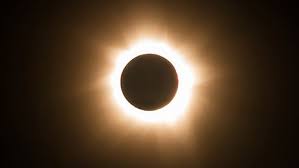
Which type of eclipse occurs when the Moon comes directly between Earth and the Sun?
a)
Lunar eclipse
b)
Solar eclipse
99.
For a solar eclipse to occur, what has to happen?
a)
The sun must be directly between Earth and the moon.
b)
The moon must be directly between Earth and the Sun.
100.
This type of eclipse occurs when the moon blocks the sunlight from reaching Earth?
a)
Solar eclipse
b)
Lunar eclipse
101.
During a solar eclipse...
a)
The sun is blocked
b)
The Earth is blocked
102.
all matter is made of what 
a)
energy 
b)
atoms 
c)
electrons 
d)
compounds 
103.
How many elements are in C6H12O6?
a)
1
b)
2
c)
3
d)
4
104.
How many atoms of carbon (C) are in  C6H12O6?
a)
3
b)
6
c)
12
d)
24
105.
Element or compound?
H2O
a)
element
b)
compound
106.
Element or compound?
O2
a)
Element
b)
Compound
107.
Which is the correct formula for:
one carbon (C)
two oxygen (O)
a)
CO2
b)
CO
c)
C2O
d)
2CO
108.
How many elements are in H2O?
a)
1
b)
2
c)
3
d)
4
109.
How many atoms are there TOTAL in:
H2SO4
a)
6
b)
5
c)
7
d)
3