wayground logo

Free Printable Worksheets

Font size

S
M
L
XL
Worksheets

Grade 8 Unit B

Total questions: 112

Worksheet time: 2hrs 33mins

Name
Class
Date
1.

All living things are composed of. . . .(building blocks of living things)

a)

Energy

b)

Cells

c)

Atoms

d)

Bugs

2.

As you mature and go through the life cycle, what characteristics is this demonstrating?

a)

Organization

b)

Reproduction

c)

Energy

d)

Growth

3.

Animals eat food and plants use sunlight, both are examples of obtaining what?

a)

A full stomach

b)

Cells

c)

Energy

d)

headache

4.

Is this an image of a living thing?

a)

Yes

b)

No

5.

How many of the 6 characteristics do living things need to have

a)

1

b)

All of them

c)

half

d)

none

6.

Which characteristic does the image represent

a)

Use Energy

b)

Maintain Homeostasis

c)

Grow

7.
A change in an organism's surroundings that causes it to react is called
a)
a stimulus.
b)
a response.
c)
development. 
d)
energy.
8.
A plant grows toward the light. The plant's action is an example of 
a)
reproduction.
b)
a response.
c)
a stimulus.
d)
development. 
9.
All living organisms are made up of ____.
a)
Cells
b)
Bacteria
c)
Organs
d)
Tissue
10.
What is reproduction?
a)
To make offspring similar to the parents
b)
To eat
c)
To read
d)
To do homework
11.
What do living things use energy for?
a)
To do things like grow, heal and digest.
b)
To find friends
c)
To succeed in school
d)
To reach their goal
12.
Rocks, water, air, sun, and soil are...
a)
living
b)
nonliving
13.
Ants, birds, rabbits, and snakes are...
a)
living
b)
nonliving
14.
Any living thing is called an
a)
organ
b)
organization
c)
organism
d)
cell
15.
Which of the following characteristics of living things best explains why your legs and arms get longer and stronger as you get older? 
a)
living things respond to their environment
b)
living things maintain internal balance
c)
living things are made of cells
d)
living things grow and develop
16.
What is an organism whose entire body is only 1 cell known as?
a)
unicellular
b)
multicellular
c)
cell
d)
Homeostasis
17.
What do living things use energy for?
a)
To do things like grow, repair, replace cells, and digest.
b)
To find friends
c)
To succeed in school
d)
To reach their goal
18.
A plant using sunlight to make food to use or a deer eating leaves from a shrub are examples of
a)
Movement
b)
Respiration
c)
Sensitivity
d)
Nutrition
19.
How do adaptations help animals?
a)
helps them hide from predators
b)
helps them hunt for food
c)
helps them survive in their habitat
d)
All of these are correct.
20.
What is one possible reason for seeds to have hooks or barbs?
a)
to stay warm during the winter
b)
to protect themselves from sunlight
c)
to get attached to passing animals and get carried away
d)
to be easier for animals to eat them
21.
A cactus can live in the desert because of this adaptation:
a)
wide flat leaves to catch water
b)
shallow roots
c)
thick, waxy leaves help it store water
d)
tendrils to reach sunlight
22.
Animals such as elephants and walruses have tusks. How do tusks help the animal?
a)
Tusks help them swim.
b)
Tusks help them camouflage.
c)
Tusks look pretty to other animals.
d)
Tusks protect the animal when fighting.
23.
Animals disperse seeds by _________.
a)
eating seeds and dropping waste later on
b)
hiding seeds for late and not coming back for them
c)
catching seeds on their fur and carrying them to different places
d)
all of the above
24.
Why might some plants have thorns?
a)
to stay safe from animals that want to eat the plant
b)
to attract insects that spread pollen to other plants
c)
to take in nutrients from the air
d)
to provide shade for the plant
25.

Why do birds have different size beaks?

a)

to look cool

b)

to help eat different food

c)

to help them breath

d)

to help attack other animals

26.

Why have seeds adapted to float in water?

a)

to see the world

b)

so they can grow in water

c)

to travel to different places

d)

so other animals have food to eat

27.
What organelle is called the "powerhouse" of a cell?

a)
Endoplasmic Reticulum
b)
Nucleus
c)
Mitochondria
d)
Nucleolus
28.
What is the function of the mitochondria?
a)
Structure that manufactures ribosomes
b)
Structures that converts nutrients to energy
c)
Stack of membranes that packages chemicals
d)
Structure that contains DNA and directs the cell
29.
What is the function of the vacuole?
a)
Sac that stores water, nutrients, and waste products
b)
Sac filled with digestive chemicals
c)
Jelly-like substance within the plasma membrane
d)
stack of membranes that packages chemicals
30.
What is the function of nucleus?
a)
Structure that organizes motion of chromosomes. 
b)
Structure that contains DNA and directs the cell 
c)
Membrane that surrounds and protects the cell 
d)
Stack of membranes that packages chemicals
31.
Where does photosynthesis occur?
a)
mitochondria
b)
stomata
c)
xylem
d)
chloroplast
32.
What cell part is NOT found in all cells?
a)
Cell Wall
b)
Cell Membrane
c)
Cytoplasm
d)
Genetic Material
33.
Where are proteins made?
a)
Golgi body
b)
Mitoichondria
c)
Chromosomes
d)
Ribosomes
34.
A rigid layer that lies outside the cell's  membrane is...
a)
Cytoskeleton
b)
Cilia
c)
Cell Wall
d)
Flagella
35.

I am fluid filled within the cell

a)

Mitochondrion

b)

Vacuole

c)

cytoplasm

d)

Cell membrane

36.
What is found in both plant and animal cells but is much larger in plant cells?
a)
Nucleus
b)
Mitochondrion
c)
Chloroplast
d)
Vacuole
37.
Cell membranes are found in
a)
Only animal cells
b)
Only plant cells
c)
Some plant and animal cells
d)
All plant and animal cells
38.
A rigid layer that lies outside the cell's  membrane is...
a)
Cytoskeleton
b)
Cilia
c)
Cell Wall
d)
Flagella
39.

What is the main organ of the circulatory system?

a)

small intestine

b)

bone

c)

lungs

d)

heart

40.

Arteries carry oxygen rich blood away from the heart.

a)

True

b)

False

41.

Veins carry oxygen poor blood back to the heart.

a)

False

b)

True

42.

The job of the heart is to . . .

a)

pump blood around the body.

b)

send food to the small intestines.

c)

break down food.

d)

give energy to the body.

43.

How does the heart work?

a)

It pumps blood first to the lungs, back to the heart and then around the rest of the body.

b)

It pumps blood first to the rest of the body, back to the lungs and then to the heart.

c)

It pumps blood around the rest of the body, back to the heart and then to the lungs,

44.
______________ are the smallest blood vessels.
a)
Arteries
b)
Veins
c)
Capillaries
45.
The circulatory system works with the ___________ system to provide our body with oxygen.
a)
respiratory
b)
digestive
c)
muscular
d)
skeletal
46.
Which is NOT a function of the circulatory system?
a)
deliver O2 and nutrients to cells
b)
remove CO2 and wastes from cells
c)
break down carbohydrates into glucose
d)
transport other materials through body
47.
What do Red-Blood cells do?
a)
Carry oxygen from the lungs to the body cells and  transport carbon dioxide from the cells back to the lungs
b)
keeps blood flowing in one direction to the heart and prevent blood from flowing backwards
c)
Collects  blood from the capillaries and drain it into the veins
d)
Bring nutriients to the cells and carries away waste materials.
48.

which takes the wastes from the body cells?

a)

platelets

b)

red blood cells

c)

white blood cells

d)

plasma

49.

which is important to heal the wound or cut?

a)

plasma

b)

platelets

c)

red blood cell

d)

white blood cell

50.
White blood cells
a)
help fight disease
b)
take up oxygen and deliver to cells 
c)
help form blood clots 
d)
helps carries nutrients
51.
Red blood cells 
a)
help fight disease
b)
take up oxygen and deliver to cells 
c)
help form blood clots 
d)
help carries nutrients
52.
Carry blood away from heart; mostly oxygen-rich
a)
Arteries
b)
Veins
c)
Capillaries
53.
Blood vessels that carry oxygen poor blood to the heart are 
a)
veins
b)
arteries
c)
capillaries
54.
What does blood transport?
a)
Oxygen 
b)
All of the answers provided are transported in blood
c)
wastes
d)
nutrients
55.
Through which vessel does gas exchange happen?
a)
artery
b)
vein
c)
capillaries
d)
liver
56.
What is the main function of the respiratory system?
a)
to provide oxygen and remove carbon dioxide from the body
b)
to bring oxygen to the body
c)
to break down food and absorb nutrients
d)
to remove oxygen from the body and deliver carbon dioxide
57.
What are the main organs of gas exchange in the respiratory system?
a)
diapragm
b)
lungs
c)
trachea
d)
bronchi
58.
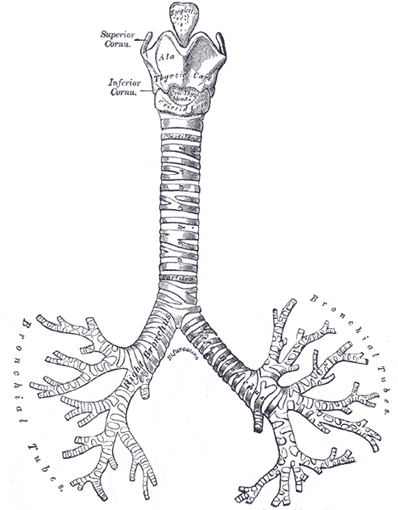
What is the function of the bronchi?
a)
Transport air from nose to lungs
b)
Transport air from trachea to lungs
c)
Transport air from lungs to alveoli
d)
Transport air from alveoli to blood
59.
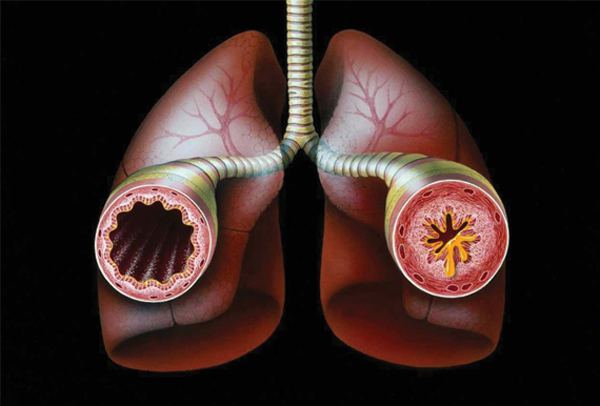
A disorder of the lungs called ____ causes the bronchi to become restricted (get smaller) so air can't get to the lungs.
a)
asthma 
b)
cold
c)
influenza 
d)
bronchitis 
60.
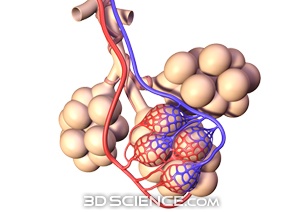
The air sacs that are covered with capillaries where gas exchange takes place
a)
bronchi
b)
lungs
c)
oxygen
d)
alveoli
61.
What is tube that is also known as your wind pipe?
a)
esophogus
b)
bronchi
c)
trachea
d)
alveoli
62.
What is function of the dome-shaped diaphragm?
a)
This is where gas exchange happens.
b)
Air passes through the diaphragm on the way to the lungs.
c)
It attaches to the lungs to help in breathing.
d)
It is under the lungs and helps move air into and out of the lungs.
63.

When we breathe in our . . .

a)

ribs go out and our diaphragm goes up

b)

ribs go out and our diaphragm goes down

c)

ribs go in and our diaphragm goes up

d)

ribs go in and our diaphragm goes down

64.

When we breathe out our . . .

a)

ribs go out and our diaphragm goes up

b)

ribs go out and our diaphragm goes down

c)

ribs go in and our diaphragm goes up

d)

ribs go in and our diaphragm goes down

65.
The chewing and grinding of food into smaller pieces is an example of...
a)
Mechanical Digestion
b)
Chemical Digestion
66.
Nutrients from digested food are absorbed in which digestive organ?
a)
Small Intestine
b)
Stomach
c)
Large Intestine
d)
Gallbladder
67.
Which body system gets ride of solid waste?
a)
Excretory (Urinary)
b)
Digestive
c)
Circulatory
d)
Respiratory
68.
As waste moves through the digestive system, the ______ absorbs water before storing waste in the rectum.
a)
Small intestine
b)
Stomach
c)
Esophagus
d)
Large intestine
69.
Which is NOT a function of the Digestive System?
a)
To rid the body of solid waste
b)
Absorb nutrients for energy & growth
c)
Break down nutrients from food
d)
Pump blood around the body
70.
Enzymes (chemicals) in your saliva help break down food while chewing.  This is...
a)
Mechanical digestion
b)
Chemical digestion
71.
Why is the esophagus/food pipe important?
a)
To swallow food
b)
To choke
c)
To make your breath smelly
d)
None of these
72.
What does the stomach do?
a)
Nothing
b)
Adds digestive juices to the food
c)
Goes out to the rectum
d)
Barley any of these
73.
What do the villi do?
a)
Digests food in the mouth.
b)
Digests food in the stomach
c)
Protects the stomach from digesting iteself
d)
Absorbs nutrients from food so the body has energy.
74.
What two things are found in the central nervous system?
a)
brain/spinal cord
b)
spinal cord/motor neurons
c)
motor/sensory neurons
d)
only brain
75.
Which part of a neuron RECIEVES information?
a)
axon
b)
dendrite
c)
cell body
d)
axon terminal
76.
Which part of the neuron is a long fiber that send information to other cells?
a)
dendrite
b)
terminal
c)
cell body
d)
axon
77.
The nervous system is composed of the ___, ___, and ___.
a)
heart, brain, kidneys
b)
lungs, liver, stomach
c)
brain, spinal cord, nerves
d)
eyes, pancreas, veins
78.
What is the main function of the excretory system?
a)
to collect and remove wastes from the body
b)
to strengthen skeletal muscles
c)
to protect the nervous system
d)
to bring oxygen to body cells
79.
Which excretory organ eliminates water and some chemical wastes in perspiration?
a)
lungs
b)
skin
c)
liver
d)
kidneys
80.
What function do the kidneys perform?
a)
eliminate carbon dioxide
b)
supply oxygen to body cells
c)
remove urea and excess water
d)
play a role in gas exchange
81.
These organs are responsible for what?
a)
storing urine
b)
storing water
c)
filtering blood
d)
they don't have a particular job 
82.
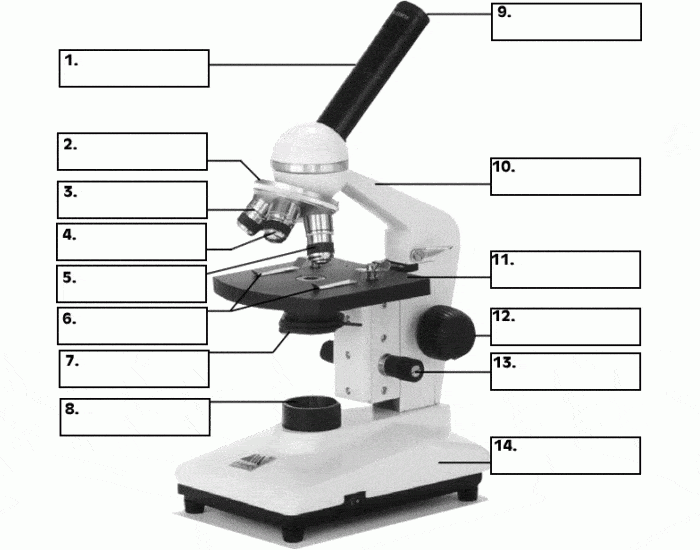
Part 9
a)
Body tube
b)
Eyepiece
c)
Objective
d)
Light Source
83.
Part 10
a)
Stage
b)
Arm
c)
Base
d)
Diaphragm
84.
Part 11
a)
Stage Clips
b)
Stage
c)
Diaphragm
d)
Illuminator
85.
Part 12
a)
Fine Adjustment Knob
b)
Coarse Adjustment Knob
c)
Diaphragm
d)
Objective
86.
Part 13
a)
Fine Adjustment Knob
b)
Course Adjustment Knob
c)
Stage
d)
Diaphragm
87.
Part 14
a)
Stage
b)
Diaphragm
c)
Base
d)
Illuminator
88.
This bring the specimen into sharp focus
a)
Coarse Adjustment Knob
b)
Fine Adjustment Knob
c)
Eyepiece
d)
Diaphragm
89.
Connects to the base and helps carry the microscope easily
a)
Arm
b)
Base
c)
Body Tube
d)
Revolving Nosepiece
90.
This moves the specimen up or down to adjust the slide containing specimen
a)
Fine Adjustment Knob
b)
Coarse Adjustment Knob
c)
Stage
d)
Diaphragm
91.
Used to control the amount of light reaching the specimen
a)
Illuminator
b)
Stage
c)
Eyepiece
d)
Diaphragm
92.
Used to hold the slides in place
a)
Stage
b)
Stage Clips
c)
Diaphragm
d)
Arm
93.
Part that holds two or more objectives
a)
Stage
b)
Stage Clip
c)
Revolving Nosepiece
d)
Body Tube
94.
What structure does an amoeba us to move?
a)
psuedopod
b)
cilia
c)
flagella
d)
flagpole
95.
How does a paramecium move?
a)
Pseudopod
b)
Cilia
c)
Flagella
d)
Flagpole
96.
What is diffusion?
a)
when molecules move 
b)
when molecules move from a high concentration to a low.
c)
no movement 
d)
molecules move everywhere
97.
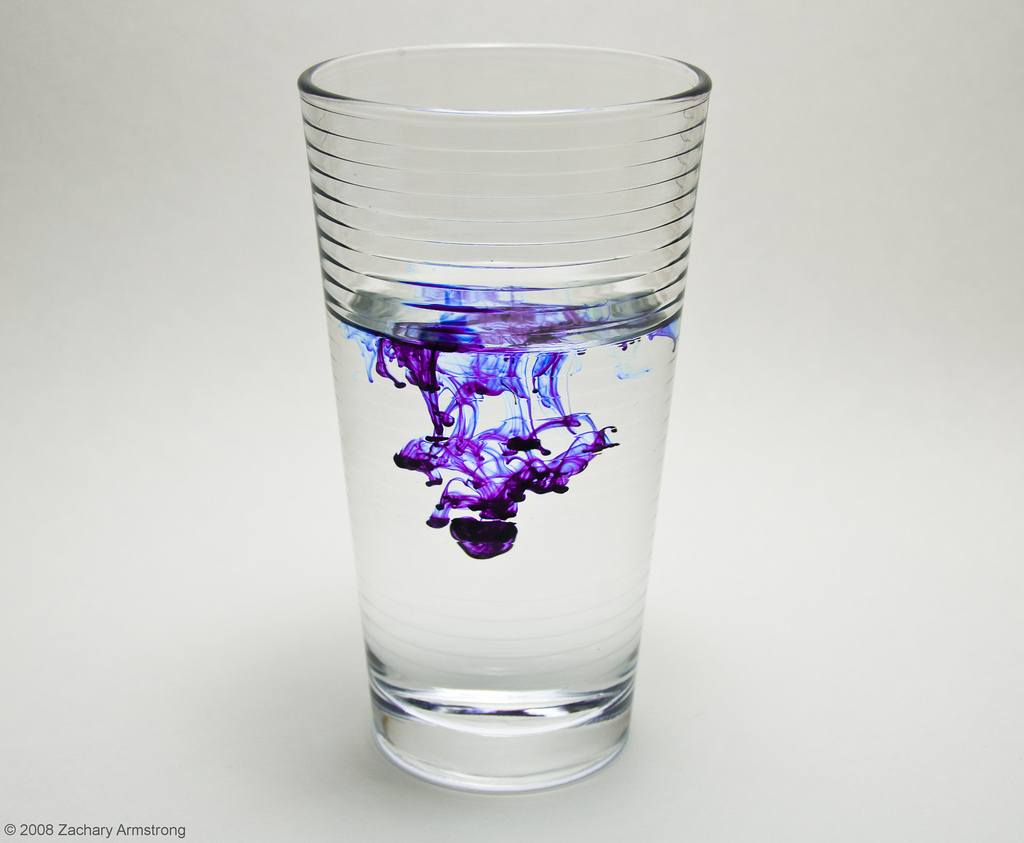
Where is there a low concentration of dye?
a)
at the bottom of cup
b)
in the color
c)
at the top of cup 
d)
no concenteraion gradient
98.
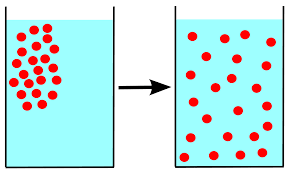
The picture below is an example of _________________.
a)
osmosis
b)
isotonic
c)
diffusion
d)
active transport
99.
Osmosis is the movement of _____ across a membrane.
a)
food
b)
energy
c)
oxygen
d)
water
100.
During osmosis
a)
water moves from high to low concentration
b)
large or oddly shaped molecules move across a cell membrane
c)
water moves when energy is used
d)
proteins are built
101.
Permeable means
a)
things can pass through
b)
the concentration levels are different
c)
it is permanent
d)
things are stuck
102.
What is the definition of  Selective Permeability?
a)
The movement of materials across the cell membrane that requires NO ENERGY from the cell.
b)
The movement of materials through (or across) the cell membrane
c)
The ability of the cell membrane to allow some things to pass through while preventing other things from passing through.
d)
The movement of molecules from an area of high concentration to a area of low concentration 
103.
An animal cell placed in a hypertonic (salty) solution will
a)
Shrink
b)
Swell
c)
Stay the same
104.
Cells make up.....
a)
Tissues
b)
Organs
c)
Organ systems
d)
more cells
105.
organ systems make up.....
a)
Tissues
b)
Organs
c)
Organ systems
d)
organisms
106.
Organs  make up.....
a)
Tissues
b)
Organs
c)
Organ systems
d)
more cells
107.
Which of the following tissues binds everything together?
a)
Epithelial
b)
Connective
c)
Muscle 
d)
Nervous
108.
Which of the following tissues lines the interior and exterior of organs?
a)
Epithelial
b)
Connective
c)
Muscle 
d)
Nervous
109.
Which of the following tissues is made up of cells that contract when stimulated?
a)
Epithelial
b)
Connective
c)
Muscle 
d)
Nervous
110.
Which of the following tissues is made up of cells that conduct impulses?
a)
Epithelial
b)
Connective
c)
Muscle 
d)
Nervous
111.
What is the addictive drug found inside any kind of cigars?
a)
Tobacco 
b)
Liquid Internet
c)
There could be more than one, you never know
d)
Nicotine
112.
Smoking causes...
a)
Strokes
b)
Heart Disease
c)
Cancer
d)
All of the above