
 Worksheets
Mrs Disney Y10 - Biology cells
Total questions: 56
Worksheet time: 39mins
Name
Class
Date
1.
Which of the following is the smallest unit of life that can carry out all life functions?
a)
the mitochondria
b)
the vacuoles
c)
the nucleus
d)
the cell
2.
Which structures are found in every living cell?
a)
cell membrane and cytoplasm
b)
chloroplasts and mitochondria
c)
a cell wall and nucleus
d)
chloroplasts and cell wall
3.
Which cell structure is found in plant and animals cells and controls what can come into or leave a cell?
a)
cell membrane
b)
cytoplasm
c)
nucleus
d)
vacuole
4.
What is the function of the cell nucleus found in both plant and animal cells?
a)
to produce energy
b)
to control cell activity
c)
to remove waste products
d)
to allow molecules to enter the cell
5.
What is one basic function of the vacuoles?
a)
circulating oxygen
b)
producing food
c)
controlling cell processes
d)
storing water
6.
Chloroplasts in plant cells allow the plant to perform a function that animal cells cannot do. What is the main function of the chloroplasts found in plant cells?
a)
to absorb light energy and manufacture food
b)
to remove waste materials by active transport
c)
to manufacture chemical energy from food
d)
to control the shape of the cell
7.
All cells need energy to function. Which cell organelle is responsible for producing energy in the cell?
a)
chloroplasts
b)
mitochondria
c)
nucleus
d)
vacuoles
8.
What is the function of a cell wall?
a)
to protect and support the cell
b)
to perform different functions in each cell
c)
to prevent water from passing through it
d)
to prevent oxygen from entering the cell
9.
In what part of the plant cell does the process of photosynthesis take place?
a)
nucleus
b)
mitochondria
c)
chloroplasts
d)
vacuoles
10.
The basic unit of structure and function in a living things.
a)
chloroplast
b)
nucleus
c)
cell
d)
cell membrane
11.
Which organelle is only found in a plant cell?
a)
nucleus
b)
chloroplast
c)
mitochondria
d)
cell membrane
12.

Directs all cell activities through the DNA located there.
a)
Lysosomes
b)
Nucleus
c)
ribosomes
d)
Mitochondria
13.
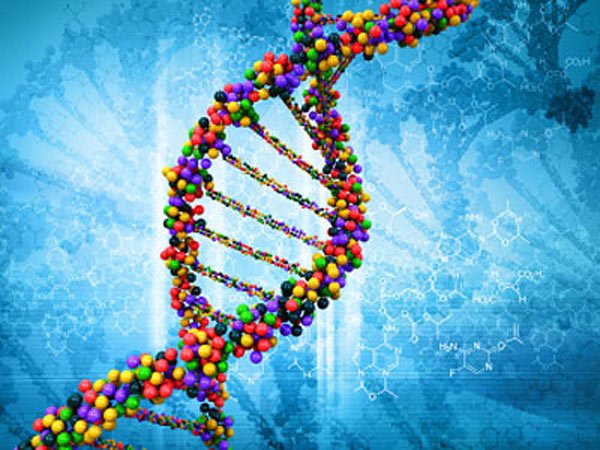
What is the name of the genetic material that is inside the nucleus?
a)
ER
b)
ATP
c)
YOLO
d)
DNA
14.
What is found in both plant and animal cells but is much larger in plant cells?
a)
Nucleus
b)
Mitochondria
c)
Chloroplast
d)
Vacuole
15.
Where are proteins made?
a)
Golgi body
b)
Mitoichondria
c)
Chromosomes
d)
Ribosomes
16.
This organelle takes food and turns it into ENERGY for plant and animal cells.
a)
Chloroplast
b)
Mitochondria
c)
Lysosome
d)
Ribosome
17.
The site of photosynthesis
a)
ribosome
b)
mitochondria
c)
chloroplast
d)
nucleus
18.
I am the outer most layer of an animal cell. What am I?
a)
cell wall
b)
nucleus
c)
cell membrane
d)
cell skin
19.
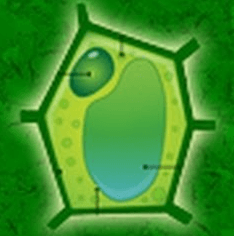
A rigid layer that lies outside the cell's membrane is...
a)
Cytoskeleton
b)
Cilia
c)
Cell Wall
d)
Flagella
20.
What is the gel-like substance inside of cells called?
a)
photoplasm
b)
photosynthesis
c)
cytoskeleton
d)
cytoplasm
21.
The lungs and the kidneys are examples of
a)
cells
b)
organs
c)
tissues
d)
organ systmes
22.
This thin layer protects the cell and regulates what substances enter and leave the cell.
a)
cell membrane
b)
cell
c)
cell wall
d)
golgi body
23.
In a plant cell, a stiff wall surrounds the membrane, giving the cell a rigid, boxlike shape.
a)
cell membrane
b)
cell
c)
ribosome
d)
cell wall
24.
These organelles capture energy from sunlight and use it to produce food for the cell.
a)
cell membrane
b)
chloroplasts
c)
cell wall
d)
ribosomes
25.
A gel-like fluid in which many different organelles are found.
a)
cell membrane
b)
nucleus
c)
organelle
d)
cytoplasm
26.
A tiny cell structure that carries out a specific function within a cell.
a)
organelle
b)
cell
c)
nucleus
d)
ribosomes
27.
Plants perform photosynthesis through this organelle. It captures energy from the sun and uses it to produce food for the cell.
a)
Chlorophyll
b)
Chloroplasts
c)
Mitochondria
d)
Golgi Apparatus
28.
This structure is a storage area for the cell. Plants usually have one large one.
a)
Lysosome
b)
Vacuole
c)
Ribosome
d)
Golgi Body
29.
This structure is in plant cells but not animal cells. It is outside of the cell membrane and adds more support/structure/rigidity to the plant.
a)
Cell membrane
b)
Cell Nucleus
c)
Cell Wall
d)
Endoplasmic Reticulum
30.
What tool do you use to view cells?
a)
metric ruler
b)
magnifying glass
c)
microscope
d)
petri dish
31.
This scientist discovered and named the cell.
a)
Robert Hooke
b)
Anton Van Leeuwenhoek
c)
John Dalton
d)
Mathias Schleiden
32.
A typical plant cell is rectangular in shape.
a)
True
b)
False
33.
A typical animal cell is spherical in shape.
a)
True
b)
False
34.
Controls what enters and leaves the cell
a)
Mitochondria
b)
Cell Membrane
c)
Cell Wall
d)
Nucleus
35.

What is the fluid inside a cell called?
a)
Endoplasimic Reticulum
b)
Orange Juice
c)
Water
d)
Cytoplasm
36.
Find the total magnification:
Eyepiece = 10X
Objective lens = 55X
Eyepiece = 10X
Objective lens = 55X
a)
10x
b)
55x
c)
65x
d)
550x
37.
What does “high concentration area” mean?
a)
Spread out
b)
Tightly packed together
c)
Uncrowded
d)
Spacious
38.
When particles move from areas of high concentration to areas less concentrated, this has taken place.
a)
diffusion
b)
mitosis
c)
endocytosis
d)
photosynthesis
39.
What process occurs when WATER diffuses across a membrane?
a)
endocytosis
b)
mitosis
c)
osmosis
d)
nuclear fission
40.

Which diagram best shows the end result of diffusion?
a)
F
b)
G
c)
H
d)
J
41.
Why is diffusion and osmosis important to cells?
a)
It allows them to take in materials without using energy.
b)
It allows them to reproduce.
c)
It allows them to absorb sunlight.
d)
It allows cells to use all energy.
42.

The picture is an example of _________________.
a)
isotonic
b)
diffusion
c)
osmosis
d)
active transport
43.
When both inside and outside of a cell have the same amount of water it is said that the cell has reached a state of ___________.
a)
osmosis
b)
equilibrium
c)
diffusion
d)
hypertonic
44.

Which way will the water molecules move during osmosis?
a)
Out of the cell, so the cell shrinks.
b)
Out of the cell, so the cell swells.
c)
Into the cell, so the cell shrinks.
d)
Into the cell, so the cell swells.
45.

Where is there a high concentration of bbq smoke?
a)
In the bbq pit
b)
In the house
c)
Two streets over
d)
In the atmosphere
46.
What is diffusion?
a)
when molecules move
b)
when molecules move from a high concentration to a low.
c)
no movement
d)
molecules move everywhere
47.
molecules move from a
a)
high concentarion to low concentartion
b)
up and down
c)
left to right
d)
no movement
48.

Where is there a high concentration of water?
a)
in the flower
b)
cannot be determined by picture.
c)
in the vase
d)
in the leaves
49.
when a person smells something, what is actually traveing up their nose?
a)
solids
b)
moleulces
c)
matter
d)
plasma
50.

The picture below is an example of _________________.
a)
osmosis
b)
isotonic
c)
diffusion
d)
active transport
51.
Diffusion is the movement of molecules from an area of _____ concentration to an ______ concentration
a)
High, low
b)
Low, high
c)
Low, low,
d)
High, high
52.
In diffusion, particles move down a _______ ________
a)
Concentrate gradient
b)
Conceited gradient
c)
Concentration gradient
d)
Concentrated orange juice
53.
Diffusion allows the movement of particles without having to use any _____
a)
Energy
b)
4G
c)
Data
d)
Transport proteins
54.
If there is more oxygen in the blood than in an organ, which direction would the oxygen move?
a)
Out of the blood
b)
Into the blood
55.
Which of the following doesn't influence the rate of diffusion?
a)
Distance
b)
Concentration gradient
c)
Type of cell involved
d)
Temperature
56.
An increase in temperature does what to diffusion?
a)
Speeds it up
b)
Slows it down
c)
Has no effect
d)
I wish i knew. Really I do.
100 %

