Wayground logo

Free Printable Worksheets

Font size

S
M
L
XL
Worksheets

2018 Circulatory System

Total questions: 54

Worksheet time: 37mins

Name
Class
Date
1.

Arteries carry oxygen rich blood away from the heart.

a)

True

b)

False

2.

Veins carry oxygen poor blood back to the heart.

a)

False

b)

True

3.

The heart is about the size and shape of your . . .

a)

head

b)

fist

c)

hand

d)

foot

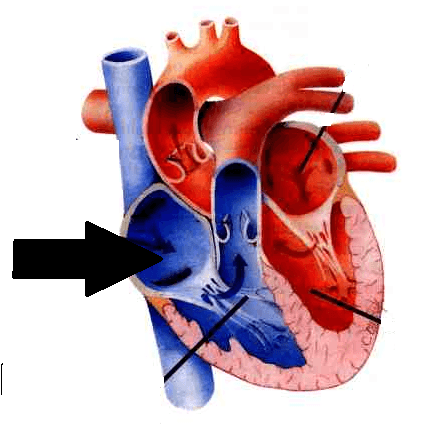
4.
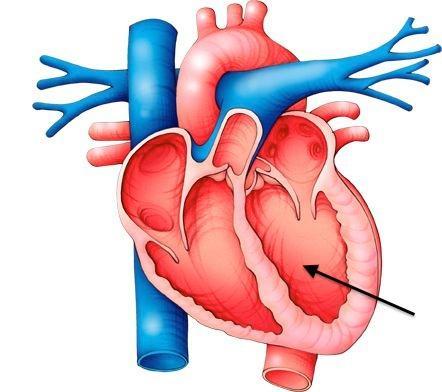
Identify
a)
Left atrium
b)
Right atrium
c)
Left ventricle
d)
Right ventricle
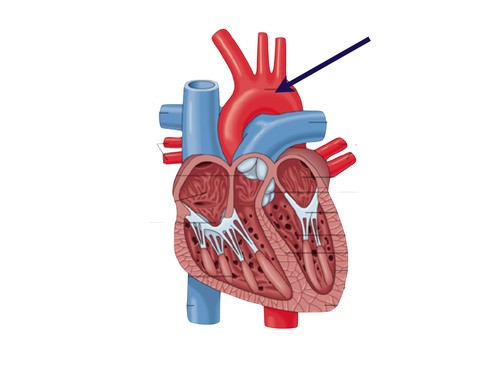
5.
Identify
a)
Pulmonary veins
b)
Pulmonary artery
c)
Aorta
d)
Vena cava
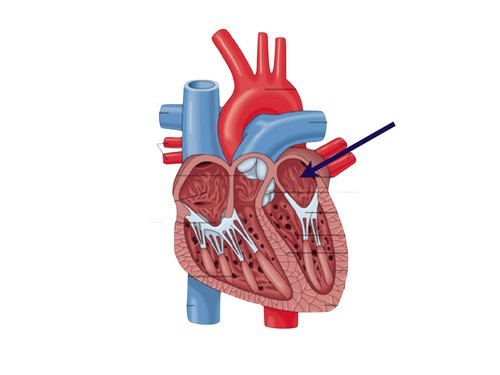
6.
Identify
a)
Left atrium
b)
Right atrium
c)
Left ventricle
d)
Right ventricle
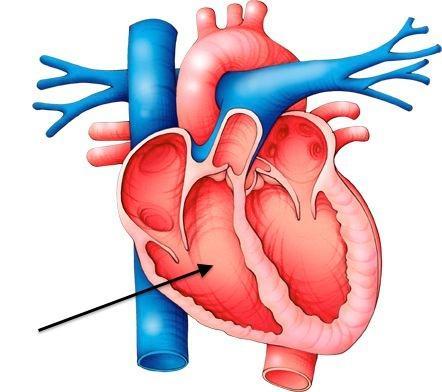
7.
Identify
a)
Left atrium
b)
Right atrium
c)
Left ventricle
d)
Right ventricle
8.
Identify
a)
Left atrium
b)
Right atrium
c)
Left ventricle
d)
Right ventricle
9.
The heart has ___ chambers.
a)
1
b)
2
c)
3
d)
4
10.
Which chambers of the heart are the thickest and strongest?
a)
Atria
b)
Ventricles
c)
Valves
d)
Aorta
11.
The aorta is the largest artery in the body. The blood leaving the aorta is full of?
a)
Oxygen 
b)
Carbon Dioxide 
c)
White blood Cells 
d)
Potassium 
12.
Thin-walled vessels that allow for the exchange of O2 , CO2, nutrients and wastes between blood cells or air sacs in the lungs
a)
Arteries
b)
Veins
c)
Capillaries
13.
What does Deoxygenated mean?
a)
Oxygen-rich
b)
Blood flow
c)
Oxygen-poor
d)
Water Flow
14.
A flap of tissue that prevents blood from flowing backward
a)
Aorta
b)
Atrium
c)
Septum
d)
Valve
15.
What is pulmonary circulation?
a)
Blood travelling to and from the lungs
b)
Blood travelling to and from the body
c)
A blood clot in the lungs
d)
The vessel that brings blood to the lungs
16.
Blood circulation from the heart to the rest of the body is called
a)
Full body
b)
Systemic
c)
pulmonary
d)
heart to lung
17.
Which is the correct definition of the Circulatory system?
a)
The system fights disease so the body stays healthy.
b)
The system that circulates blood and oxygen through the body, consisting of the heart,blood vessels,and blood.
c)
Breaks down food into smaller pieces and absorbs those nutrients into the body.
d)
Provides shape and structure for the body.
18.
Which is NOT a function of the circulatory system?
a)
deliver O2 and nutrients to cells
b)
remove CO2 and wastes from cells
c)
break down carbohydrates into glucose
d)
transport other materials through body
19.
What is the functon of an Pulmonary Circulation?
a)
Sends blood from the heart to the lungs to be purified.
b)
Carries the blood from the heart throughout the body 
c)
Temporarily close a passage or permits blood flow in only one direction.
d)
Makes you bleed
20.
Where is the bicuspid valve located?
a)
between right atrium & right ventricle
b)
between left atrium & left ventricle
c)
between left ventricle & aorta
d)
between right ventricle & pulmonary trunk
21.
What electrical part of the heart is also called the intrinsic pacemaker of the heart?
a)
SA node
b)
AV node
c)
VA node
d)
purkinje fibers
22.
What is the largest artery in the human body?
a)
Aorta 
b)
lung
c)
ventricle
d)
vein 
23.
The circulatory system works with the ___________ system to provide our body with oxygen.
a)
respiratory
b)
digestive
c)
muscular
d)
skeletal
24.
The circulatory system works with the __________ system to obtain energy from nutrients that we eat. 
a)
respiratory 
b)
digestive
c)
skeletal
d)
nervous
25.
Where does the deoxygenated blood from the body go ?
a)
Stomach
b)
Colon
c)
Toes
d)
Lungs
26.

The muscular layer of the heart is the

a)

Pericardium

b)

Endocardium

c)

Epicardium

d)

Myocardium

27.

How much blood does the average adult have in his/her body?

a)

2 to 4 quarts

b)

4 to 6 quarts

c)

6 to 8 pints

d)

3 to 6 pints

28.

Which of the following blood proteins does not aid in clotting?

a)

hemoglobin

b)

fibrinogen

c)

prothrombin

d)

none of the above

29.

How many erythrocytes are in one droplet of blood

a)

250,000 to 400,000

b)

25 billion

c)

4.5 to 6 million

d)

10,000-15,000

30.

Hemoglobin carrying oxygen results in blood looking which color?

a)

Red

b)

Blue

c)

Bluish

d)

Purple

31.

Blood cells that fight infection are called

a)

Erythrocytes

b)

Thrombocytes

c)

Platelets

d)

Leukocytes

32.

An inherited disease that occurs almost exclusively in males in which the blood is unable to clot is ?

a)

Anemia

b)

Hemophilia

c)

Leukemia

d)

Sickle Cell Anemia

33.

An inflammation of a vein near the skin surface, with the formation of a clot is ____.

a)

Varicose veins

b)

Embolus

c)

Thrombophlebitis

d)

Phlebitis

34.

During ______, the atria are filling with blood and the ventricles contract.

a)

Diastole

b)

Contractility

c)

Elasticity

d)

Systole

35.

Plasma is approx ____ % water with suspended elements.

a)

25

b)

60

c)

85

d)

90

36.

A severe chest pain that may radiate into the arm, neck or jaw may indicate which of the following?

a)

Myocardial Infarction

b)

Congestive Heart Failure

c)

Rapid PVCs

d)

Atrial Fibrillation

37.

The pressure exerted by the right ventricle must push blood to

a)

the body

b)

the lungs

c)

left atrium

d)

aorta

38.

The disease that occurs when fatty plaques are deposited on the walls of the arteries is called

a)

arteriosclerosis

b)

anemia

c)

MI: Myocardial Infarction

d)

atherosclerosis

39.
Chemical that binds to red blood cells to transport oxygen and pick up carbon dioxide. 
a)
Hemoglobin
b)
Hormone
c)
White Blood Cell 
d)
Glucose
40.
(Natural pacemaker of the heart) Controls the heart rate by generating electrical impulses and then sending electrical signals through the heart muscle, causing the heart to contract and pump blood throughout the body.
a)
AV Node
b)
SA Node
c)
Atrium 
d)
Ventricle
41.
The dividing wall between the right and left sides of the heart. 
a)
Ventricle
b)
Atrium 
c)
Septum
d)
Aorta
42.
The small cell fragments circled in yellow function to __
a)
Transport oxygen to the body's cells
b)
Take carbon dioxide to the lungs
c)
To fight infection and bacteria that invade the body 
d)
To help form clots
43.
The function of the structure circled in yellow is to ____
a)
Transport oxygen and other needed materials to the body's cells
b)
To help fight bacteria and other infectious organisms
c)
To help form clots
d)
It is the liquid part of the blood
44.
What is the function of the blood component that is circled in yellow? 
a)
Transport oxygen, glucose and other needed materials to the cells. 
b)
To fight bacteria and diseases
c)
It is the liquid part of the blood
d)
To help form clots
45.
Which is NOT a component of the cardiovascular system.
a)
Heart
b)
liver 
c)
Blood
d)
Blood vessels 
46.

What are the microscopic vessels that join the arterial system with the venous system?

a)

arteries

b)

capillaries

c)

veins

d)

venules

47.
Order the phases an action potential travels in the conduction system
a)
SA node--> AV bundle branches--> AV node--> Purkinje fibers
b)
SA node--> AV node--> AV bundle branches-->  Purkinje fibers
c)
Av bundle branches--> AV node--> SA node--> Purkinje fibers
d)
Purkinje fibers--> SA node--> AV node--> AV bundle branches
48.
The pacemaker of the heart is also known as the....
a)
AV node
b)
SA node
c)
Purkinje fibres
d)
Bundle of His
49.
An electrocardiogram measures what?
a)
The amount of pressure exerted on blood vessels.
b)
The electrical activity of the heart.
c)
How many times the heart contracts over time.
d)
The body's temperature caused by friction of blood in vessel.
50.
Which contract in unison?
a)
Top chambers, then bottom chambers.
b)
Right Chambers, then the Left Chambers
c)
All four chambers beat in unison.
51.
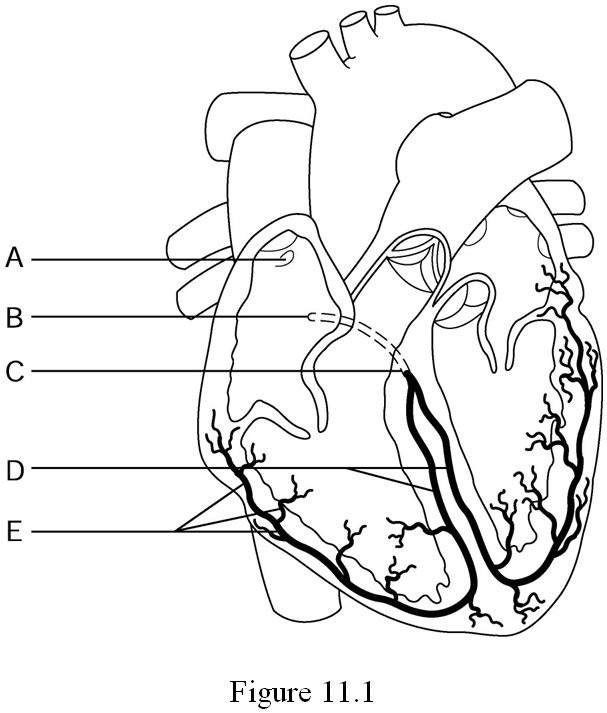
The AV node is located at...
a)
A
b)
B
c)
C
d)
D
52.
Where in the heart could I find the SA Node?
a)
Right Atrium
b)
Left Atrium
c)
Right Ventricle
d)
Left Ventricle
53.
Which label is representing the Purkinje fibers?
a)
A
b)
C
c)
D
d)
E
54.
Which one of the following represents the correct path for the transmission of an impulse in the intrinsic conduction system of the heart?
a)
AV node, Bundle of His, SA node, Purkinje fibers, bundle branches
b)
SA node, AV node, Bundle of His, bundle branches, Purkinje fibers
c)
SA node, Bundle of His, AV node, Purkinje fibers, bundle branches
d)
SA node, Bundle of His, bundle branches, Purkinje fibers, AV node