wayground logo

Free Printable Worksheets

NEW

Font size

S
M
L
XL
Worksheets

Unit 1 Review

Total questions: 65

Worksheet time: 55mins

Name
Class
Date
1.
Which of the following is a negatively charged subatomic particle?
a)
Electron
b)
Proton
c)
Neutron
d)
Quark
2.
All matter is made of what?
a)
energy 
b)
atoms 
c)
electrons 
d)
compounds 
3.
The particles that are found in the nucleus of an atom are
a)
neutrons and electrons
b)
electrons only
c)
protons and neutrons
d)
protons and electrons
4.
The atomic number of an elements is the total number of which particles in the nucleus?
a)
neutrons
b)
protons
c)
electrons
d)
protons and electrons
5.
The atomic number of an elements is the total number of which particles in the nucleus?
a)
neutrons
b)
protons
c)
electrons
d)
protons and electrons
6.
What are the horizontal rows on the periodic table called?
a)
Groups
b)
Periods
c)
Rows
d)
Classifications
7.
Which of the following is a positively charged subatomic particle found in the nucleus of an atom?
a)
Electron
b)
Proton
c)
Neutron
d)
Quark
8.
Which of the following is a subatomic particle with no charge that is found in the nucleus of an atom?
a)
Electron
b)
Proton
c)
Neutron
d)
Quark
9.
Where are electrons of an atom found?
a)
Nucleus
b)
Electron Cloud
c)
Some are in the nucleus and some in the electron cloud.
d)
They are moving everywhere.
10.
What are the vertical columns on the periodic table called?
a)
Groups
b)
Periods
c)
Rows
d)
Classifications
11.
What subatomic particle is electrically neutral (no charge)?
a)
Proton
b)
Ion
c)
Neurton
d)
Electron
12.
What is the mass of an atom if it has 11 protons, 12 neutrons, and 11 electrons?
a)
22
b)
11
c)
34
d)
23
13.
If an atom has 10 protons, 10 neutrons, and 10 electrons, what is the mass of the atom?
a)
10
b)
20
c)
30
14.
What subatomic particle(s) would be found orbiting the nucleus?
a)
Neutrons only
b)
Electrons only
c)
Protons and Neutrons
d)
Protons and Electrons
15.
Protons and Electrons balance the charge of an atom.
a)
True
b)
False
16.
Which subatomic particles contribute the most to the mass of an atom?
a)
Protons, Neutrons, Electrons
b)
Protons only
c)
Protons and Electrons
d)
Protons and Neutrons
17.
If an atom has 12 positively charged subatomic particles, which of the following must it also have to be considered a neutral atom?
a)
12 neutrons
b)
12 electrons
c)
12 protons
d)
24 protons and neutrons
18.
Compounds are made of two or more elements.
a)
True
b)
False
19.
The smallest particle of any type of matter is known by which of the following terms?
a)
Element
b)
Compound
c)
Atom
d)
Chemical
20.
What is the chemical symbol for Chlorine
a)
C
b)
Cl
c)
Ch
d)
Ce
21.
What particle uniquely identifies an element?
a)
Number of Valence Electrons
b)
Number of Protons
c)
Number of Electrons
d)
Atomic Mass
22.
Who was the first scientist to name atoms?
a)
Aristotle
b)
Democritus
c)
JJ Thomson
d)
Rutherford
23.
True or False: There is nothing smaller than an atom.
a)
True
b)
False
24.
What is the overall charge of this atom?
a)
+4
b)
-3
c)
+1
d)
-1
25.
What is the overall charge of this atom?
a)
+3
b)
-3
c)
0
d)
+1
26.
What is the atomic number for an element with three protons?
a)
2
b)
1
c)
3
d)
6
27.
an atom with atomic number 6 would have how many protons 
a)
6
b)
12
c)
3
d)
cannot be determined 
28.
What is the number of protons that the element in this image contain?
a)
14
b)
7
c)
15
d)
18
29.
Which letter represents a proton?
a)
A
b)
B
c)
C
d)
D
30.

The periodic table is in order by the

a)

Mass number

b)

Neutron number

c)

Atomic number

d)

APE MAN Number

31.

Name the element

a)

Boron

b)

Carbon

c)

Nitrogen

d)

Oxygen

32.

Name the element

a)

Aluminum

b)

Silicon

c)

Phosphorus

d)

Sulfur

33.
How many energy levels would an atom of Boron have?
a)
1
b)
2
c)
3
d)
4
34.
How many valence electrons would an atom of Oxygen have?
a)
3
b)
6
c)
8
d)
16
35.
What element is represented in this Bohr Model? 
a)
Carbon
b)
Hydrogen
c)
Aluminum
d)
Lithium
36.
The first energy level can hold up to how many electrons?
a)
8
b)
4
c)
2
d)
5
37.
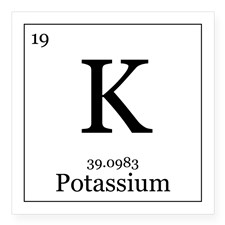
How many neutron are in the atom "K"?
a)
7
b)
2
c)
39
d)
20
38.
Which of these grouping of elements could have the characteristic of luster (shiny)?
a)
Metal
b)
Nonmetal
c)
metalloids
d)
Both metals and metalloids
39.
Which of these grouping of elements could have the characteristic of brittle?
a)
Metal
b)
Nonmetal
40.
Which of the following is a good conductor of heat?
a)
Metal
b)
Nonmetal
c)
Metalloid
41.
One property of a nonmetals is that it is a good conductor of electricity?
a)
true
b)
false
42.
Which of the following properties refers to the ability of metals to be drawn into wires?
a)
A. malleability 
b)
B. compressibility
c)
C. ductility
d)
D. luster
43.
If a substance breaks easily, it is said to be ________________.
a)
A. Magnetic
b)
B. Brittle
c)
C. Conductive
d)
D. Ductile
44.
Metals appear to the _______ of the dark ziz-zag line on the periodic table. 
a)
A. right
b)
B. middle
c)
C. left
45.
What does malleable mean?
a)
able to bend
b)
will break easily
c)
can be used for wire
d)
is shiny
46.
How would this element be classified?
a)
Metal
b)
Nonmetal
c)
Metalloid
d)
Metamorphic
47.
Some students conducted a laboratory investigation to learn more about the physical properties of different elements. They observed four samples and recorded their observations in the table . Based on these observations, which sample is most likely a nonmetal?
a)
Sample 1
b)
Sample 2
c)
Sample 3
d)
Sample 4
48.

Which force holds the nucleus of the atom together?

a)

Strong Nuclear

b)

Weak Nuclear

c)

Electromagnetic

d)

Gravitational

49.
What is an isotope?
a)
atom of the same element with a different number of neutrons.
b)
Atoms of different elements with the same mass
c)
Atoms of the same element with different numbers of electrons
d)
I have no idea:(
50.
Mass Number is--
a)
the number of protons + neutrons
b)
the number of protons
c)
the number of electrons +protons +electrons
d)
the same as atomic number
51.
Atomic number=
a)
number of neutrons
b)
atomic mass
c)
protons
d)
electrons+protons
52.

UP and DOWN columns on the periodic table are

a)

groups

b)

periods

53.

SIDE TO SIDE rows on the periodic table are

a)

groups

b)

periods

54.

Which elements have properties in common?

a)

elements in a group

b)

elements in a period

55.

The group number tells you the number of

a)

protons

b)

valence electrons

c)

energy levels

56.

The period number tells you the number of

a)

protons

b)

energy levels

c)

valence electrons

57.

Which two elements have properties in common?

a)

Nitrogen and Phosphorous

b)

Oxygen and Nitrogen

c)

Sulfur and Nitrogen

58.

These elements are in a:

a)

group

b)

period

59.

Do these elements have properties in common?

a)

yes

b)

no

60.

These elements are in a:

a)

group

b)

period

61.

Do these elements have properties in common?

a)

yes

b)

no

62.

Which elements are stable?

a)

Group 1

b)

Group 8

c)

Group 18

63.
Which of the following is a pure substance?
a)
CO
b)
C02
c)
Co
d)
H2O
64.
Which of the following chemical formulas represents a compound? 
a)
C
b)
O2
c)
CaCO3
d)
H2
65.
Which of the following is NOT a compound?
a)
HCl
b)
Cl
c)
NaCl
d)
CO2