Wayground logo

Free Printable Worksheets

Font size

S
M
L
XL
Worksheets

Test Review - Motion of the Moon

Total questions: 50

Worksheet time: 33mins

Name
Class
Date
1.
About how many days does it take to moon to go through a complete cycle?
a)
7 days
b)
365 days
c)
29 days
d)
20 days
2.
When the visible (lit) portion of the moon is increasing, the moon is:
a)
waning
b)
full
c)
waxing
d)
new
3.
When the Earth is between the moon and sun, it is most likely a:
a)
new moon
b)
full moon
c)
waxing crescent
d)
waxing gibbous
4.
Approximately how much time passes between the new moon and full moon?
a)
one month
b)
two weeks
c)
3 days
d)
24 hours
5.

What causes the moon's phases

a)

Where you are standing on Earth

b)

the amount of sunlight reflected onto the moon from the sun

c)

The tilt of Earth

d)

how fast the moon is moving

6.
As the moon moves from a new moon to a full moon, you see:
a)
the moon appearing increasingly lighter
b)
The amount of light the moon is receiving decreasing
c)
the amount of light the moon gets staying constant
d)
more light and then less light
7.
Why do we always see the same side of the moon from Earth?
a)
because the phases change
b)
because it rotates and revolves at the same rate
c)
because half of the moon always receives sunlight
d)
The moon changes positions
8.
Mrs. Smith says "the moon looks larger than the stars!" What explains this?
a)
The moons soaks up the star's light
b)
The moon is larger than Earth
c)
The moon is larger than stars
d)
the moon is closer to Earth than stars
9.
The Moon orbits Earth in a ________________ direction
a)
clockwise
b)
counterclockwise
c)
upwards
d)
downwards
10.

Define Waxing

a)

The visible part of the Moon is increasing and the dark part is decreasing.

b)

Completely illuminated

c)

dark side is facing earth

d)

Moon is decreasing and light part appears to be shrinking

11.
Define Gibbous
a)
Less than half of moon visible
b)
More than half of moon visible
c)
All of moon visible
d)
None of moon visible
12.
Define Full Moon
a)
None of moon is visible
b)
Half moon phase is visible
c)
Complete moon face is visible
d)
Less Than half of moon is visible
13.
Define New Moon
a)
None of moon is visible from Earth
b)
All of moon visible from Earth
c)
Moon is 1/2 visible from Earth
d)
Moon is more than Half Visible from Earth
14.
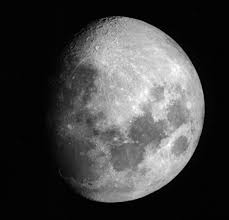
Name the moon phase
a)
Waxing Gibbous
b)
Waxing Crescent
c)
Waning Crescent
d)
Waning Gibbous
15.
Name the moon phase
a)
Waning Crescent
b)
Waxing Crescent
c)
Waning Gibbous
d)
Waxing Gibbous
16.
The phase of the moon that occurs between the sun and Earth
a)
Full moon
b)
Waxing crescent
c)
Waning Crescent
d)
New Moon
17.
The 1st Quarter moon is lit on the:
a)
Left Side
b)
Right Side
18.
T/F When the moon is waxing,the part that is lit by the sun is getting larger on the right side
a)
TRUE
b)
FALSE
19.
T/F The moon can be seen from Earth because it reflects the sun's light
a)
TRUE
b)
FALSE
20.
When only a small part of the moon is visible, it is probably in what phase?
a)
waxing or waning crescent
b)
first quarter
c)
new moon phase
d)
waxing or waning gibbous phase
21.
What is the correct order of the moon phases?
a)
new, full, 1st quarter, 3rd quarter
b)
new moon, 1st quarter, full moon, 3rd quarter
c)
1st quarter, 3rd quarter, new moon, full moon
d)
new, 1st quarter, 3rd quarter, full
22.
Define Waning
a)
Moon appears to be gradually increasing in size
b)
Moon is completely illuminated
c)
Moon appears to be gradually decreasing in size
d)
More than half illuminated
23.
Name the moon phase
a)
waning crescent
b)
waxing crescent
c)
waning gibbous
d)
waxing gibbous
24.
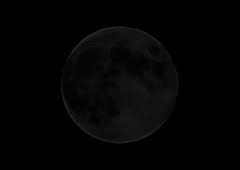
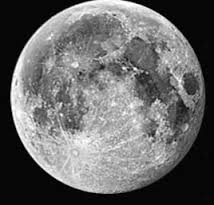
Name the moon phase
a)
First Quarter
b)
Last Quarter
c)
New Moon
d)
Full Moon
25.
Name the moon phase
a)
First Quarter
b)
Last Quarter
c)
New Moon
d)
Full Moon
26.
Name the moon phase that would come AFTER this moon.
a)
waning crescent
b)
waxing crescent
c)
waning gibbous
d)
waxing gibbous
27.
What are the reasons for the seasons?
a)
Earth's tilt and rotation.
b)
Earth's rotation and revolution.
c)
Earth's tilt and revolution.
d)
Earth's tilt and resolution
28.
Which of the following statements is most accurate about the Movement of Earth and the Sun?
a)
The Sun revolves around the Earth
b)
The Earth rotates around the Sun
c)
The Earth revolves around the Sun
d)
The Earth rotates and revolves around the Sun 
29.
What would be the result if the Earth's axis was not tilted but straight up and down?
a)
Nothing would change
b)
There would be no seasons
c)
Days would get longer
d)
The Equator would burn up and the poles would freeze
30.
A solar eclipse only occurs during which moon phase?
a)
1st Quarter
b)
New Moon
c)
Full Moon
d)
3rd Quarter
31.
Which is NOT a reason why lunar eclipses are more commonly seen than solar eclipses.
a)
The Earth's shadow is larger on the moon that the moon is on Earth.
Lunar eclipses last for a longer period of time.
b)
The Earth's shadow is larger on the moon that the moon is on Earth.
c)
Solar eclipses are only visible in a small strip of degrees latitude.
d)
The Earth's orbit and the moon's orbit is the same.
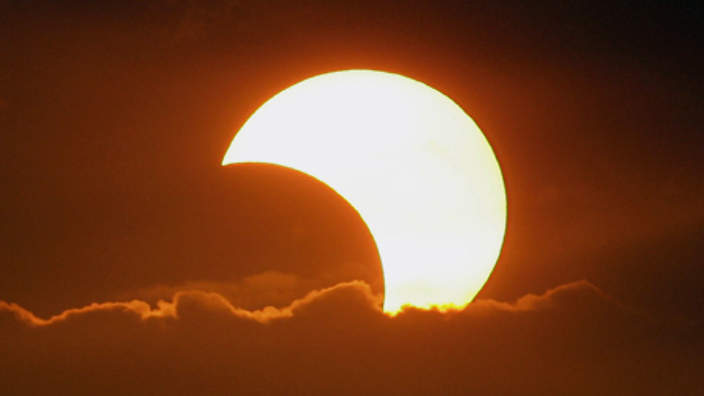
32.
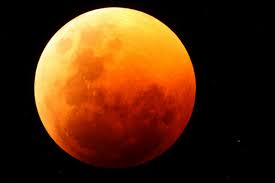
This image is an example of
a)
Lunar Eclipse
b)
Full Moon
c)
New Moon
d)
Solar Eclipse
33.
A lunar eclipse only occurs during which moon phase?
a)
New Moon
b)
3rd Quarter
c)
Full Moon
d)
1st Quarter
34.
This image is an example of 
a)
Lunar Eclipse
b)
New Moon
c)
Solar Eclipse
d)
Full Moon
35.

Why isn't there an eclipse every month?

a)

Because the moon orbits the sun differently than Earth does.

b)

Because the Earth's orbit and the moon's orbit are at the same angle, flat plane.

c)

Because the moon's orbit is offset from Earth's orbit by 5°, not in a flat plane.

d)

Because the lunar cycle is longer than a month.

36.

What happens during a total solar eclipse?

a)

The sun blocks the moon from Earth.

b)

The moon blocks the light from the sun from reaching a small part of Earth.

c)

The Earth blocks the moon from the sun.

d)

The Earth blocks the light from the sun on the moon.

37.

The phase of the moon is caused by moon's

a)

rotation

b)

revolution around Earth

c)

eclipses

d)

gravity

38.

A full moon occurs on June 15. Approximately when will the next full moon be observed?

a)

July 1

b)

June 15

c)

July 15

d)

June 21

39.

Which type of eclipse can be seen by more people?

a)

lunar eclipse

b)

solar eclipse

40.
For a solar eclipse to occur, what has to happen?
a)
The sun must be directly between Earth and the moon.
b)
The moon must be directly between Earth and the Sun.
c)
Earth must be directly between the Sun and the moon.
41.
A lunar eclipse often has a/an __________ appearance
a)
Black
b)
Yellow
c)
Orange Red
d)
White
42.
Faint, outer shadow of the Moon.
a)
umbra
b)
lumbar
c)
penumbra
d)
annular
43.
Dark, inner shadow of the Moon.
a)
umbra
b)
lumbar
c)
penumbra
d)
annular
44.
In any given location on Earth, a total eclipse happens only once every ______ . 
a)
100 years
b)
250 years
c)
360 years
d)
1,000 years
45.
when the Moon passes completely into the Umbra, or total shadow of the Earth.
a)
Total Lunar Eclipse
b)
Partial Lunar Eclipse
c)
Penumbral Lunar Eclipse
d)
Annular Eclipse
46.

This type of eclipse occurs when the moon is farthest from the Earth in its orbit. This makes the moon look smaller, so during the eclipse you see an outer ring of light from the Sun.

a)

Total Solar Eclipse

b)

Partial Solar Eclipse

c)

Annular Eclipse

d)

Partial Annular Eclipse

47.
Why Don’t We See Lunar
Eclipses More Often?
a)
Because the Moon’s orbit is tilted, during most months, the Moon is above or below the Earth. 
b)
Because, most lunar eclipses happen at night so you do not see them.
c)
Because, most lunar eclipses happen during the day and the sun blocks our view.
d)
Because, they happen usually very late night or early in the mornings before people are awake to see them.
48.
The path the moon takes around the Earth.
a)
Trail
b)
Circle
c)
98 Days
d)
Orbit
49.
Why do we not have a solar eclipse every year?
a)
The Earth's orbit is tilted
b)
The moons orbit is tilted 
c)
The Sun is shy
d)
The Sun is too hot
50.
When the moon passes partly into the umbra of the Earth's Shadow
a)
Partial Solar Eclipse
b)
Partial Lunar Eclipse
c)
Total Lunar Eclipse
d)
Total Solar Eclipse