Wayground logo

Free Printable Worksheets

Font size

S
M
L
XL
Worksheets

Lithosphere review

Total questions: 114

Worksheet time: 2hrs 35mins

Name
Class
Date
1.
The color of a mineral in powder form is called the mineral's 
a)
hardness
b)
specific gravity
c)
luster
d)
streak
2.
How light reflects off of a mineral is called the mineral's 
a)
luster
b)
streak
c)
cleavage
d)
fracture
3.
Why is coal not a mineral?
a)
It's not a solid
b)
It is man-made
c)
It is not inorganic
d)
It is made of carbon
4.
Diamond has a hardness of ___ on Mohs Hardness Scale.
a)
1
b)
5
c)
8
d)
10
5.
By definition, a mineral has which of the following characteristic(s)?
a)
definite chemical composition
b)
crystal structure
c)
naturally occuring
d)
all of the above
6.
How do you test the hardness of a mineral? 
a)
Throw it against a wall
b)
Step on it
c)
Scratch Test
d)
Kick it until it breaks
7.
The solid, geometric form of a mineral produced by a repeating pattern of atoms
a)
crystal
b)
density
c)
element
d)
fracture 
8.
What process is used to form sedimentary rocks?
a)
Lava cools and hardens to form a rock.
b)
Bits of sand and gravel form layers that turn into rock from pressure.
c)
Extreme heat and pressure from inside the Earth turn rocks into new rocks.
d)
Magma trapped under the Earth's surface cools and solidifies.
9.
Which of the words below describe mud, sand, and tiny bits of rocks that cement together to form a type of rock?
a)
stalactites
b)
magmas
c)
metamorphs
d)
sediments
10.
Which type of rock would you expect to find by a volcano?
a)
Ingenious
b)
Igneous
c)
Indigenous 
d)
Indigo 
11.
The process by which metamorphic rocks are formed...
a)
heat and pressure
b)
compaction and cementation
c)
melting and cooling
12.
The process by which igneous rocks are formed...
a)
heat and pressure
b)
melting and cooling
c)
compaction and cementation
13.
what is the rock cycle.
a)
molten rock that is stored underground.
b)
rock material that forms where rocks are broken down into smaller pieces.
c)
a process that changes one type of rock into another type of rock.
14.
Wind, water, and ice breaking down rock is called
a)
Erosion
b)
Deposition
c)
Compaction
d)
Weathering
15.
A metamorphic rock changes into an igneous rock by what two processes?
a)
Melting and cooling
b)
Extreme heat and pressure
c)
Compaction and cementation
d)
Weathering and erosion
16.
The process in which dissolved minerals crystallize and glue sediment together.
a)
compaction
b)
deposition
c)
organic rock
d)
cementation
17.
When sediments are pressed together tightly, this is called ____________.
a)
Compaction
b)
Cementation
c)
Weathering
d)
Erosion
18.
Wind, water, and ice breaking down rock is called
a)
Erosion
b)
Deposition
c)
Compaction
d)
Weathering
19.

Which type of rock contains large crystals?

a)

Igneous Intrusive

b)

Igneous Extrusive

c)

Sedimentary Intrusive

d)

All of the above

20.

What type of rock forms when lava cools?

a)

Igneous

b)

Metamorphic

c)

Sedimentary

d)

Magma

21.
This rock was formed by lots of fossils that settled on top of each other over time. What type of rock is this?
a)
Sedimentary
b)
Igneous
c)
Metamorphic
22.
The process of sediments settling out of wind or water is known as what?
a)
erosion
b)
deposition
c)
compaction
d)
cementation
23.
The top layer of sediments in a sedimentary rocks is...
a)
The newest and youngest layer.
b)
The oldest layer.
c)
The only layer that is made from pebbles.
d)
The second layer of sediments.
24.
Two ways to describe types of igneous rocks are _____
a)
Extrusive and Intrusive
b)
Foliated and Non-Foliated
c)
Clastic and Biochemical
d)
Black and Gray
25.
The texture of soil depends primarily on the
a)
mass of the soil.
b)
water in the soil.
c)
composition of the soil.
d)
vegetation growing in the soil.
26.
If soil is permeable
a)
water cannot flow through it.
b)
water easily flows through it.
c)
it contains many minerals.
d)
it contains few minerals.
27.
What is the top layer of soil that contains decaying organic material?
a)
Bedrock
b)
Humus
c)
Sand
d)
Clay
28.
Humus is an organic material that makes up soil. Which characteristic best indicates that soil has a high humus content?
a)
the color of the sample
b)
the mass of the sample
c)
the amount of clay in the sample
d)
the amount of rock in the sample
29.
Which soil component has the least capacity for holding water?
a)
silt
b)
clay
c)
sand
d)
humus
30.
Which environment would most likely have rich, fertile soil?
a)
a desert plain
b)
a coastal beach
c)
a mountain peak
d)
a flood plain
31.
The natural chemical or physical processes that breaks down rock on Earth's surface.
a)
weathering
b)
erosion
c)
deposition
d)
jackhammering
32.
The process by which water, ice, wind or gravity moves weathered rock and soil from one place to another.
a)
weathering
b)
erosion
c)
deposition
d)
dumptruck
33.
This type of weathering occurs when rock is physically broken down into smaller pieces of rock.
a)
mechanical weathering
b)
chemical weathering
c)
erosion weathering
d)
deposition
34.
This type of weathering occurs when rocks weaken then break down due to chemical changes in the composition of the rock.
a)
mechanical weathering
b)
chemical weathering
c)
erosion weathering
d)
deposition
35.
These rocks were made smooth by wind blowing smaller rock particles across their surface.  This is an example of:
a)
ice wedging
b)
chemical weathering
c)
acid rain
d)
abrasion
36.
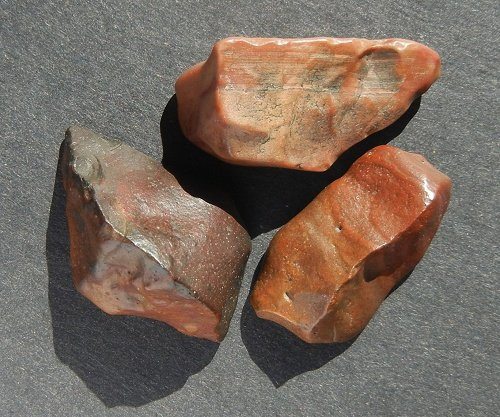
These rocks were broken apart from the continuous freeze/thaw of water in the cracks of the rocks. This is an example of:
a)
ice wedging
b)
acid rain
c)
permeability
d)
abrasion
37.
This rock may chemically weather easily because is has many spaces or holes in it that allow water to seep through it, meaning it is:
a)
permeable
b)
abrasive
c)
erosion
d)
unchangable
38.
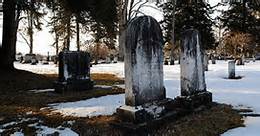
These gravestones have slowly broken down and turned a blackish color due to the action of:
a)
ice wedging
b)
abrasion
c)
acid rain
d)
mechanical weathering
39.
How might a weathered mountain appear different than an unweathered mountain?
a)
Weathered mountain would be taller.
b)
Weathered mountain would be rounder and less jagged.
c)
Weathered mountain would be more jagged and less rounded.
d)
Weathered mountain would have no trees.
40.
How is mechanical weathering different from chemical weathering?
a)
Chemical weathering happens over much shorter time frame than mechanical weathering.
b)
Chemical weathering changes the chemical composition of rocks; mechanical weathering does not.
c)
Chemical weathering occurs only in tropical climates; mechanical weathering occurs only in cool climates.
d)
Chemical weathering occurs only in the mountains; mechanical weathering occurs only on flat land.
41.
Weeds growing into the cracks in a sidewalk and the sidewalk begins to crumble is an example of:
a)
mechanical weathering
b)
chemical weathering
42.
A metal statue slowly turning green after years of being outside is an example of:
a)
mechanical weathering
b)
chemical weathering
43.
The formation of stalactites and stalagmites in a cave as water mixed with carbon dioxide creates carbonic acid, which dissolves away the limestone, is an example of:
a)
mechanical weathering
b)
chemical weathering
44.
The process that breaks down rocks and other materials on Earth's surface is called
a)
weathering
b)
erosion
c)
soil conservation
d)
decomposition
45.
Which type of climate will have faster chemical weathering?
a)
Hot and Wet
b)
Cold and Dry
c)
Hot and Cold
d)
Cold and Wet
46.
Rust that forms on rocks or metal because of extended exposure to oxygen is what example of chemical weathering?
a)
carbon dioxide (carbonic acid)
b)
acid rain
c)
oxygen
d)
living organisms
47.
Which of the following is an example of chemical weathering?
a)
Acid rain dissolving limestone
b)
roots breaking into concrete
c)
paper being ripped
d)
Water running over rocks
48.
Potholes forming in the road after a cold winter is an example of:
a)
mechanical weathering
b)
chemical weathering
49.
This layer contains the upper mantle and the crust.
a)
Mesosphere
b)
Asthenosphere
c)
Lithosphere
d)
Core
50.
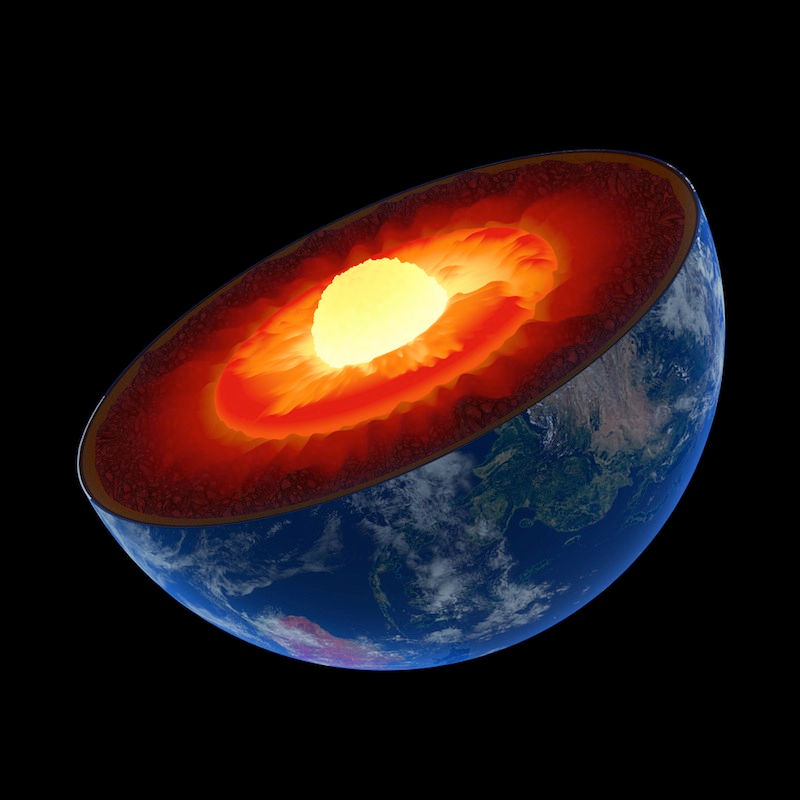
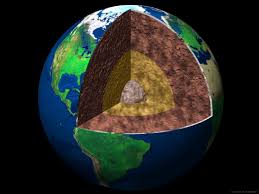
This layer contains most of Earth's mass.
a)
Inner Core
b)
Mantle
c)
Outer Core
d)
Crust
51.
You live, breathe, and eat on this layer.
a)
Outer Core
b)
Inner Core
c)
Mantle
d)
Crust
52.
Which layer of the Earth is the only liquid layer?
a)
Outer Core
b)
Inner Core
c)
Mantle
d)
Lithosphere
53.
What are the two type of crust?
a)
Continental and Landforms
b)
Oceanic and Mountains
c)
Mountains and Landforms
d)
Oceanic and Continental
54.
How are scientist able to estimate the thickness of each layer of the Earth?By studying __________
a)
 radio waves
b)
sonar waves
c)
laser waves
d)
seismic waves
55.
Why is the inner core made of solid metal?
a)
Because it is so hot it turns from liquid to solid
b)
Because of the weight of the crust
c)
Because of it's temperature
d)
Because of the pressure of the other layers beating down on it
56.
Which layer is considered the thinnest layer?
a)
Mesosphere
b)
Core
c)
Mantle
d)
Crust
57.
Which Layer is considered the coolest layer?
a)
Crust
b)
Mantle
c)
Inner Core
d)
Outer Core
58.
What is the hottest layer?
a)
Crust
b)
Mantle
c)
Core
59.
The OLDEST seafloor is located? 
a)
Closest to the mid-ocean ridge
b)
Farthest from the mid-ocean ridge
60.
True or False : Sea-floor Spreading adds new material to the ocean floor?
a)
True
b)
False
61.
What happens when Subduction occurs?
a)
Parts of the crust fall into the mantle
b)
Parts of the crust fall into the core
c)
Parts of the crust fall into space
d)
None of the Above
62.
When one tectonic plate __________ under another at a convergent boundary it sinks back in the mantle.
a)
subducts
b)
falls
c)
sinks
63.
The oceanic crust is pushed aside on both sides of the 
a)
Continent's edge
b)
Deep-ocean trench
c)
Mid-ocean ridge
64.
New crust is always formed at the...
a)
mid-ocean ridge
b)
deep-ocean trench
c)
asthenosphere
65.
Process by which new ocean lithosphere forms.
a)
Seafloor spreading
b)
Continental drift
c)
Mid-ocean ridge
d)
Rift
66.
Massive pieces of land that are part of the Earth's crust and upper mantle
a)
Tectonic plates
b)
Trenches
c)
Divergent boundary
d)
Continental shelves
67.
The zone where one plate slides under another is called the
a)
Convergent zone
b)
Subduction zone
c)
Transform zone
d)
Mantle zone
68.
Which type of crust is more dense and thinner?
a)
Continental
b)
Asthenosphere
c)
Oceanic
d)
Byers
69.
Which of the following supports the theory of seafloor spreading?
a)
Correlation of rock layers
b)
Crustal Age
c)
Magnetic Reversal
d)
Continuous Mountain Chains
70.
What causes the crust to move?
a)
convection
b)
conduction
c)
tension
d)
radiation
71.
The zone where one plate slides under another is called the
a)
Convergent zone
b)
Subduction zone
c)
Transform zone
d)
Mantle zone
72.
The entire cycle of heating occurring in the mantle is called
a)
Convection currents
b)
Compound currents
c)
heat currents
d)
 subcurrents
73.
Undersea mountain range.
a)
Rift
b)
Mid-ocean ridge
c)
seafloor spreading
d)
Continental drift
74.
Magnetic field that points south.
a)
Modern polarity
b)
Past polarity
c)
Normal polarity
d)
Reversed polarity
75.
Why were magnetic patterns found on the ocean floor puzzling?
a)
They showed alternating bands of normal and reversed polarity.
b)
No rocks were magnetic.
c)
They did not show alternating bands of normal and reversed polarity.
d)
All rocks were magnetic.
76.
A _____ will form on the ocean floor when becomes dense and sinks back towards the manrle
a)
Earthquake
b)
Rift Zone
c)
Valley
d)
Trench
77.
What are Mid-Ocean Ridges?
a)
A chain of underwater waterfalls 
b)
A chain of underwater volcanos
c)
A chain of underwater mountains
d)
A chain of underwater rocks
78.
Which of these two layers is a solid?
a)
innercore
b)
Outercore
79.
Which layer of Earth is located above the outer core?
a)
crust
b)
inner core
c)
mantle
d)
lithosphere
80.
Which layer of the earth is rock made mostly of iron?

a)
Lithosphere
b)
Core
c)
Asthenosphere
d)
Mantle
81.
A giant landmass that existed 200 million years ago
a)
Wegener
b)
Pangaea
c)
Archyopteryx
d)
Ammonite
82.
The Theory of Continental Drift states that Pangaea broke apart and the continents "drifted" away from each other
a)
True
b)
False
83.
Which piece of evidence did Wegener use to prove continental drift?
a)
The shape of the continents
b)
Similar fossils found on separate continents
c)
Tree fossils found in odd places
d)
All of the above
84.
Who suggested the Continental Drift theory?
a)
Aldrin Weiner
b)
Alfred Wegener
c)
George Williams
d)
IDK 😭
85.
What is this a picture of?
a)
plate tectonics
b)
continental drift
c)
pangea
d)
glacier scaring
86.

what are the three plate boundries

a)

Divergent convergent and transform

b)

convergent and transform

c)

Divergent and Convergent

d)

Divergent and transform

87.

What are the 6 major plates

a)

North American, African, and Antarctic plates Nazca plate Caribbean Plate,

b)

Philippine Sea Plate, African plate, Antarctic plate, Eurasian plate, Indo-Australian plate, North American

c)

African plate, Antarctic plate, Eurasian plate, Indo-Australian plate, North American plate, Pacific plate and South American plate.

d)

Caribbean Plate, North American, African plate Juan de Fuca Plate Philippine Sea Plate,

88.

Which type of plate boundary would cause mountains to form?

a)

Transform

b)

Convergent

c)

Divergent

d)

Reform

89.
Name the boundary
a)
convergent boundary
b)
divergent boundary
c)
transform boundary
d)
sergent boundary
90.
Name the boundary
a)
convergent boundary
b)
divergent boundary
c)
transform boundary
d)
sergent boundary
91.
Name the boundary
a)
convergent boundary
b)
divergent boundary
c)
transform boundary
d)
sergent boundary
92.
The scientific theory that the Earth's crust is made of moving plates.
a)
quakes
b)
seismic
c)
plate tectonics
d)
rotation
93.
What is the opening in Earth's crust through which molten rock, gases, and ash erupt?
a)
Divergent Boundary
b)
Magma
c)
Subduction Boundary
d)
Volcano
94.
What is molten rock that has formed deep within the Earth?
a)
Hot Spot
b)
Magma
c)
Lava
d)
Volcano
95.
The formation of magma depends on which set of conditions?
a)
Pressure, Density, and Water Content
b)
Temperature, Density, and Pressure
c)
Temperature, Density, and Water Content
d)
Temperature, Pressure, and Water Content
96.
What type of volcano has steep slopes made of alternating layers of ash and silica rich lava?
a)
Caldera
b)
Cinder Cone
c)
Composite Volcano
d)

Shield Volcano

97.
What type of volcano is made of lava fragments that have been ejected from a volcanic vent?
a)
Caldera
b)
Cinder Cone
c)
Composite Volcano
d)
Shield Volcano
98.
Where are most volcanoes found?
a)
Southern Hemisphere
b)
Ring of Fire
c)
Mid-Atlantic Ridge
d)
Hot Spots
99.
What is molten rock that has reached the Earth's surface?
a)
Aa
b)
Lava
c)
Magma
d)
Pahoehoe
100.
What type of volcano is Mount St. Helens?
a)
Caldera
b)
Cinder Cone
c)
Composite Volcano
d)
Shield Volcano
101.
Where do volcanoes come from?
a)
Places where plates move apart
b)
Places where plates are moving together
c)
Hot Spots
d)
All of these options
102.
The cycle that powers the ocean currents, weather, and tectonic plates it called
a)
conduction current
b)
radiation
c)
condition current
d)
convection current
103.
The energy from the sun is transmitted through movement of electromagnetic waves by
a)
conduction
b)
convection
c)
contraction
d)
radiation
104.
The transmission of energy by two objects touching is called
a)
conduction
b)
convection
c)
contraction
d)
radiation
105.
In convection, WARM air
a)
Rises
b)
Sinks
106.
Warm air rises and the cool air sinks demonstrates this type of heat transfer. 
a)
conduction
b)
convection
c)
radiation
d)
Insolation 
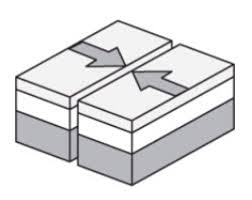
107.
What kind of plate boundary is shown here?
a)
divergent
b)
convergent
c)
transform
d)
subducting
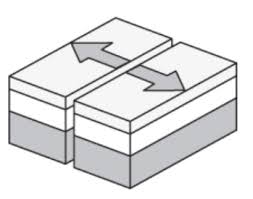
108.
What kind of plate boundary is shown here?
a)
divergent
b)
convergent
c)
transform
d)
submergent
109.
What geologic feature/event you be most likely to find at a transform boundary?
a)
Earthquakes
b)
Volcanoes
c)
Mountains
d)
Rift Valleys
110.
What geologic feature/event would you most likely to find at a divergent boundary between two pieces of oceanic crust?
a)
Rift Valley
b)
Mid-Ocean Ridge
c)
Island Arc
d)
Flat land
111.
What geologic feature/event would you most likely to find at a convergent boundary between two pieces of continental crust?
a)
Volcano
b)
Mountain
c)
Rift
d)
Island Arc
112.
A subduction zone is formed...
a)
when one tectonic plate sinks below another
b)
at every type of convergent plate boundary
c)
at every type of divergent plate boundary
d)
at transform boundaries
113.
The area where two or more plates meet is called a __________________.
a)
fault
b)
plate boundary
c)
plate edge
d)
ring of fire
114.
Plates slide past one another at ____________ boundaries.
a)
divergent
b)
convergent
c)
transform
d)
submergent