wayground logo

Free Printable Worksheets

NEW

Font size

S
M
L
XL
Worksheets

Testlet 1 Review 2020

Total questions: 45

Worksheet time: 32mins

Name
Class
Date
1.

When you shade your eyes (a response) from a bright light (a stimulus), you are demonstrating which characteristic

a)

Respiration

b)

Regulation

c)

Movement

d)

Growth

2.
A change in an organism's surroundings that causes it to react is called
a)
a stimulus.
b)
a response.
c)
development. 
d)
energy.
3.

basic building block of an organism

a)

cell

b)

tissue

c)

organ

d)

organ system

4.

Which organelle converts glucose to energy?

a)

mitochondria

b)

chloroplast

c)

vacuole

d)

lysosome

5.

Semi-permeable means

a)

only allowing certain things to enter or leave the cell

b)

allowing nothing to enter or leave the cell

c)

only providing structural support

d)

only allowing water into the cell

6.

How are plants and humans different?

a)

plants make their own food and humans do not

b)

humans make their own food and plants do not

c)

humans have mitochondria and plants do not

d)

plants need energy but humans do not

7.

The following items are seen in a cell: ribosome, DNA, mitochondria, and cell membrane. The cell has to be?

a)

prokaryotic

b)

eukaryotic

c)

bacteria

d)

fungi

8.

Where are proteins modified?

a)

ER

b)

golgi

c)

ribosome

d)

nucleus

9.

Which organelle produces ATP?

a)

mitochondria

b)

golgi

c)

ribosome

d)

nucleus

10.

Which of the following is a catalyst for breaking down large molecules?

a)

enzymes

b)

mitochondrion

c)

lipids

d)

nucleotides

11.

Which of the following would increase an individual's glucose level?

a)

carboyhdrates

b)

lipids

c)

proteins

d)

nucleic acids

12.

98.6 temperature, shivering when cold, sweating when hot, running from danger are all examples of

a)

maintaining homeostasis

b)

producing energy

c)

using up glucose

d)

controlling metabolism

13.
What do viruses need to reproduce?
a)
they need genetic material
b)
They need a host cell
c)
They need  bacteria
d)
They need insulin
14.
Reasons that viruses are considered to be nonliving is because
a)
They are not cellular
b)
They cannot reproduce on their own
c)
They cannot make proteins
d)
all of the above
15.
Waxes, oils and fats are examples of
a)
Carbohydrates
b)
Lipids
c)
Proteins
d)
Nucleic Acids
16.
What is the function of nucleic acids?
a)
store genetic information
b)
store energy (long-term)
c)
store energy (short-term)
d)
build skin, hair, nails, muscles
17.

What type of macromolecule are enzymes?

a)

Carbohydrate

b)

Protein

c)

Lipid

d)

Nucleic Acid

18.

Which macromolecule stores energy, insulates us, and makes up the cell membrane?

a)

nucleic acids

b)

proteins

c)

carbohydrates

d)

lipids

19.
What suffix (word ending) is used in the names of most carbohydrates?
a)
-ase
b)
-nic
c)
-ose
d)
-yme
20.
What are the single sugars that are the building blocks of carbohydrates?
a)
monosaccharides
b)
disaccharides
c)
polysaccharides
d)
amino acid
21.
What are the building blocks of proteins?
a)
amino acid
b)
fatty acid
c)
nucleotide
d)
lipid
22.
What is the monomer of nucleic acids?
a)
Glycerol
b)
Monosaccharides
c)
Amino Acids
d)
Nucleotides
23.

What suffix (word ending) is used in the names of most enzymes?

a)

-ose

b)

-ase

c)

-ic

d)

-es

24.
Who discovered and named cells? 
a)
Captain Hook
b)
Robert Hooke
c)
Zacharias Janssen
d)
Rudolf Virchow
25.
What was Schleiden convinced of? 
a)
All plants are made of cells
b)
All animals are made of cells
c)
All cells form spontaneously
d)
None of the above
26.
Who noted that animals are made of cells and concluded that all living things are made of cells and cell products? 
a)
Rudolf Virchow
b)
Anton van Leeuwenhoek
c)
Theodor Schwann
d)
Robert Hooke
27.
Who discovered that cells come from preexisting cells and whose research lead to the major principles of cell theory?
a)
Matthias Schleiden
b)
Robert Hooke
c)
Zacharias Janssen
d)
Rudolf Virchow
28.
Which is not a part of cell theory?
a)
All organisms are made of cells
b)
All existing cells come from preexisting cells
c)
All matter is composed of living cells
d)
The cell is the most basic unit of life
29.
What organelle PRODUCES proteins?
a)
ribosomes
b)
centrioles
c)
lysosomes
d)
nucleus
30.
Cell organelles that are responsible for digesting food, worn out organelles and other cellular wastes are called ___________________.
a)
Mitochondria
b)
Vacuoles
c)
Lysosomes
d)
Chlororplasts
31.
What is one basic function of the vacuoles?
a)
circulating oxygen
b)
producing food
c)
controlling cell processes
d)
storing water
32.
Chloroplasts in plant cells allow the plant to perform a function that animal cells cannot do.  What is the main function of the chloroplasts found in plant cells?
a)
to absorb light energy and manufacture food
b)
to remove waste materials by active transport
c)
to manufacture chemical energy from food
d)
to control the shape of the cell
33.
Prokkaryotic
a)
are single celled organisms that do not have a nucleus or membrane bound organelles
b)
a protective layer that covers the the cells surface and acts as a barrier
c)
is the smallest unit that can preform all he processes necessary for life
34.
Which are examples of fungi?
a)
mold
b)
yeast
c)
mushrooms
d)
all of the above
35.
What part of a fungus is described as long, thread-like structures that absorb nutrients?
a)
roots
b)
fruit body
c)
hyphae
d)
spores
36.
What part of a fungus is used for reproduction?
a)
spores
b)
flagellum
c)
cilia
d)
hyphae
37.
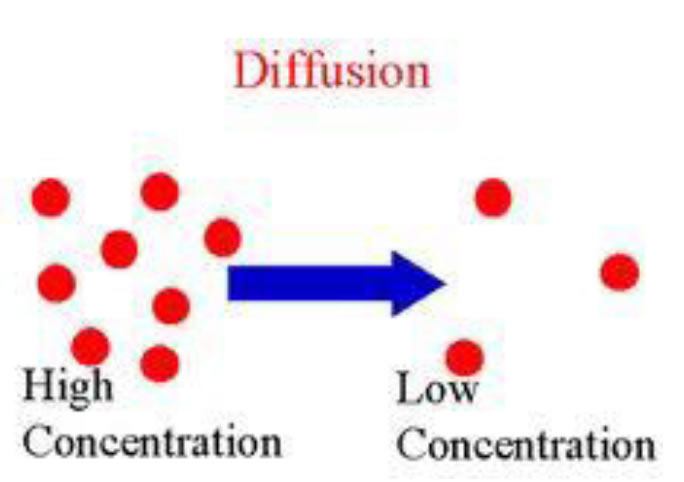
Movement of particles from high to low concentration. 
a)
Passive Transport
b)
Active Transport
38.
Osmosis is a form of ______________. 
a)
Passive Transport
b)
Active Transport
39.
Solutes move against the concentration gradient, therefore energy is needed
a)
Passive Transport
b)
Active Transport
40.
This takes substances into a cell
a)
endocytosis
b)
exocytosis
c)
both
41.
What is it called when molecules move across the cell membrane from an area of high concentration to an area of low concentration through a carrier protein?
a)
Diffusion
b)
Osmosis
c)
Active Transport
d)
Facilitated Diffusion
42.
The cell below is in a _________ solution.
a)
Hypotonic
b)
Hypertonic
c)
Isotonic
43.
An ISOTONIC solution has a(n) ______________ concentration of solute (dissolved stuff) than inside the cell.
a)
lower
b)
equal
c)
higher
44.
What type of solution is this cell in?
a)
Isotonic
b)
Hypertonic
c)
Hypotonic
d)
diffused
45.

Which of the following is the correct order of organization from simple to complex?

a)

cells, tissues, organs, organ systems, organisms

b)

organisms, organ systems, organs, tissues, cells

c)

cells, organs, tissues, systems, organisms

d)

tissues, cells, systems, organs, organisms