wayground logo

Free Printable Worksheets

Font size

S
M
L
XL
Worksheets

Chemistry Unit 3 Test Review: Bonding

Total questions: 83

Worksheet time: 3hrs 10mins

Name
Class
Date
1.
The electron configuration of an atom is 1s22s22p6.  The number of electrons in the atom is 
a)
3
b)
6
c)
8
d)
10
2.
What atom matches this electron configuration?
1s22s22p63s23p64s23d10
a)
Zinc
b)
Copper
c)
Nickel
d)
Germanium
3.
What is the noble gas shorthand electron for Sulfur atom?
a)
[Ar] 3p4
b)
[He] 3s23p4
c)
[Ne] 3s23p4
d)
[Na] 3s23p4
4.
What atom matches this electron configuration?
[Xe] 6s25d9
a)
Mercury
b)
Gold
c)
Platinum
d)
Thallium
5.
What electron configuration matches an oxygen atom?
a)
1s22s22p63s2, 3p64s23d104p5
b)
1s22s22p4
c)
1s22s22p6
d)
1s22s22p63s23p64s23d1
6.
The electron configuration of an atom is 1s22s22p6.  The number of valence electrons in the atom is 
a)
3
b)
6
c)
8
d)
10
7.
Magnesium's ion
a)
Mg+
b)
Mg2+
c)
Mg-
d)
Mg2-
8.
When an atom loses a valence electron, it becomes a(n) _____________ ion.
a)
positive
b)
negative
c)
neutral
d)
polyatomic
9.
When an atom gains a valence electron, it becomes a(n) _____________ ion.
a)
positive
b)
negative
c)
neutral
d)
polyatomic
10.
Cations are _______ that form ____________ ions and __________ electrons.
a)
nonmetals, positive, lose
b)
nonmetals, negative, gain
c)
metals, positive, gain
d)
metals, positive, lose
11.
Anions are _______ that form ____________ ions and __________ electrons.
a)
nonmetals, positive, lose
b)
nonmetals, negative, gain
c)
metals, positive, gain
d)
metals, positive, lose
12.
What atom matches this electron configuration?
1s22s22p63s2
a)
Neon
b)
Magnesium
c)
Aluminum
d)
Potassium
13.
Which electron configuration belongs to Chlorine (Cl)?
a)
1s2s2p3s3p5
b)
1s2s2p3s3p6
c)
1s2s2p3s3p7
14.
Identify the Electron Configuration for Aluminum (Al)
a)
1s2s2p3s3p1
b)
1s2s2p3s3p3
c)
1s2s2p3s4p1
15.
What is the electron configuration for Bromine (Br)
a)
1s2, 2s2, 2p6, 3s2, 3p6, 4s2, 3d1
b)
1s2, 2s2, 2p4
c)
1s2, 2s2, 2p6, 3s2, 3p6, 4s2, 3d10, 4p5
d)
1s2, 2s2, 2p6
16.
What is the correct configuration for lead?
a)
[Rn] 6s2 5d10 4f14 6p2
b)
[Xe] 6s2 6d10 6p2
c)
[Xe] 6s2 5d10 6p2
d)
[Xe] 6s2 5d10 4f14 6p2
17.
What is this element? 
[Ne] 3s23p64s2
a)
Calcium
b)
Sodium
c)
Scandium
d)
Titanium
18.
What is this element? 
1s22s22p63s23p6
4s23d104p6
a)
Argon
b)
Krypton
c)
Selenium
d)
Bromide
19.
Identify the Noble Gas Shorthand Notation for Aluminum (Al)
a)
[Ne] 3s2 2d1
b)
[He] 2s2 2p6 3s2 3p1
c)
[Ne] 3s3p
20.
Identify the Noble Gas Shorthand notation for Barium (Ba)
a)
[Xe] 5s1
b)
[Xe] 6s2
c)
[Rn] 6s-10
21.
What electron configuration matches an oxygen ion?
a)
1s22s22p63s2, 3p64s23d104p5
b)
1s22s22p4
c)
1s22s22p6
d)
1s22s22p63s23p64s23d1
22.

Which ground-state electron configuration belongs to a chloride ion (Cl-)?

a)

1s2 2s2 2p6 3s2 3p5

b)

1s2 2s2 2p6 3s2 3p6

c)

1s2 2s2 2p6 3s2 3p7

23.

Which ions have the ground-state electron configuration: [Ne] 3s23p6? (More than one answer to select).

a)

Fluoride ion, F-

b)

Chloride ion, Cl-

c)

Potassium ion, K+

d)

Magnesium ion, Mg2+

24.

This could be the dot diagram of

a)

Mg

b)

Cl

c)

C

d)

O

25.

This is a correct dot diagram for carbon (C)

a)

true

b)

false

26.

This is a correct dot diagram for nitrogen (N)

a)

true

b)

false

27.

This is a correct dot diagram for neon (Ne)

a)

true

b)

false

28.

Which ones are acceptable?

a)
b)
c)
29.

Which of these is incorrect?

a)
b)
30.
How many valence electrons does calcium have?
a)
2
b)
4
c)
6
d)
7
31.
How are covalent bonds explained?
a)
When one atom takes the other atom's electron
b)
When the atom shares an electron with an another atom
c)
When the two nucleus merge
d)
When the neutrons leave the nucleus
32.
A covalent bond in which electrons are shared unequally is:
a)
polar
b)
a double bond
c)
ionic
d)
polyatomic
33.
What two types of atoms make a covalent bond?
a)
2 Nonmetals
b)
1 Nonmetal and 1 Metal
c)
2 Metals
d)
2 Noble Gases
34.
Ionic compounds are formed when one or more valence electrons are transferred from _____
a)
a nonmetal atom to a metal atom
b)
a nonmetal atom to a nonmetal atom
c)
a metal atom to a nonmetal atom
d)
a metal atom to a metal atom
35.
In the correct Lewis Structure for methane (CH4), how many unpaired electrons can be found around Carbon?
a)
0
b)
2
c)
4
d)
8
36.
When chlorine reacts it wants to ______________ electron.
a)
gain 1
b)
lose 1
c)
gain 2
d)
lose 2
37.
What type of bond forms between two or more atoms that are charged (+/-)?
a)
Covalent bond
b)
Incomplete bond
c)
Ionic bond
d)
Metallic bond
38.

The compound NaCl

a)

is ionic

b)

involves transfer of electrons

c)

is made of a sodium cation and chloride anion

39.

Which is true?

a)

Magnesium usually forms ions with 2+ charge

b)

Oxygen usually forms ions with a 3- charge

c)

Halogens usually form ions with a -1 charge.

d)

Alkali metals usually form ions with 2+ charge.

40.

In the compound MgO

a)

Mg form a cation

b)

O forms a cation

c)

The charges of the ions are 2+ and 2-

d)

Two electrons are transferred from the oxygen to the magnesium

41.

When aluminum (Al) bonds with oxygen (O)

a)

Each Al loses three electrons

b)

Each O gains 3 electrons

c)

The formula of the compound is AlO2

42.

In forming ionic compounds,

a)

Electrons are transferred

b)

Metals gain electrons

c)

Non-metals lose electrons

d)

Metals form cations

e)

Non-metals form anions

43.
How do covalent bonds form?
a)
Donating & receiving valence e- between atoms.
b)
Opposite slight charges attract each other between compounds.
c)
Scientists are still not sure how they form.
d)
Sharing valence e- between atoms.
44.
Which of the following is the correct Lewis dot structure for the molecule fluorine (F2)?
a)
A
b)
B
c)
C
d)
D
45.
How many electrons are shared in one of these N-Cl bonds?
a)
1
b)
2
c)
3
d)
4
46.
Which of the following is the correct Lewis structure for the compound PBr3?
a)
structure A
b)
structure B
c)
structure C
d)
structure D
47.
What is the correct structure for BF3?
a)
Option A.
b)
Option B. 
c)
Option C.
d)
Option D.
48.
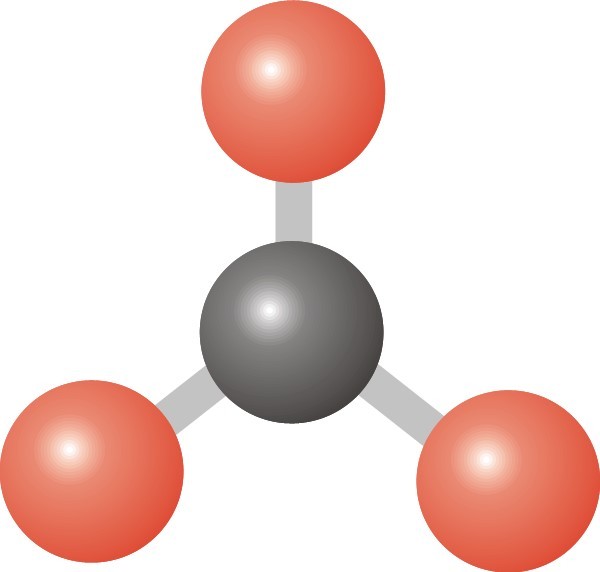
What is the name of the molecular geometry for this Lewis Structure?
a)
trigonal planar
b)
trigonal pyramidal
c)
tetrahedral
d)
bent
49.
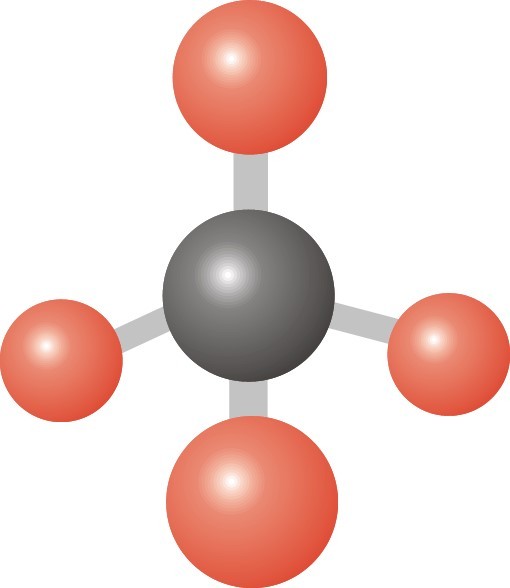
What is the name of this Lewis Structure?
a)
linear
b)
bent
c)
tetrahedral
d)
planar
50.
What is the VSEPR theory used to predict?
a)
Bond Strength
b)
Polarity
c)
Molecular Shape
d)
Electronegativity
51.
What molecule could this be? 
a)
BF3
b)
CH4
c)
H2O
d)
CO2
52.
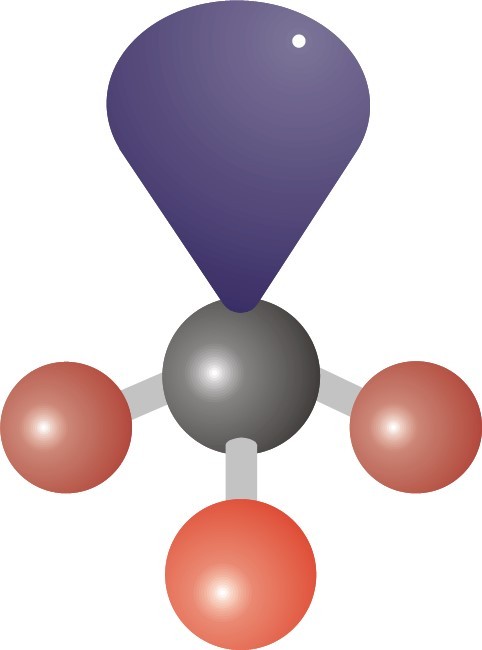
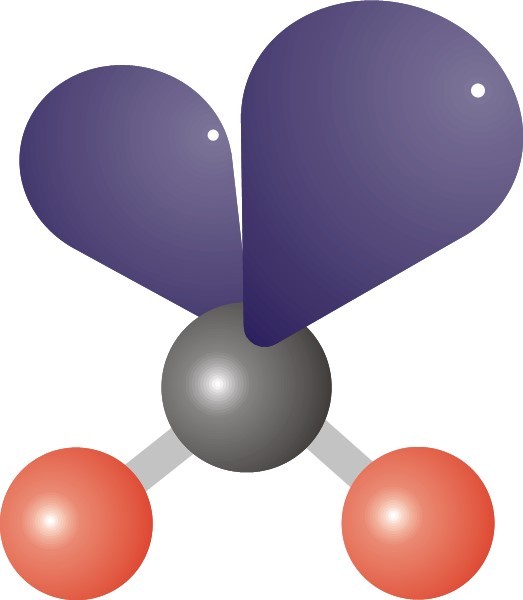
Which shapes are altered by unshared pairs of electrons? 
a)
Bent and Pyramidal
b)
Trigonal Planar and Bent
c)
Tetrahedram and Bipyramidal
d)
Pyramidal and Linear
53.
Who could this molecule be?
a)
CH4
b)
CO2
c)
PCl5
d)
BF3
54.
What shape would PHhave?
a)
Trigonal Planar
b)
Trigonal Bipyramidal
c)
Bent
d)
Linear
55.
Who could this be?
a)
H2O
b)
NH3
c)
CO2
d)
CH4
56.
Who could this be? 
a)
CO2
b)
NH3
c)
H2S
d)
CH4
57.
In CO2, how many UNSHARED pairs of electrons does each oxygen have?
a)
2
b)
1
c)
4
d)
6
58.
According to the octet rule most elements need _______ valence electrons.
a)
2
b)
8
c)
6
d)
18
59.
If electrons are shared unequally then the bond is....
a)
Non-polar covalent
b)
Ionic
c)
Non-polar ionic
d)
Polar covalent
60.
Hydrogen needs _____ electrons in its valence shell to be stable.
a)
4
b)
6
c)
8
d)
2
61.
If electrons are shared equally then the bond is....
a)
Non-polar covalent
b)
Ionic
c)
Non-polar ionic
d)
Polar covalent
62.
How many electrons should Carbon have around its Lewis dot model?
a)
1
b)
3
c)
4
d)
5
63.
Three pairs of electrons are shared in a
a)
Single bond
b)
Double bond
c)
Triple bond
64.
What bond would form between elements from Group 1A and Halogens?
a)
Metallic
b)
Ionic
c)
Covalent
65.
What bond type involves the transferring of electrons?
a)
Metallic
b)
Ionic
c)
Covalent
66.
The molecule shown in the diagram can best be classified as a
a)
polar covalent molecule
b)
nonpolar covalent molecule
c)
ionic compound
d)
nonpolar ionic compound
67.
The polarity of a bond between two elements can be best determined by
a)
The difference in electronegativity between the elements
b)
The difference in first ionization energy between the elements
c)
The number of electrons shared in the bond
d)
The difference in atomic radius between the elements
68.
This molecule has______bond and is a _________molecule.
a)
non-polar; non-polar
b)
polar, polar
c)
polar,
non-polar
d)
non-polar; polar
69.
Why do metals conduct
a)
They are shiny
b)
The electrons are held tightly within the lattice
c)
The electrons are delocalised and able to move
d)
The electrons are shared between two metal ions
70.
Choose the correct shape for this molecule:
a)
Bent
b)
Linear
c)
Tetrahedral
d)
Trigonal pyramidal
71.
F2 has a shape as:
a)
Bent
b)
linear
c)
Tetrahedral
d)
Trigonal pyramidal
72.
VSEPR stands for ________ theory.
a)
Valence Structure of Electron Pyramids and Regression
b)
Varied Structures of Electrons Paired and Replaced
c)
Varied Shell Energy of Protons and Radiation
d)
Valence Shell Electron Pair Repulsion
73.
How many valence electrons are in Phosphorus?
a)
15
b)
4
c)
5
d)
31
74.
How many electrons does each line indicate are shared?
a)
1
b)
2
c)
3
d)
4
75.

Determine the type of bond in an oxygen molecule (O2).

a)

Double covalent

b)

Single covalent

c)

Ionic

d)

Triple covalent

76.

Determine the type of bond in a nitrogen molecule (N2).

a)

Double covalent

b)

Single covalent

c)

Ionic

d)

Triple covalent

77.
Which of the following is an ionic bond?
a)
H3N
b)
CaCl2
c)
NO2
d)
SCl
78.
Which is the correct structure for ammonia?
Pictures correspond with a-d.
a)
Option A.
b)
Option B. 
c)
Option C.
d)
Option D. 
79.
What is the correct structure for BF3?
a)
Option A.
b)
Option B. 
c)
Option C.
d)
Option D.
80.

The model used to describe and explain the bonding and arrangement of atoms in a solid metal is the

a)

ball and stick model

b)

electron sea model

c)

metalloid model

d)

valence shell electron pair repulsion theory

81.

Which of the following describes metallic bonding?

a)

A bond between atoms where electrons are unequally shared.

b)

A bond between positive ions and surrounding mobile electrons

c)

A bond between atoms where electron pairs are shared equally

d)

A bond between positive ions and negative ions

82.

What characteristic of metallic bonds allows metals to be malleable and ductile?

a)

The tightly held valence electrons in metallic bonds allow the atoms in a metal to move freely.

b)

The strong connection between atoms in metallic bonds allow the bonds to bend without breaking.

c)

The sea of free electrons in metallic bonds allow the atoms to move when stressed without changing the properties of the substance.

d)

The crystal structure of atoms in metallic bonds allows the metal to maintain a constant pattern when force is applied.

83.

Why do metallic compounds conduct electricity as solids?

a)

core electrons are mobile, allowing electricity to flow through the metal

b)

valence electrons are mobile, allowing electricity to flow through the metal

c)

protons are mobile, allowing electricity to flow through the metal

d)

the metal cations are mobile, allowing electricity to flow through the metal