
 Worksheets
B.8.1 Life is Cellular
Total questions: 44
Worksheet time: 39mins
Name
Class
Date
1.
Has membrane bound organelles
a)
Prokaryote
b)
Eukaryote
c)
both
2.
Smaller
a)
Prokaryote
b)
Eukaryote
c)
both
3.
Has Mitochondria
a)
Prokaryote
b)
Eukaryote
c)
both
4.
Which has ribosomes?
a)
Prokaryote
b)
Eukaryote
c)
both
5.
Has cytoplasm
a)
Prokaryote
b)
Eukaryote
c)
both
6.
Has nucleus
a)
Prokaryote
b)
Eukaryote
c)
both
7.
Bacteria
a)
Prokaryote
b)
Eukaryote
c)
both
8.
Has chloroplast
a)
Prokaryote
b)
Eukaryote
c)
both
9.
more complex
a)
Prokaryote
b)
Eukaryote
c)
both
d)
both
10.
can be multicellular
a)
Prokaryote
b)
Eukaryote
c)
both
11.
plants
a)
Prokaryote
b)
Eukaryote
c)
both
12.
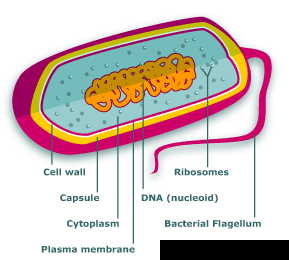
Which type of cell?
a)
Prokaryote
b)
Eukaryote
13.

Which type of cell?
a)
Prokaryote
b)
Eukaryote
14.

Which type of cell?
a)
Prokaryote
b)
Eukaryote
15.
A single-celled organism that lacks a membrane-bound nucleus, mitochondria, or any other membrane -bound organelle .
a)
Prokaryote
b)
Eukaryote
c)
Nucleus
d)
Single-celled organism
16.
Where is the DNA found in a prokaryotic cell?
a)
floating around in the cytoplasm
b)
in the nucleus
17.
Where is the DNA found in a eukaryotic cell?
a)
floating around in the cytoplasm
b)
in the nucleus
18.
Plants and animal cells are examples of ___ cells
a)
prokaryotic cells
b)
eukaryotic cells
19.

Part 8
a)
Illuminator
b)
Diaphragm
c)
Base
d)
Stage
20.

Part 9
a)
Body tube
b)
Eyepiece
c)
Objective
d)
Light Source
21.

Part 10
a)
Stage
b)
Arm
c)
Base
d)
Diaphragm
22.

Part 11
a)
Stage Clips
b)
Stage
c)
Diaphragm
d)
Illuminator
23.
This holds the eye piece and connects it to the objective
a)
Arm
b)
Base
c)
Body Tube
d)
Objective
24.
Uses a beam of electrons to create an image of the specimen
a)
Binocular Microscope
b)
Compound Microscope
c)
Electron Microscope
d)
Simple Microscope
25.
Similar to a magnifying glass and has only one lens
a)
Binocular Microscope
b)
Compound Microscope
c)
Electron Microscope
d)
Simple Microscope
26.
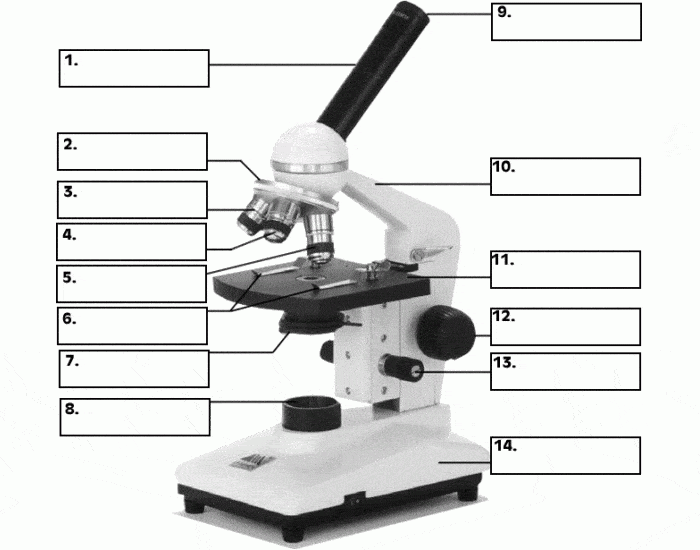
Part 12
a)
Fine Adjustment Knob
b)
Coarse Adjustment Knob
c)
Diaphragm
d)
Objective
27.

Part 13
a)
Fine Adjustment Knob
b)
Course Adjustment Knob
c)
Stage
d)
Diaphragm
28.

Part 14
a)
Stage
b)
Diaphragm
c)
Base
d)
Illuminator
29.
This bring the specimen into sharp focus
a)
Coarse Adjustment Knob
b)
Fine Adjustment Knob
c)
Eyepiece
d)
Diaphragm
30.
Source of light usually situated at the bottom/ base of the microscope
a)
Eyepiece
b)
Diaphragm
c)
Objective
d)
Illuminator
31.
Connects to the base and helps carry the microscope easily
a)
Arm
b)
Base
c)
Body Tube
d)
Revolving Nosepiece
32.
Used to control the amount of light reaching the specimen
a)
Illuminator
b)
Stage
c)
Eyepiece
d)
Diaphragm
33.
This supports the microscope to stand and provides stability
a)
Stage
b)
Stand
c)
Base
d)
Arm
34.
Used to hold the slides in place
a)
Stage
b)
Stage Clips
c)
Diaphragm
d)
Arm
35.
Part that holds two or more objectives
a)
Stage
b)
Stage Clip
c)
Revolving Nosepiece
d)
Body Tube
36.
This is responsible for magnifying the image of specimen
a)
Eyepiece
b)
Illuminator
c)
Objectives
d)
Diaphragm
37.
The flat surface where the slide with the specimen is placed
a)
Base
b)
Arm
c)
Stage
d)
Diaphragm
38.

Part 1
a)
Eyepiece
b)
Body Tube
c)
Arm
d)
Objective
39.
Lets light pass through an object and then through two or more lenses
a)
Binocular Microscope
b)
Compound Microscope
c)
Electron Microscope
d)
Simple Microscope
40.

Part 2
a)
Objectives
b)
Body Tube
c)
Revolving Nosepiece
d)
Stage
41.

Part 3
a)
Low Objective
b)
Medium Objective
c)
High Objective
d)
Revolving Nosepiece
42.

Part 7
a)
Stage
b)
Stage Clips
c)
Light Source
d)
Diaphragm
43.

Part 6
a)
Stage
b)
Stage Clips
c)
Diaphragm
d)
Arm
44.
Part 5
a)
Objective
b)
Diaphragm
c)
Aperture
d)
Revolving Nosepiece
100 %

