
 Worksheets
Topographic Maps, Rocks, Minerals, Resources
Total questions: 63
Worksheet time: 1hrs 4mins

What is the contour interval for this map?
500
100
20
1000

What is the contour interval
5
10
15
20
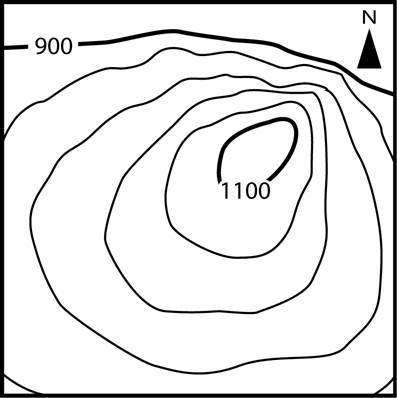
The steepest slope on this hill can be found on the side that is facing which direction?


Which directions do lines of latitude measure?
South and East
North and West
East and West
North and South
What directions do lines of Longitude measure?
South and West
East and West
North and South
North and East
When plotting or finding coordinates, which do you find first?
Longitude
Latitude
Equator
Prime Meridian
Which is NOT true about the Equator?
It separates the Earth into the Northern and Southern hemispheres.
It measures 0 degrees
It is the major line of Longitude
It is the major line of Latitude
What is NOT true about the Prime Meridian?
It is the major line of Longitude
It separates the Earth into the Eastern and Western Hemispheres
It is the major line of Latitude
It measures 0 degrees
What term means half of the Earth?
Globe
Grid
Hemisphere
Climate


Scratching a mineral against a glass plate is a method of determining its __________.
color
hardness
streak
cleavage

Which mineral property is best illustrated by the following diagram?
hardness
streak
cleavage
density

Which mineral property is being tested in the following diagram?
density
luster
fracture
streak

The reflection of light from the surface of a mineral is called __________.
luster
streak
fracture
color

Describe the luster of the following mineral.
glassy
dull
metallic
nonmetallic

Which factor determines the crystal shape of a mineral?
arrangement of atoms
presence of impurities
reflection of light

Which mineral will scratch gypsum but not fluorite?
talc
calcite
apatite
diamond

Which mineral is yellow in color and has a foul odor?
sulfur
pyrite
halite
talc

Which mineral has a hardness of 6.5 and a reddish-brown streak?
garnet
magnetite
quartz
hematite

Which mineral is colorless, has rhombohedral cleavage, and bubbles with acid?
halite
calcite
fluorite
quartz

Which mineral has metallic luster, a hardness of 2.5, and cubic crystals?
galena
halite
magnetite
graphite
A rock deep within the Earth experiences extreme temperature and pressure. After a long period of time it becomes which rock?
Magma
Igneous
Metamorphic
Sedimentary
Rocks and sediment change as they move through the rock cycle. Which change involves turning into melting?
Lava to rock
magma to lava
rock to magma
rock to sediment
What must happen to a metamorphic rock before it becomes a sedimentary rock rock?
It must be broken down into sediment
It must be melted into magma
Its minerals must dissolve in water
It must be exposed to high temperature and pressure

Based on the law of superposition, what is the order of these rock layers, from oldest to youngest?
1, 2, 3, 4
2, 1, 4, 3
3, 2, 1, 4
4, 3, 2, 1
Models serve many purposes. Which is NOT a purpose of a model?
to perform a task
to observe something that is very large
to watch something change over time and speed it up
to observe something very dangerous
Which is the correct order of the scientific method?
Hypothesis, Conclusion, Experiment, Question, Analyze data, Observations
Experiment, Question, Conclusion, Analyze data, Observations, Hypothesis
Analyze data, Observations, Hypothesis, Question, Conclusion, Experiment
Question, Hypothesis, Experiment, Observations, Analyze data, Conclusion
These rocks are often foliated, meaning they have layers.
Sedimantary
Sediment
Metamorphic
Igneous
As a result of cooling slowly, these rocks develop air pockets and are often very lightweight.
Sedimentary
Metamorpic
Intrusive Igneous
Extrusive Igneous
These rocks are often foliated, meaning they have layers.
Sedimantary
Sediment
Metamorphic
Igneous

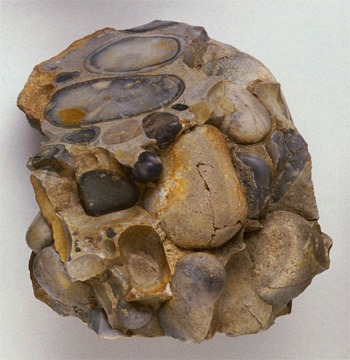
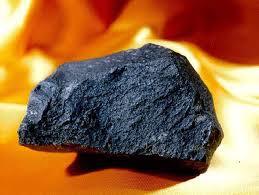

This rock was formed when molten rock cooled into a solid. What type of rock is it?
Igneous Rock
Metamorphic Rock
Sedimentary Rock

Which is not one of the 3 types of rock?
igneous
sedimentary
metamorphic
big carnage rock
When magma cools slowly, what sort of grains form?
Large, coarse grains
Small, fine grains
Grains so small that you can't see them
Sedimentary grains
Rocks that have been changed due to heat or pressure are called
Igneous rock
Sedimentary rock
Metamorphic rock
Minerals
What is a natural resource?
Material from the Earth that people use for their needs.
A place hidden in the mountains.
An object made from natural things.
__________ is an energy resource that WILL NOT run out in the next several hundred years.
Renewable Energy Resource
Non-Renewable Energy Resource
__________ is an energy resource that WILL run out in the next several hundred years.
Renewable Energy Resource
Non-renewable Energy Resource
Which of the following is a renewable resource?
Oil
Solar
Coal
Natural Gas
Which of the following is a non-renewable resource?
Water
Sun
Coal
Win
What are the 3 fossil fuels?
coal, oil, uranium
coal, hydroelectric, oil
natural gas, oil, coal

Coal is a __________ energy resource.
Renewable
Non-renewable
Hyrdo Power is a __________ energy resource.
Renewable
Non-renewable
Solar Power is a __________ energy resource.
Renewable
Non-renewable
Oil is a __________ energy resource.
Renewable
Non-renewable
Wind is a __________ energy resource.
Renewable
Non-renewable
Fossil Fuel are?
A group of energy resources that were formed from ancient plants and organisms
A group of dinosaur fossils
A type of gas used for planes

