Wayground logo

Free Printable Worksheets

Font size

S
M
L
XL
Worksheets

Year 8 biology revision

Total questions: 62

Worksheet time: 2hrs 4mins

Name
Class
Date
1.
Gas exchange between the blood and the outside occurs in which system?
a)
Respiratory
b)
Circulatory
c)
Lymphatic
d)
Integumentary
2.
This system carries oxygen, nutrients and waste around the body.
a)
Lymphatic
b)
Urinary
c)
Respiratory
d)
Circulatory
3.
What is the main function of the respiratory system?
a)
to provide oxygen and remove carbon dioxide from the body
b)
to bring oxygen to the body
c)
to break down food and absorb nutrients
d)
to remove oxygen from the body and deliver carbon dioxide
4.
What is the function of the digestive system?
a)
to break down and absorb nutrients
b)
to support and protect our bodies
c)
to produce vitamin D
d)
to help us move
5.
What function does the heart do?
a)
Protects organs and produces red blood cells.
b)
Generates heat.
c)
Breaks down food into nutrients.
d)
The heart is a pump, which moves the blood. The arteries and veins are the pipes where the blood flows.
6.
What body system consists of the lungs
a)
Respiratory
b)
Circulatory
c)
Muscular
d)
Skeletal
7.
What body system consists of the heart?
a)
Excretory
b)
Digestive
c)
Circulatory
d)
Respiratory
8.
The food I eat goes down my esophagus to my __________.
a)
Bladder
b)
Kidney
c)
Stomach
d)
Big Toe
9.
Which system produces sperm and egg cells?  In females, it also nourishes the fetus.
a)
reproductive
b)
endocrine
c)
nervous
d)
lymphatic
10.
Which system sends electrical messages that helps control the body's responses to internal and external changes?
a)
nervous
b)
endocrine
c)
reproductive
d)
integumentary
11.
The brain and spinal cord belong to what system?
a)
Lymphatic System
b)
Circulatory System
c)
Nervous System
d)
Reproductive System
12.
The mouth, esophagus and large intestine belong to what system?
a)
Nervous System
b)
Digestive System 
c)
Integumentary System
d)
Lymphatic System 
13.
What blood vessels take blood away from the heart after oxygen is addels
a)
veins
b)
arteries
c)
capillaries
14.
Where does digestion start?
a)
stomach
b)
mouth
c)
esophagus
15.
What is NOT a component of blood?
a)
platelets
b)
bone marrow
c)
plasma
16.
Wearing your seat belt, safety helmets, and following safety rules are examples of protecting what body system?
a)
Endocrine System
b)
Urinary system
c)
Nervous System
17.
When you breathe, your lungs take in ___ and remove ___. 
a)
air/oxygen
b)
oxygen/carbon dioxide 
c)
carbon dioxide/waste 
d)
waste/air 
18.
What is function of the dome-shaped diaphragm?
a)
This is where gas exchange happens.
b)
Air passes through the diaphragm on the way to the lungs.
c)
It attaches to the lungs to help in breathing.
d)
It is under the lungs and keeps them from falling down to your stomach.
19.
Carbon dioxide is considered a _________________
a)
food
b)
waste
c)
energy
d)
fun party favor
20.
Red blood cells transport __________ around our body.
a)
oxygen
b)
plasma
c)
bones
d)
cardiac muscles
21.

what is heart rate

a)

number of heart beats per unit of time

b)

maximum number of heartbeats in a given amount of time

c)

minimum number of heart beats in a certain period of time

d)

number of times your heart beats in a minute at rest
22.
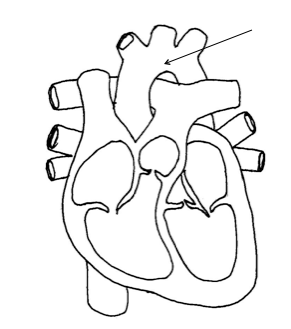
Name the part.
a)
Pulmonary vein
b)
Right atrium
c)
Aorta
d)
Pulmonary artery
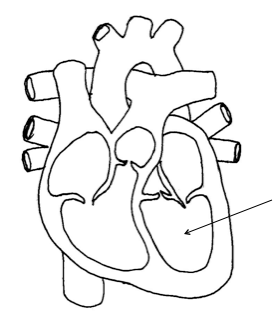
23.
Name the part.
a)
Left ventricle
b)
Vena cava
c)
Right atrium
d)
Right ventricle
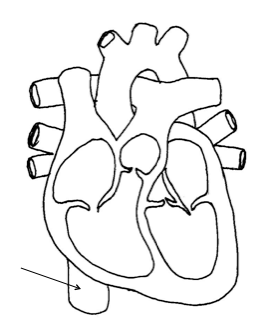
24.
Name this part.
a)
Superior vena cava
b)
Right ventricle
c)
Inferior vena cava
d)
Pulmonary vein
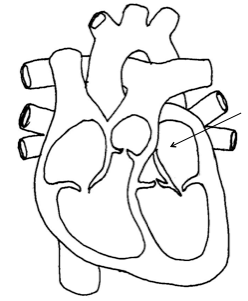
25.
Name this part.
a)
Right atrium
b)
Left ventricle
c)
Right ventricle
d)
Left atrium
26.
Name this part.
a)
Left ventricle
b)
Pulmonary artery
c)
Right atrium
d)
Pulmonary veins
27.
Which side of the heart pumps blood into the lungs?
a)
Right
b)
Left
28.
______ carry blood to the heart.
a)
Arteries
b)
Veins
c)
Capillaries
d)
Vena Cava
29.

What is the name of the tube that is also known as your wind pipe?

a)

esophogus

b)

bronchi

c)

trachea

d)

alveoli

30.

Why is mucus produced in the lungs?

a)

To help you cough

b)

To trap microbes to reduce the chance of infection

c)

To help the air move in and out

31.
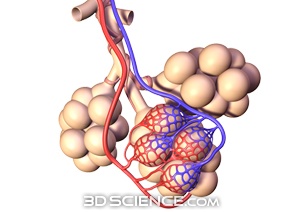
The air sacs that are covered with capillaries where gas exchange takes place
a)
bronchi
b)
lungs
c)
oxygen
d)
alveoli
32.
Which of the following are features of the alveoli that adapt them to gas exchange?
I. High surface area
II. Thin walls
III. Dry surfaces
a)
I and II only
b)
I only
c)
II and III
d)
I, II and III
33.

The blood vessels that surround the alveoli sacs are called

a)

Capillaries

b)

Arteries

c)

Veins

d)

vessels

34.

The process of a molecule moving from an area of high concentration to an area of low concentration is called...

a)

osmosis

b)

diffusion

c)

active transport

d)

mitosis

35.

The blood vessel that has the largest diameter is

a)

vein

b)

artery

c)

capillary

36.

The blood vessel that has valves at intervals...

a)

capillary

b)

artery

c)

vein

d)

none of the above

37.

What vessel is labelled X ?

a)

Artery

b)

Vein

38.

Which type of vessel is in the middle, labelled X?

a)

Artery

b)

Vein

c)

capillary

39.
The walls of a small intestine have fingerlike projections called _______. 
a)
Appendix
b)
Chyme 
c)
Villi
d)
None of these 
40.
What does the small intestine do?
a)
Absorbs water from waste
b)
Absors nutrients
c)
Absorbs nutrients
d)
Aborts nutrients
41.
When a starfish grows a new body off a broken arm, what kind of reproduction is this?
a)
Sexual
b)
Differentiation
c)
Asexual 
d)
Specialization
42.
Sexual reproduction requires _____ parents and asexual reproduction requires ___ parents
a)
1,1
b)
2,2
c)
2,1
d)
1,2 
43.
What is an advantage of sexual reproduction?
a)
Allows genetic variation
b)
Only needs one parent
c)
Happens very quickly
d)
Offspring are exact copies of parent
44.
What is one disadvantage of sexual reproduction?
a)
Only one parent needed
b)
Off spring are exact copies of parents
c)
Happens very quickly
d)
Needs two parents
45.
How many parents are required for sexual reproduction? 
a)
one
b)
two
c)
four
d)
six
46.
The female sex cell
a)
sperm cell
b)
egg cell
c)
sex cell
d)
female cell
47.
A sperm cell unites with an egg cell to form a zygote. Which process is taking place? 
a)
Pollination
b)
Asexual reproduction
c)
Fertilization
d)
Vegetative propagation
48.
It refers to the fertilization between male reproductive cell and female reproductive cell.
a)
Sexual reproduction
b)
Asexual reproduction
c)
Implantation
d)
Fertilization
49.
Male animals produce reproductive cells known as _____.
a)
palisade
b)
ovum
c)
sperm
d)
egg
50.
Requires two parents
a)
sexual
b)
asexual
51.

Where does the exchange of materials take place between mother and fetus?

a)

oviduct

b)

umbilical cord

c)

uterus

d)

vagina

52.

Ovuluation is the process in which

a)

sperm is released

b)

ovaries are released

c)

egg cells are released

53.

Which one is developed first?

a)

Embryo

b)

Fetus

c)

Baby

d)

Zygote

54.
Biological process by which new offspring are produced from their parents
a)
Reduction
b)
Reproduction
c)
Birth
d)
Fertilization
55.
An Egg cell is about 90,000 times_______ than a sperm cell
a)
smaller
b)
smarter
c)
bigger
d)
flabbier
56.
What part of a sperm fertilizes the egg
a)
flaggelum
b)
heart
c)
head
d)
butt
57.
how many parents are in asexual reproduction
a)
10
b)
1
c)
2
d)
4
58.
The offspring from asexually reproduced organisms are?
a)
Different than their parents
b)
Identical to parents
c)
Like a combination from both parents
d)
A different species
59.

What is the name of the process occuring at A

a)

Implantation

b)

Cell division

c)

Fertilisation

d)

Ovulation

60.

What is the name of the process occuring at B

a)

Implantation

b)

Cell division

c)

Fertilisation

d)

Ovulation

61.

What is the name of the process occuring at D

a)

Implantation

b)

Cell division

c)

Fertilisation

d)

Ovulation

62.

What is the name of the structure at C

a)

Foetus

b)

Embryo

c)

Zygote

d)

Ovum