

wayground logo

Free Printable Worksheets

NEW

Font size

S
M
L
XL
Worksheets

SOL 6.8 a,b Planets #1

Total questions: 60

Worksheet time: 47mins

Name
Class
Date
1.
Planets that are closer to the sun
a)
take more time to orbit
b)
take less time to orbit
2.
The order of the planets is:
a)
Mars,Venus,Earth,
Mercury,Saturn
Jupiter, Uranus, Neptune
b)
Earth,Venus,Mars
Jupiter, Neptune,
Mercury,Saturn,
Uranus
c)
Mercury,Venus,Earth
Mars,Jupiter,
Saturn,Uranus
Neptune
3.
Which planet is the largest?
a)
Jupiter
b)
Saturn
c)
Uranus
d)
Neptune
4.
Which planet is fifth from the sun?
a)
Saturn
b)
Jupiter
c)
Mars
d)
Earth
5.
Which planet is seventh from the sun?
a)
Saturn
b)
Earth
c)
Venus
d)
Uranus
6.
which planet is the third from the sun?
a)
Mercury 
b)
Neptune 
c)
Pluto 
d)
Earth 
7.
Which is the fourth planet from the sun?
a)
Mars
b)
Saturn
c)
Earth
d)
Jupiter
8.
Which is the second closest planet to the sun?
a)
Earth
b)
Saturn
c)
Venus
d)
Mercury
9.
The largest known volcano in the solar system, Olympus Mons, is located on this planet.
a)
Venus
b)
Mars
c)
Mercury
d)
Earth
10.
Almost Earth’s twin in size and mass, this planet has very thick atmosphere.
a)
Venus
b)
Mars
c)
Mercury
d)
Neptune
11.
This is the only planet in the solar system with oceans of liquid water.
a)
Mercury
b)
Mars
c)
Venus
d)
Earth
12.
Scientists have been able to find no atmosphere around this planet because it has little gravity and is closest to the sun.
a)
Mars
b)
Venus
c)
Mercury
d)
Earth
13.
The surface of this planet appears red due to rusting iron in the rocks.
a)
Mercury
b)
Mars
c)
Pluto
d)
Venus
14.
This gas giant has a large storm in its atmosphere known as The Red Spot
a)
Jupiter
b)
Saturn
c)
Uranus
d)
Neptune
15.
Some scientists believe that this dwarf planet is actually a very large comet caught in a permanent orbit.
a)
Eris
b)
Pluto
c)
Mars
d)
Neptune
16.
This cold, blue planet was discovered by a mathematical prediction.
a)
Neptune
b)
Jupiter
c)
Uranus
d)
Venus
17.
This is the largest planet in the solar system.
a)
Saturn
b)
Jupiter
c)
Uranus
d)
Venus
18.
This is the smallest planet in the solar system
a)
Mercury
b)
Venus
c)
Earth
d)
Mars
19.
Its largest moon is Titan.
a)
Saturn
b)
Jupiter
c)
Neptune
d)
Uranus
20.
Only planet known to have life
a)
Earth
b)
Mars
c)
Venus
d)
Mercury
21.
True or False
The Earth is the center of the solar system.
a)
True
b)
False
22.
What is a common characteristic of the inner planets?
a)
Large
b)
Gaseous
c)
Rings
d)
Rocky Surface
23.
What is NOT a common characteristic of the outer planets?
a)
Gaseous
b)
Giant
c)
Rings
d)
Smaller than Earth
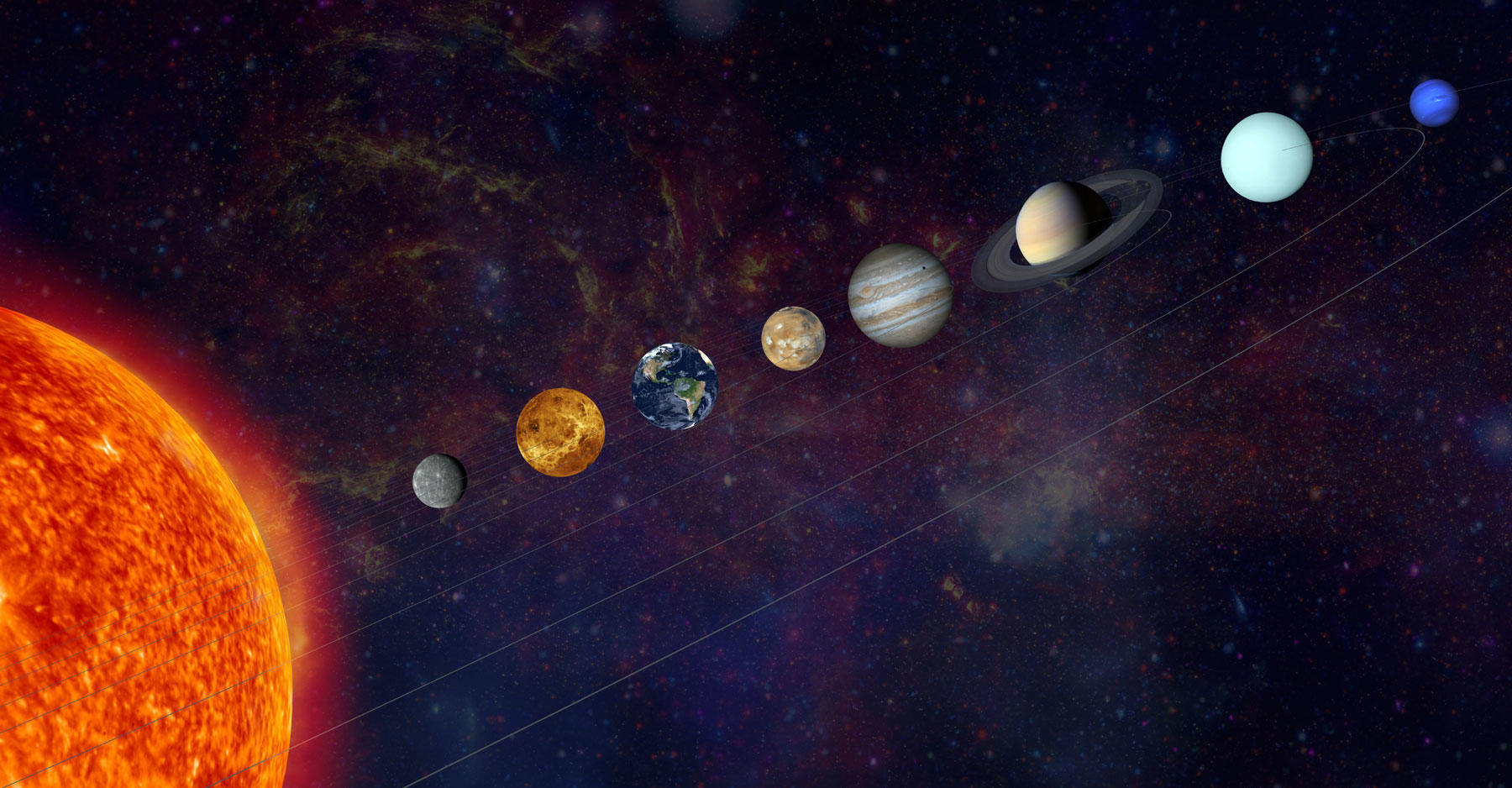
24.
True or False
The planets are not lined up in a perfectly straight line
a)
True
b)
False
25.
True or False
The planets are all equally distanced from each other.
a)
True
b)
False
26.
Which planet has no atmosphere and looks like our moon?
a)
Mercury
b)
Venus
c)
Earth
d)
Mars
27.
Which planet has a thick atmosphere and is the hottest planet?
a)
Mercury
b)
Venus
c)
Earth
d)
Mars
28.
Which planet is the smallest?
a)
Mercury
b)
Venus
c)
Earth
d)
Mars
29.
Which planet is Earth's sister planet?
a)
Mercury
b)
Venus 
c)
Earth
d)
Mars
30.
What is in between the inner planets and the outer planets?
a)
Asteroid belt
b)
Kuiper belt
c)
Sun
d)
Moon
31.
Which planet has the biggest rings?
a)
Jupiter
b)
Saturn
c)
Uranus
d)
Neptune
32.
Which planet rotates on its side?
a)
Jupiter
b)
Saturn
c)
Uranus
d)
Neptune
33.
Which planet has a Great Dark Spot?
a)
Jupiter
b)
Saturn
c)
Uranus
d)
Neptune
34.
What force keeps the planets orbiting the sun?
a)
Gravity
b)
Magnetism
c)
Electricity
d)
Friction
35.
Which of the following orbits the sun?
a)
asteroids
b)
comets
c)
planets
d)
all of the above
36.
What planets are Mercury, Venus, Earth, & Mars considered?
a)
inner
b)
outer
c)
dwarf
37.
What type of planets are Jupiter, Saturn, Uranus, & Neptune considered?
a)
inner
b)
outer
c)
dwarf
38.
Which land feature is sometimes made when a meteorite lands on Earth?
a)
canyon
b)
crater
c)
river delta
d)
mountain range
39.
The innermost planets have what type of physical composition?
a)
gaseous
b)
terrestrial
c)
liquid
40.
The outermost planets have what type of physical composition?
a)
gaseous
b)
terrestrial
c)
liquid
41.
What 4 planets make up the outer planets?
a)
mercury, venus, earth, mars
b)
jupiter, saturn, uranus, venus
c)
mercury, venus, earth, saturn
d)
jupiter, saturn, uranus, neptune
42.
What does the term terrestrial mean?
a)
made of water
b)
mars-like
c)
gas planet
d)
earth-like
43.
What characteristics of inner planets are correct?
a)
terrestrial and larger
b)
gaseous and smaller
c)
gaseous and larger
d)
terrestrial and smaller
44.
Pluto is not a planet. It is actually a 
a)
meteorite
b)
dwarf planet
c)
asteroid
d)
comet
45.
Saturn is known for it's _______. 
a)
rings
b)
atmopshere
c)
moons
d)
temperature 
46.
Which is NOT a ROCKY planet?
a)
Earth
b)
Jupiter
c)
Mercury
d)
Mars
47.
Which is NOT a GASSY planet?
a)
Saturn
b)
Neptune
c)
Venus
d)
Uranus
48.
True or False: Rocky planets are made of metal and rock.
a)
True
b)
False
49.
How many planets do we have in our solar system?
a)
9
b)
10
c)
12
d)
8
50.
True or False: The Sun is a planet.
a)
True
b)
False
51.

The hottest and brightest planet is ___________.

a)

Venus

b)

Earth

c)

Jupiter

d)

Neptune

52.

Earth is also called as the _________ planet.

a)

best

b)

blue

53.

Saturn is __________ in colour.

a)

orange

b)

yellowish

c)

blue

d)

red

54.

Saturn has beautiful rings that are made up of _____________.

a)

ice and water

b)

ice and rocks

c)

ice and soil

d)

ice and dust

55.

This planet is similar to Earth's moon. Its year is 88 Earth days.

a)

Pluto

b)

Mercury

c)

Neptune

d)

Saturn

56.

What are 3 facts about the inner plates?

a)

smaller, shorter years, have rings

b)

have rings, longer years, closer to the sun

c)

shorter years, further apart, larger in size

d)

smaller, shorter years, closer to the sun

57.

What are 3 facts about the outer planets?

a)

denser, gaseous, larger in size

b)

gaseous, longer years, have rings

c)

no rings, smaller in size, longer days

d)

shorter days, close together, no rings

58.

Which rocky planet is closer to Earth?

a)

I don't even know...

b)

Mars

c)

Mercury

d)

Venus

59.
The name for the average sun-to-earth distance is
a)
A Year
b)
A Light Year
c)
An Astronomical Unit
d)
A Parsec
60.
Motion of a planet moving in the opposite direction of the normal direction of planetary motion as observed from Earth
a)
retrograde
b)
planetismal
c)
eccentricity
