wayground logo

Free Printable Worksheets

Font size

S
M
L
XL
Worksheets

earth's interior

Total questions: 88

Worksheet time: 1hrs 19mins

Name
Class
Date
1.
Which layer of Earth is located above the outer core?
a)
crust
b)
inner core
c)
mantle
d)
lithosphere
2.
Which of these two layers is a solid?
a)
innercore
b)
Outercore
3.
What is the top layer of the Earth's surface called? 
a)
Mantle
b)
Innercore
c)
Outercore
d)
Crust
4.

A ball of solid iron and nickel that is Earth's densest layer.

a)

crust

b)

inner core

c)

mantle

d)

outer core

5.
What is the rigid layer of the Earth's surface made up of the  crust and upper mantle called?
a)
asthenosphere
b)
lithosphere
c)
mesosphere
d)
continental crust
6.
How many layers of the Earth's CORE are there?
a)
one
b)
two
c)
three
d)
four
7.
Is the outer core a liquid or solid?
a)
liquid
b)
solid
8.
Temperature _____________________ as you go deeper into the earth.
a)
increases
b)
decreases
c)
goes up and down depending on the layer
d)
stays the same
9.
Scientists think that convection currents that move the plates flow in Earth's
a)
Continental crust
b)
Oceanic crust
c)
Asthenosphere
d)
Lithosphere
10.

What is the name of layer 1?

a)

Crust

b)

Inner core

c)

Mantle

d)

Outer core

11.

What is the name of layer 2?

a)

Crust

b)

Inner core

c)

Mantle

d)

Outer core

12.

What is the name of layer 3?

a)

Crust

b)

Inner core

c)

Mantle

d)

Outer core

13.

What is the name of layer 4?

a)

Crust

b)

Inner core

c)

Mantle

d)

Outer core

14.

Identify #1

a)

Continental Crust - made of granite

b)

Continental Crust - made of basalt

c)

Oceanic Crust - made of granite

d)

Oceanic Crust - made of basalt

15.

Identify #5

a)

Lithosphere

b)

Mesosphere

c)

Asthenosphere

d)

Core

16.

Which is more dense? #1 or #2

a)

1

b)

2

17.

What is happening at #4? What layer is it?

a)

Convection; Asthenosphere

b)

Conduction; Asthenosphere

c)

Convection; Lithosphere

d)

Conduction; Lithosphere

18.

Which layer is the most dense?

a)

1

b)

3

c)

5

d)

7

19.

Which layer is the only liquid layer?

a)

3 - Lithosphere

b)

4 - Asthenosphere

c)

6 - Outer Core

d)

7 - Inner Core

20.

What are the compositional layers of Earth?

a)

Crust, mantle, core

b)

Lithosphere, Asthenosphere, Mesosphere, Outer Core, Inner Core

c)

Crust, Lithosphere, Mantle, Outer Core, Inner Core

d)

None of the above

21.

Which physical layer is made of the crust and tectonic plates?

a)

Mesosphere

b)

Lithosphere

c)

Asthenosphere

d)

Mantle

22.

Which physical layer do tectonic plates move on top of?

a)

Crust

b)

Mesosphere

c)

Mantle

d)

Asthenosphere

23.

Which layer is made up of iron and nickel?

a)

Crust

b)

Mantle

c)

Core

d)

Lithosphere

24.
What are the two types of crust?
a)
top crust,bottom crust
b)
oceanic crust, continental crust
c)
water,land
d)
none of the above 
25.

What layer of Earth do we live on?

a)

Crust

b)

Core

c)

Mantle

d)

Mesosphere

26.
Which layer contains soil?
a)
Mantle
b)
Asthenosphere
c)
Crust
d)
Mesosphere
27.
Which layer is hottest?
a)
Crust
b)
Asthenosphere
c)
Mantle
d)
Core
28.
What makes the inner core solid?
a)
Metals in the core are very light.
b)
Pressure at the core is very high.
c)
Chemicals in the core are very reactive.
d)
Temperatures in the core are very low.
29.
Which layer contains BOTH the upper mantle and the crust?
a)
lithosphere
b)
atmosphere
c)
mesosphere
d)
athensosphere
30.
Which layer is MOST dense?
a)
Mantle
b)
Crust
c)
Outer Core
d)
Inner Core
31.
Which is the source extremely high temperatures in the Earth?
a)
Volcanoes
b)
Solar Radiation
c)
Earthquakes
d)
Heat created by the formation of the earth
32.
Seismic waves _____ when they go from a solid to a liquid.
a)
Slow down
b)
Speed up
c)
Remain the same
d)
Slow down and then speed up
33.
The speed of seismic waves _____ through materials that are MORE dense. 
a)
increase
b)
decrease
34.
How was the formation of the Earth similar to the formation of our solar system?
a)
The densest materials moved to the center.
b)
The densest materials moved to the outside.
c)
The densest materials moved to the middle layer.
d)
The densest materials were evenly distributed.
35.
What creates the magnetic field around the Earth?
a)
The Earth spinning on its axis
b)
The liquid outer core spinning around the solid inner core
c)
The solid outer core spinning around the liquid inner core
d)
Seismic waves
36.
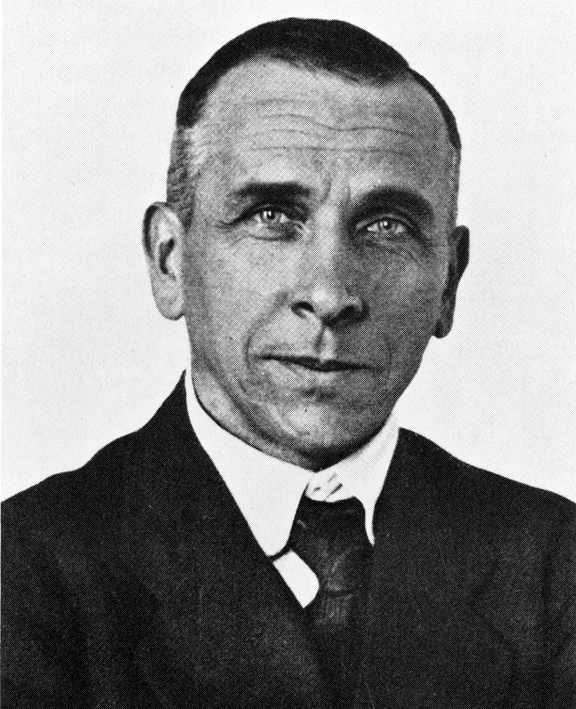
Who is the person credited with developing the theory of continental drift?
a)
Harry Hess
b)
Galileo
c)
Alfred Wegener
d)
Newton
37.

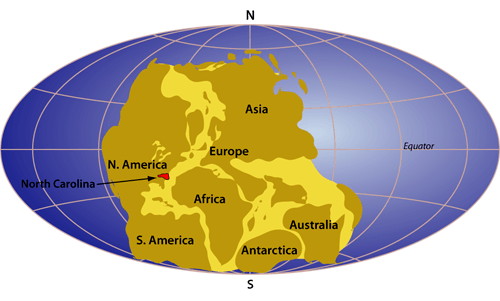
What is this a picture of?

a)

plate tectonics

b)

continental drift

c)

Pangaea

d)

glacier scaring

38.
What does the theory of continental drift state?
a)
The continents were once joined in a super-continent and have moved over time
b)
Continents are stationary and do not move
c)
The Earth is broken into lithospheric plates that move due to convection currents
d)
none of the above
39.
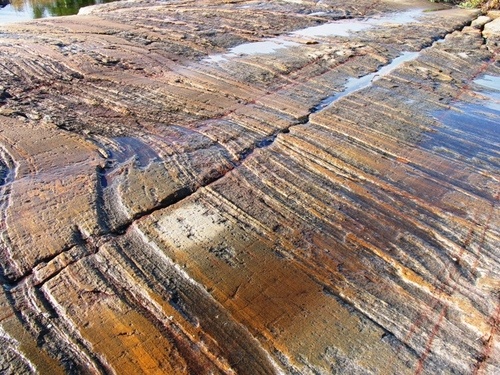
This is a picture of glacier scars found in Africa.  What are these evidence for?
a)
Africa has always been near the equator
b)
Africa was once in an area of the Earth that had a very cold climate
c)
The continents have not moved
d)
sea floor spreading
40.
What evidence did Wegener use in his theory?
a)
Continents and fossils fitting together/matching-up like puzzle pieces 
b)
glacier scars and evidence from temperature
c)
mountain ranges and coal deposits line up across continents
d)
all of the above
41.

Why did no one believe Wegener's thoery?

a)

He could not explain the force that moved the continents

b)

He didn't have evidence

c)

His data was wrong

d)

He didn't use the right technology to gather data

42.
What two specific continents fit together most noticeably?
a)
Africa and North America
b)
South America and Europe
c)
South America and Africa
d)
Antartica and Africa
43.
What specific technology did Wegener use in his study?
a)
GPS
b)
Sonar
c)
Radar
d)
Maps
44.
What do you call the evidence of Wegener's Theory that tells about the remains of an organism that lived long time ago?
a)
Ashes
b)
Bones
c)
Follicles
d)
Fossils
45.
According to Wegener's hypothesis of continental drift, 
a)
Earth's surface is made up of seven major landmasses
b)
the continents DO NOT move
c)
Earth is slowly cooling and shrinking
d)
the continents were once joined together in a single landmass
46.
What type of evidence was NOT used by Alfred Wegener to support his continental drift hypothesis?
a)
evidence from landforms
b)
evidence from fossils
c)
evidence from human remains
d)
evidence from climate
47.
Which of the following is the best evidence that Earth's continents were once in vastly different positions than they are today?
a)
Penguins only found in southern hemisphere
b)
Fossils of tropical plants found in Antartica
c)
Volcanoes encircling Pacific Ocean
d)
Major rivers from deltas from continental erosion
48.
What happens to temperature as you go deeper in the Earth?
a)
decreases
b)
increases
c)
fluctuates
d)
remains the same
49.
Which of the following occurs because of convection currents?
a)
Tectonic plates on the crust move.
b)
The mantle increases in size.
c)
Pressure in the crust increases.
d)
Pressure in the crust decreases.
50.
Scientists think that convection currents that move the plates flow in Earth's
a)
Continental crust
b)
Oceanic crust
c)
Mantle/Asthenosphere
d)
Lithosphere
51.
What does the theory of continental drift state?
a)
The continents were once joined in a super-continent and have moved over time
b)
Continents are stationary and do not move
c)
The Earth is broken into lithospheric plates that move due to convection currents
d)
none of the above
52.
Oceanic crust is
a)
Younger and less dense than continental crust
b)
Thinner, younger and more dense than continental crust
c)
Older, thicker and less dense that continental crust
d)
Bigger and younger than continental crust
53.
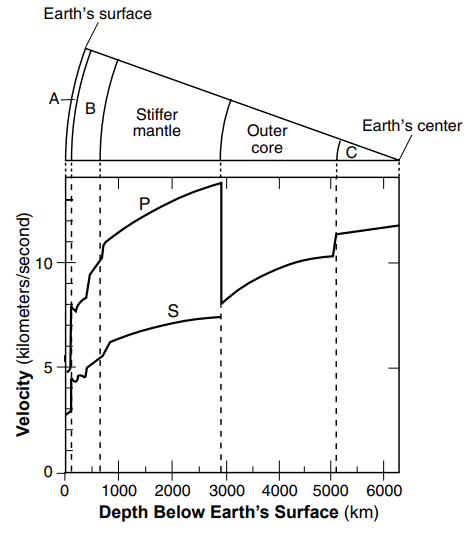
Letter C is pointing to the ...
a)
crust
b)
mantle
c)
inner core
d)
outer core
54.
Letter B is pointing to the ...
a)
crust
b)
mantle
c)
inner core
d)
outer core
55.
What does Pangaea  mean?
a)
together
b)
all earth
c)
all over Marlboro
d)
all around the world
56.
What year did Alfred Wegener create his theory?
a)
1912
b)
1960
c)
1945
d)
1512
57.
Which ocean is expanding due to a mid-ocean ridge?
a)
Indian
b)
Dead Sea
c)
Atlantic
d)
Artic
58.
Mountains form from ...
a)
plates sliding past one another
b)
collision of plates
c)
plates moving away from each other
59.
Earth's plates are...
a)
constantly moving and changing the face of the earth
b)
Never moves
c)
Moves seldom and very fast
d)
Moves when it feels like it
60.
Mid-Ocean Ridges form canyons
a)
True 
b)
False
61.
Massive pieces of land that are part of the Earth's crust and upper mantle
a)
Tectonic plates
b)
Trenches
c)
Divergent boundary
d)
Continental shelves
62.
The deepest part of the ocean; long, narrow ditches
a)
Tectonic plates
b)
Trenches
c)
Divergent boundary
d)
Continental shelves
63.
The OLDEST seafloor is located? 
a)
Closest to the mid-ocean ridge
b)
Farthest from the mid-ocean ridge
64.
True or False : Sea-floor Spreading adds new material to the ocean floor?
a)
True
b)
False
65.
What did scientists use to map the oceans floor?
a)
Echo-location
b)
Sonar
c)
Space Shuttles
d)
Animals
66.
What are Mid-Ocean Ridges?
a)
A chain of underwater waterfalls 
b)
A chain of underwater volcanos
c)
A chain of underwater mountains
d)
A chain of underwater rocks
67.
The oceanic crust is pushed aside on both sides of the 
a)
Continent's edge
b)
Deep-ocean trench
c)
Mid-ocean ridge
68.
New crust is always formed at the...
a)
mid-ocean ridge
b)
deep-ocean trench
c)
asthenosphere
69.
If there are MORE mid-ocean ridges than subduction zones, what happens to the ocean?
a)
It gets larger
b)
It gets smaller
c)
It sinks
70.
Which type of wave arrives first during an earthquake?
a)
Primary (p-wave) waves
b)
Secondary (s-wave) waves
c)
Rayleigh Waves
d)
Love Waves
71.
Which type of wave is the most destructive wave?
a)
Primary Wave
b)
Secondary Wave
72.

Main type of seismic waves that can only travel through the surface of the Earth.

a)

seismic waves

b)

surface waves

c)

body waves

d)

primary waves

73.

This is considered as the fastest kind of seismic waves.

a)

Love waves

b)

Body waves

c)

Primary waves

d)

Secondary waves

74.

It can travel through solids only

a)

Love waves

b)

Rayleigh waves

c)

Primary waves

d)

Secondary waves

75.
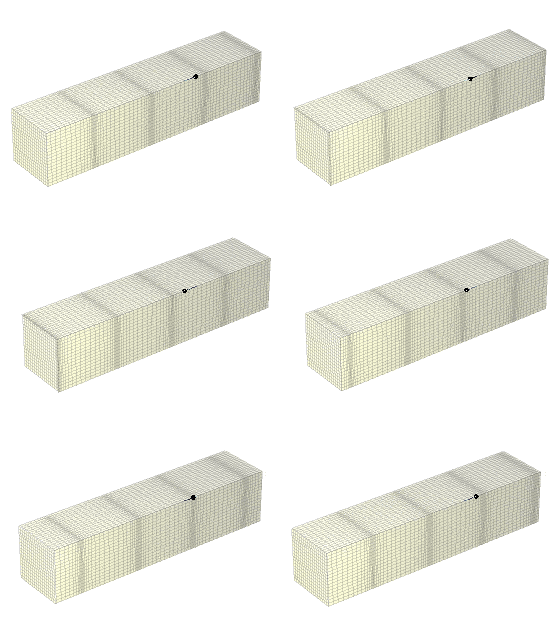
Which body wave is pictured?
a)
P-Wave
b)
S-Wave
c)
Rayleigh Wave
d)
Love Wave
76.

Primary (P) Waves can pass through...

a)

solids only

b)

liquids only

c)

gases only

d)

solids, liquids, and gases

77.

Rank the seismic waves in order of appearance when an earthquake first occurs as measured by a seismograph.

a)

S waves, P waves, then surface waves

b)

P waves, S waves, then surface waves

c)

S and P waves at the same time, then surface waves

d)

Surface waves, then S and P waves at the same time
78.
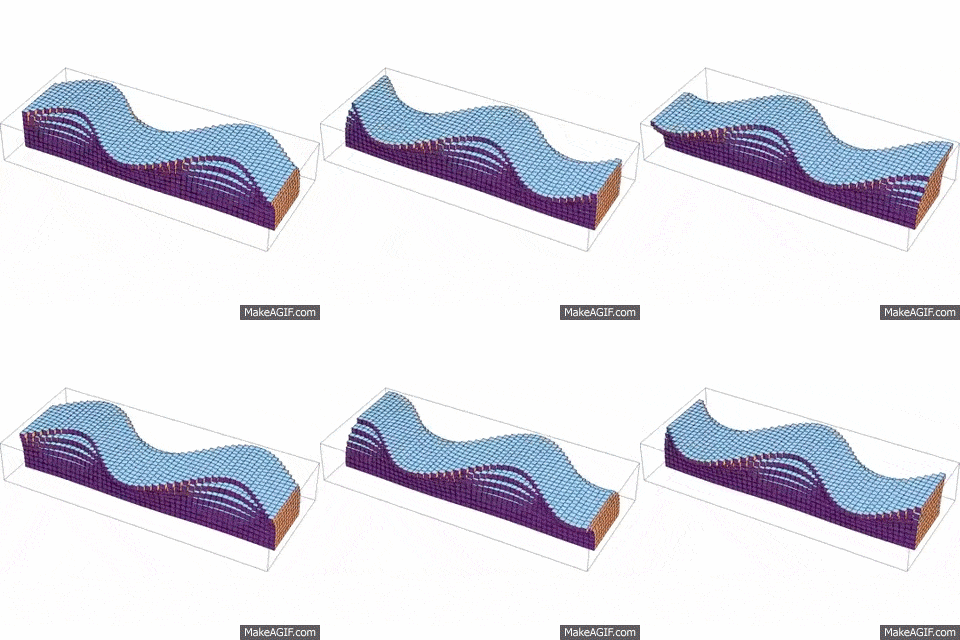
Which surface wave is pictured?
a)
P-Wave
b)
S-Wave
c)
Rayleigh Wave
d)
Love Wave
79.
An instrument that detects and measures earthquakes is a 
a)
seismogram
b)
focus seismic map
c)
focus
d)
seismograph 
80.

It is the energy radiated in all directions from the focus due to earthquake.

a)

seismic waves

b)

epicenter

c)

body waves

d)

surface waves

81.

The point where the earthquake begins.

a)

epicenter

b)

fault

c)

focus

d)

seismic waves

82.

Two types of surface waves

a)

Love waves and Rayleigh Waves

b)

P waves and S waves

83.
When plates break or slip past each other they form these
a)
mountains
b)
tectonic plates
c)
Fault lines
d)
earthquakes
84.
This is the area above ground where the earthquake starts
a)
focus
b)
epicenter
c)
p waves
d)
plate boundary
85.
We use this tool to measure seismic waves during earthquakes
a)
Seismographs
b)
magnitude
c)
actual magnitude
d)
sonograph
86.
What is another term for P- Wave?
a)
Compression Wave
b)
Principal Wave
c)
Shear Wave
d)
Secondary Wave
87.
What is the general term for a smaller magnitude earthquake that occurs after a larger earthquake in the same area?
a)
Aftershock
b)
Foreshock
c)
Seismic Gap
d)
Tsunami
88.

What is the zig-zag record made by a seismograph called?

a)

A. Seismograph

b)

B. Seismologist

c)

C. Seismic wave

d)

D. Seismogram