Wayground logo

Free Printable Worksheets

Font size

S
M
L
XL
Worksheets

Dichotomous taxonomy classification

Total questions: 121

Worksheet time: 2hrs 55mins

Name
Class
Date
1.
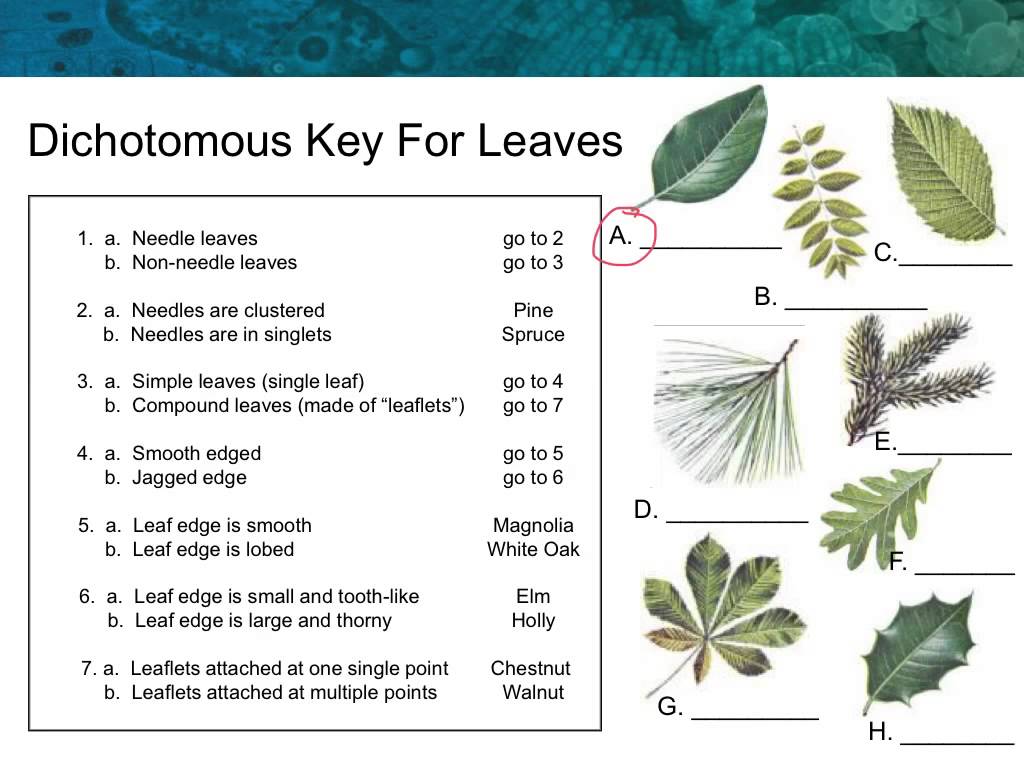
A dichotomous key for trees is provided. Hikers found a tree that has large brown cones and single sharp needles. What species of tree have the hikers found?
a)
Juniper
b)
Pine
c)
Spruce
d)
Fir
2.
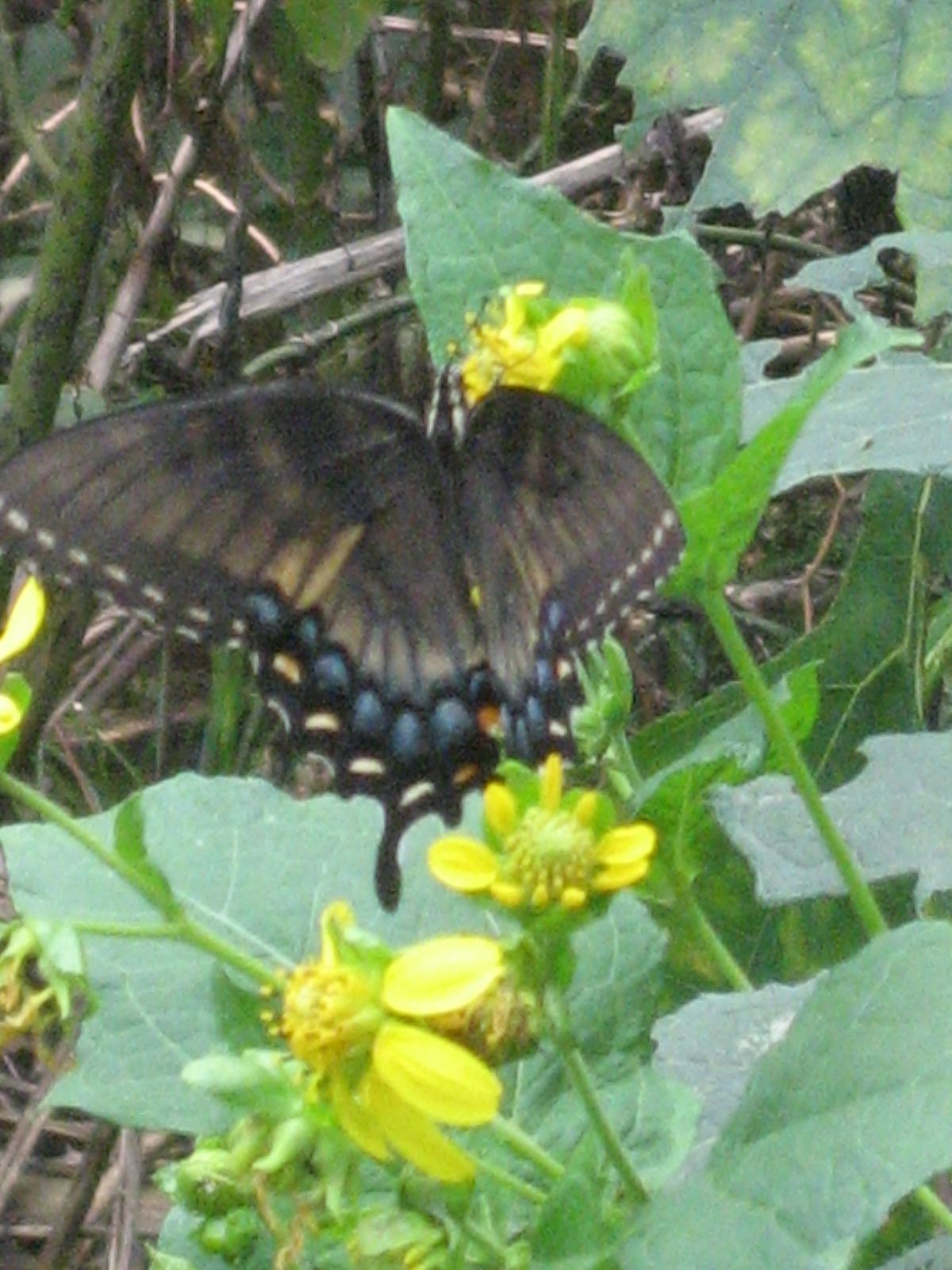
Which of the following characteristics will most likely be helpful in identifying a butterfly using a dichotomous key?
a)
Migrates north every spring
b)
hangs on branches
c)
flutters wings fast on hot days
d)
Wings have long extensions
3.
A dichotomous key for insects is given. To what order does an insect with two pairs of scaly wings belong?
a)
Coleoptera
b)
Heteroptera
c)
Diptera
d)
Lepidoptera
4.
A student discovers an arachnid with a segmented abdomen, long legs, and a tail with no stinger. The student uses the dichotomous key below to identify it. Which arachnid has the student found?
a)
Whip Scorpion
b)
Wind Scorpion
c)
Daddy long legs
d)
Scorpion
5.
An illustration and a dichotomous key are given. What is the correct classification for this organism?
a)
Class Insecta
b)
Order Amblygygi
c)
Order Araneae
d)
Order Scorpiones
6.
A labeled diagram of a fiddler crab is provided. Which of the following is an accurate observation of the structures of a fiddler crab? Fiddler crabs have -
a)
five pairs of walking legs on each side.
b)
an enlarged propodus on both front legs.
c)
a pair of eyes on stalks at the top of the body.
d)
two pairs or chelipeds for a total of four.
7.
A table of arachnid and insect characteristics is shown. Which characteristic could be used to distinguish between
arachnids and insects?
a)
Jointed legs
b)
Body segments
c)
Presence of eyes
d)
Presence of antennae
8.
What step do we always start with when using dichotomous keys?
a)
1
b)
2
c)
3
d)
4
9.
A botanist discovers a new plant in the jungle. Which of the
following observations of the plant’s characteristics would be useful in determining its identity with a dichotomous key?
a)
It was discovered in the summertime
b)
It is wet from a recent rain storm.
c)
Its leaves curl up on the edges.
d)
It is eaten by native jungle ants.
10.
When using a dichotomous key to identify organisms, what do we look at?
a)
physical features
b)
weather patterns
c)
environment
d)
diet
11.
The scientific name for an organism is made from the:
a)
class and family name
b)
genus and species name
c)
domain and kingdom name
d)
kingdom and phylum name
12.
Tool used by a taxonomist to identify an unknown organism is a:
a)
dichotomous key
b)
binomial nmenclature
c)
scientific name
d)
binomial key
13.
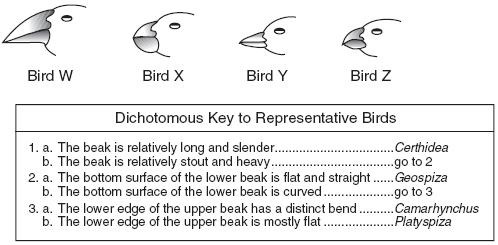
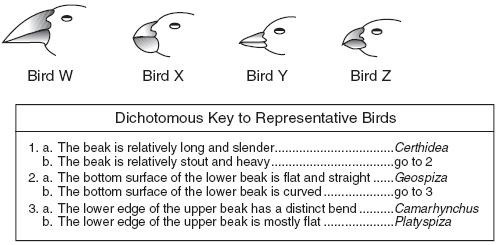
What is the name of bird W?
a)
Certhidea
b)
Geospiza
c)
Camarhynchus
d)
Platyspiza
14.
What is the name of bird W?
a)
Certhidea
b)
Geospiza
c)
Camarhynchus
d)
Platyspiza
15.
What is the name of bird Z?
a)
Certhidea
b)
Geospiza
c)
Camarhynchus
d)
Platyspiza
16.
What is a dichotomous key used for in science?
a)
To organize biomes
b)
Classify organisms
c)
Identify bacteria only
d)
None of these
17.
A student discovers an arachnid with a segmented abdomen, long legs, and a tail with no stinger. The student uses the dichotomous key below to identify it. Which arachnid has the student found?
a)
Whip Scorpion
b)
Wind Scorpion
c)
Daddy long legs
d)
Scorpion
18.
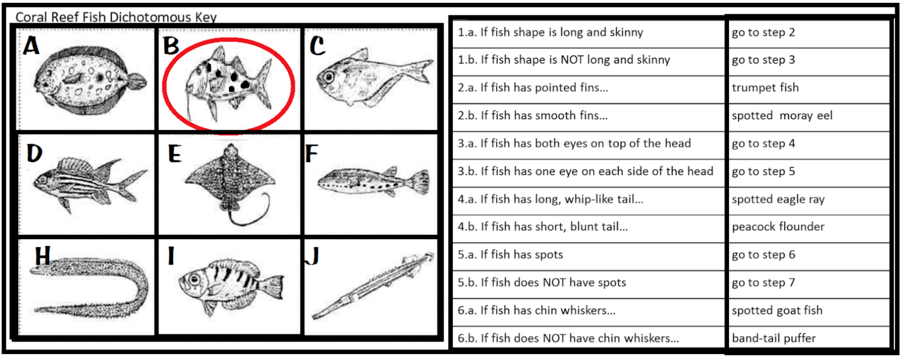
Using this dichotomous key, identify the name of the circled Fish, J.
a)
peacock flounder
b)
band-tail puffer
c)
trumpet fish
d)
spotted goat fish
19.
Using this dichotomous key, identity the name of the circled fish.
a)
band-tail puffer
b)
spotted goat fish
c)
peacock flounder
d)
trumpet fish
20.
A dichotomous key for insects is given. To what order does an insect with two pairs of scaly wings belong?
a)
Coleoptera
b)
Heteroptera
c)
Diptera
d)
Lepidoptera
21.
Which of the following is the correct way to write the scientific name of a house cat? (imagine that these options are all in italics)
a)
Felis Domesticus
b)
felis domesticus
c)
Felis domesticus
d)
felis Domesticus
22.
The first part of a scientific name is an organism's _______________ and the second part is its ________________.
a)
species, genus
b)
phylum, order
c)
class, spices
d)
genus, species
23.

Find the description of a dog and list the order of yes and no

1.Is this animal a mammal

Yes ........................... Go to 2

No ........................... Go to 3


2.Does this animal have claws

Yes ........................... Go to 3

No ........................... Go to 4


3.Does this animal have scales

Yes ......................... Snake

No .......................... Go to number 4


4.Does this animal have fur?

Yes ......................... Dog

No .......................... Dolphin

a)

Yes, Yes, No, Yes

b)

No,Yes

c)

Yes,Yes,Yes

d)

Yes,No,No

24.

What is something every animal has

a)

A name

b)

A tounge

c)

A scientific name

d)

Two parents

25.

What is a dichotomous key?

a)

A key that can be used to open doors but will mess up the door

b)

A dual key that can be used to answer all types of keys, but you have to get the right one to get it correct

c)

A tool that can't be used to identify things in a series of choices

d)

A tool that can be used to identify things in a series of choices

26.

How would you describe a snake

a)

Very scaly, invertebrate, and lays eggs

b)

Very scaly, vertebrate, and lays eggs

c)

Has miniscule hair and many scales and also is a invertebrate that lays eggs

d)

Is a reptile thats always has scales and always poisonous or venomous

27.

Which statement do you read first in a Dichotomous key

a)

Statement B

b)

Statement A

c)

Statement C

d)

Statement Z

28.

What does Dichotomous mean

a)

Divided into many parts

b)

A pair of many things

c)

Divided into two parts

d)

Animal pairs

29.

Is there a classification higher than kingdom?

a)

Yes

b)

No

30.
What is the purpose of a dichotomous key?
a)
to find a common ancestor
b)
to show the evolution of organisms
c)
to show relationships between organisms
d)
to identify organisms
31.
Term given to describe the 2 name naming system is:
a)
dichotmous key
b)
binomial nomenclature
c)
2 scientific names
d)
binomial key
32.
The 8 levels of classification, most broad to most specific.
a)
Domain, Genus, Family, Order, Class, Phylum, Kingdom, Species
b)
Domain, Species, Kingdom, Genus, Phylum, Family, Class, Order
c)
Domain, Kingdom, Phylum, Class, Order, Family, Genus, Species
d)
Order, Kingdom, Species, Domain, Phylum, Family, Class, Genus
33.

Survival of the fittest means......

a)

Only strong organisms survive

b)

Organisms best adapted to their environment survive the best

c)

Organisms that are most attractive survive the best

d)

Only organisms that have homologous structures survive

34.
Tool used by a taxonomist to identify an unknown organism is a:
a)
dichotomous key
b)
binomial nmenclature
c)
scientific name
d)
binomial key
35.
The term used to describe the scientific study of how living things are classified.  
a)
Classification
b)
Organization
c)
Domain
d)
Taxonomy 
36.
In the 8 Levels of Classification which levels is the broadest category? 
a)
Kingdom
b)
Family
c)
Species
d)
Domain
37.
In the Kingdom Plantae organisms that make their own food are called_____________. 
a)
Eukaryotes
b)
Heterotrophs
c)
Prokaryotes
d)
Autotrophs
38.
Organisms in the Kingdom Animalia that consume other organisms are called_____________. 
a)
Eukaryotes
b)
Heterotrophs
c)
Prokaryotes
d)
Autotrophs
39.
Who first proposed binomial nomenclature as a way of classifying organisms?
a)
Carolus Linnaeus
b)
Carl's Jr.
c)
Charles Darwin
d)
Henry Groseclose
40.
______ is important to survive in the environment.
a)
Variability
b)
Survival
c)
Niches
d)
Intelligence
41.
Blending in with the environment is - 
a)
natural selection
b)
imitation
c)
mimicry
d)
camouflage
42.
A series of questions used to identify an organisms, is called?
a)
a cladogram
b)
a field guide
c)
a dichotomous key
d)
a phylogentic tree
43.
Which trait is most adapted for a cold climate?
a)
thick, furry coat
b)
long, flexible trunk
c)
sharp, curved tusks
d)
broad, powerful body
44.
Which of the following is the correct way to write the scientific name of a house cat? (imagine that these options are all in italics)
a)
Felis Domesticus
b)
felis domesticus
c)
Felis domesticus
d)
felis Domesticus
45.
Why do we use scientific names to name organisms instead of relying on common names?
a)
Because common names vary regionally
b)
Because everyone understands and speaks Latin
c)
To make scientists sound smart
d)
Because they are the most descriptive
46.
Which of the following shows taxonomic groups in order from broadest to most specific?
a)
kingdom, phylum,order, class, genus, species
b)
species, genus, family, order, class, phylum, kingdom
c)
kingdom, phylum, class, order, family, genus, species
d)
phylum, kingdom, order, class, genus, family, species
47.
Fungi are a type of...
a)
decomposer
b)
producer
48.
Choose the correct way to write the scientific name for humans:
a)
homo sapiens
b)
Homosapiens
c)
Homo sapiens
d)
Homo Sapiens
49.
Tigers, Jellyfish, Gorillas and Sponges are all part of kingdom _______.
a)
Animalia
b)
Plantae
c)
Fungi
d)
Bacteria
50.
Which kingdom is autotrophic AND has a cell wall?
a)
Bacteria
b)
Fungi
c)
Plantae
d)
Protista
51.
 You would find mushrooms in which kingdom?
a)
Plantae
b)
Protists
c)
Fungi
d)
Animalia
52.
Which kingdom do humans belong to?
a)
Plantae
b)
Fungi
c)
Animalia
d)
Protista
53.
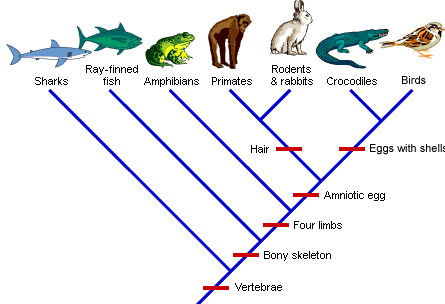
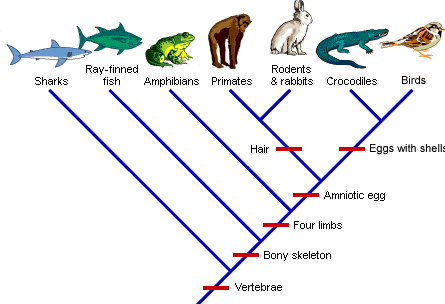
According to this cladogram, sharks are MOST closely related to which organism? 
a)
Amphibians
b)
Ray finned fish
c)
Crocodiles
d)
Birds
54.
Which two orgainsms have hair? 
a)
Sharks & Ray Finned Fish
b)
Primates & Rodents
c)
Birds & Crocodiles
d)
Rabbits & Birds
55.
According to this cladogram, birds are LEAST related to: 
a)
Amphibians
b)
Sharks
c)
Ray Finned Fish
d)
Crocodiles
56.
Most young animals inherit similar appearances, such as shape and color, from their parent animals. Which best describes why a baby deer (fawn) has spots when the adult deer do not?
a)
The spots help camouflage the fawn for protection.
b)
The spots help a fawn to be seen when crossing roads.
c)
The adult deer lose their spots by rubbing against trees.
57.
Emily has brown hair. Which is most likely a true statement about Emily?
a)
Emily’s favorite color is brown.
b)
Emily has a parent with brown hair.
c)
Emily’s older brother has brown hair. 
58.
When a starfish grows a new body off a broken arm, what kind of reproduction is this?
a)
Sexual
b)
Differentiation
c)
Asexual 
d)
Specialization
59.
Where does an off spring get its traits in asexual reproduction?
a)
From both parents
b)
From only one parent
c)
From neither parent
d)
There are no traits handed down
60.
What percentage of chromosomes are handed down by a sperm cell?
a)
75%
b)
25%
c)
50%
d)
100%
61.
Sexual reproduction requires _____ parents and asexual reproduction requires ___ parents
a)
1,1
b)
2,2
c)
2,1
d)
1,2 
62.
What is an advantage of sexual reproduction?
a)
Allows genetic variation
b)
Only needs one parent
c)
Happens very quickly
d)
Offspring are exact copies of parent
63.
What is one disadvantage of sexual reproduction?
a)
Only one parent needed
b)
Off spring are exact copies of parents
c)
Happens very quickly
d)
Needs two parents
64.

What happens in asexual reproduction after budding?

a)

the cell becomes two daughter cells

b)

budding happens again

c)

the nucleus divides itself

65.

Sexual reproduction usually happens in which of these organisms?

a)

animals

b)

plants

c)

fungi

d)

animals & plants

66.

What are gametes?

a)

a type of food

b)

sex cells

c)

an organism

d)

a way of reproducing

67.

What happens in budding after the bud grows?

a)

another buds grows

b)

the bud breaks off and becomes independent

c)

the bud grows buds on top of it

68.

What is Reproduction?

a)

It is the process of giving rise to offsprings

b)

Making two

c)

making many

d)

two offsprings produced

69.
A mode of reproduction in which an organism arises from two organisms and inherits half of its DNA from each parent
a)
Sexual Reproduction
b)
Asexual Reproduction
c)
Cloning
d)
Fragmentation
70.
What is a characteristic of sexual reproduction?
a)
diverse offspring
b)
identical offspring
c)
faster than asexual reproduction
d)
requires no energy
71.
2 dogs reproduce, 2 sex cells join together & form offspring. The resulting offspring is likely
a)
to express only recessive traits
b)
to be identical to ONE parent
c)
to share some traits from BOTH of its parents
72.
Creates the greatest diversity, & therefore the ability to survive changing environments is
a)
sexual reproduction
b)
asexual reproduction
c)
cloning
d)
fragmentation
73.
Which of the following describes the main advantages of sexual reproduction? 
a)
requires lots of time/energy
b)
no new gene combos can arise 
c)
diversity
d)
looks identical to the parent
74.
If two organisms reproduce sexually, then their offspring will exhibit a genetic makeup that is -
a)
identical to only one parent
b)
identical to all of its siblings
c)
a unique combination of traits
d)
the recessive traits of each parent
75.
If an environment suddenly changes, which type of reproduction would be most beneficial? Why?
a)
Asexual, because asexual organisms always have variation within species.
b)
Sexual, because sexual organisms have variation within species.
c)
Both Asexual and Sexual reproduction would be beneficial, because they both have variation within species.
d)
Asexual, because asexual organisms have no variation, so they can adapt to a changing environment.
76.
Humans have ________ pairs of chromosomes.
a)
21
b)
23
c)
46
d)
None of the above
77.
Where does a cell contain it's genetic material?
a)
nucleus
b)
nucleolus
c)
cytoskeleton
d)
golgi
78.
The production of a new organism from two parents
a)
Sexual Reproduction
b)
Asexual Reproduction
c)
Vegetative Propagation
d)
Fertilization
79.
A sperm cell from a male and an egg cell from a female join into a single unit
a)
Reproduction
b)
Runners
c)
Fertilization
d)
Vegetative Propagation
80.
The production of a new organism from a single parent
a)
Sexual Reproduction
b)
Vegetative Propagation
c)
Fertilization
d)
Asexual Reproduction
81.

These determine your physical traits:

a)

Chromosomes/Genes/Nucleus

b)

Emotional traits

c)

Mitochondria/Muscles

82.

Your traits are determined by ________ located in your genes

a)

chromosomes

b)

mitochondria

c)

mitosis

83.

________ is the natural process of passing traits from generation to generation

a)

heredity

b)

mitosis

c)

meiosis

84.

Genetically identical offspring comes from

a)

asexual reproduction

b)

sexual reproduction

85.

The Nucleus stores genetic information and is stored in the _____ of a cell

a)

center

b)

outside

86.

Gregor Mendel is known as the father of ________

a)

genetics

b)

reproduction

c)

cells

87.

A disadvantage of asexual reproduction is

a)

All offspring are similar and can't adapt to changes quickly

b)

All offspring are not the same and can adapt to changes quickly

88.

Animals are adapted to eat and survive in their specific environment?

a)

true

b)

false

89.

Meiosis takes places inside the

a)

nucleus

b)

skin

c)

muscles

90.

Chromosomes are in the shape of the letter

a)

X

b)

P

91.

When a parent cell divides, it passes on ______ information to its offspring through heredity

a)

genetic

b)

computing

c)

learning

92.

Offspring in asexual reproduction has _________ chromosomes to that of its parent

a)

identical

b)

different

93.
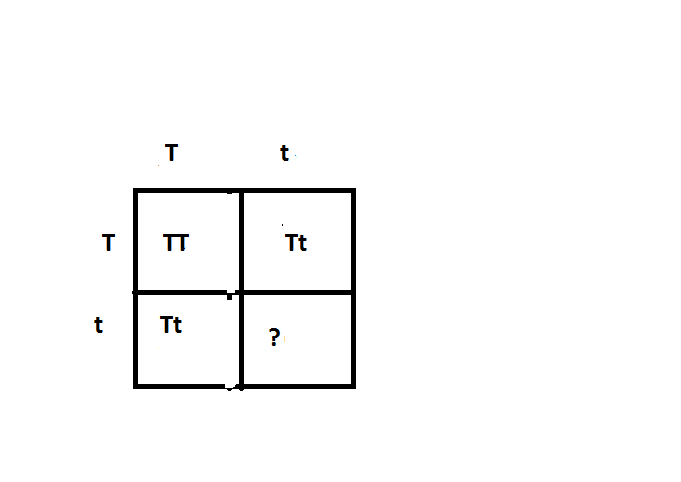
T - tall and t = short
In the punnett square below, what belongs in the missing square
a)
tt
b)
Tt
c)
Bb
d)
TT
94.
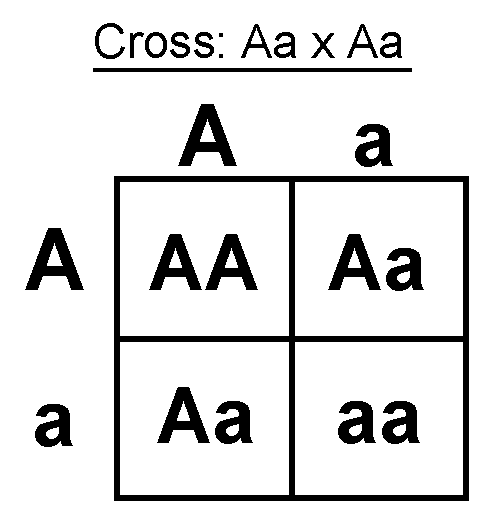
B = brown fur  b = white fur
In the punnett square, what is the probability for white fur? 
a)
0%
b)
25%
c)
50%
d)
75%
95.
G = green, g = yellow
The genotype for a yellow plant is...
a)
GG
b)
Gg
c)
gg
d)
all of the choices result in yellow
96.
Complex molecule that carries genetic information that defines an organism's traits. It is stored in the nucleus.
a)
DNA
b)
protein
c)
RNA
d)
glucose nucleic acid (GNA)
97.
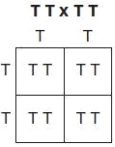
T - tall and t = short
In the punnett square below, what belongs in the missing square
a)
tt
b)
Tt
c)
Bb
d)
TT
98.
aa always shows up as
a)
dominant
b)
recessive
99.
aa always shows up as
a)
dominant
b)
recessive
100.
What ratio of the offspring from the cross shown will be homozygous recessive for the  trait of tallness? 
a)
0 in 4
b)
1 in 4
c)
2 in 4
d)
4 in 4
101.
What is a punnett square?
a)
graph used to predict the possible genotypes of offspring in a given cross
b)
a graph used to predict the possible birth rate of offspring.
c)
a graph used to predict the possible behavioral characteristics an offspring could have
d)
None of the above
102.
What is probabilty? 
a)
is the mathematical chance of a specific outcome in relation to the total number of possible outcomes. 
b)
is the mathematical formula to additional and subtraction of genotypes
c)
is the mathematical chance of a specific relationship between genotype and phenotype
d)
All of the above
103.
In a flowering plant species, red flower color (R) is dominant over white flower color (r). What is the genotype of any red-flowering plant resulting from this species?
a)
rr
b)
R
c)
RR
d)
RR or Rr
104.
How many alleles (letters) do each person carry for a trait?
a)
1
b)
2
c)
3
d)
4
105.
Genotype refers to the ...
a)
physical expression of the genes
b)
the possible combination of alleles in a gene
c)
whether an allele is dominant or recessive
d)
how an organism will appear
106.
What is a phenotype
a)
The genetic make up (code)
b)
The physical trait
107.
the passing of genetic traits from parent to offspring.
a)
heredity
b)
trait
c)
gene
d)
allele
108.
Two heterozygous (Tt) tall pea plants are crossed. Which describes their offspring?
a)
50% tall and 50% short
b)
75%tall and 25% short
c)
100%short
109.
Freckles is an example of..
a)
genotype 
b)
phenotype
110.
The physical appearance of a gene:
a)
Genotype
b)
Heredity
c)
Phenotype
d)
Allele
111.
blue eyes is an example of...
a)
Genotype
b)
Phenotype
112.
BB 
a)
Genotype
b)
Phenotype
113.
What is the phenotype of the offspring? (A-Brown hair; a-blond hair) 
a)
50 % Brown Hair and 50% Blond Hair 
b)
25 % Brown Hair and 75% Blond Hair 
c)
75 % Brown Hair and 25% Blond Hair 
d)
0% Brown Hair and 100% Blond Hair 
114.
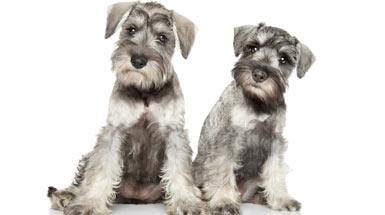
The pictures below show two dogs. The instructions determining the color of their fur are found in their cell...
a)
cytoplasm
b)
membrane
c)
mitochondria
d)
chromosomes
115.
What is a gene?
a)
A segment of DNA
b)
A structure in the nucleus
c)
Long double helix strands that make up a chromosome
116.
You get your genes from:
a)
Department Store
b)
Parents
c)
Aunt
d)
Neighbor
117.

The process of passing genetic instructions from one generation to the next is called __________.

a)

Adaptation

b)

Fertilization

c)

Genetics

d)

Heredity

e)

Eugenics

118.
The man who studied genetics and came up with genetics is
a)
Watson
b)
Crick
c)
Mendel
d)
Darwin
119.
Where, in the eukaryotic cell, is DNA located?
a)
ribosomes
b)
nucleus
c)
E.R.
d)
cytoplasm
120.
When humans breed purebred dogs to look a certain way and have traits that they like, this is an example of ___________________________
a)
Probably Breeding
b)
Sectional Breeding
c)
Selective Breeding
d)
Suspended Breeding
121.
He is known as the father of modern day genetics.
a)
Gregory Mendel
b)
Greg Mendel
c)
Gregor Mendel
d)
Grace Mendel